X — EU €120M DSA Fine
On Friday, December 5, 2025, the European Commission announced its first non-compliance decision under the Digital Services Act (DSA) and fined X (formerly Twitter) €120 million — roughly $140 million at the exchange rate that day. The official press release is datelined "Brussels, 5 December 2025."
This matters to the Charlie Kirk investigation for one reason: X is the platform where nearly all citizen investigation of September 10, 2025 actually lives. Any regulator that can impose nine-figure penalties on that platform becomes a factor in what stays visible there — regardless of whether the penalty itself was about speech.
The decision at a glance
| Item | Detail |
|---|---|
| Date announced | December 5, 2025 (Commission press release, Brussels) |
| Authority | European Commission, under the Digital Services Act |
| Announced by | Executive Vice-President Henna Virkkunen |
| Amount | €120 million (~$140 million USD at the time) |
| Legal basis | Transparency obligations — not content moderation |
| Significance | Reported by AP, Reuters, Sky News, The Guardian, Bloomberg and others as the first DSA fine |
The Commission's own account was posted to X on December 5, 2025 at approximately 15:41 GMT.
The three findings
Per the Commission's stated reasoning, the fine covered three breaches — all framed as transparency failures rather than as decisions about what X allows users to say:
- Deceptive design of the blue checkmark. After X made verification a paid feature, anyone could purchase "verified" status without meaningful identity checks. The Commission characterized this as a dark pattern that misleads users about who they are reading.
- Advertising repository. The DSA requires a searchable, publicly accessible repository of ads served on the platform. The Commission found X's repository was not properly transparent or usable.
- Researcher data access. The DSA requires very large platforms to give vetted researchers access to public platform data. The Commission found X's access provision inadequate.
None of the three findings concerns a specific post, account, or topic. That distinction is the entire argument between the two sides described below.
What happened on which day
Reporting dates are worth pinning down precisely, because anticipation and announcement got compressed together in later summaries:
- Thursday, December 4, 2025 (evening). US Vice President JD Vance publicly commented in anticipation of expected EU action. This was commentary before the fact, not a report of the decision.
- Thursday, December 4, 2025. At least one specialized outlet (the Agence Europe bulletin) carries a December 4 publication stamp, but its own text refers to the public announcement occurring on Friday by Executive Vice-President Virkkunen.
- Friday, December 5, 2025. The official press release, the Commission's X post, and the wave of headlines from AP, Reuters, The Register, Sky News, The Guardian, Euronews, TechCrunch, The Verge, Bloomberg and DW all reporting the fine had been imposed.
Searches covering December 4–5 turn up no confirmed earlier post announcing an imposed fine. December 5 is the operative date.
Two framings of the same decision
The Commission's framing: this is bookkeeping enforcement. Transparency rules apply to every very large online platform in the EU; X failed three of them; a penalty followed. On this reading the fine has nothing to do with censorship and would have landed identically on a platform with the opposite editorial posture.
The critics' framing: X leadership, including Elon Musk, and some US officials described the penalty in free-speech and censorship terms — arguing that a foreign regulator levying nine-figure fines on the platform that hosts the most unfiltered political speech creates pressure that reaches speech indirectly, whatever the stated legal grounds.
This site does not resolve that dispute. Both framings are reported claims about motive, and motive is exactly what neither side can prove from the text of a transparency decision. What is documented is the date, the amount, the three findings, and the fact that the Commission chose X for the DSA's first enforcement action.
Correcting a circulating claim
There is no comparable fine against Bluesky. Searches for a €120 million / $120 million DSA penalty against Bluesky return no relevant results. The December 5, 2025 decision applies specifically to X. Where you see the figure attached to another platform, it is a misattribution.
Why this page sits in Censorship
Investigators documenting September 10 rely on X for distribution — the Candace Owens engagement suspensions, the deboosting complaints, and the Ryne Simmons FBI video claim are all X-native stories. A regulatory regime capable of imposing repeat penalties is a structural variable in that environment, and it belongs in the record alongside the platform-level and court-level pressures this section tracks.
The relevant test going forward is behavioral, not rhetorical: does X's handling of investigation content change measurably in EU jurisdictions after December 5, 2025? Impression logs, regional visibility comparisons, and archived post states are what would answer that. Absent that data, the fine is context — not evidence of suppression of this case.
What came later
Subsequent developments — X's compliance action plans, and challenges to the decision — ran into 2026 and are outside the scope of this page. The initial news of the fine itself begins December 5, 2025.
Open questions
- Do EU-region impression counts on Charlie Kirk investigation threads diverge from US-region counts after December 5, 2025?
- Did X change any moderation, labeling, or reach setting in response to the decision, and was that change disclosed?
- Do the DSA's researcher-data-access provisions — the third finding — offer citizen investigators a legitimate route to the platform data that would settle the deboosting question?
Interesting In This Area
- The same platform carries the engagement-ban reports and the deboosting complaints.
- A witness says federal callers pressed until his footage was deleted — a different mechanism.
- A poll about the rifle account reportedly failed to send and went to drafts.
- Judicial pressure runs in parallel through an own-motion gag order.
Interesting In Other Areas
- The researcher-data-access finding is the one that might help citizen investigators.
- Media reform proposes forcing platforms to disclose throttling rather than fining bookkeeping.
- Media censorship collects what was removed and what platforms will not say.
- Archiving and records requests survive any regulator's decision.
Other Pages In This Section
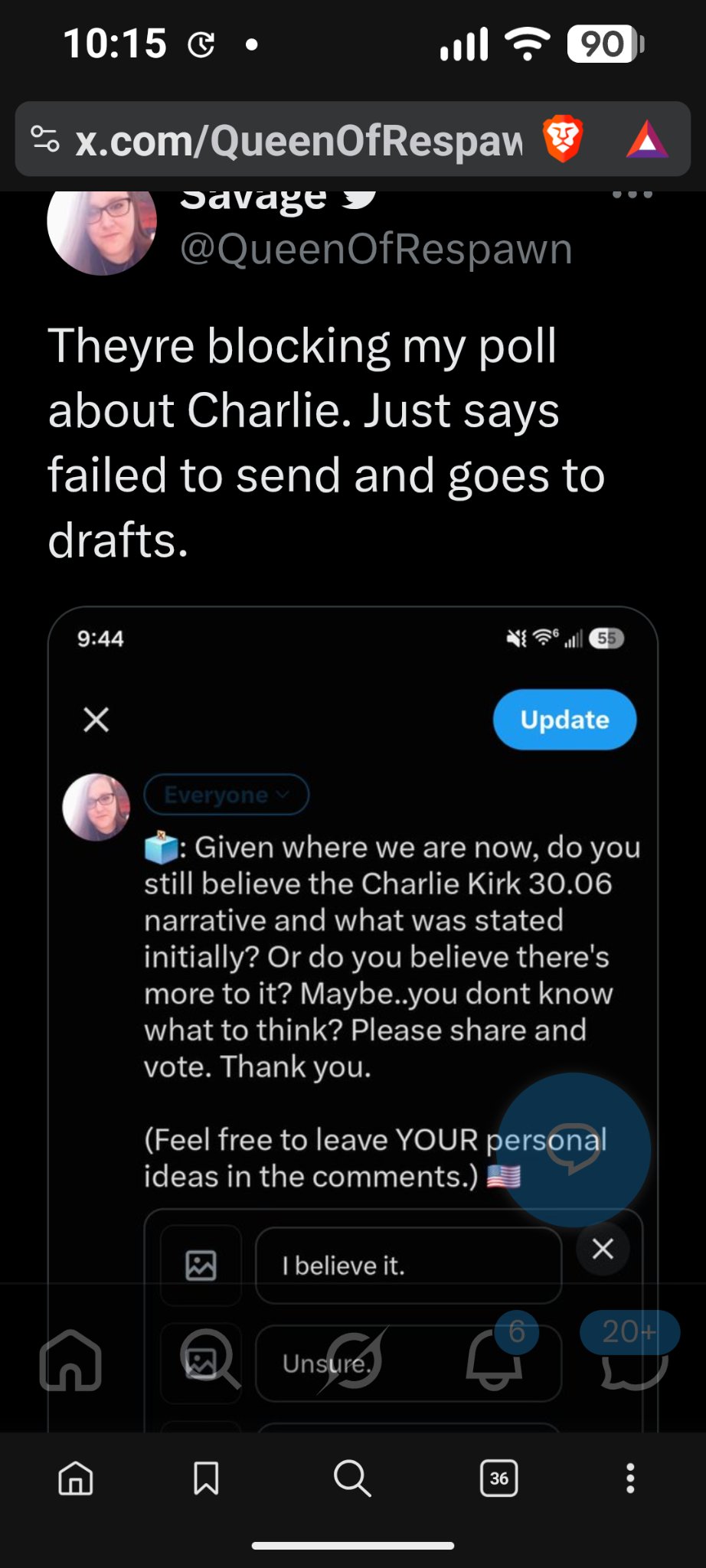
X — Poll About Kirk Narrative Reportedly Blocked
Two accounts reported on the same August 2026 day that a poll asking whether people still believe the initial rifle account would not publish as a poll. No platform log, no error code, no control test — and unusually easy for anyone to check.
Read this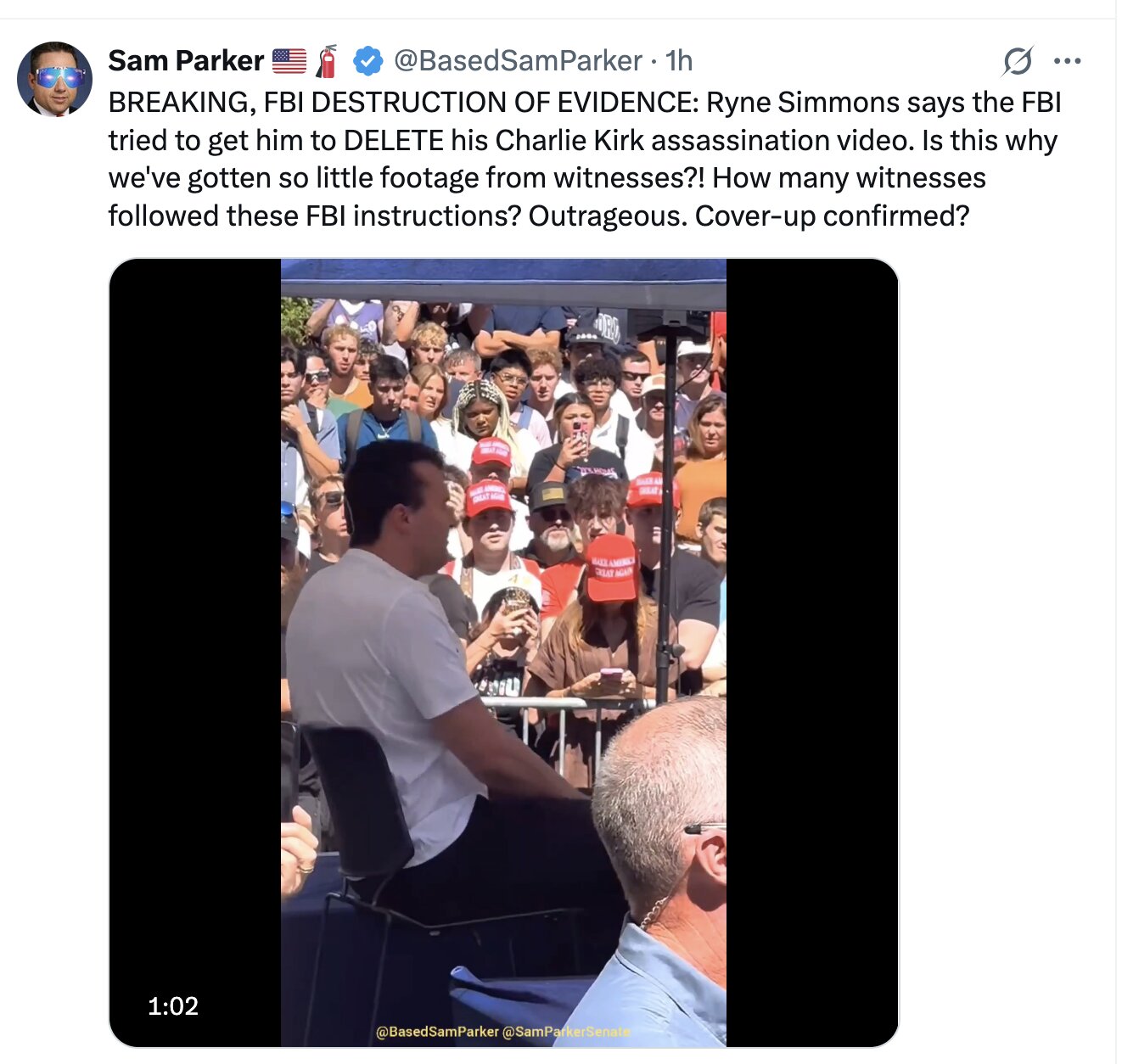
Ryne Simmons — FBI Video Deletion
A witness says he sent the FBI close-up 4K 60fps footage of the moment Charlie Kirk was killed, then was called repeatedly and asked to delete it. He says he kept a copy. Deletion over preservation is a transparency question, not yet a court finding.
Read this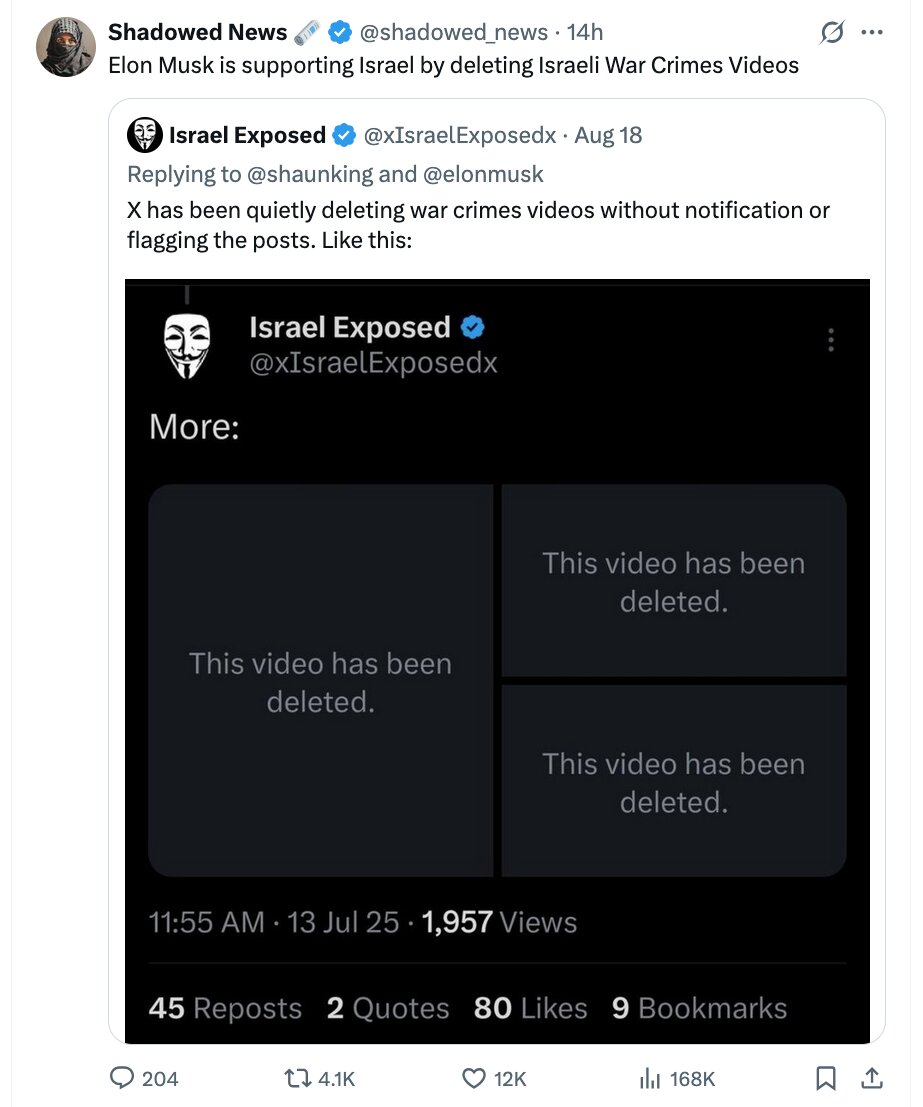
Locks, shadowbans and limited-visibility warnings for engaging the wrong posts, alongside a witness reportedly told to delete his own footage. Suppression does not prove a cover-up, but it does decide what survives online.
Read this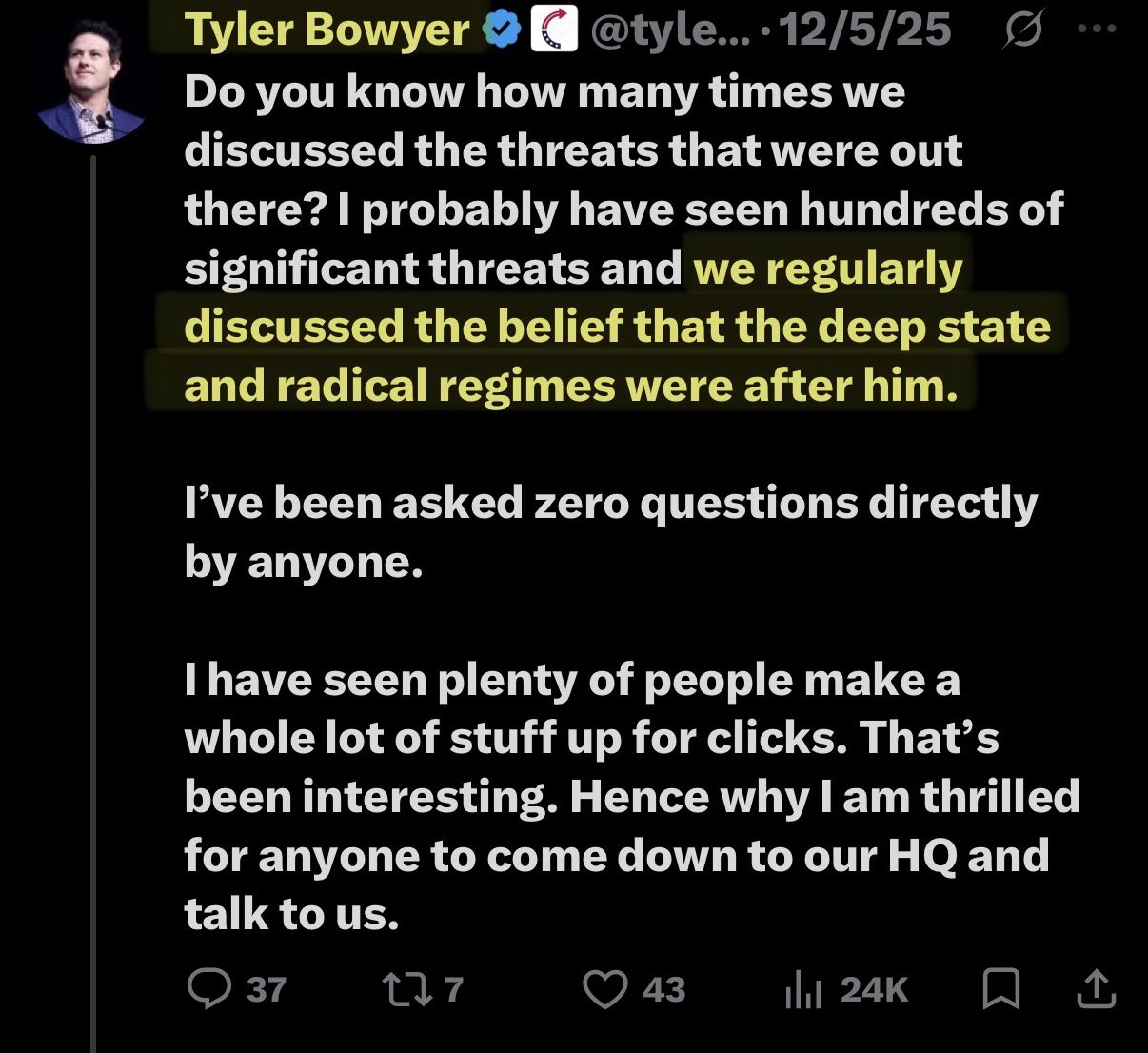
Reported cease-and-desist letters and legal pressure aimed at citizen investigators over drone footage and insider material. Legal risk is its own form of reach suppression.
Read thisElsewhere In The Investigation
Censorship of Charlie Kirk Citizen Investigators (Claims)
The cross-platform version of the pattern: many independent researchers reporting throttling, strikes, demonetisation and account actions on the same subject at once. Ordinary moderation explains part of it, and the page argues about which part.
Read this
Media and Journalism Transparency
Most of the work on this case was done by citizen investigators with no shield law behind them. The proposal gives them standing, adds anti-SLAPP protection, and forces platforms to disclose how reach is throttled.
Read thisClaims of suppression and information control drawn from public reporting — what was removed, who asked for it, and what the platforms will not say about individual actions.
Read this
Concrete things one person can do: records requests, contacting representatives, preserving and sharing evidence. It is the shortest route from reading this site to changing anything on it.
Read thisThis website's author is @HolonCitizen on X and YouTube/@HolonCitizen. Follow me there.
Interesting
- A December 2025 order silenced the case through a gag nobody in court requested.
- A sitting intelligence official says the foreign-ties review was halted with leads open.
- Utah's incoming public-safety commissioner was reportedly searched from Washington the day before appointment.