Airborne Surveillance Records Over UVU Withheld (Claims)
:::caution Legal Disclaimer Nothing on this page is a claim of fact that any living person or organization knew of, planned, participated in, or covered up any crime, or acted illegally, immorally, or unethically. This page documents questions and allegations raised in public commentary — not findings of fact. All persons and organizations named are presumed innocent; the allegations referenced are unproven and have not been established in any court. Tyler Robinson is charged, not convicted. :::
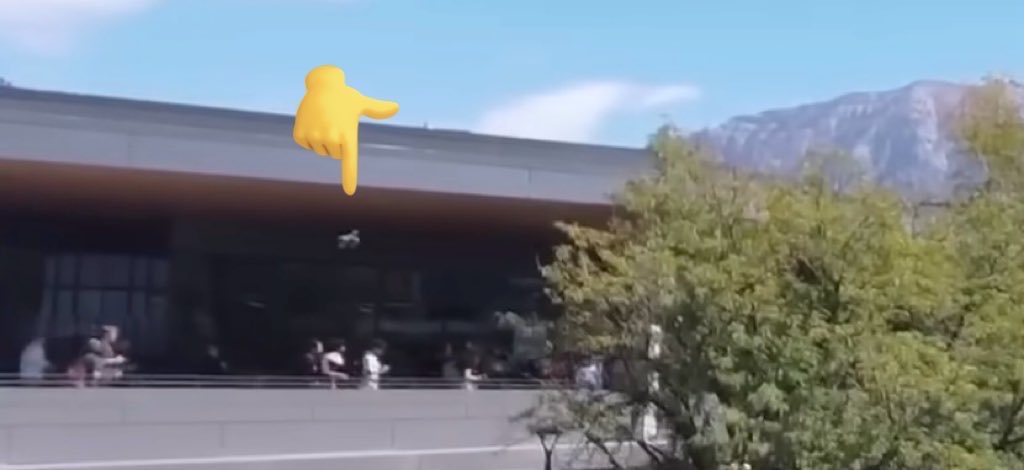
This page catalogs a reported allegation about airborne surveillance over Utah Valley University on the day Charlie Kirk was killed, September 10, 2025. The core question, raised by open-source investigators, is that if military-grade sensors and drones were overhead, then imagery of the scene may exist — yet the crew, tasking, and authorizing paperwork have not been made public. The framing that records are being deliberately "withheld" is an attributed claim, not a finding; the contractors and agencies named are presumed to have acted lawfully. See the detailed N1098L flight analysis for the aircraft record.
The claim
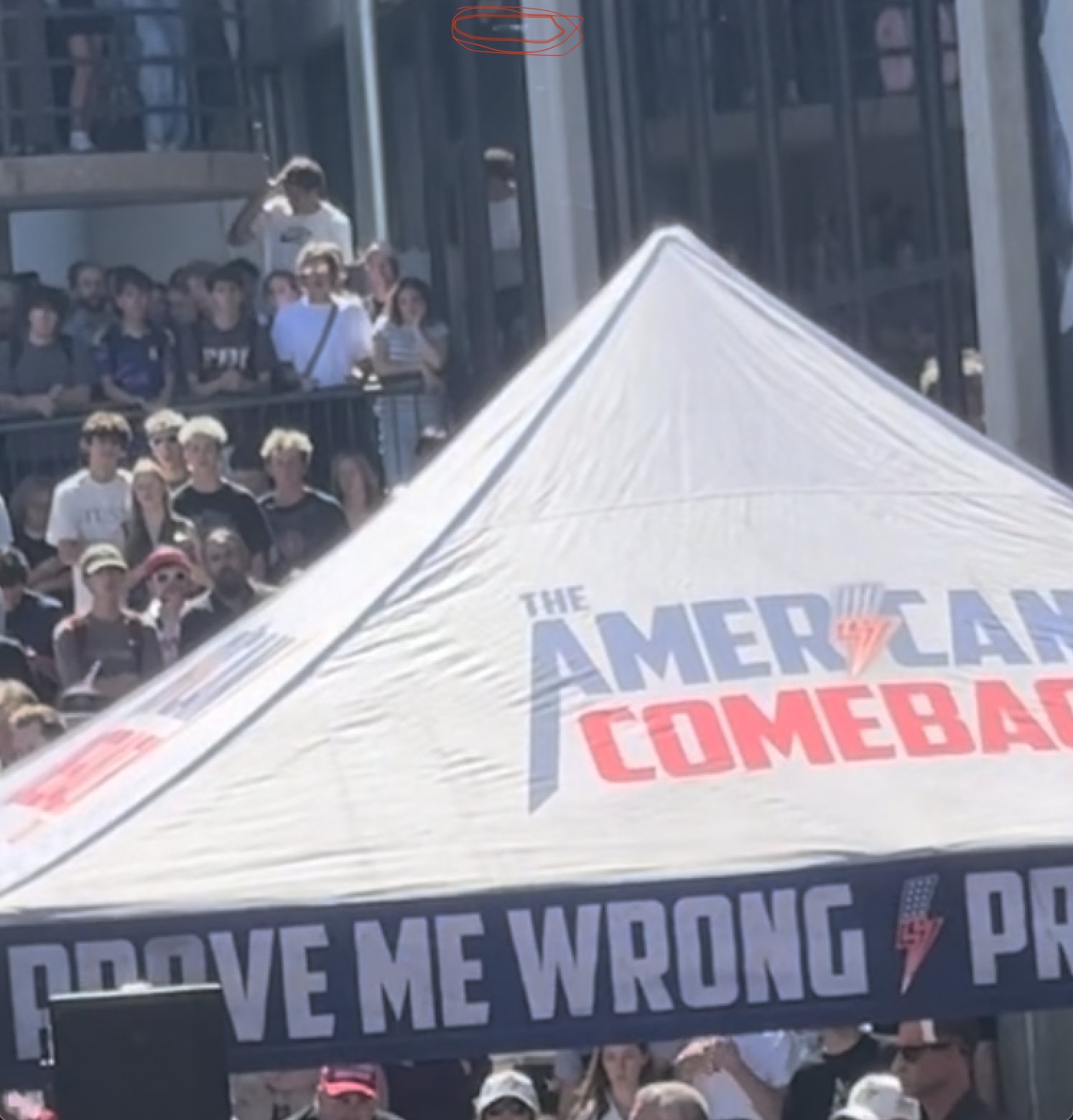
Investigators contend that two separate airborne surveillance questions over UVU remain unanswered. First, a U.S. Army HADES ISR jet — tail number N1098L, callsign AXLE10 — is documented making low-altitude passes near the Orem and UVU corridor before and after the shooting, meaning airborne sensor or imagery data of the area may exist. Second, campus security reportedly deployed no preventive drone overwatch, even though a TPUSA production drone is said to have flown and military ISR appears in nearby flight logs. In both cases, the argument is the same: the records that would settle the matter — crew lists, tasking orders, sensor feeds, FAA authorizations — have not been produced.
The N1098L / HADES record
Per the master investigation file and cited aviation coverage:
- N1098L is a Bombardier Global 6500 operated by LASAI Aviation II LLC, a defense contractor whose ISR work fell under Leidos. Its ICAO hex is A0299E.
- Public ADS-B data (via ADS-B Exchange and Flightradar24) is often the only civilian visibility into such flights. That data reportedly shows the jet descending over the corridor on September 10 — cited variously at roughly 203, 335, and 600 feet AGL — and slowing near stall speed, maneuvers a defender characterized as "textbook drone drop and recovery" training.
- The HADES program (an Army high-altitude ISR effort) is described as run out of Biggs Army Airfield, and the master file states that Bradley Hansell is the program lead — an assertion in the source notes that this site has not independently confirmed against any official Army organizational record.
- A search of the NTSB database for N1098L reportedly returns no incidents — expected for a flight with no accident, but also meaning no public post-flight file.
Investigators argue that because LASAI's ISR missions are described as classified or proprietary, crew and tasking details sit outside ordinary public-records reach. One account attributes to a reported NCTC-community contact the statements that officials were "not aware of N1098L's flight path" and that the maneuvers were "too damning." Those are attributed, uncorroborated hearsay and are not asserted here as fact. A citizen FOIA effort for overflight flight logs was, per the notes, "denied."
The drone-overwatch gap
Separately, investigators point to a mismatch between the drones that were and were not in the air:
- Per an Associated Press account cited in the file, UVU provided six campus police officers — about a quarter of its department — led by Police Chief Jeff Long, tasked with perimeter and crowd control. The account states they "engaged no drones," even though UVU is described as running a campus drone program.
- TPUSA-linked media reportedly admitted, in a cease-and-desist to a critic, that a "media production drone briefly flew for B-roll BEFORE the event" — while, in the same discussion, a security counter-drone request was said to have been denied ("No drones — university denied").
- Investigators say this is not the same as the news-gathering drones (for example, footage attributed to Reuters) that appeared after the shooting. The distinction they draw is between post-event press UAS and the absence of pre-event security UAS.
The unresolved records here are the FAA authorizations and TFRs over UVU for September 10 and the identity of anyone who received any drone or ISR feed — none of which, per citizen FOIA accounts, has been produced. For the peer pages, see UVU security flew no drones, the TPUSA production drone admission, and military drones on video.
Why it matters
If military ISR and a production drone were overhead while the records that would show what they captured remain classified, proprietary, or simply unanswered, that leaves a documented gap over the exact place and time of a political assassination. That is why the episode is filed under Cover Up (Possible): as an open question about whether relevant airborne imagery exists and why it has not been produced — not as a proven act of concealment. The straightforward remedy is disclosure of crew, tasking, FAA authorizations, and any feeds, or an authoritative statement that none exist.
Counterarguments, skepticism, and innocent explanations
Ordinary, lawful explanations can account for much of this, and they deserve real weight:
- Military ISR training flights are routine. Drone drop-and-recovery training over open corridors is a normal use of an Army ISR platform, and its tasking is lawfully protected regardless of what else happened that day. Low passes and stall-speed maneuvers are consistent with that stated purpose.
- Classified or proprietary tasking is standard, not sinister. Defense-contractor ISR crew and mission details are routinely restricted; nondisclosure does not imply a specific record is being hidden about Kirk.
- ADS-B gaps are normal. Civilian tracking of military and contractor aircraft is often partial; missing data points reflect the nature of the platform, not deletion.
- Campus drone non-use is a policy and resource choice. A decision not to fly security drones — and to deny a counter-drone request — can reflect airspace rules, staffing, or liability judgments rather than intent to leave the scene un-monitored.
- FOIA delays and denials are common. Requests to the FAA, Army, or a contractor routinely take months or are denied on statutory grounds; a denial is not proof that responsive imagery exists.
- Named parties are presumed innocent. No court has found that any contractor, agency, or official concealed airborne records. These are questions and allegations.
Interesting In This Area
- Foreign-nexus questions were reportedly met with blood-libel labels rather than released records.
- An officer's body camera reportedly died as he reached the alleged rooftop perch.
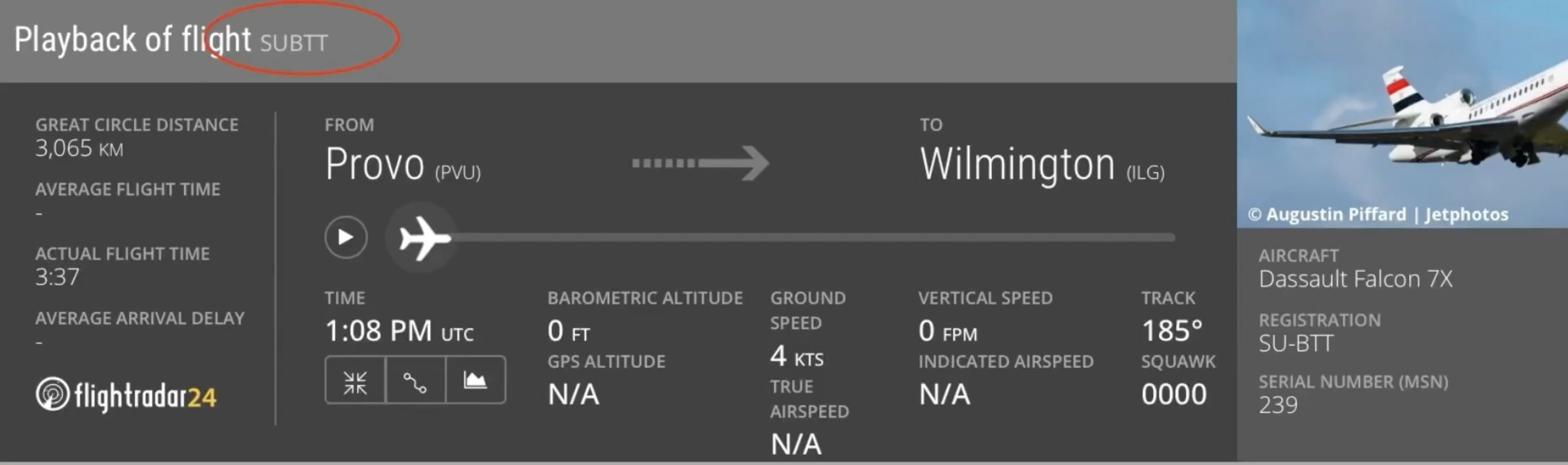
- Manifests for SU-BTT and SAM-702 stay unreleased, as do Fort Huachuca passenger lists.
- UVU's own HD surveillance has never been published, only grainy trimmed clips.
Interesting In Other Areas
- The HADES program turns a Global 6500 business jet into an Army signals-collection platform.
- N1098L reportedly dropped to about 204 feet near campus roughly twenty-five minutes after the shot.
- TPUSA's production drone flew while campus counter-drone was reportedly declined.
- SU-BTT reportedly sat near Provo from September 4 until the morning of September 10.
Other Pages In This Section
"Blood Libel" Branding Used to Kill Foreign Leads (Claims)
The allegation that labelling foreign-nexus questions "antisemitism" or "blood libel" worked as rhetorical closure — not removing the question, just making it radioactive to ask. The page notes the dynamic cuts both ways.
Read thisCIA Reportedly Blocked From the Investigation (Claims)
Reported claims that the FBI physically blocked CIA personnel from advancing the investigation, and that the Oval Office heard about it and did nothing.
Read thisFBI Admitted Enhancing the Suspect Photos (Claims)
The FBI director reportedly called the stairwell images "enhanced." They went out on the evening the suspect was already in custody — and critics say the morning and afternoon figures do not look like the same man.
Read this
Hospital Footage Seized, ER Cleared, Staff NDAs (Claims)
Footage never released, an emergency room that reportedly looked unusually empty, and staff at a nearby facility reportedly asked to sign non-disclosure agreements. Presented as questions, not conclusions.
Read thisElsewhere In The Investigation
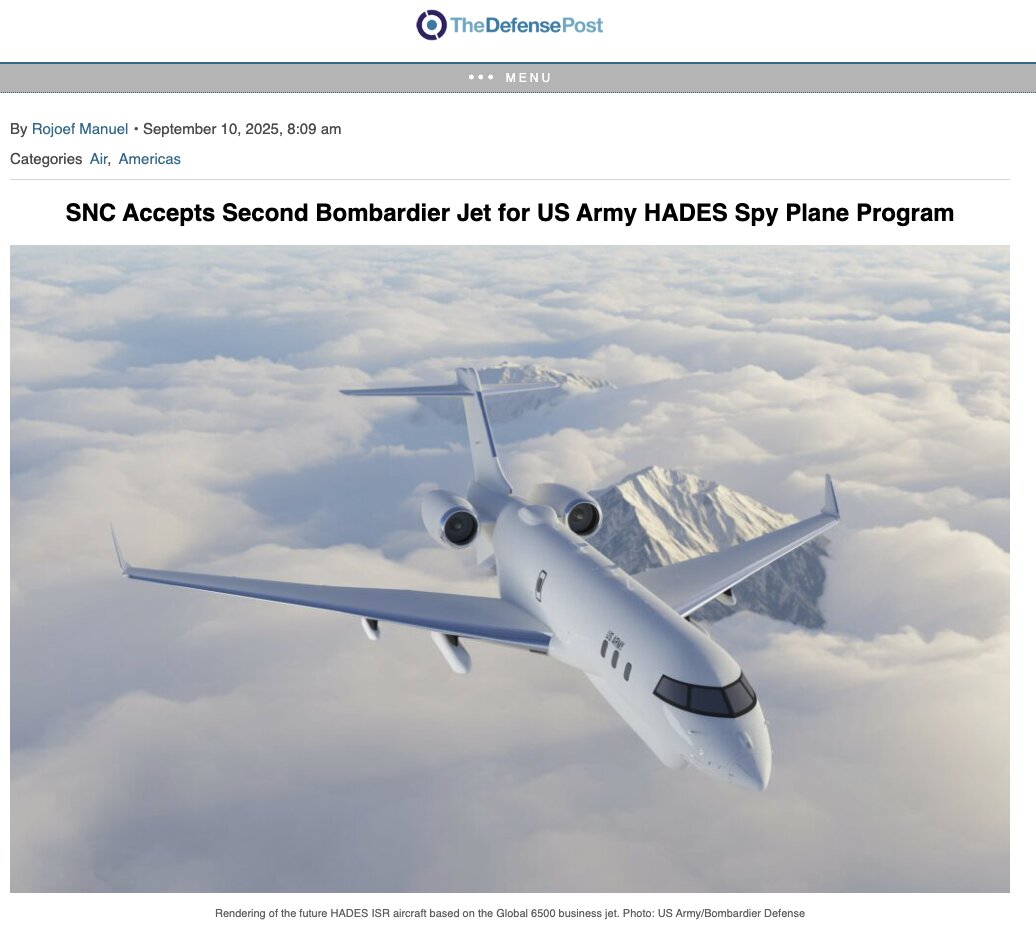
US Army HADES (Drone Launching Planes)
HADES is a real, publicly contracted Army ISR program built on the same Global 6500 airframe as N1098L. Defense-trade reporting separately describes Army interest in launching drones from that airframe.
Read this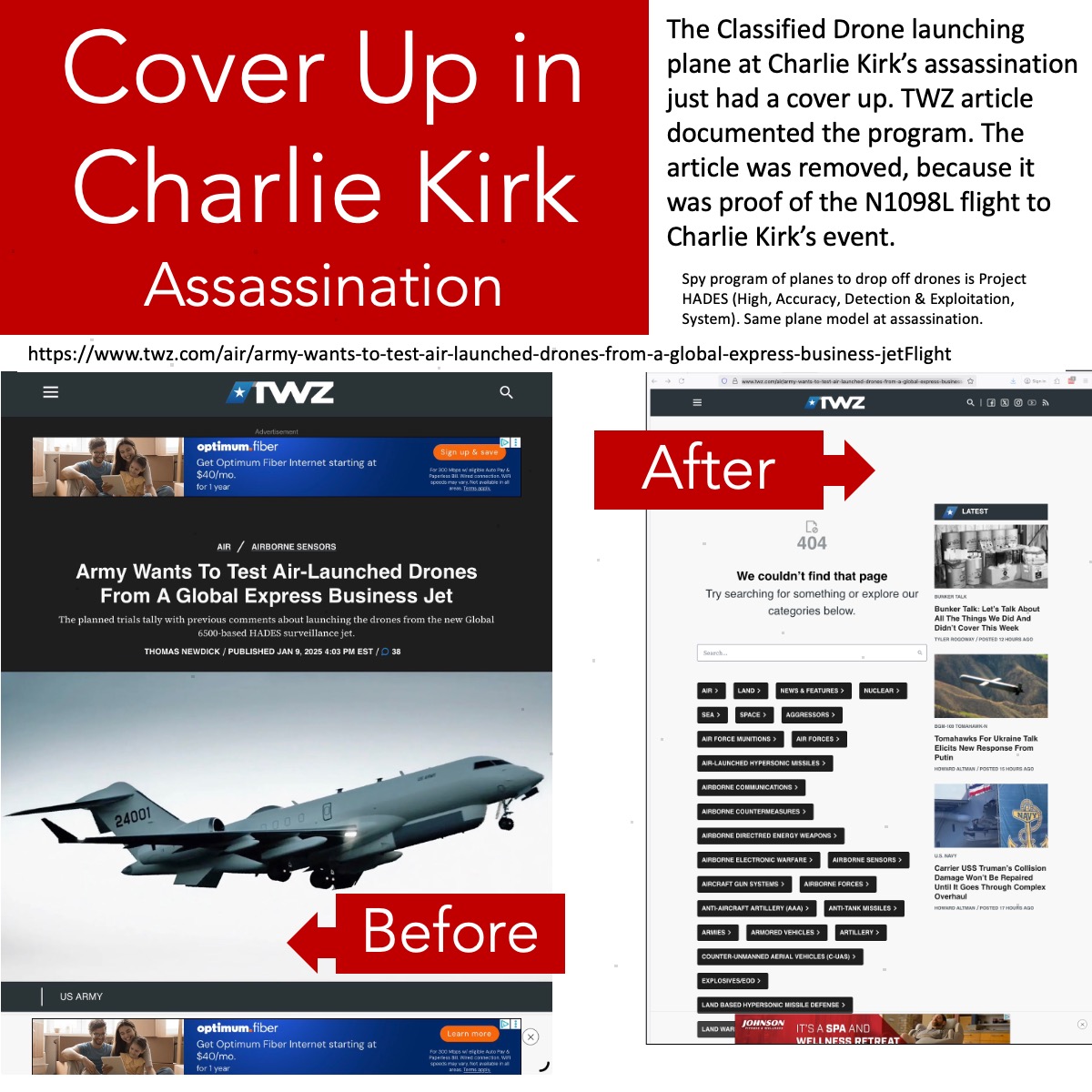
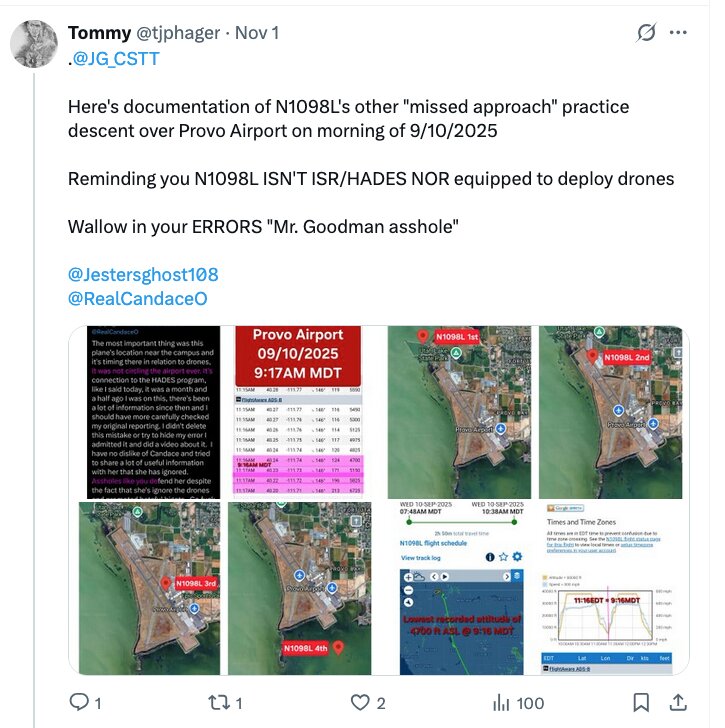
Public ADS-B puts an Army HADES jet in extremely low, slow passes near UVU before and after 12:23 PM. The master file's summary of it runs to four words: it was ours.
Read thisSources
- Master investigation file, sections "N1098L," "HADES," and crew-inquiry notes: Bombardier Global 6500, LASAI Aviation II LLC, ICAO A0299E, callsign AXLE10, Biggs Army Airfield, program lead Bradley Hansell.
- The Defense Post coverage of the U.S. HADES spy plane (September 10, 2025).
- ADS-B Exchange / Flightradar24 track data cited for the September 10 low passes (roughly 203 / 335 / 600 feet AGL).
- NTSB database search for N1098L returning no incidents.
- Associated Press account, cited in the file, of six UVU officers under Chief Jeff Long on perimeter duty who "engaged no drones."
- TPUSA-linked media cease-and-desist reportedly admitting a "media production drone briefly flew for B-roll BEFORE the event," alongside a reportedly denied counter-drone request.
- Citizen FOIA accounts for overflight flight logs and FAA authorizations / TFRs over UVU on September 10 (reported denied or unfulfilled).
- Attributed NCTC-community remarks ("not aware of N1098L's flight path," maneuvers "too damning") — uncorroborated hearsay.
This website's author is @HolonCitizen on X and YouTube/@HolonCitizen. Follow me there.
Interesting
- Foreign leads reportedly died under "blood libel" branding instead of being answered on merit.
- Trends screenshots reportedly show Tyler Robinson searches months early, spiking from Israeli IPs.
- MKUltra and Artichoke are declassified, so "could he have been guided" is not dismissed here.
Related Areas
Images