"Blood Libel" Branding Used to Kill Foreign Leads (Claims)
:::caution Legal Disclaimer Nothing on this page is a claim of fact that any living person or organization knew of, planned, participated in, or covered up any crime, or acted illegally, immorally, or unethically. This page documents questions and allegations raised in public commentary — not findings of fact. All persons and organizations named are presumed innocent; the allegations referenced are unproven and have not been established in any court. Tyler Robinson is charged, not convicted. :::
This page catalogs a reported rhetorical dynamic in the public conversation about the September 10, 2025 killing of Charlie Kirk: the allegation that labeling foreign-nexus questions "antisemitic," "blood libel," or "disinformation" functioned as rhetorical closure — deterring some journalists and officials from demanding records, even where questions were carefully worded. Unlike a platform takedown, this is described as a branding mechanism: not removing content, but attaching a label that makes a line of inquiry feel radioactive. The material below is attributed and presented as a reported interpretation, not as proof, and it cuts both ways.
The claim
Investigators and commentators allege that when people ask about a possible foreign nexus — for example, questions about Israeli-registered phones near the venue, reported donor pressure, or a claimed Turning Point political realignment — the questions are frequently answered not on the merits but with a label: antisemite, blood libel, disinformation. The claim is that this labeling operates as a shortcut that ends the conversation and, over time, deters careful reporters and officials from pressing for primary documents, because the reputational cost of asking is raised regardless of how the question is phrased.
This is a claim about rhetoric and incentives, not a claim that any government agency ordered speech suppressed, and not an endorsement of any ethnic-blame theory. Related record-and-narrative dynamics are cataloged under the Censorship overview.
What the material describes
According to material surfaced on this site and in circulating commentary:
- A described deterrent effect. Site pages note that "foreign theories are labeled antisemitic, 'blood libel,' or disinformation, which can deter journalists and officials from demanding records" — framed as a reported political tactic, not a proven directive.
- Reported reply-and-report waves. Users asking about topics such as Israeli-registered phones, donor pressure, or a claimed TPUSA realignment reportedly say they were "hit with antisemite labels in replies, quote-tweets, and report waves." Some of this is characterized by those users as "tactical...to make motive questions radioactive even when carefully worded." These are reported user experiences, not verified coordination.
- A prominent pushback. At the December 2025 Amfest gathering, commentator Tucker Carlson reportedly argued that criticizing AIPAC should not be labeled antisemitism, and said that Charlie Kirk had been "falsely attacked as antisemitic." This is presented as a reported public statement reflecting Carlson's stated view.
For the underlying subject matter these labels attach to — the foreign-nexus and motive questions themselves — see the Israel connections overview and the Motive analysis overview.
Why it is catalogued here
This page is listed under Cover Up (Possible) because a rhetorical mechanism that reliably deters records requests can have the same practical effect as suppression — fewer people press for the documents that would resolve disputes — even though no one takes anything down and no law is broken. That makes it an open question about the information climate around the case, not a proven act of obstruction.
Why it matters
If carefully worded, good-faith questions are systematically deflected with a stigmatizing label rather than answered with evidence, the public record stays thinner than it otherwise would — fewer FOIA and GRAMA requests, fewer follow-up questions at hearings. Whether that is a deliberate tactic or simply the ordinary friction of a genuinely charged topic is the unresolved question. Nothing here establishes intent, and the label is often legitimately applied. The stakes are concrete: former NCTC director Joe Kent has said on the record that his center's official review of exactly these foreign-nexus leads was ordered to stop before they were exhausted — leaving public questioning as one of the few remaining avenues.
Counterarguments, skepticism, and innocent explanations
This dynamic genuinely cuts both ways, and the counterarguments are strong:
- Genuine antisemitism exists. A real amount of "foreign nexus" content online is openly bigoted or trades in classic antisemitic tropes. When that is the content being labeled, the label is accurate and appropriate, not censorship.
- Calling out bigotry is protected speech. People who apply the label are exercising their own free speech. Objecting to a theory — even loudly, even in "report waves" — is not the same as a state actor suppressing it.
- "Blood libel" has a specific meaning. The term describes a historic, lethal defamation; invoking it can be a sincere warning against reviving that pattern, not a cynical tactic.
- The stigma can be self-inflicted. Where a question is entangled with ethnic-blame framing, the reputational cost may come from the framing itself, not from any coordinated effort to make the question "radioactive."
- Named parties are living and presumed innocent. Organizations and individuals referenced here — including AIPAC and any named commentators — are living public figures and entities, presumed innocent; nothing here asserts that any of them directed a suppression campaign.
This page does not endorse any ethnic-blame theory and does not assert that any foreign government was involved. It documents a reported rhetorical response and the disagreement over what that response means.
Interesting In This Area
- Flight manifests and visas are the records that would end the argument; none are public.
- A FARA filing dated eight days after the killing is the sharpest version of the claim.
- Fort Huachuca manifests and a halted counterterrorism review both stalled on the same question.
- Wikipedia and Google ranking shape which version of the foreign question readers meet.
Interesting In Other Areas
- Sixteen Israeli-registered phones are the specific claim that most often draws the label.
- Israel's foreign leads page collects the same questions with the counterarguments attached.
- Media coverage of Israel criticism tracks how the same framing plays out in print.
- Geopolitical motive theories are exactly the lane critics say the label closes off.
Other Pages In This Section
Fifty days after the killing, the FBI subpoenaed the registrar behind Archive.today — the one archive that is genuinely hard to delete from. The operator answered by publishing the document itself with a single word: "canary."
Read this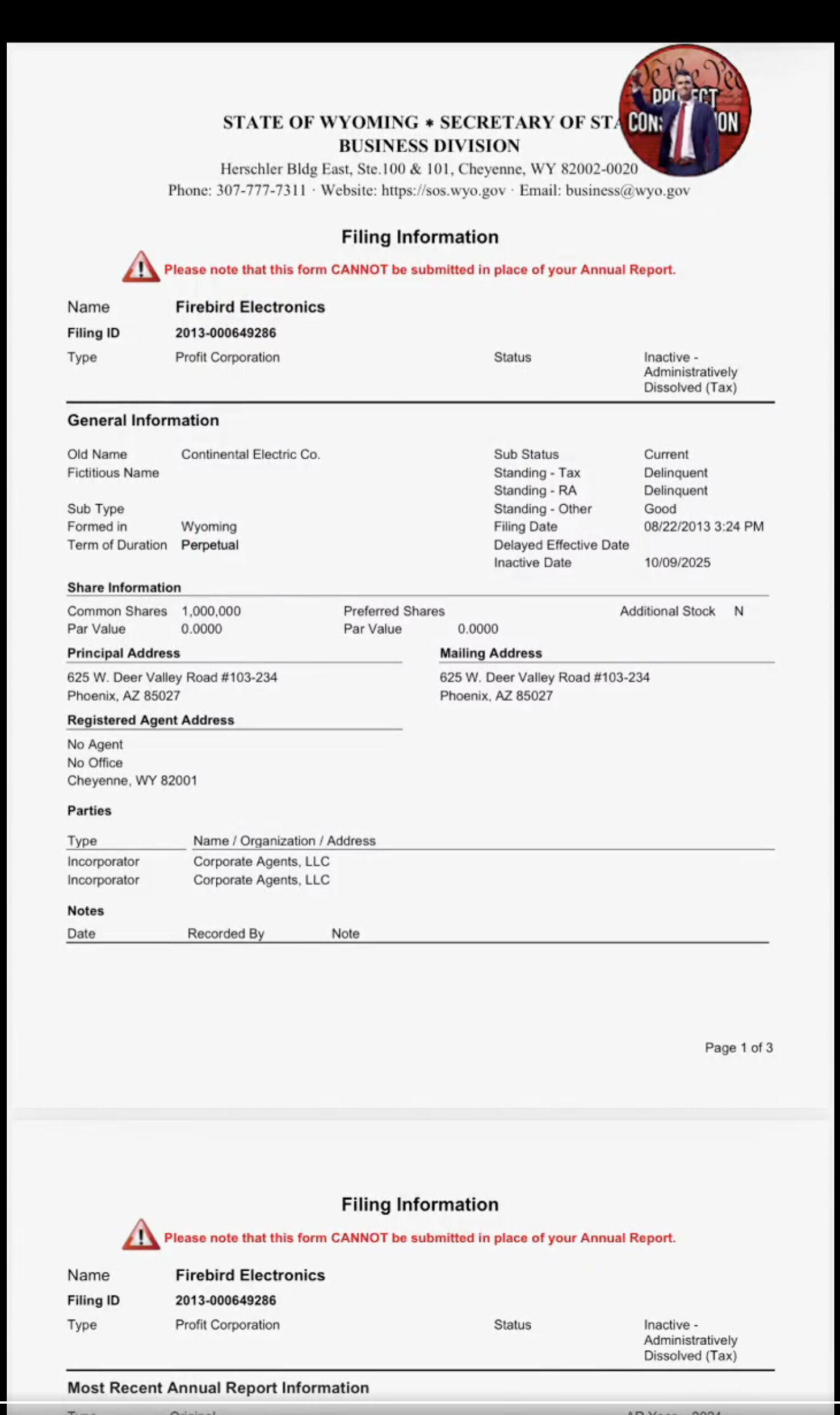
Phone-Extraction Filing Contradicts Courtroom Testimony (Claims)
A prosecution filing reportedly said the state did not intend to offer evidence obtained through forensic extractions of the seized electronics. In the same proceeding an agent testified that a Cellebrite extraction of the roommate's phone was performed, personally reviewed, and used to build the text timeline.
Read this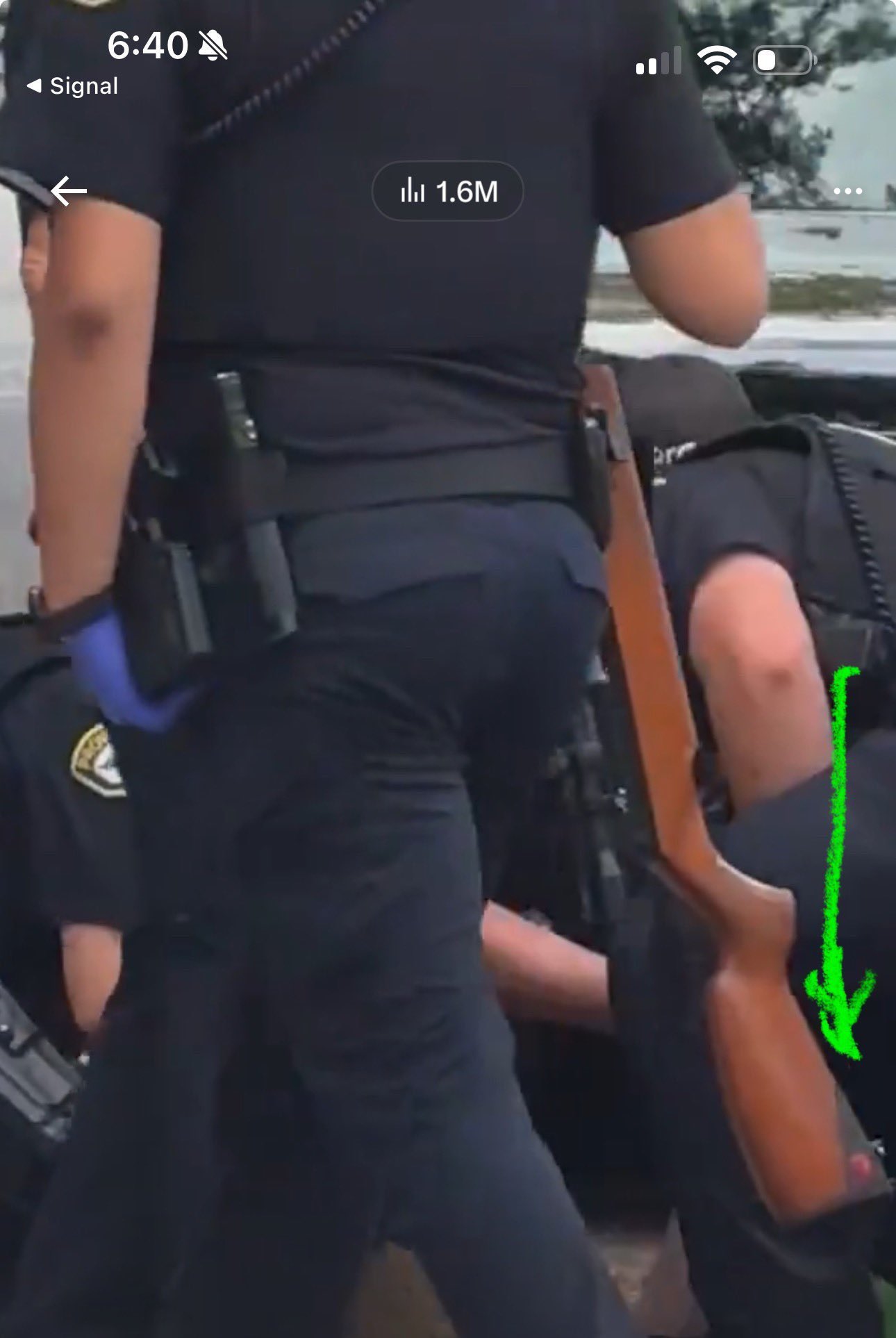
Foreign-Agent Capture of the Kirk Show's Distribution (Claims)
Reported claims tying a FARA filing and control of the Charlie Kirk Show's distribution to a shift in the show's messaging after September 10. Registration law is the whole hinge.
Read thisFort Huachuca Records and JTF Reportedly Silenced (Claims)
Withheld flight manifests, denied FOIA requests, a reassigned joint task force and an unusual recusal. The lead stays unfalsifiable, which is itself the complaint.
Read thisElsewhere In The Investigation
Sixteen Israeli-Registered Phones at UVU (Claims)
An analyst reportedly claims raw GPS data put 44 foreign-registered phones near Charlie Kirk on September 10, sixteen of them Israeli. The dataset has never been published, so nobody outside the claim can test it.
Read this
The leads pointing outside the United States — phones, travel, SIGINT, search patterns — and the prior question of whether the government ran any of them down at all.
Read thisMedia Coverage of Israeli Agenda Criticism
How outlets handled the claim that Charlie was privately breaking from donor pressure on Israel in the days before he died — separating partly confirmed texts from unverified foreign-involvement theory.
Read this
Geopolitical and Intelligence‑Service Motive Theories (Claims)
Motive frameworks arguing the killing required capabilities beyond a lone gunman — foreign-policy stakes, aircraft movements, and a blocked counterterrorism probe. No court has attributed the killing to any intelligence service.
Read thisSources
- Site pages noting that foreign theories are labeled "antisemitic," "blood libel," or "disinformation," which can deter journalists and officials from demanding records (reported political tactic).
- Circulating user accounts describing "antisemite labels in replies, quote-tweets, and report waves," some characterized as tactical efforts to make motive questions "radioactive even when carefully worded."
- Reported remarks by Tucker Carlson at the December 2025 Amfest gathering that criticizing AIPAC should not be labeled antisemitism, and that Charlie Kirk was "falsely attacked as antisemitic."
This website's author is @HolonCitizen on X and YouTube/@HolonCitizen. Follow me there.
Interesting
- The day's first suspect, a man dressed entirely in black, reportedly vanished once federal agents arrived.
- A former NCTC director says the foreign-ties review was ordered stopped once a suspect was in custody.
- Kirk reportedly texted "THEY ARE GOING TO KILL ME" during a September 9 pressure meeting.
Related Areas
Images
Videos
Footage related to this page. Each card opens that clip's own page, with the video, the full write-up, and its source.