Autopsy Sealed and the Performing Examiner Kept Out of View (Claims)
:::caution Legal Disclaimer Nothing on this page is a claim of fact that any living person or organization knew of, planned, participated in, or covered up any crime, or acted illegally, immorally, or unethically. This page documents questions and allegations raised in public commentary — not findings of fact. All persons and organizations named are presumed innocent; the allegations referenced are unproven and have not been established in any court. Tyler Robinson is charged, not convicted. :::
This page catalogues a reported concern about the death of Charlie Kirk: that the Utah autopsy report remains sealed, that the pathologist who performed the hands-on examination has never been publicly named in a released document (though Agent Hull named Dr. Guajardo under oath), and that an outside Texas medical examiner — who did not perform the autopsy — became the public face of the wound explanation. Skeptics argue this arrangement keeps the primary forensic witness out of view. This is presented as an unresolved question about transparency, not a claim that anyone falsified anything. Medical-section companions: Charlie Kirk Autopsy Report, Charlie Kirk Medical Examiner Report, Charlie Kirk Medical Examiner Name, and Autopsy Report Not Public.
The claim
At the preliminary hearing in July 2026, DPS agent David Hull testified that the manner of death was homicide by a gunshot to the neck, and that a bullet fragment was recovered (master file; circulating hearing notes). The defense reportedly objected to the report as hearsay because the person who actually performed the autopsy was not called to testify. Critics say that if the report is trusted enough to charge a capital case, the examiner who wrote it should be nameable and subject to cross-examination.
The named office leadership vs. the hands-on examiner
- Dr. Deirdre Amaro — Utah's Chief Medical Examiner, who reportedly began full-time on July 1, 2025 — is named as office leadership over the case.
- The account @stratagemmer attributes a hands-on pathologist name ("Dr. Guajardo") via Hull's spelling at the hearing — this is unconfirmed in the public court record and is presented only as an attributed claim.
- Because the office head can testify to a colleague's report, skeptics say the actual examiner's identity has stayed effectively hidden from the public.
The outside expert as public face
Dr. Kendall Crowns, the medical examiner for Tarrant County, Texas, reportedly became the media face of the wound explanation despite not having performed the autopsy (attributed to @fratercrc). Critics view using an out-of-state expert to explain the wounds — rather than the person who did the work — as a way to control the public narrative while the primary witness stays offstage.
The "signed off before finished" allegation
Account @lindseey_loo (July 3–4, 2026) relayed a secondhand allegation, described as a personal DM from a longtime acquaintance, that a "new, young, blonde" woman "signed off" on the report before the examiner finished — with the reasoning that "a report is a draft until it is signed," so changes could be made in that window. This is uncorroborated hearsay, names no one, and is presented strictly as a reported allegation, not as evidence of alteration.
Fringe claims to treat skeptically
Some more extreme claims also circulate — that there was "no autopsy," that the body was "flown out," or that there is "no grave." These should be read with heavy skepticism: they conflict with the sealed-report testimony that a homicide finding and a recovered bullet fragment exist, and they are internally contradictory. They are noted here only for completeness. The full report — wound trajectory, toxicology, and any explosive-residue testing — is not public.
Why it matters
In a capital case, the identity and testimony of the person who performed the autopsy is a core transparency question. If the performing examiner cannot be named or cross-examined, the defense's hearsay objection points to a real gap. This is catalogued under Cover Up (Possible) as an open question about who did the examination and why the report is sealed — not as proof that the findings are false.
Counterarguments, skepticism, and innocent explanations
- Sealing is routine. Autopsy reports are commonly withheld during an active homicide prosecution; Utah's own records law restricts them.
- Office ME testimony is normal. A medical examiner's office regularly has one qualified examiner speak to a colleague's report; the performing pathologist can still be called at trial.
- Outside experts are routine. Media outlets frequently use an unaffiliated expert to explain wound mechanics for the public; that does not mean the actual autopsy was outsourced.
- The hearsay objection is procedural. A defense hearsay objection at a preliminary hearing is standard advocacy, not proof of misconduct.
- The extreme claims undercut each other. "Signed by a stranger," "no autopsy," and "body flown out" are uncorroborated and partly contradictory; the sealed-report testimony describes a documented homicide finding. Dr. Amaro, Dr. Crowns, and any named examiner are living professionals presumed innocent.
Interesting In This Area
- Utah S.B. 82 took effect May 7, 2025, four months before September 10.
- The ATF could neither match nor exclude the fragment recovered during that same examination.
- The transport SUV was reportedly scrapped before any independent forensic examination of its interior.
- A new hospital chief executive started weeks earlier and reportedly joined the surgical team.
Interesting In Other Areas
- Doctors reportedly dispute the examiner's trajectory, calling an upward path from the roof impossible.
- The state's brief describes a downward path against C2 to C7 damage.
- Gag orders and sealing explain how much of this record stays off the docket.
- Closed hearings and unreleased transcripts keep the same record out of public view.
Other Pages In This Section
Officer's Body Camera Died on the Roof (Claims)
The first officer up to the Losee Center roof had a body camera that ran 27 minutes and 35 seconds and stopped as he arrived. Batteries do die; this one reportedly died before the gravel, the screwdriver and the alleged perch were ever filmed.
Read this
Questions About How the Discord Confession Was Produced (Claims)
The confession reached the public as photographs of a roommate's screen rather than a platform export. Reported questions about its form and authorship follow from that, and remain unresolved.
Read thisForeign-Nexus Flight Records Withheld (Claims)
Tail numbers, routes and times are all citizen trackers can see; manifests, cargo logs, visas and security waivers are where the foreign-nexus leads stop. A lead testable only with records nobody will release stays permanently open — which is itself the complaint.
Read this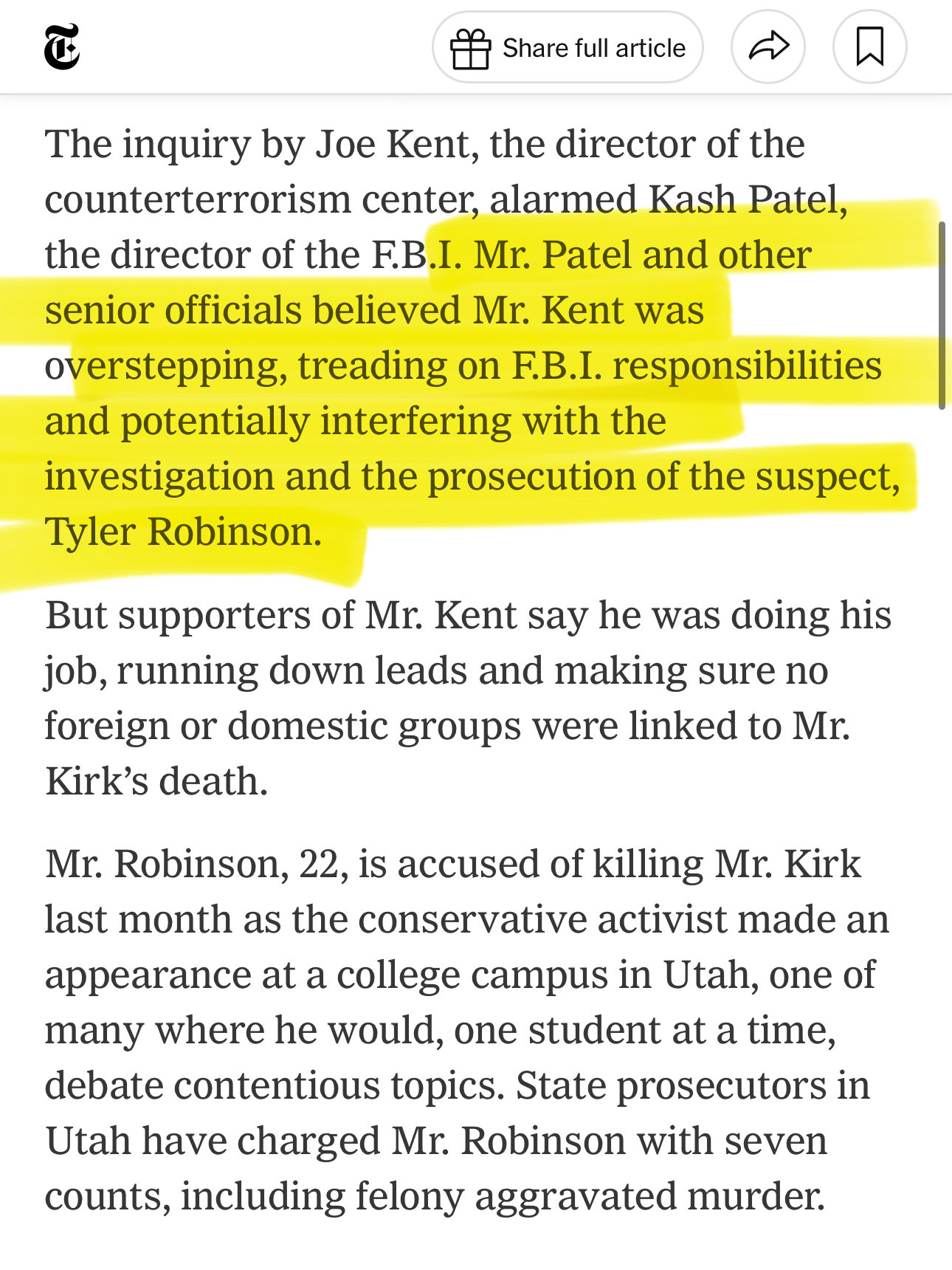
FBI Halt of Joe Kent's Counterterrorism Leads (Claims)
Reported allegations that a counterterrorism review into a possible foreign role was stopped before its leads were run down. Every person named is a living public figure who denies or has not commented, and nothing here is a finding of fact.
Read thisElsewhere In The Investigation
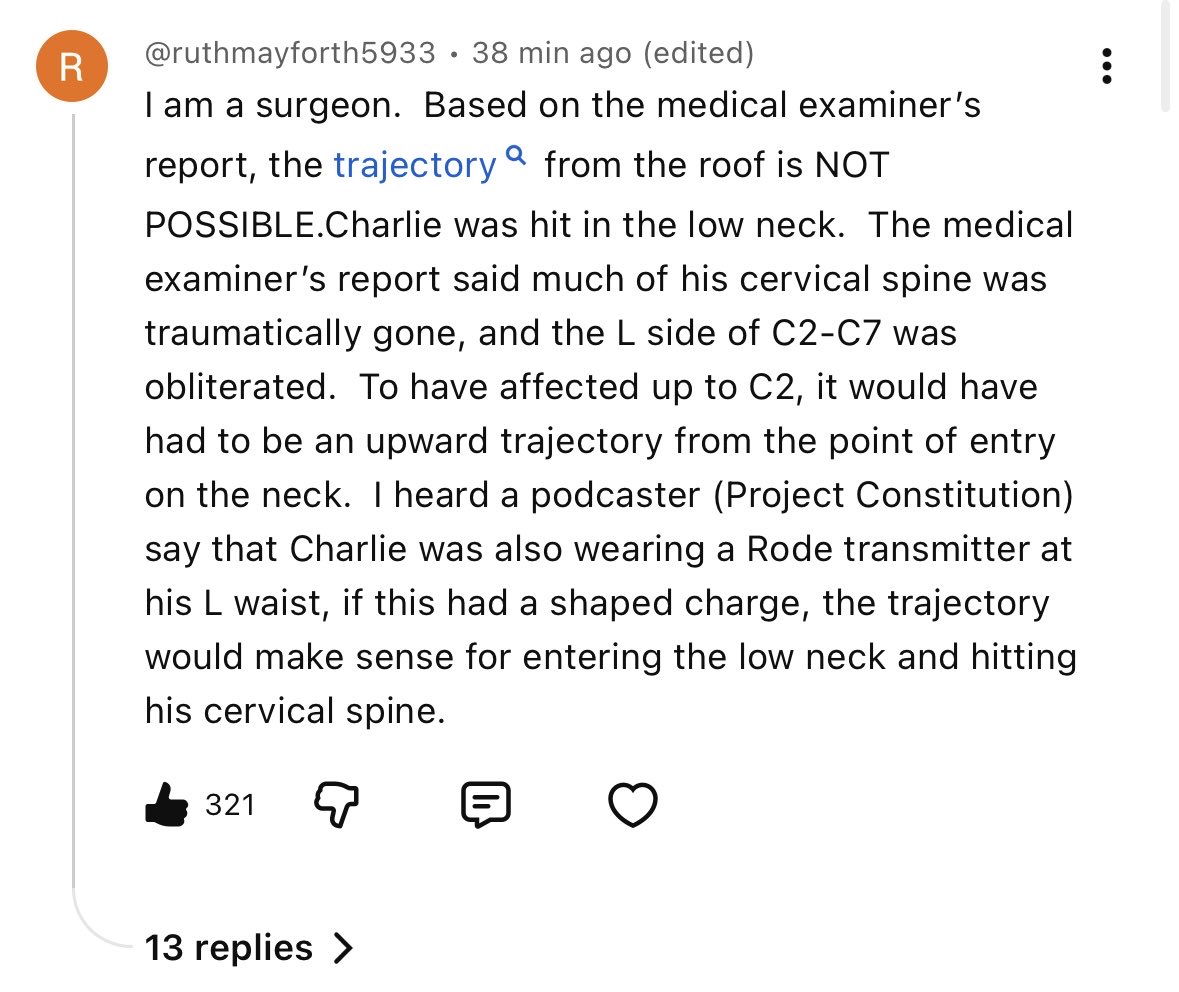
Doctors Question the Medical Examiner's Report
Two commenters identifying themselves as a surgeon and a retired cardiologist read the Medical Examiner findings and said the same thing from different specialties — the injury list does not fit one downward rifle round. Their credentials are unverified.
Read this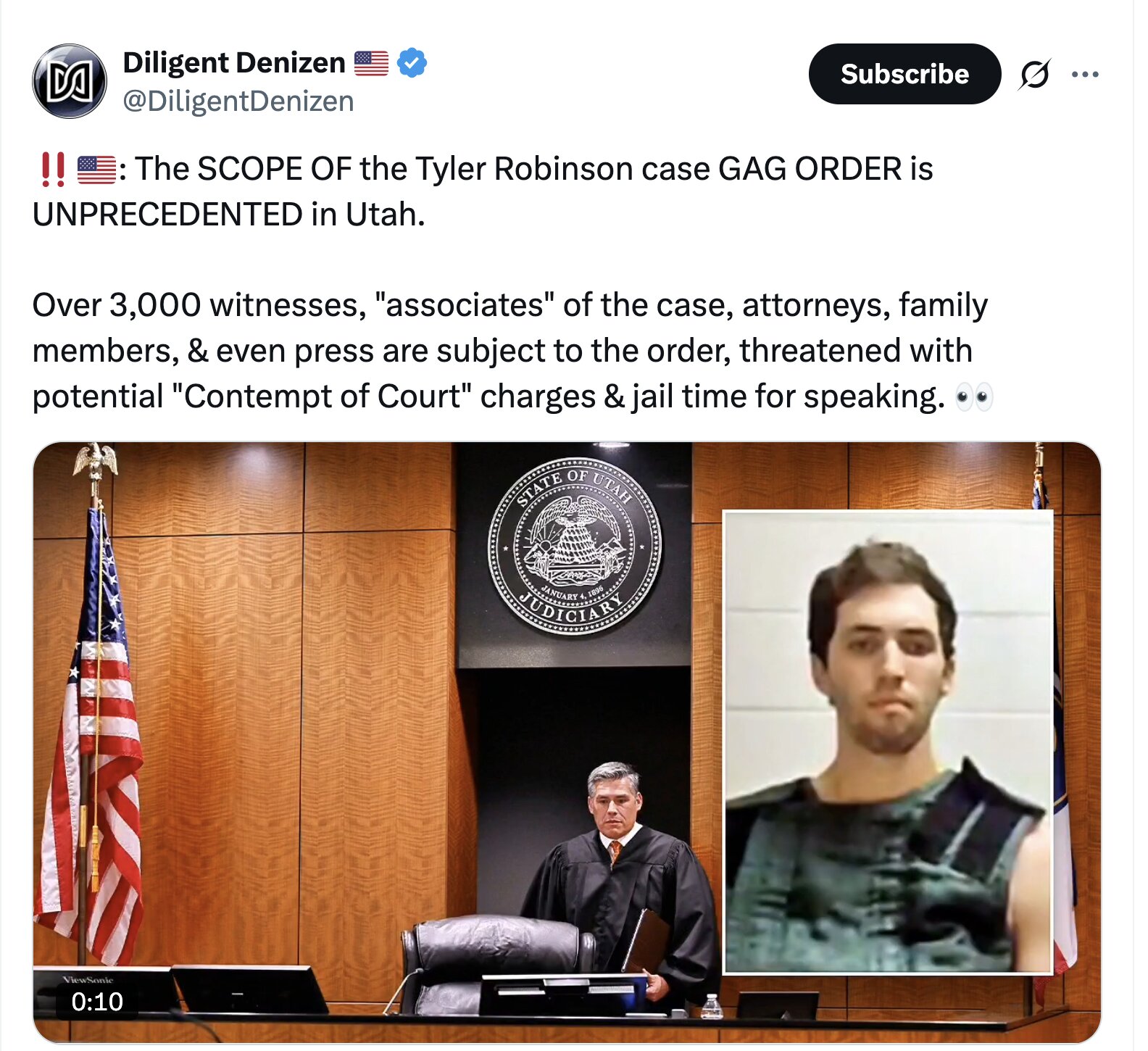
A December 2025 gag order, closed hearings, and a March 2026 motion to seal the inconclusive ATF report — opposed by a media coalition. The public record narrows in stages.
Read this
Hearings Closed, No Transcripts Released (Claims)
Media barred, no transcripts issued, later sessions ordered closed as well. The page rates the claim EMERGING and says outright that closing a session is lawful and is not sealing a record forever.
Read thisDOJ Prosecution and Evidence Secrecy
The public record on the charges and evidence handling, plus the sealing questions commentators raise. Digital-forensics warrants were reportedly sealed well into 2026, limiting outside review.
Read thisSources
- Master investigation file: "Mystery woman signed off on medical examiner report" section and Utah Medical Examiner (Deirdre Amaro) notes.
- Circulating July 2026 preliminary-hearing notes attributing homicide-by-gunshot and bullet-fragment testimony to DPS agent David Hull.
- @stratagemmer (attribution of a hands-on pathologist name via Hull's spelling — unconfirmed).
- @fratercrc (attribution that Tarrant County, TX ME Dr. Kendall Crowns became the public face of the wound explanation).
- @lindseey_loo (July 3–4, 2026 secondhand "signed off before finished" allegation — uncorroborated).
This website's author is @HolonCitizen on X and YouTube/@HolonCitizen. Follow me there.
Interesting
- Volunteer attorneys were reportedly turned away from the defense as an unconnected inmate was moved into position.
- Every Middle Tennessee judge reportedly recused from Harpole v. Owens, forcing an outside judge in.
- A private defamation suit can reach subpoenas faster than any federal disclosure law.
Related Areas
Images
Videos
Footage related to this page. Each card opens that clip's own page, with the video, the full write-up, and its source.