Questions About How the Discord Confession Was Produced (Claims)
:::caution Legal Disclaimer Nothing on this page is a claim of fact that any living person or organization knew of, planned, participated in, or covered up any crime, or acted illegally, immorally, or unethically. This page documents questions and allegations raised in public commentary — not findings of fact. All persons and organizations named are presumed innocent; the allegations referenced are unproven and have not been established in any court. Tyler Robinson is charged, not convicted. :::
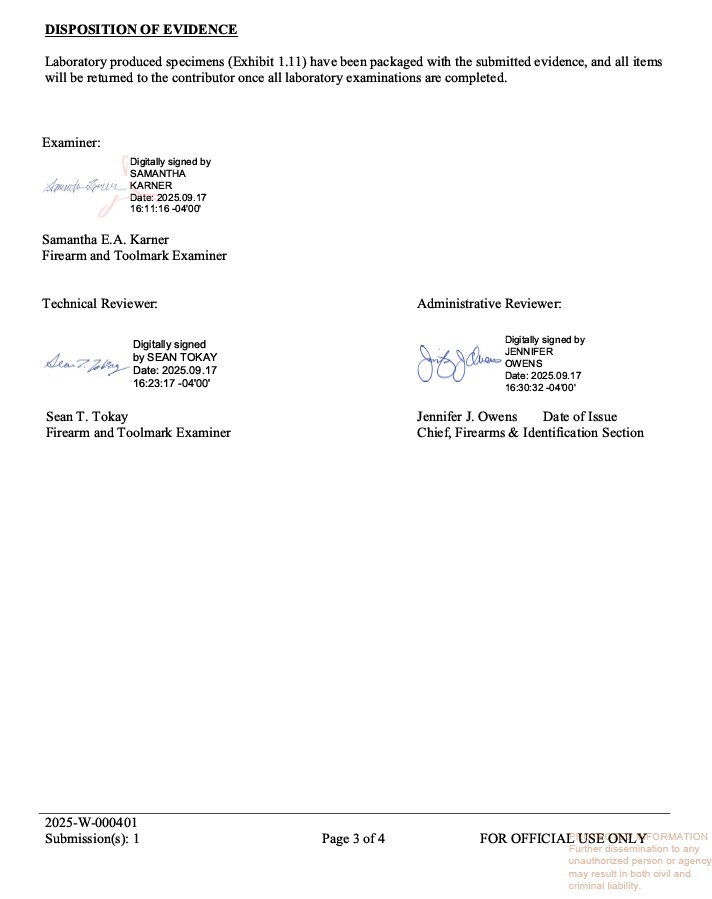
Distinct from the dispute over the custody clock, this page examines the confession artifact itself — the form in which the alleged Discord "confession" attributed to Tyler Robinson in the September 10, 2025 killing of Charlie Kirk entered the public record. Commentators note that the earliest public form is photographs of a roommate's screen, that the material was released in stages months apart, that there is no signed sworn confession, and that the underlying Discord account data was still being subpoenaed while the lone-actor narrative had already hardened. The claims below are attributed and unproven; the "joke" and screenshot framings are disputed.
The claim
The core question raised in commentary is one of authorship and provenance: rather than an original, exportable log tied to a seized device, the public "confession" first surfaced as still images of someone else's phone screen, was drip-released over months, and was never reduced to a sworn statement — leaving open, critics say, whether the artifact can be reliably attributed and dated.
Photographs of a screen, not original logs
Per a government document summarized in the master investigation file, investigators interviewed Robinson's roommate, who said Robinson "made a joke on discord." Investigators then "asked if he would show them the messages," and the roommate "opened it and showed several messages to investigators and allowed investigators to take photos of the screen as each message was shown." Skeptics stress that this means the earliest evidentiary form is photographs of messages on the roommate's device — not original logs, a device seizure, or a platform export.
Released to the public in stages
Commentators note the confession material was released to the public in stages, months apart, rather than as a single authenticated package. That staggered rollout, they argue, makes it harder to fix what existed when, and easier for later-surfacing text to blend with earlier fragments. This is a characterization of the release pattern, not a proven claim of manipulation.
No signed sworn statement
According to statements attributed to Candace Owens, no signed, sworn confession exists — the "confession" lives as chat content rather than as a formal, witnessed document. Robinson pleaded not guilty. Supporters of the charging narrative counter that Discord messages plus corroborating evidence can be probative without a signed statement.
Platform data still being subpoenaed
Per the master file and reporting cited there, the Utah State Bureau of Investigation later sought records from Discord tied to Craftopia, Gamin, and The Corruption (Discord warrant, referenced by The Post Millennial). Those three are servers, not usernames — the account attributed to Robinson himself is zealous_monkey_55095, the name carried on the confession screenshot and, per Discord's own September 13 statement, the account it identified before reporting it found no evidence of planning. Critics highlight the sequencing: the lone-actor account was widely locked in before the platform-side data was verified, which they say inverts the normal order of authenticate-then-conclude.
The authorship-timing gap
A separate strand attacks authorship on timing. Defense-filed material and a Washington County Sheriff's Office video exhibit (Bates 3996-R1/R2) are described as showing Robinson read his Miranda rights at about 6:25 PM with family present, after which he declined to answer questions and asked for a lawyer. Commentators ask how messages timestamped after that point, and after his phone was reportedly seized, square with an account that has him volunteering a full confession on Discord. See the detailed Discord custody timeline and the phone-extraction disputes for the underlying records.
Why it matters
A self-contained "it was me, alone, no overseas allies, no military involvement" message conveniently forecloses foreign-actor and accomplice lanes at the same moment it establishes guilt — the same lanes former NCTC director Joe Kent says his center was ordered to stop examining once a suspect was in custody. Because the artifact drives the lone-actor charging narrative yet reached the public as staged photographs of a third party's screen rather than an authenticated export or sworn statement, its provenance is a fair public-interest question. That is why it is catalogued here under Cover Up (Possible) — as an unresolved question about how the confession was produced, not a finding that it was fabricated.
Counterarguments, skepticism, and innocent explanations
- Screenshots are normal early evidence. Photographing a cooperating witness's screen at the scene, then subpoenaing the platform for authenticated records, is an ordinary sequence — not proof of tampering.
- Staged release is routine. Evidence in an active capital case is commonly released in phases as it is processed, unsealed, or introduced; "months apart" can reflect procedure, not manipulation.
- "Joke" framing is disputed. The roommate's reported "joke on Discord" characterization is contested; prosecutors treat the messages as substantive.
- A prelim is not a trial. The state indicating it may not offer forensic extractions at the preliminary hearing does not mean it will not authenticate and offer the underlying data at trial.
- Presumed innocent. Candace Owens, the named roommate, and all officials are living persons; nothing here establishes wrongdoing by any of them. Tyler Robinson is charged, not convicted.
Interesting In This Area
- A written filing reportedly disclaimed the extraction evidence an agent then described in court.
- A sealed autopsy and an unmatched fragment leave the physical case resting on text.
- Volunteer defence lawyers were reportedly turned away while an unrelated inmate was moved nearby.
- Joe Kent says foreign leads were closed at the same moment guilt was fixed.
Interesting In Other Areas
- Discord says the planning messages were not Discord messages at all.
- The account that posted it was removed before independent researchers could examine it.
- A 6:25 PM Miranda time sits against the confession clock in defence filings.
- Not-guilty plea versus confession narrative is the courtroom version of this dispute.
Other Pages In This Section
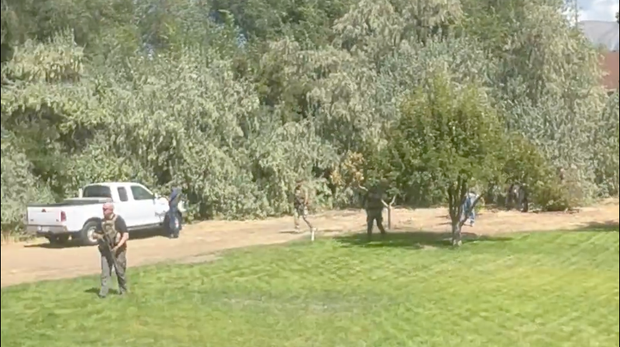
Ten inches of dirt reportedly taken out of the courtyard, and pavers laid over the ground where he fell. Whatever residue that soil held is gone.
Read this
Standard Forensic Tests Reportedly Skipped (Claims)
Standard forensic tests that were reportedly never run. In a case where residue and trace evidence would decide the argument, what was skipped shapes the record as much as what was found.
Read this
The Exploding Microphone Theory (Claims)
The exploding-microphone theory as a cover-up item: what is alleged, who alleges it, and what would have to be suppressed for it to be true. The majority citizen reading of the case runs through this page.
Read this
Rifle Found Only After a Federal Redirect (Claims)
An arm-to-arm search found nothing. A K-9 pass found nothing. Then federal agents arrived, sent local officers back over the same ground, and a towel-wrapped rifle appeared — the reported sequence skeptics keep returning to.
Read thisElsewhere In The Investigation
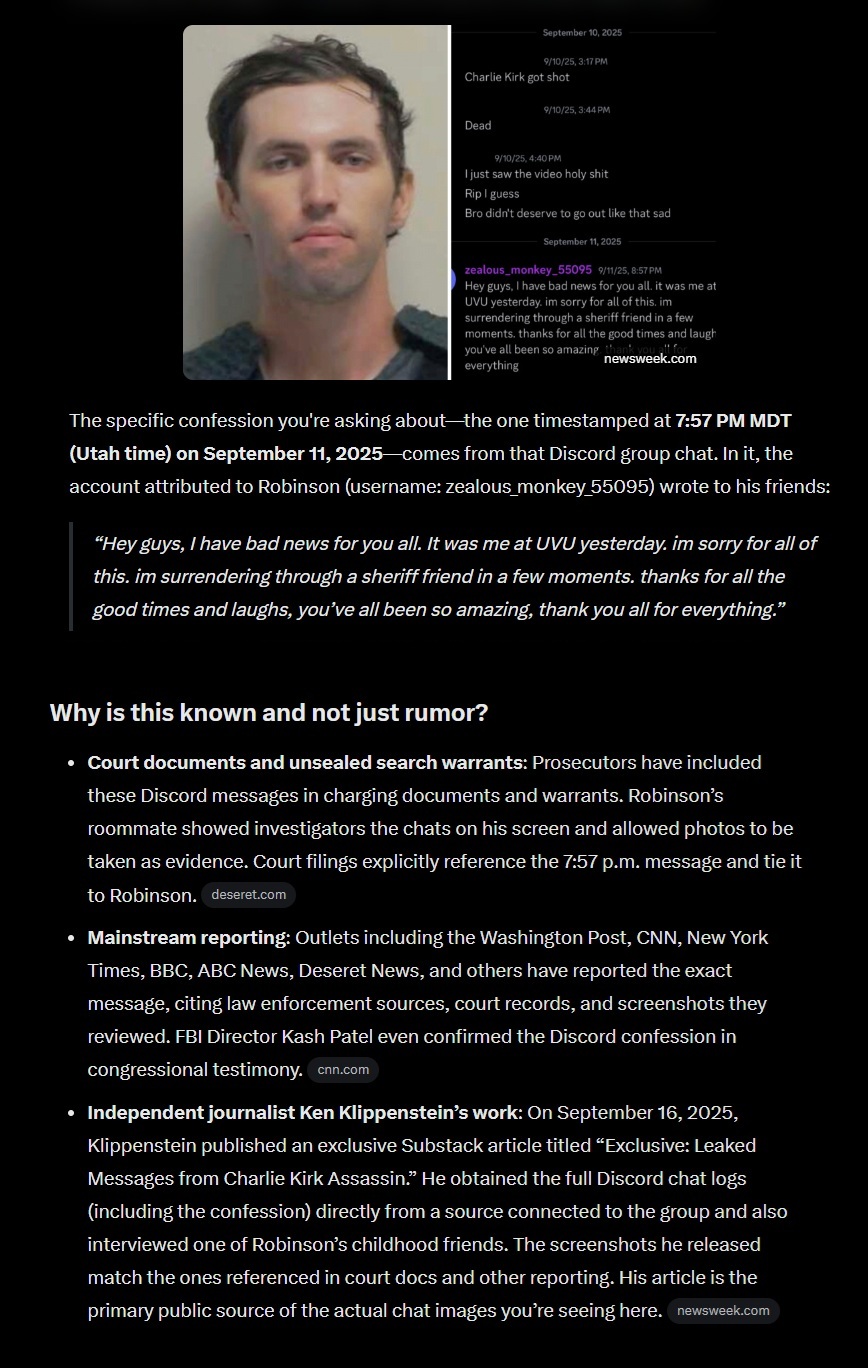
How the Confession Screenshot Reached the Public
The image travelled from a roommate's phone to a Substack post to a congressional hearing. Every hop was a place the original could have been checked, and was not.
Read this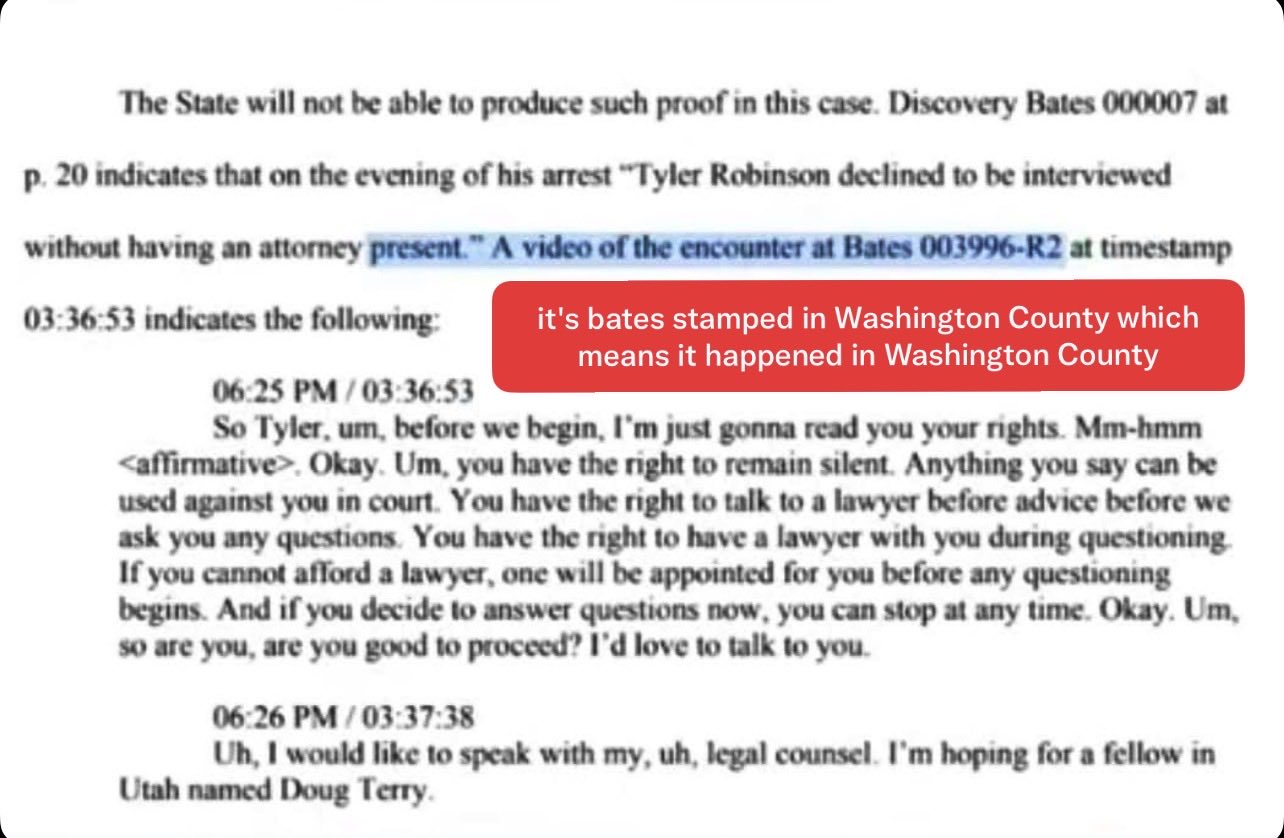
6:25 PM Custody & the Discord Confession
If the rights warning came at 6:25 PM and the phone went into evidence, who typed the Discord messages at 7:57? A single login-IP record that nobody has published would settle it.
Read thisWashington County protocol reportedly seizes a phone at Miranda. Miranda is placed near 6:25 PM; the Discord traffic is stamped 7:57 PM, 260 miles from campus. The page documents the timing conflict without asserting forgery.
Read thisNot-Guilty Plea Versus the Confession Narrative (Claims)
Candace Owens argues no sworn written confession exists and points to the not-guilty plea. Critics ask why the defense has not publicly rebutted the confession narrative — though a plea is itself the formal denial.
Read thisSources
- Government document summarized in the master investigation file: investigators "allowed to take photos of the screen" of the roommate's Discord messages; roommate described it as "a joke on discord."
- Statements attributed to Candace Owens that no signed sworn confession exists — https://x.com/RealCandaceO
- Utah State Bureau of Investigation Discord warrant seeking records for usernames Craftopia, Gamin, and The Corruption — https://www.scribd.com/document/1024574137/Discord-Warrant ; https://thepostmillennial.com/revealed-utah-officers-demanded-discord-turn-over-server-records-containing-tyler-robinsons-communication-affidavit
- Defense filings and Washington County Sheriff's Office video exhibit (Bates 3996-R1/R2) documenting the ~6:25 PM Miranda timestamp (master investigation file).
- Prosecution filing indicating the state does not intend to offer forensic extractions from the seized electronics at the preliminary hearing (master investigation file).
This website's author is @HolonCitizen on X and YouTube/@HolonCitizen. Follow me there.
Interesting
- An unidentified team reportedly stripped inches of soil before pavers went down on a "by Monday" deadline.
- Russell Brand cites sources describing orders not to pursue foreign involvement six days after the killing.
- A sitting intelligence director says the FBI halted his foreign-nexus inquiry.
Related Areas
Images