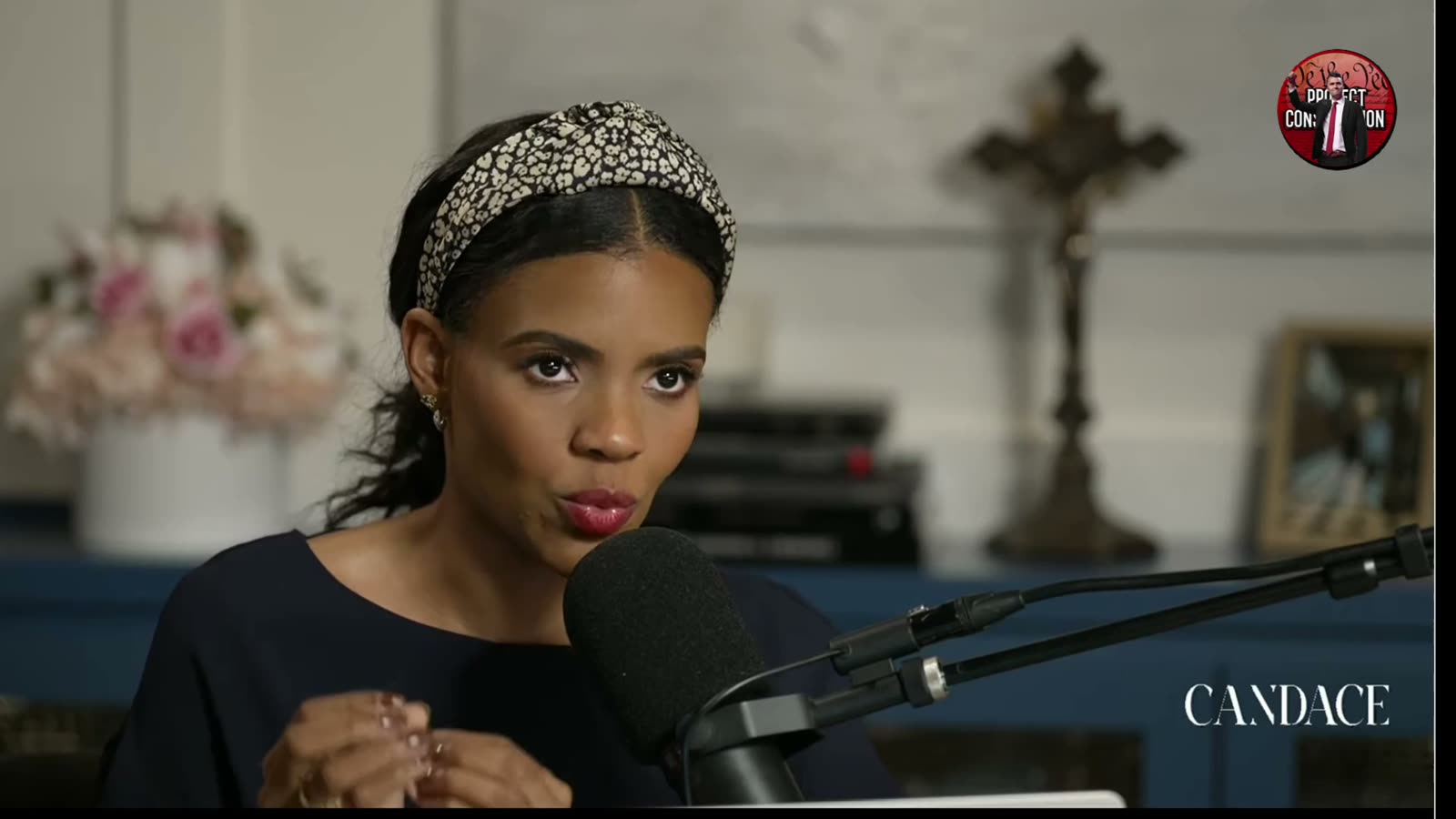
10 in. of dirt removed
:::caution Legal Disclaimer Nothing on this page is a claim of fact that any living person or organization knew of, planned, participated in, or covered up any crime, or acted illegally, immorally, or unethically. We make no claim that anyone named here knew anything beforehand or did anything wrong. This page documents questions and allegations raised in public commentary — not findings of fact. All persons and organizations named are presumed innocent; the allegations referenced are unproven and have not been established in any court. :::
The claim
A recurring allegation circulating on X/Twitter holds that several inches of dirt and soil — figures cited range from roughly six to ten inches — were stripped from the area around the spot where Charlie Kirk was shot at Utah Valley University on September 10, 2025. According to these accounts, an unidentified team removed the topsoil and grass within about a day, hauled it away, and power-washed the area, before the paving contractor who later installed pavers arrived on site.
This page treats that claim as an unverified allegation, not an established fact. What has been documented through a contractor's own on-camera statements is the unusually rapid paving-over of the courtyard and his first-hand description of arriving to find the ground already excavated. The "six inches of dirt" framing and the identity and authority of the team that did the initial digging remain unconfirmed by any official source. Readers should keep the documented paving and the unverified soil-removal details separate.
The contractor's account: Dan Merrell
The most detailed first-hand source is Utah contractor Dan (Daniel) Merrell, owner of Hardscape Utah, whose interview on the Jimmy Rex Show was widely clipped and shared starting around May 2026 and amplified by accounts including @JodyChaseTN, @ZachCostello_, @ReturnOfKappy, Alex Jones–affiliated accounts, and Candace Owens segments.
According to his account, Merrell received an unexpected "paver emergency" call on Sunday, September 14, 2025 — four days after the Wednesday shooting. As relayed in the circulated clips:
- The caller described the job as weird and urgent and noted they had "never done pavers before."
- Higher-ups — tied in the posts to the Governor of Utah and the FBI — wanted the work "done by Monday." Merrell quotes the on-site coordinator: "This is above our pay grade. The governor and the FBI said they want this done by Monday."
- He was told, in effect, "we're not talking to the media" and not to ask questions because it was "above our pay grade."
Merrell says he agreed to help — "I'm going to go help these guys" — assembled a "rag-tag team" of his crew within roughly 90 minutes, and arrived that Sunday. He describes two men "in charge": one said to manage a state-owned facility in American Fork, the other described as a maintenance/groundskeeper at a facility in Provo. "These are the two guys I'm corresponding with," he says.
He arrived to an already-excavated scene
The pivotal point Merrell repeats is that he did not perform the initial excavation — it was already complete when he arrived. In his own words from the interview:
"Everything's dug up… They had taken out about 10 inches of the dirt around the whole place."
"When I showed up I took pictures of what it looked like, they had taken out about ten [inches] of it. It didn't cross my mind."
He explained the ordinary paving method to frame why over-excavation is normal: "To do pavers correctly you over-excavate, you get rid of the top, so you do 100% — you want to get a good base." But he is explicit that, in the clip amplified by @ProjectConstitu, he was the second team on the ground: "before he had even arrived on that Sunday … they had sent another government team to the soil." His role was paver installation on the pre-prepared ground only.
The "unidentified team" that dug first
In the same account, the initial removal is attributed to a UVU grounds crew / groundskeeper plus what is described as a biohazard or state-affiliated maintenance team. Per Merrell's retelling, that crew "tore everything out, including the blood and the nastiness," and reportedly power-washed the area using a fire truck. He recounts the groundskeeper sounding bitter about the operation:
"I don't know why the hell they're bringing you guys in here or why they're bringing the state in here… they made us tear everything out — the blood and the nastiness… I don't know why they're bringing other state guys… to finish out this crime scene."
Merrell says the scene felt "heavy" because "somebody had been killed there," and that he was not viewing it through a conspiracy lens at the time — he simply wanted to be useful and get the job done right. In other clips he is quoted describing the job as being asked "to replace — to beautify — an area where a brother had been gunned down," and noting "It was Sunday. I usually don't work on Sunday… It was heavy, but we did it" (per investigation working notes compiling the circulated interview).
A second, competing contractor name: "Hardscape Specialties LLC"
Separate from Merrell's "Hardscape Utah," some circulating social-media research attributes the courtyard paving to a differently named entity, "Hardscape Specialties LLC." This attribution is unverified, conflicts with Merrell's own first-person account, and should be treated as an open claim, not a finding. It is included here only because it bears directly on the central question of who altered the ground and under what authority.
According to those compiled notes (sourced to X/Twitter discussion, not to any court record or official filing), the following details are alleged about that entity (the following are unverified claims from public commentary, not findings of fact):
- The LLC had reportedly been dormant for roughly 20 years and was revived in February 2025, months before the shooting.
- Its listed owner is named in the compiled research as Michael Powell, described as a Utah Attorney General special agent, and a co-owner as Burton Romrell, described as a former UVU operations staff member. Both are living persons named here only in connection with an unverified business-registration claim; no wrongdoing is alleged against either, they are presumed innocent, and nothing here states or implies they knew of or participated in any crime.
- A work order was reportedly issued two days after the shooting, with no public bidding process mentioned, a crew said to have worked overnight on rushed materials, and a directive to finish by Monday afternoon — the same "by Monday" deadline that appears in Merrell's account. UVU reportedly said the work was prescheduled, a characterization the circulating notes dispute.
These business-registration claims have not been confirmed here against the Utah Division of Corporations or any official record, and no court or agency has established that any named individual did anything improper. The two named individuals are treated as living persons under this site's defamation rules: nothing on this page states or implies they committed a crime. The relevance is narrow — if accurate, it would mean a company tied to a state law-enforcement agent, rather than an ordinary independent landscaper, controlled the physical restoration of the scene on an unusually fast, no-bid, weekend timeline. Whether "Hardscape Specialties LLC" and Merrell's "Hardscape Utah" describe the same job, two phases of one job, or a confusion of names in the online discussion remains unresolved.
Reconciling "six inches" vs "ten inches"
The circulating posts actually describe two layered removals, which reconciles the differing depth figures:
- Biohazard cleanup layer (~4–6 inches). One detailed explanatory post states that "4–6 inches of grass and soil needs to be removed for the biohazard cleanup," because blood-soaked porous sod is treated as biohazard material requiring proper disposal. This layer is the likely origin of the "six inches of dirt" framing.
- Paver-prep over-excavation (to ~10 inches total). Additional digging to build a stable paver base brings the total to roughly ten inches — matching Merrell's repeated "about ten inches" observation.
So the "six inches" and "ten inches" numbers are not necessarily contradictory: one describes the biohazard layer, the other the deeper total once paver prep is included. What remains unconfirmed is who ordered the dig, under what authority, and where the hauled-away soil went.
Reconstructed timeline (from the discussions)
- Sept 10 (Wed): Charlie Kirk is shot at UVU.
- Following days: Scene reportedly under roughly 24-hour guard and processed by investigators (FBI/local) for several days, then released back to UVU.
- Before Sunday: A grounds/biohazard team tears out and hauls away the blood-soaked sod and dirt and power-washes the area.
- Sun, Sept 14: Merrell receives the emergency paving call; arrives to find the area already excavated (~10 inches).
- Sun–Mon: Paver installation runs from Sunday into Monday to meet the reported "by Monday" deadline.
Why it matters
In serious criminal investigations, the physical condition of a crime scene is itself evidence. If ground material from a shooting scene were removed and disposed of rapidly, it could — in principle — eliminate trace evidence such as fragments, residue, fibers, or blood patterns. Critics frame the rapid paving as destroying potential trace evidence and ask, in the words of circulating posts, "Where did the soil/dirt go? Who took control of that?" and "Never in history has a crime scene been 'legally' covered up before any investigation was conducted."
The soil angle is also tied — by some commentators, notably in segments attributed to Candace Owens and posted by @ProjectConstitu — to the contested "exploding microphone" theory, on the premise that explosive residue such as PETN is highly soil-absorbed and would have to be dug out. That theory is unproven and is covered on its own page; it is noted here only because it is the most common reason commentators give for why soil would be removed. Skeptics also point to the Sunday work in heavily LDS Utah County (where Sabbath-day work is unusual), the "by Monday" deadline, and the lack of a named authorizing official in early local reporting as the elements they find most suspicious.
The core open question is simple: was anything removed beyond what a normal paving job requires, and if so, by whom and under what authority? That question remains unanswered in the public record.
The "next day" framing and the chain of custody
Beyond the depth dispute, several investigation notes emphasize the speed itself as the core anomaly. One widely shared summary states bluntly that authorities "covered up the evidence the next day, demolishing and repaving the crime scene," and pairs this with the separate claim that recovered shrapnel was never linked to any bullet. Whether the literal "next day" timing is exact or compressed in the retelling, the broader point critics make is consistent: the ground was disturbed, hauled away, and sealed under pavers within days, before any independent party could re-examine it.
This is why the chain of custody of the removed soil is the question commentators return to. In a normal homicide, soil and trace material taken from a scene would be bagged, logged, and retained as evidence. Here, the publicly available record does not document where the excavated and power-washed material went, who took possession of it, or whether any of it was preserved. The discovery-style question list in the working file puts it directly: "Who ordered the cement poured over the crime scene? Did it cover up the bullet? Was it scheduled before? Who authorized it?" None of those have a documented public answer.
A pattern critics point to: rapidly altered assassination scenes
Commentators frame the rapid paving within a broader historical pattern they describe as a hallmark of contested assassination cases. The investigation notes explicitly compare it to the JFK, RFK, and MLK scenes — each, the notes argue, "quickly destroyed" after those killings — and to the 2024 Butler, Pennsylvania Trump rally shooting, where commentators recall the FBI hosing down the rooftop area used by Thomas Crooks soon after the event.
Per these accounts, the argument is summarized as: "Rapid destruction of a high-profile assassination crime scene is a tell-tale sign of a cover-up… the simplest, Occam's Razor explanation." This is an interpretive claim, not proof, and reasonable observers dispute whether scene restoration in any of those cases was improper. It is presented here as the analytical lens critics apply, so readers can weigh it against the innocent explanations below.
Counterarguments / innocent explanations
Several innocent explanations deserve equal weight:
- Biohazard cleanup is mandatory. Blood-soaked porous grass and soil on a public university courtyard must be removed for health and safety; a 4–6 inch removal is consistent with standard biohazard remediation, not necessarily evidence-tampering.
- Over-excavation is routine. Removing the top layer to build a stable paver base is standard hardscaping practice. Merrell himself described it as the correct method.
- A scene can be legitimately released and restored. Once investigators formally release a scene — after documenting it with video, ballistics, witness statements, and recovery of the rifle elsewhere — restoring a high-traffic campus courtyard quickly, and choosing pavers to create a memorial space, is not inherently improper.
- No one has accused Merrell of wrongdoing. Even commentators circulating the story state plainly, in one writer's words, "I'm not accusing Daniel Merrell of anything nefarious… I'm sure he was just doing what was asked of him." He is presumed to have simply performed contracted work.
- The specific "ordered by the Governor and FBI" detail is second-hand. Merrell quotes an on-site coordinator, not any official directly. Governor Spencer Cox and the FBI have not, on the public record, confirmed ordering the excavation or paving, and any claim that a named official ordered evidence destroyed is an unproven allegation.
No court has found, and no official body has confirmed, that any soil was improperly removed or that evidence was destroyed. The "six inches of dirt" claim should be read as an open, unresolved allegation that invites verification — not as a proven event.
Backlash and aftermath
After his story spread, Merrell reportedly faced significant online backlash, including fake reviews and accusations that he was part of a cover-up or lying. He has addressed the criticism publicly, saying his intent was simply to help and that he regrets engaging with online trolls. Separately, research notes flag that his name and business were reportedly searched from Israeli IP addresses earlier in the summer of 2025 — a circumstantial data point raised by commentators and covered under the Israeli search-pattern claims; it is explicitly not an accusation against Merrell. Commentators have urged witnesses to "send the pictures to Candace Owens and Baron Coleman" and called for fuller transparency about the chain of command and the soil's destination.
Sources
- Dan (Daniel) Merrell / Hardscape Utah — interview on the Jimmy Rex Show (clipped and circulated from ~May 2026), amplified by @JodyChaseTN, @ZachCostello_, @ReturnOfKappy, and Alex Jones–affiliated accounts.
- Paving account and "governor and the FBI … by Monday" quote — @ShadowofEzra on X.
- "Second team," "about ten inches," biohazard layer, and "exploding microphone" framing (attributed to Candace Owens) — @ProjectConstitu on X.
- KUTV / KATV local reporting on courtyard landscaping changes (named contractor and authorizer not identified in original coverage).
- "Hardscape Specialties LLC" attribution (dormant-20-years, revived Feb 2025, owner described as a Utah AG special agent, co-owner former UVU operations staff, work order two days post-shooting, no public bidding, "finish by Monday") — compiled X/Twitter research notes; unverified and not checked against the Utah Division of Corporations.
- "Covered up the evidence the next day, demolishing and repaving the crime scene" framing and the JFK / RFK / MLK / Butler (Thomas Crooks rooftop) crime-scene comparison — investigation working notes summarizing circulated X commentary.
- Investigation working notes, Charlie_Kirk.txt (private master file).
All on-the-record sourcing here is the contractor's own statements plus social-media commentary; none is an official or court record. Readers should verify independently before drawing conclusions.
Citizen Investigator Claims on X (2026 research)
:::note Attribution The claims below come from public X/Twitter posts, hearing notes, and citizen-investigator commentary captured in mid-2026 research. They are not court findings. Living persons are presumed innocent. The site does not assert that any living person planned or carried out Charlie Kirk's death. :::
Focus of this page
An examination of the unverified claim that several inches of soil were removed from the Charlie Kirk assassination scene within roughly a day by an unidentified team, with contractor Dan Merrell's Ji
Claims and discussions circulating (do not treat as proven)
Inches of soil removed claims; Hull biohazard framing.
Cross-cutting X signals that touch this topic
- Pre-event donor pressure (as reported): Candace Owens publicized private messages (authenticity discussed with TPUSA spokesman Andrew Kolvet in mainstream commentary) in which Charlie reportedly wrote ~48 hours before Sept 10 that donor pressure was "leaving me no choice but to leave the pro-Israel cause," and that he had lost a major donor after refusing to cancel Tucker Carlson. These are private-text claims, not a formal public policy renunciation, and they do not establish who fired any shot.
- July 2026 preliminary hearing: Citizen live-notes and press describe defense challenges to FBI DNA methods and ATF ballistics (including inconclusive comparisons widely discussed online), plus multi-agency testimony on the Sept 11 surrender chain.
- Information control: Threads continue on gag orders, Ryne Simmons video, platform deboosting, and rapid crime-scene paving (Lead Investigator Hull reportedly learned of paving via news, per circulating hearing notes).
- Counter-claims: Other accounts insist surveillance, DNA, texts, and admissions support a lone-actor charging narrative and treat foreign-intel theories as unsubstantiated. Present both sides; Tyler Robinson is charged, not convicted.
Open questions raised by investigators
- What primary documents (GRAMA, work orders, unredacted orders, bodycam) would resolve disputes on this page's core claims?
- Which circulating posts have independent corroboration vs single-source amplification?
- How do July 2026 hearing exhibits (when unsealed or accurately transcribed) change the weight of earlier X threads?
Deeper related reading: After overview · CoverUp overview · FBI overview · Fix Laws.
This website's author is @HolonCitizen on X and YouTube/@HolonCitizen. Follow me there.
Interesting
- ATF reportedly could not match the Mauser; a 2005-abandoned FBI test was revived.
- A 6:25 PM Miranda transcript with no date is argued to prove custody a day earlier.
- A neck chain could anchor and aim a cone charge — the Monroe effect argument.
Related Areas
Images
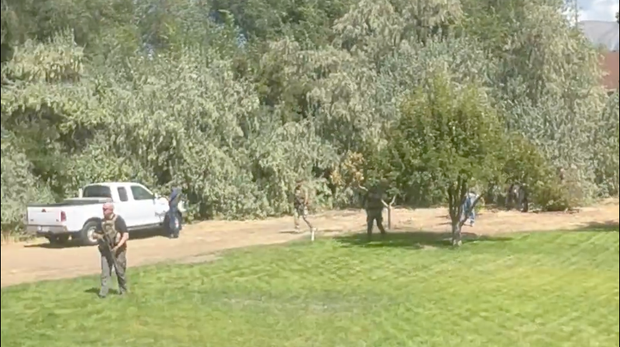
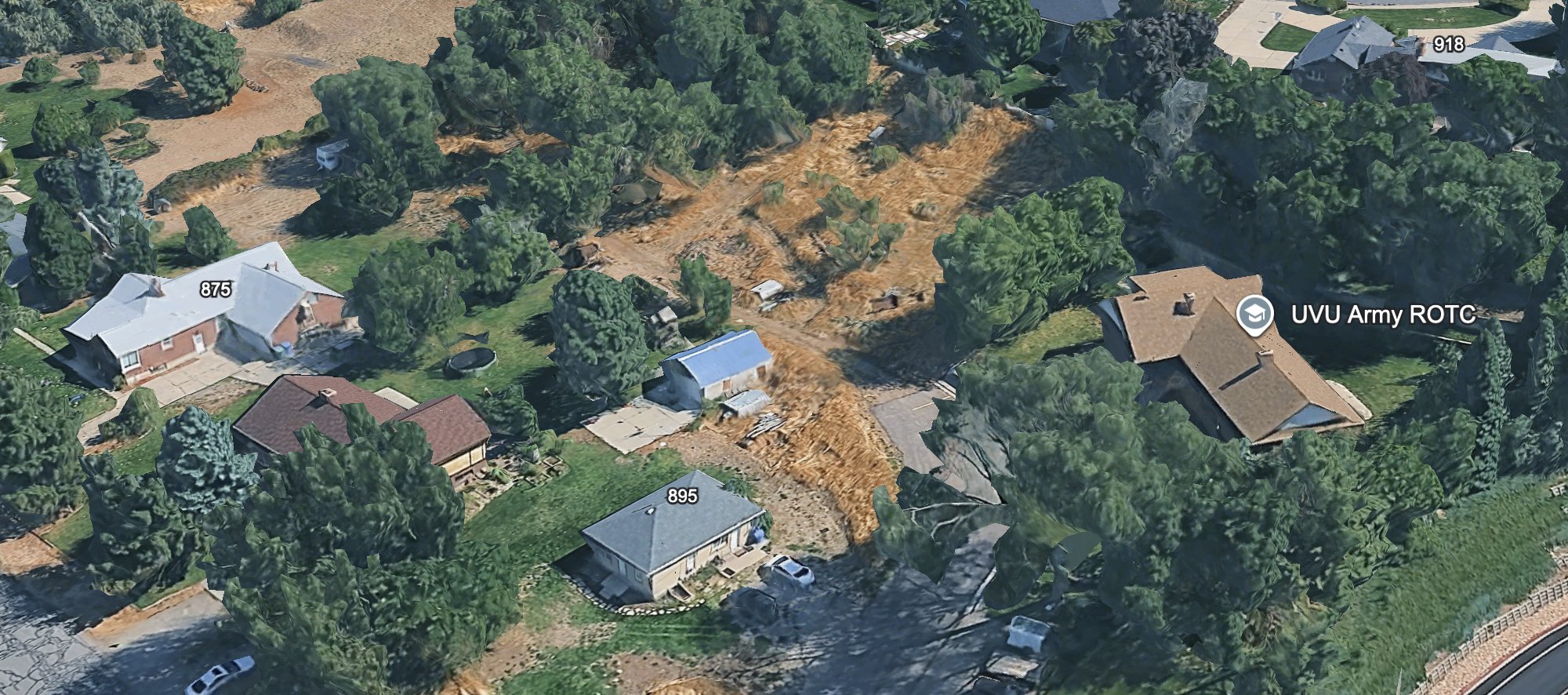
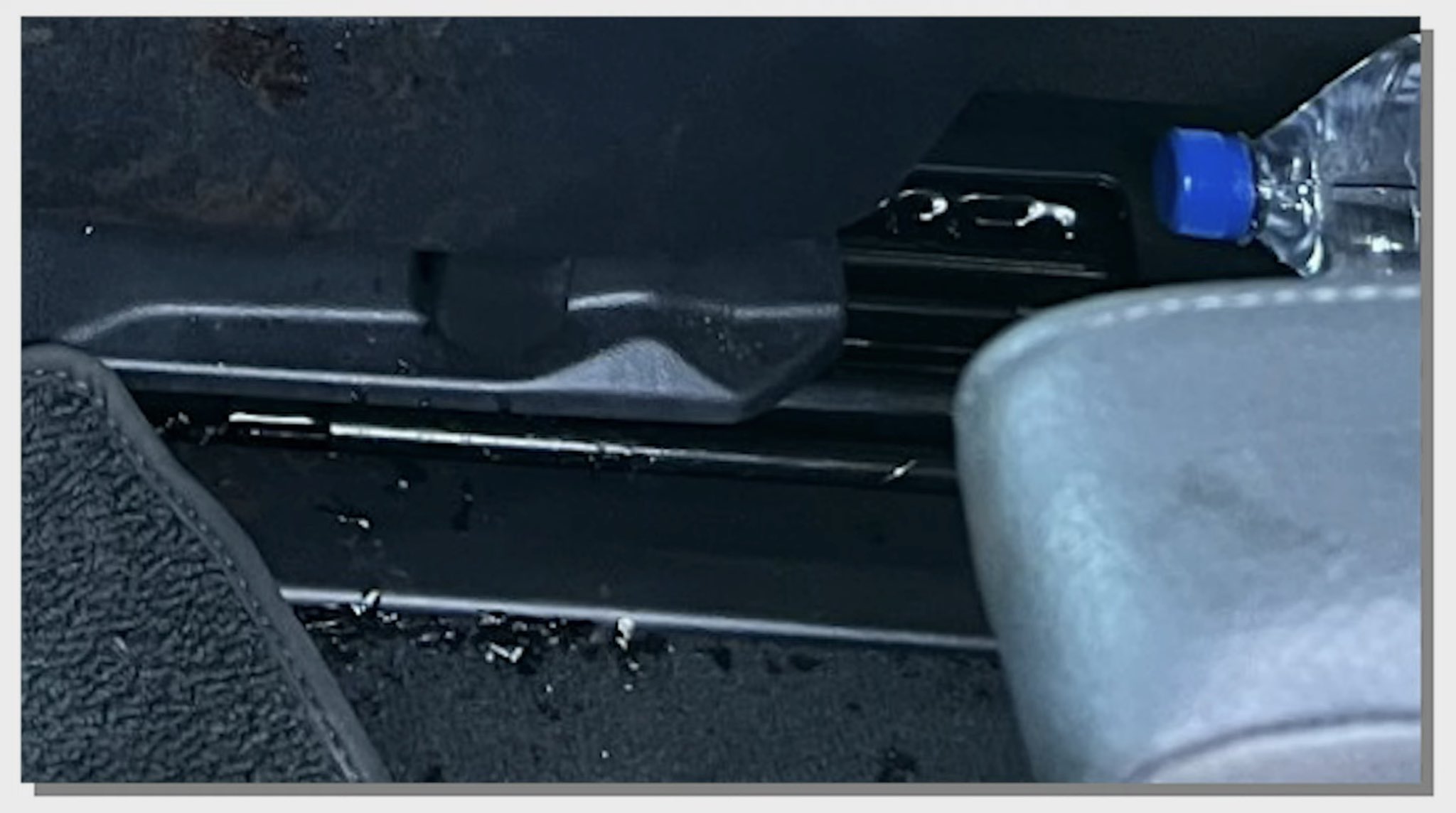
Videos
Footage related to this page. Each card opens that clip's own page, with the video, the full write-up, and its source.