600,000-File Document Dump and Withheld Raw Data (Claims)
:::caution Legal Disclaimer Nothing on this page is a claim of fact that any living person or organization knew of, planned, participated in, or covered up any crime, or acted illegally, immorally, or unethically. This page documents questions and allegations raised in public commentary — not findings of fact. All persons and organizations named are presumed innocent; the allegations referenced are unproven and have not been established in any court. Tyler Robinson is charged, not convicted. :::
This page catalogs a reported concern about how evidence was disclosed in the prosecution of Tyler Robinson — charged, not convicted, in the September 10, 2025 killing of Charlie Kirk at Utah Valley University. Critics say the defense spent months fighting for the FBI and ATF raw materials — DNA-mixture data, ballistics scans, chain-of-custody logs — while the state produced roughly 600,000 files that, in this framing, "drowned" the defense without surfacing the contested originals. Skeptics describe this as a Brady problem: volume used to obscure rather than disclose. Everything below is attributed allegation, not a finding.
The claim
According to circulating hearing notes and X commentary (including @ImBreckWorsham, April 2026), the defense repeatedly told the court that the FBI and ATF had not produced the raw analysis data files, even though September 2025 summary reports cite that same underlying data. In one widely shared framing, "while the state is drowning you in 600,000 document files, they are quietly dusting off" contested forensic methods. Critics argue that a production of that size functions to bury the specific ballistics scans, DNA-mixture data, and chain-of-custody logs the defense actually needs. Supporters counter that large productions are normal and reflect volume, not concealment.
The raw-data dispute
Per the master-file record and circulating notes:
- The defense reportedly sought a six-month continuance to retain independent forensic biologists, genetic-systems engineers, and statisticians to verify whether the FBI and ATF applied correct scientific procedures to the mixed DNA.
- In open court (@ImBreckWorsham, April 2026), the defense said the FBI and ATF had not produced raw DNA analysis data files, though the September 2025 summary reports rely on them.
- Critics say the agencies had held these files since September 2025 without releasing the originals to the defense.
The ballistics fragment and observation dispute
Skeptics tie the raw-data fight to how the physical evidence is being handled:
- Because the ATF ballistics report was inconclusive, the state reportedly moved a bullet-jacket fragment to the FBI lab for Virtual Comparison Microscopy (VCM) — a 3D-scan-and-virtual-comparison method.
- An FBI examiner reportedly acknowledged the fragment is fragile, and that scanning it might require tools to fold back portions of the jacket, which could leave marks or affect its integrity.
- The defense reportedly asked to have its own expert present, or at least to have the FBI videotape the examination. Per the accounts, the FBI declined, citing policies that do not allow a defense examiner to be present or the process to be recorded.
These are attributed characterizations of a live pretrial dispute, not established fact.
The 600,000-file framing
Commentators contrast the enormous production with the missing originals: roughly 600,000 document files said to bury the contested ballistics scans, DNA-mixture data, and chain-of-custody logs. Related notes reference unreleased FBI Form 302 interview reports and sealed warrants (some reportedly sealed until March 2026), and cite a New York Times report (October 28, 2025) on access to FBI files in the case. Read together, skeptics call this a picture of disclosure by volume rather than by substance. See the Cover Up overview for how this fits the broader pattern, and the FBI discovery-delay page for the underlying timeline.
Why it matters
If the raw DNA and ballistics originals underpinning the summary reports were withheld while the defense was handed hundreds of thousands of unrelated files, that would raise a legitimate question about whether the defense could meaningfully test the state's forensics before trial. That is why it is catalogued here under Cover Up (Possible) — as an unresolved disclosure question, not a conclusion that anyone withheld evidence unlawfully.
Counterarguments, skepticism, and innocent explanations
Ordinary, lawful explanations could account for the same facts:
- Large productions are normal. Major prosecutions routinely produce hundreds of thousands of files. Volume reflects the size of a multi-agency investigation, not concealment.
- Raw-data disputes are ordinary litigation. Fights over access to underlying forensic data are common pretrial and are resolved by the court through motions — exactly the process on display here.
- Observation limits follow policy. The FBI's refusal to allow a defense examiner at the VCM scan, or to videotape it, reportedly tracks standing lab policy rather than case-specific obstruction.
- Evidence-preservation concerns. Restricting handling of a fragile bullet fragment can reflect a genuine concern about preserving the item, not hiding it.
- Charged, not convicted. All named officials are living and presumed to be acting lawfully; Tyler Robinson is charged, not convicted.
Status: Named FBI, ATF, and prosecution officials — Alive.
Interesting In This Area
- The ATF result was inconclusive, which is why the fragment moved to an FBI laboratory.
- Rooftop video reportedly begins at 12:23:34 and HD campus feeds stay unpublished.
- Volunteer defenders were reportedly refused while the defence asked for six more months.
- A prosecutor's relative reportedly witnessed the rally and no formal screening followed.
Interesting In Other Areas
- Discovery and Brady disputes track the same fight through the actual docket.
- The defence was reportedly denied access to destructive testing of the fragment.
- FBI discovery and access delays collect the bureau-side version of the complaint.
- Evidence sealing through 2026 is where the volume argument becomes a records argument.
Other Pages In This Section
FBI Admitted Enhancing the Suspect Photos (Claims)
The FBI director reportedly called the stairwell images "enhanced." They went out on the evening the suspect was already in custody — and critics say the morning and afternoon figures do not look like the same man.
Read this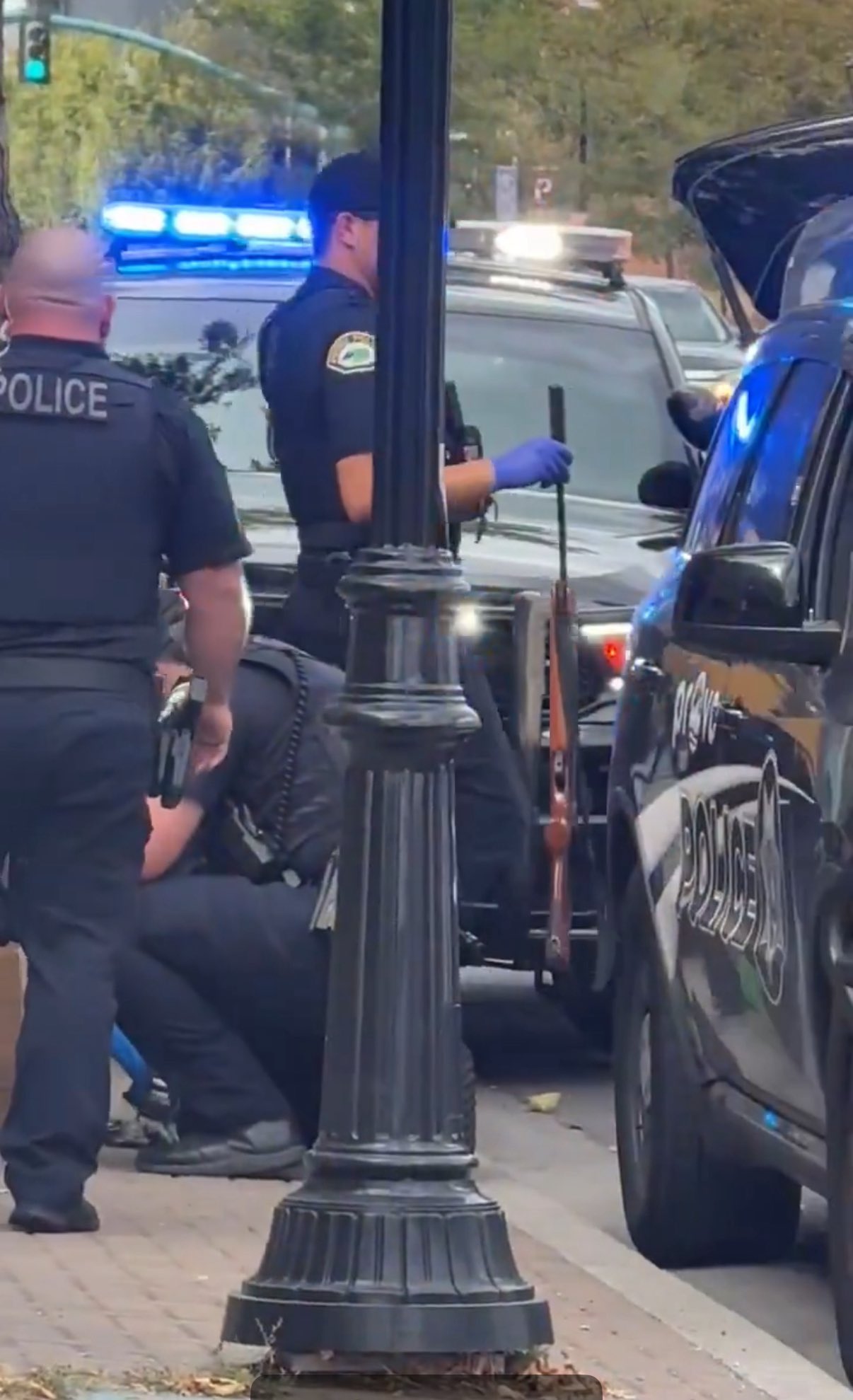
Hospital Footage Seized, ER Cleared, Staff NDAs (Claims)
Footage never released, an emergency room that reportedly looked unusually empty, and staff at a nearby facility reportedly asked to sign non-disclosure agreements. Presented as questions, not conclusions.
Read this
Key Officials Swapped in the Weeks Before the Event (Claims)
In the weeks before September 10 the court, the Salt Lake FBI field office and the treating hospital each changed leadership. Timing alone proves nothing, which is why the page is a timeline and an open question.
Read this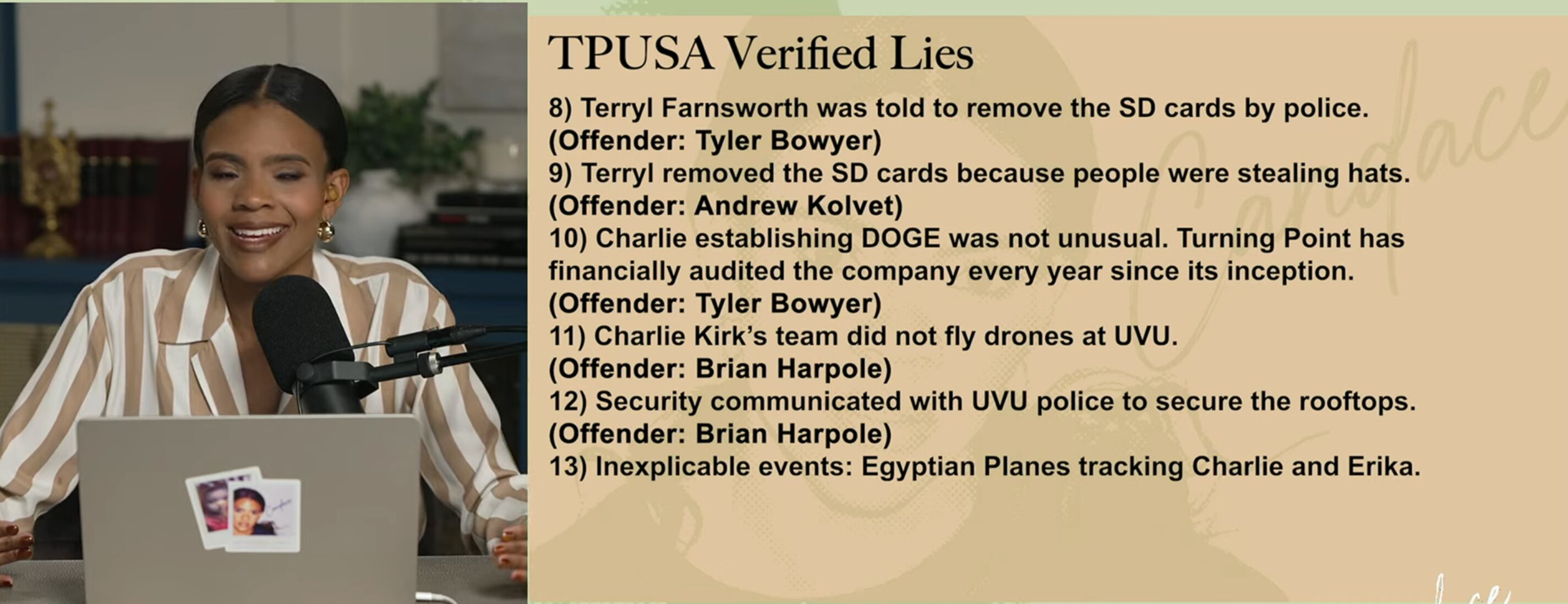
Cameras and SD Cards Removed From the Scene (Claims)
Reported claims that production AV staff, not police, pulled camera SD cards and unhooked cameras before any evidence seal. Kirk's own microphone audio has still never been released.
Read thisElsewhere In The Investigation
A reported 600,000-file production arrived while the DNA chain-of-custody material the defense asked for reportedly did not. The fight over what the defense received is now the fight over what the public will ever see.
Read thisSealed warrants, withheld DNA mixture data, and a reported 600,000-file production. The defense reportedly asked to photograph the bullet fragment and watch the testing, and was told policy does not allow it.
Read thisThe prosecution's physical case needs the autopsy fragment tied to the seized rifle, and the state's own lab could not do it. Rifling consistent with numerous makes and models is a class description, not an identification.
Read thisSealed warrants, gag orders and restricted discovery, and what is scheduled to become public in 2026. A map of the closed doors, which is the precondition for most of the suspicion in this section.
Read thisSources
- Charlie Kirk investigation master file: defense request for a six-month continuance to retain independent forensic biologists, genetic-systems engineers, and statisticians.
- X commentary from @ImBreckWorsham (April 2026) on the defense's statement that raw DNA analysis data files were not produced.
- Master-file entries on the "600,000 document files" framing and the ATF report characterized as exculpatory/inconclusive.
- Master-file account of the bullet-jacket fragment moved to FBI Virtual Comparison Microscopy (VCM) and the defense request to observe or videotape being declined under FBI policy.
- References to unreleased FBI Form 302 interview reports and sealed warrants (some reportedly sealed until March 2026).
- New York Times report (October 28, 2025) on access to FBI files in the Charlie Kirk case.
This website's author is @HolonCitizen on X and YouTube/@HolonCitizen. Follow me there.
Interesting
- An officer's body camera reportedly died on the roof before the alleged sniper's nest was ever filmed.
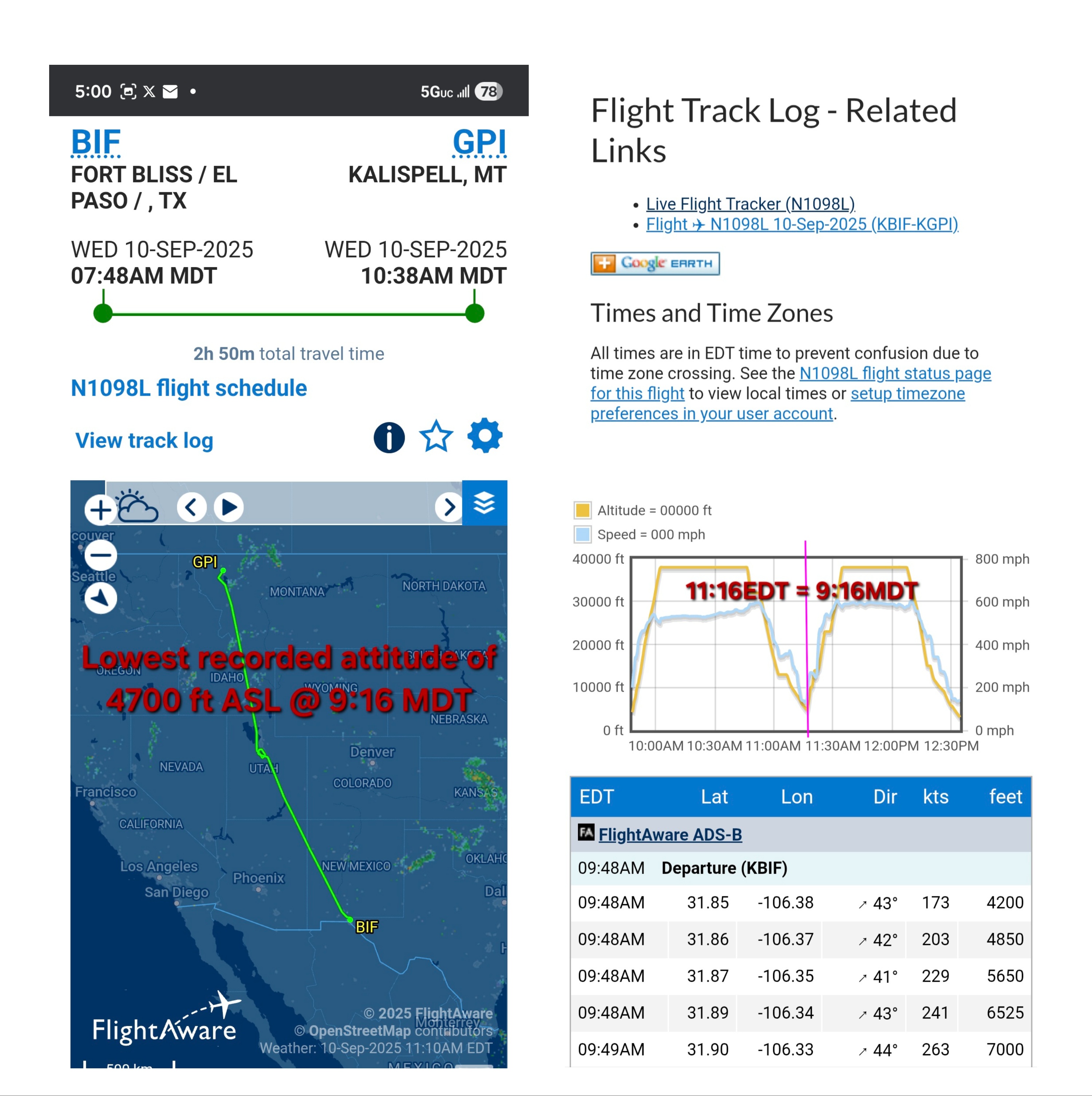
- A LiDAR survey plane reportedly finished mapping passes over campus about 11:35 that morning.
- Another jet, N872RA, sat in the same-day Provo arrival cluster on a flagged Santa Barbara route.
Related Areas
Images
Videos
Footage related to this page. Each card opens that clip's own page, with the video, the full write-up, and its source.