Standard Forensic Tests Reportedly Skipped (Claims)
:::caution Legal Disclaimer Nothing on this page is a claim of fact that any living person or organization knew of, planned, participated in, or covered up any crime, or acted illegally, immorally, or unethically. This page documents questions and allegations raised in public commentary — not findings of fact. All persons and organizations named are presumed innocent; the allegations referenced are unproven and have not been established in any court. Tyler Robinson is charged, not convicted. :::
This page catalogues a reported cluster of concerns raised in public commentary: that several standard forensic steps that could have tested the official rifle narrative — or detected an explosive — were reportedly bypassed after the September 10, 2025 death of Charlie Kirk. Critics argue the pattern is more consistent with concealing an explosive device than with an ordinary shooting. These are attributed allegations and unproven inferences, not findings of fact. Tyler Robinson is charged, not convicted.
The claim
According to commentary circulating in 2026, investigators point to a set of missing or skipped procedures: no gunshot-residue (GSR) test on the man charged despite a same-clothes-through-a-manhunt claim; bomb-sniffing dogs reportedly kept from certain areas; an urgent search for Charlie Kirk's necklace; and no ambulance on standby, with an EMS crew reportedly turned away. Skeptics read these together as steps that would have revealed an explosive rather than a fired rifle. This is an attributed interpretation, and each item below has an ordinary explanation as well.
No gunshot-residue (GSR) test
Per posts circulating online, Tyler Robinson was reportedly never given a standard GSR test, even though authorities described capturing him after a roughly 33-hour manhunt while reportedly wearing the same clothing. Commentators argue that if he had fired a rifle and kept those clothes, a GSR test would likely have detected residue — so its reported absence is treated as conspicuous.
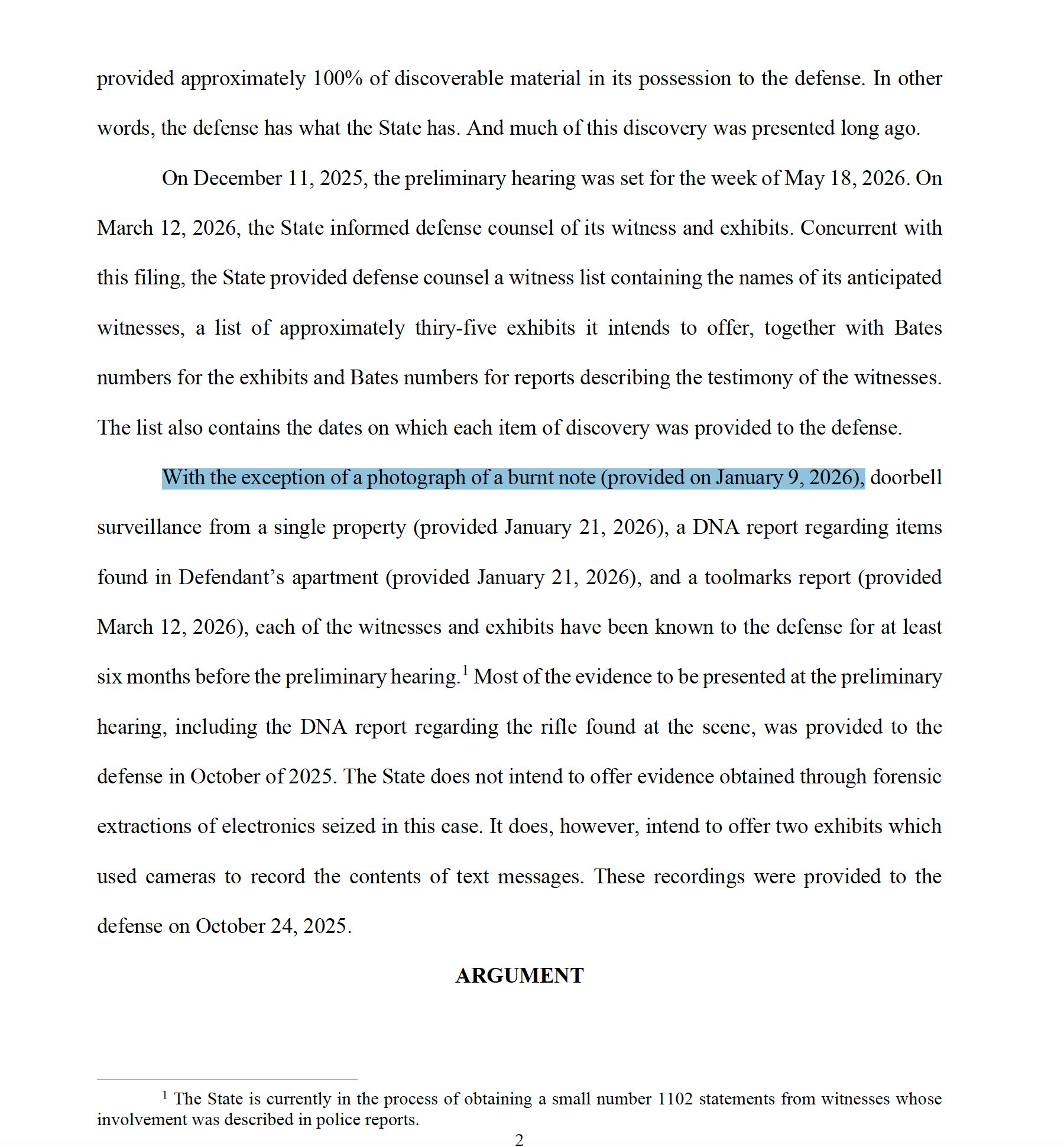
- July 2026 preliminary-hearing coverage reportedly notes GSR was "not presented."
- Critics frame the missing test as a way to avoid a result that could have undercut — or, in their theory, failed to support — the shooter narrative.
GSR evidence is often omitted in practice for reasons unrelated to any cover-up (see the counterarguments below).
Bomb-sniffing dogs reportedly restricted
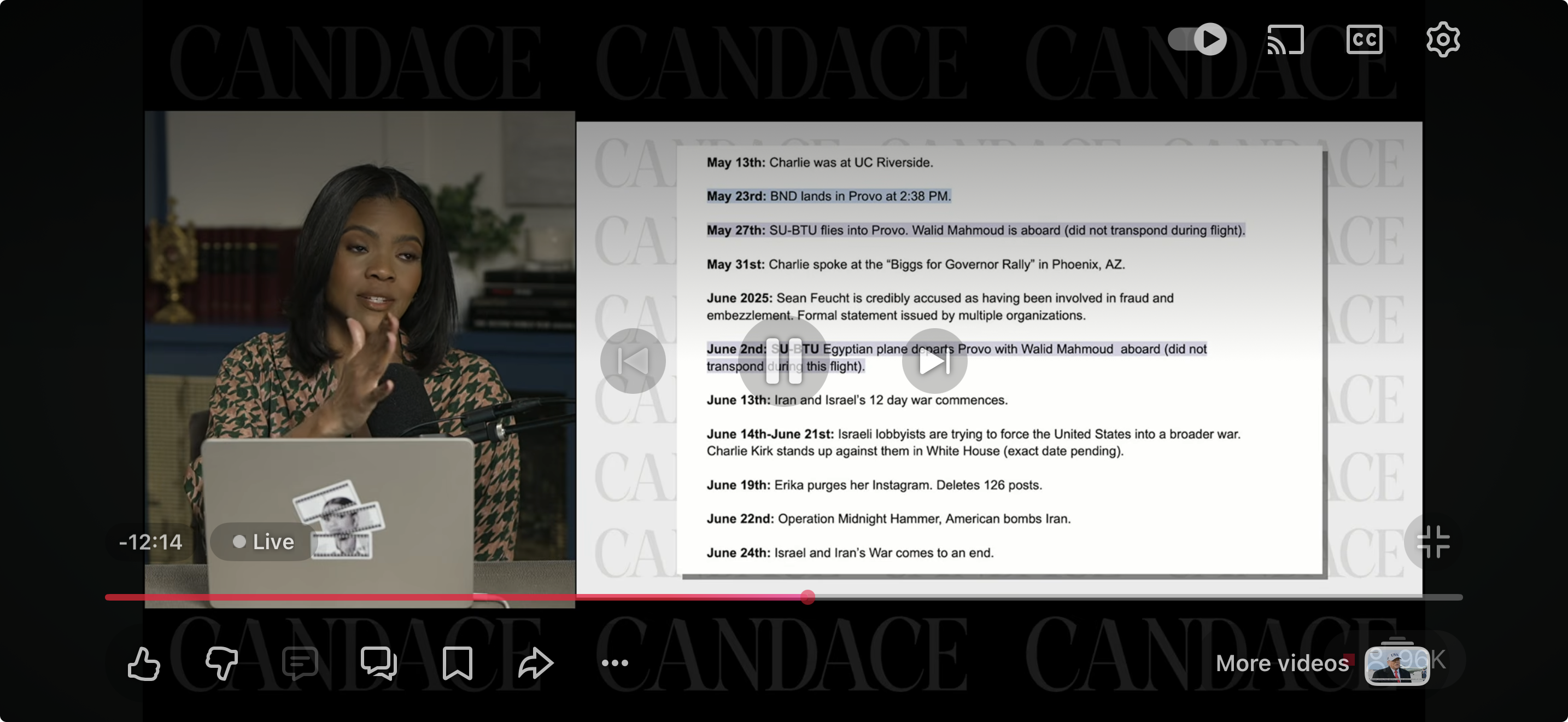
Commentary attributed to Candace Owens is cited for the claim that "the FBI did not want bomb-sniffing dogs sent to certain areas," alongside a related assertion that "the Feds lied about the gun location." In the explosive theory, keeping K-9 explosive-detection teams away from specific zones would prevent detection of energetic residue.
Status (Candace Owens): Alive. These are her reported public statements as amplified online; they are unverified, and the FBI has not conceded restricting any K-9 tasking. See the site's FBI bomb dogs page for the fuller record. K-9 deployment is ordinarily a resource-and-tasking decision.
Urgent search for the necklace
Investigators note reports that federal personnel were urgently searching for Charlie Kirk's necklace. In the explosive theory, the necklace/chain sat directly on his chest and could have carried explosive residue, making it a priority item to recover. Frame-by-frame commentators separately argue the chain was violently displaced upward, which they read as consistent with a blast rather than a bullet's path.
This is a reported detail combined with an inference; a necklace can be recovered for many ordinary reasons, including returning personal effects to family.
No ambulance on standby; EMS reportedly turned away
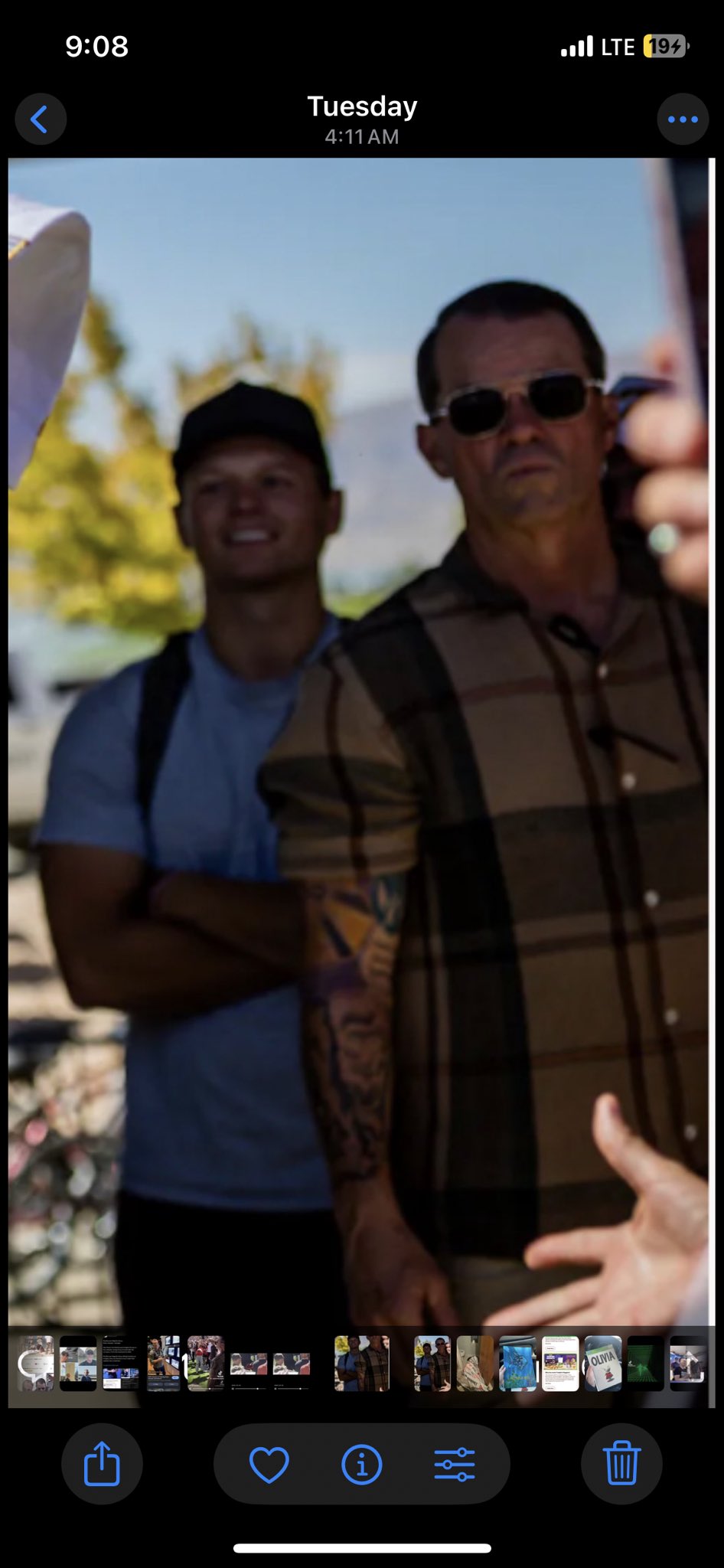
According to circulating accounts, there was no ambulance on standby at the event, and an EMS crew — reportedly including Connor Dority and a partner — was turned away by security despite offering a trauma kit and equipment. Critics argue that pre-staged medical support is expected at a large public event and that its reported absence, plus a turned-away crew, fits a scenario where responders were kept from the scene.
Status (Connor Dority): Unknown. This is a reported eyewitness-style account; event EMS staging varies widely, and a security decision to control scene access is not by itself evidence of wrongdoing.
Soil reportedly over-excavated before paving
A further concern: the crime-scene ground was reportedly over-excavated — roughly 8 to 10 inches of soil removed — before being paved over. In the explosive theory, PETN has high soil absorption, so removing that layer would strip away any energetic residue. See the site's crime-scene paving and site changes and crime-scene handling pages.
Ordinary paving does involve over-excavation for a stable base, and biohazard remediation of a scene is routine — so this detail cuts both ways.
How the pieces reportedly fit together
Investigators presenting this cluster argue the individual items are meant to be read as a set. The theory, as circulated, runs roughly like this:
- A GSR test is skipped because a man who did not fire a rifle would not show residue — and a negative result would undercut the shooter narrative.
- Bomb dogs are steered away from certain areas, and the necklace is urgently recovered, because both could reveal explosive residue rather than firearm residue.
- No ambulance is pre-staged and an EMS crew is turned away, limiting independent trauma observation at the scene.
- The soil is over-dug and paved, removing any energetic layer that later testing might have found.
Presented this way, each choice points in the same direction: away from a rifle and toward something that would not survive scrutiny. The obvious rebuttal is that ordinary events routinely feature exactly these gaps — missing GSR tests, discretionary K-9 tasking, imperfect EMS staging, and routine scene remediation — without any coordination. Which reading is correct is unresolved; the site presents both. See also the Killer coverup indicators page.
Why it matters
Individually, each skipped step has a mundane explanation. Cataloguing them together under Cover Up (Possible) reflects the concern that the combination — no GSR, restricted dogs, an urgent necklace search, no standby ambulance, and an over-dug scene — points away from the official rifle account and toward evidence that, if it existed, was not collected. Whether that pattern reflects design or ordinary chaos and resource limits is exactly the unresolved question. Nothing here is established as obstruction in any court.
Counterarguments, skepticism, and innocent explanations
Lawful, ordinary explanations account for the same facts, and all named living persons are presumed innocent:
- GSR is often uninformative. GSR testing is frequently omitted or gives ambiguous results; a missing GSR test is common and is not proof that a test was avoided to hide anything.
- K-9 tasking is a resource decision. Where explosive-detection dogs are or are not sent is a routine operational call; not sending them to a given area is not evidence of a cover-up.
- Necklace recovery is normal. Personal effects are routinely collected and returned to family; recovering a necklace does not establish it carried explosive residue.
- EMS staging varies. Event medical staging and on-scene access control differ by venue and agency; a turned-away crew can reflect security protocol, not concealment.
- Paving and remediation are ordinary. Over-excavation for a proper base and biohazard cleanup of a scene are standard; they are not inherently evidence destruction.
- Charged, not convicted. Tyler Robinson is charged; the official account remains that a rifle was used, and no explosive has been established in any court.
Interesting In This Area
- Ten inches of soil reportedly left the courtyard before any independent testing of it.
- The transport SUV was reportedly scrapped, removing the other surface residue could have reached.
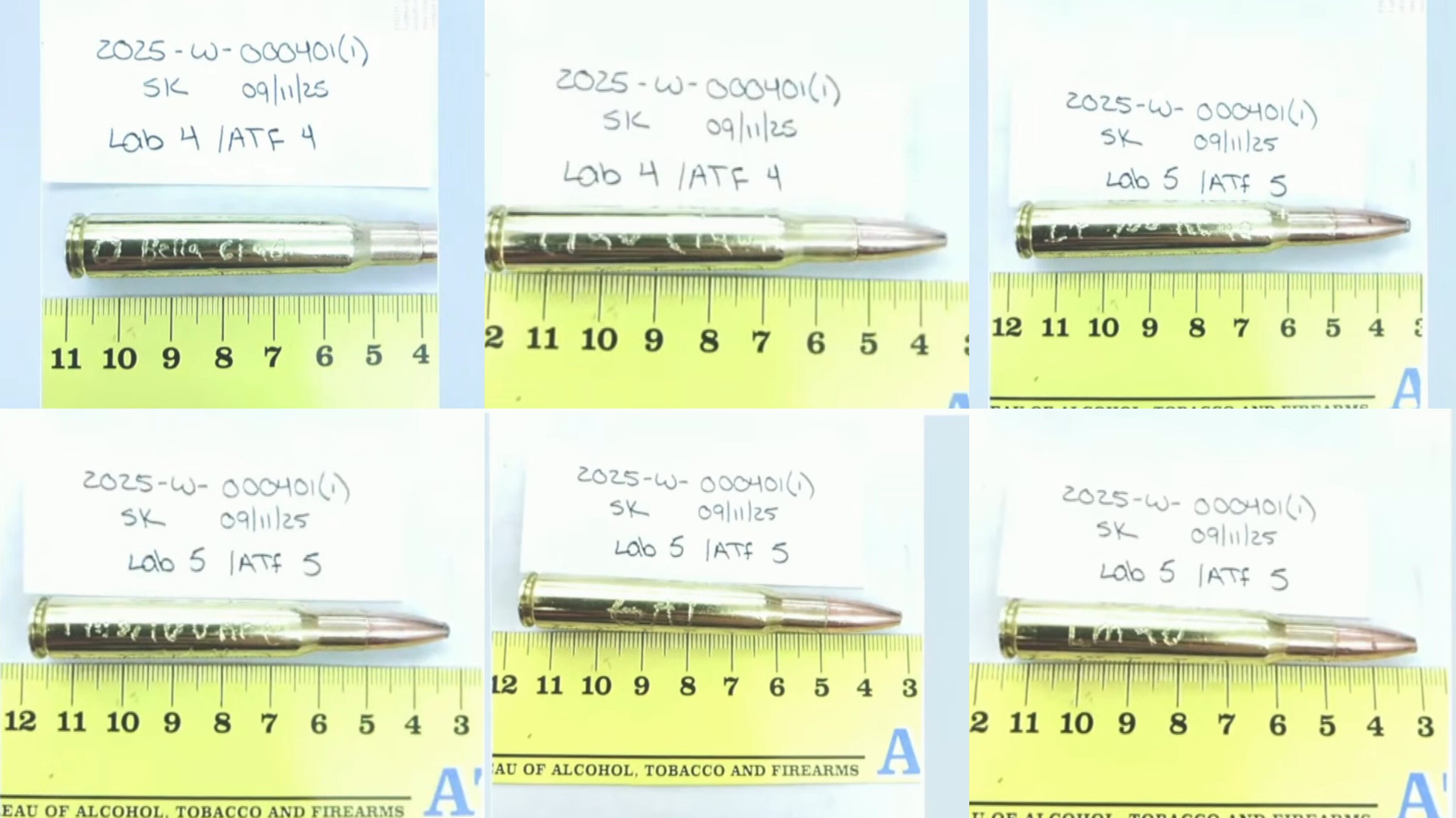
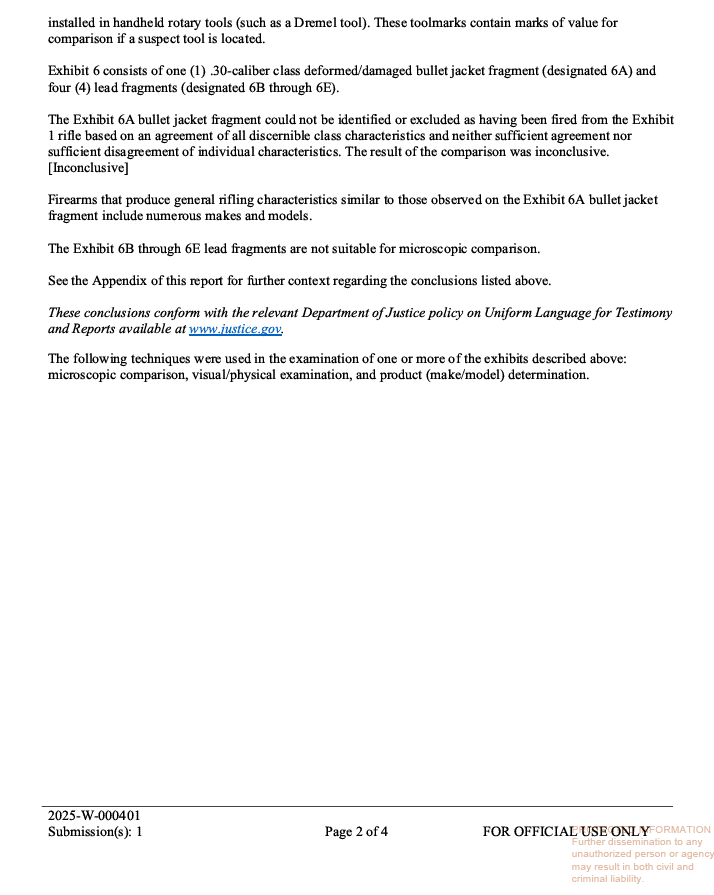
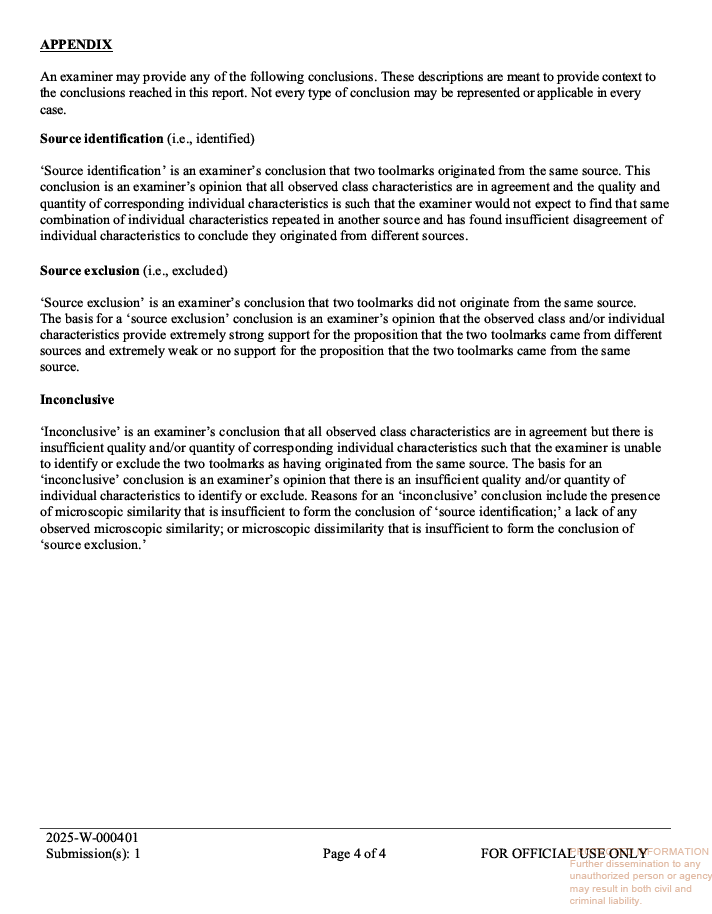
- The ATF could not tie the fragment to the rifle, and the report was sealed.
- The exploding-mic theory is what a residue test would have confirmed or destroyed.
Interesting In Other Areas
- No GSR and missing physical tests lists each omission the defence can point to.
- Bomb dogs were reportedly kept from parts of the scene, per attributed commentary.
- Kirk's necklace was reportedly searched for urgently, which residue theory explains.
- Explosive residue transfers to fabric and survives there, which is why clothing was seized.
Other Pages In This Section
Google Search Censorship of This Website (Claims)
Readers report that this site is hard to find on Google and suspect suppression. An ordinary algorithmic explanation is also possible, and the page says so.
Read thisOnline Narrative‑Control Operations (Claims)
The allegation that the first framing of September 10 arrived too fast and too uniformly to be organic — bots, paid amplification, and a top-down push on a single label. Genuine virality explains a great deal of it, and the page argues about how much.
Read thisRooftop-View Video Reportedly Trimmed and Withheld (Claims)
The released rooftop clip reportedly starts at 12:23:34, with the runner already moving. The whole argument is about the seconds before that — the ones nobody has published.
Read thisUVU HD Surveillance Never Publicly Released (Claims)
The affidavit tracks a suspect across campus almost entirely on university cameras, yet only grainy re-encoded clips have reached the public. The original DVR exports and their per-frame timestamps have not.
Read thisElsewhere In The Investigation
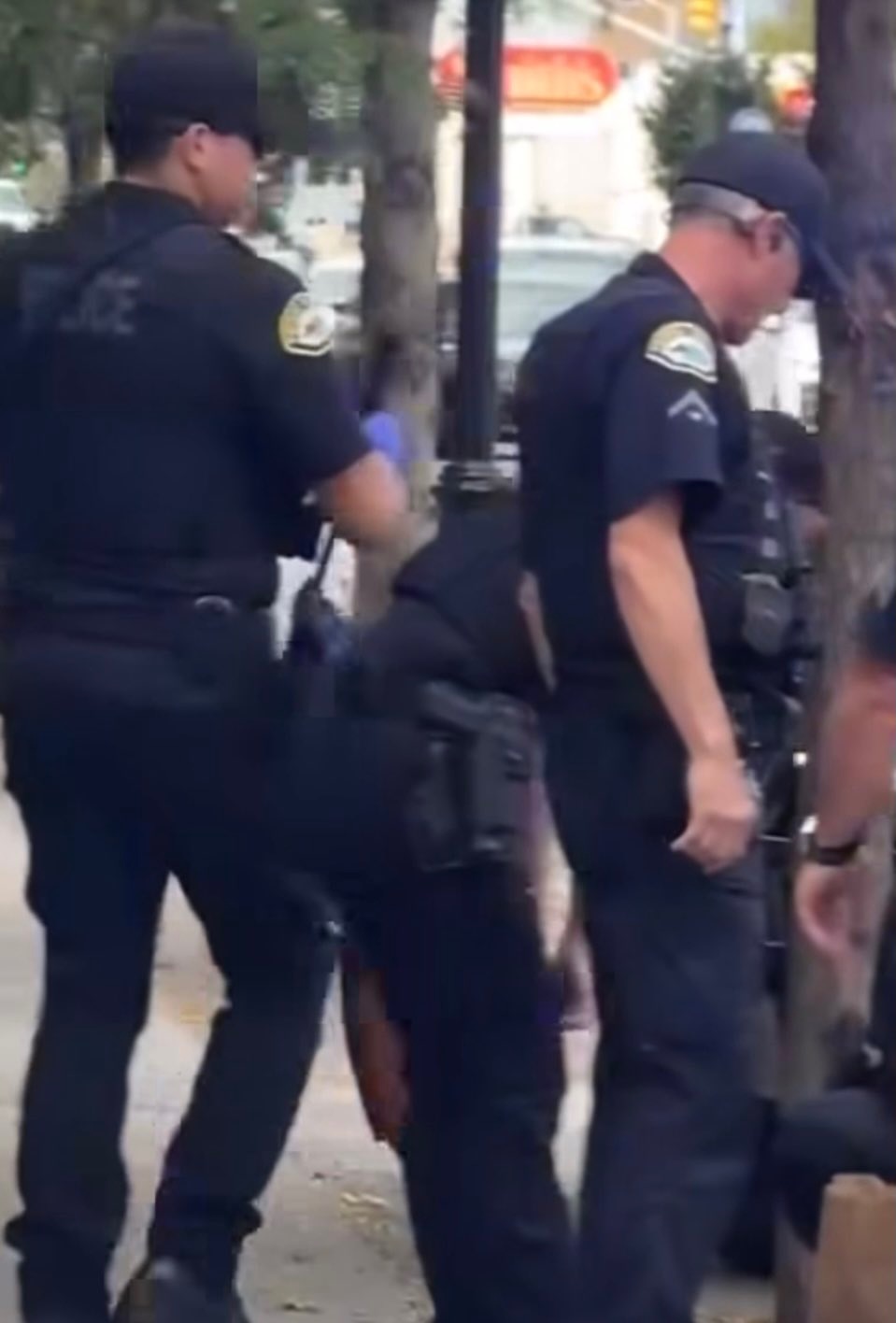
No GSR & Missing Physical Tests
No publicly reported gunshot-residue result. For a case built on a rifle fired from a roof, the missing test speaks louder than any test that was performed.
Read this
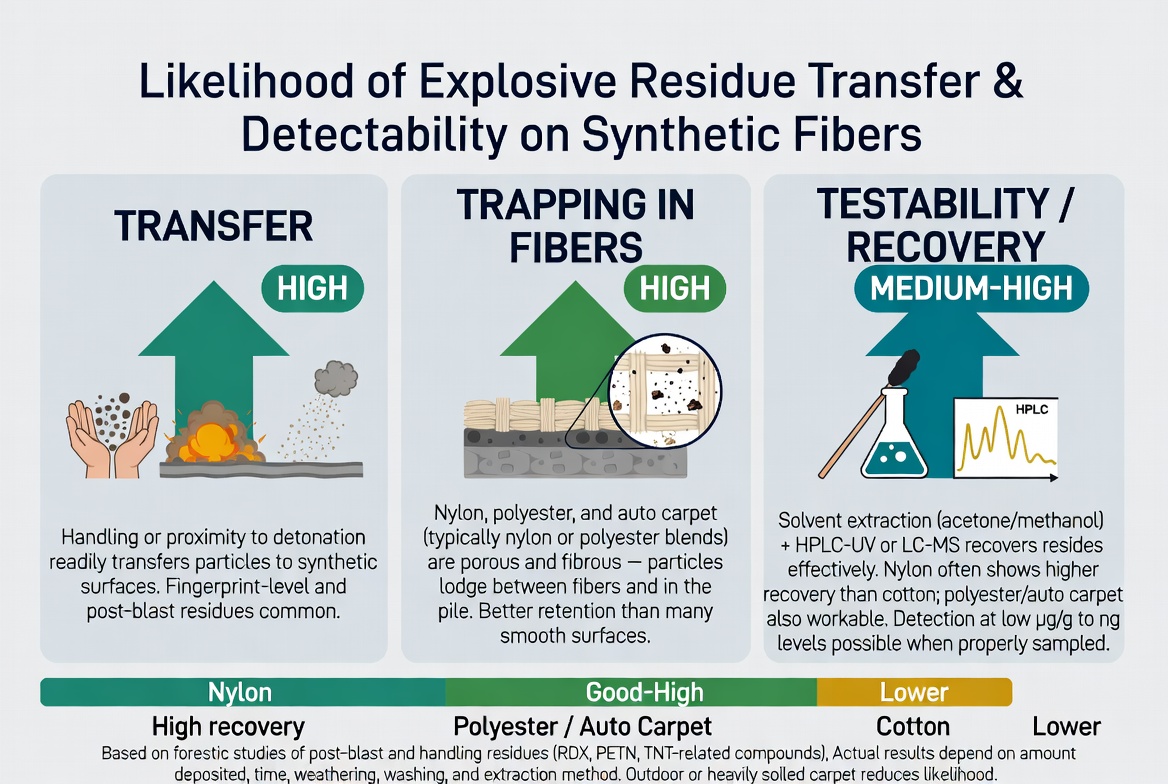
Explosive Residue — Transfer, Trapping and Recovery from Fabric
Post-blast residue is not fragile trace evidence that vanishes in an afternoon. It transfers readily, lodges in synthetic fibre, and comes back out under solvent extraction — which makes clothing and soil testable objects, not lost ones.
Read this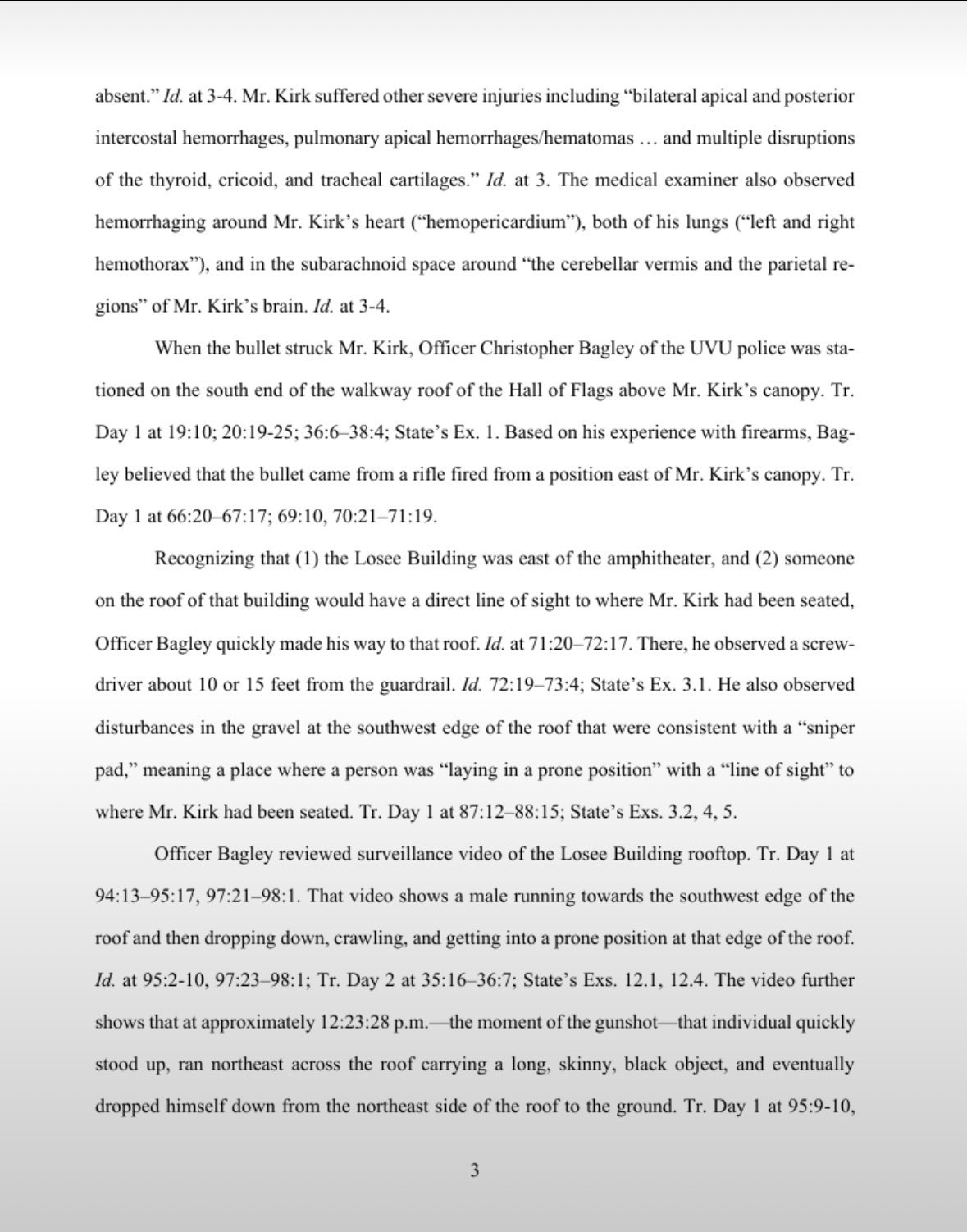
A July 2026 court filing lists injuries far beyond one neck wound — hemopericardium, bilateral hemothorax, brain hemorrhage, lung hematomas, airway cartilage disruptions. The full list is what most arguments here are missing.
Read thisSources
- Posts circulating online stating Tyler Robinson was "never given a standard GSR test" despite reportedly wearing the same clothes through a roughly 33-hour manhunt; July 2026 preliminary-hearing coverage noting GSR "not presented."
- Statements attributed to Candace Owens that "the FBI did not want bomb-sniffing dogs sent to certain areas" and that "the Feds lied about the gun location" (reported public commentary; unverified).
- Reports of federal personnel "urgently searching for Charlie's necklace" as a possible explosive-residue carrier, tied to frame-by-frame claims of the chain being displaced upward.
- Reported account that there was "no ambulance on standby" and that an EMS crew including Connor Dority was turned away by security while offering a trauma kit.
- Reports that roughly 8 to 10 inches of soil were excavated before paving, tied to claims about PETN's high soil absorption (see crime-scene paving coverage).
- Counterpoint widely noted online: GSR is often uninformative or omitted; K-9 tasking and EMS staging are ordinary operational decisions; paving and remediation are routine.
This website's author is @HolonCitizen on X and YouTube/@HolonCitizen. Follow me there.
Interesting
- Mike Glover says CIA agents were turned around at an airport and stopped from continuing.
- Officials reportedly halted the foreign-nexus probe fearing the defense would argue more than one suspect.
- A halted probe, foreign handsets, an Army jet and a foreign government plane — all one week.
Related Areas
Images