600+ Americans Punished for Kirk Comments (Claims)
:::caution Legal Disclaimer Nothing on this page is a claim of fact that any living person or organization knew of, planned, participated in, or covered up any crime, or acted illegally, immorally, or unethically. This page documents questions and allegations raised in public commentary — not findings of fact. All persons and organizations named are presumed innocent; the allegations referenced are unproven and have not been established in any court. Tyler Robinson is charged, not convicted. :::
This page catalogs a reported, unusually well-documented wave of workplace retaliation that followed the September 10, 2025 killing of Charlie Kirk at Utah Valley University: a reported 600-plus Americans fired, suspended, or otherwise disciplined for social-media comments about his death. Critics frame the wave as a chilling effect that narrowed public conversation about the case; defenders frame it as private employers lawfully enforcing conduct standards. The material below is presented as reported and attributed, not as a finding of coordinated suppression.
The claim
The claim is not that anyone committed a crime. It is a narrower speech-climate claim: that in the weeks after Charlie Kirk was shot, a rapid, visible cascade of terminations and suspensions punished ordinary people — teachers, nurses, flight attendants, office workers — for posting critical, celebratory, or simply intemperate comments about his death, and that the sheer volume and speed of the reprisals had a chilling effect on how openly Americans discussed the killing and the investigation around it.
According to a Reuters investigation headlined, in substance, "Charlie Kirk purge: How 600 Americans were punished in pro-Trump crackdown" (reported November 19, 2025), the tally of documented punishments reached into the hundreds. A New York Times account (reported September 26, 2025) described Kirk critics being fired and framed the episode around free-speech tensions. These are reported characterizations by named outlets, not a claim that any government agency ordered the firings.
What the reporting describes
According to the cited reporting, the pattern included:
- Hundreds of individual cases. Reuters reportedly documented on the order of 600 people disciplined or dismissed by employers after posting about Kirk's death — a figure it presented as a floor of documented cases, not a complete count.
- Amplification driving visibility. Reuters and other outlets reportedly described high-follower accounts — for example, Libs of TikTok — surfacing individuals' posts to their employers and audiences, increasing the pressure for employer action. This is described as reported amplification, not proof that any account directed a firing.
- Cross-spectrum framing. The episode was covered across mainstream outlets (Reuters, The New York Times) and alternative media as a single "backlash cycle" — a self-reinforcing loop of posts, exposure, and reprisal.
For how this reported speech climate connects to the broader information environment around the case, see the Media analysis overview and the Censorship overview.
Why it is catalogued here
This page centers speech suppression, not any individual's guilt. It is listed under Cover Up (Possible) because a documented chilling of public speech — whoever caused it and whether or not it was lawful — can shape which questions get asked about a high-profile killing and which witnesses or commentators feel safe speaking. That is a public-interest question worth cataloging, framed as an open question rather than a proven act of coordinated suppression.
Why it matters
If the reported scale is accurate, a fast, visible wave of reprisals for commentary about a political assassination could deter ordinary people from discussing the event candidly, and could narrow the range of voices weighing in while the investigation is contested. Whether that chilling effect was an intended suppression or an emergent byproduct of ordinary employer conduct enforcement is exactly the unresolved question. Nothing here establishes coordination.
Counterarguments, skepticism, and innocent explanations
There are routine, lawful explanations that could account for the same facts, and reasonable people read this episode very differently:
- Private employers enforcing conduct policies is lawful. In the United States, private employers may generally discipline employees for public conduct they judge harmful to the workplace or brand. That is not a state cover-up and, in most cases, is not a First Amendment violation.
- Some posts were genuinely inflammatory. Reporting indicates a number of terminations followed posts that celebrated or mocked a man's violent death; employers reacting to those posts is an ordinary HR response, not evidence of a plot.
- "Chilling effect" is a contested interpretation. Whether hundreds of independent employer decisions add up to a coordinated suppression of speech — versus many separate, lawful reactions — is a matter of interpretation, not established fact.
- Amplifier accounts are living parties. Accounts and outlets named in the reporting are living persons and organizations, presumed innocent; surfacing a public post is itself protected speech, and does not establish that anyone directed an employer's decision.
- No government order is documented. The cited reporting describes private-sector reprisals, not a proven directive from any agency to punish speech about the case.
Interesting In This Area
- Independent researchers report throttling on the same subject across several platforms.
- Wikipedia and narrative operations shape the version most people encountered.
- A witness says the FBI asked him to delete his footage rather than preserve it.
- Google visibility decides how many people find the underlying documents at all.
Interesting In Other Areas
- Visa revocations followed online celebrations of the killing, in a parallel wave.
- Institutional resignations track the same weeks from the employer side.
- Media censorship sets this wave in the wider coverage context.
- Whistleblower protections are the reform proposed against exactly this chilling effect.
Other Pages In This Section
Volunteer Defenders Reportedly Blocked, Jailhouse Informant Positioned (Claims)
Reported claims that volunteer attorneys were turned away while an unrelated inmate was positioned as a possible jailhouse informant. Two separate claims critics read together; each is weak on its own.
Read this
Free Trauma Counseling Used to Intimidate a Witness (Claims)
One witness's attributed account that free counselling offered to witnesses was used to pressure him into silence. Presented as an unproven, uncorroborated claim.
Read this
Wikipedia as the Default Narrative Reference (Claims)
Wikipedia's article is the first and often the only page reporters and international readers consult on this case, and its sourcing rules keep the live citizen dispute off it until a mainstream outlet covers it. Good-faith editing can still harden a contested account into apparent consensus.
Read this
Airborne Surveillance Records Over UVU Withheld (Claims)
An Army HADES ISR jet under the callsign AXLE10 made low passes over the corridor that day, and a production drone flew while campus police reportedly engaged none. The crew lists, tasking orders and FAA files that would say what either one recorded have not been released.
Read thisElsewhere In The Investigation
Visa Revocations After Online Celebrations
Visa revocations, deportations and a reported 600-plus workplace actions followed celebration posts. It is the aftermath thread with the least to do with ballistics and the most to do with how institutions behave under pressure.
Read thisClaims of suppression and information control drawn from public reporting — what was removed, who asked for it, and what the platforms will not say about individual actions.
Read thisDisclosure reform fails if the people closest to the evidence cannot speak. Protected channels, a rebuttable presumption of retaliation, mandatory reinstatement and treble damages — extended to intelligence contractors, who are usually left out.
Read this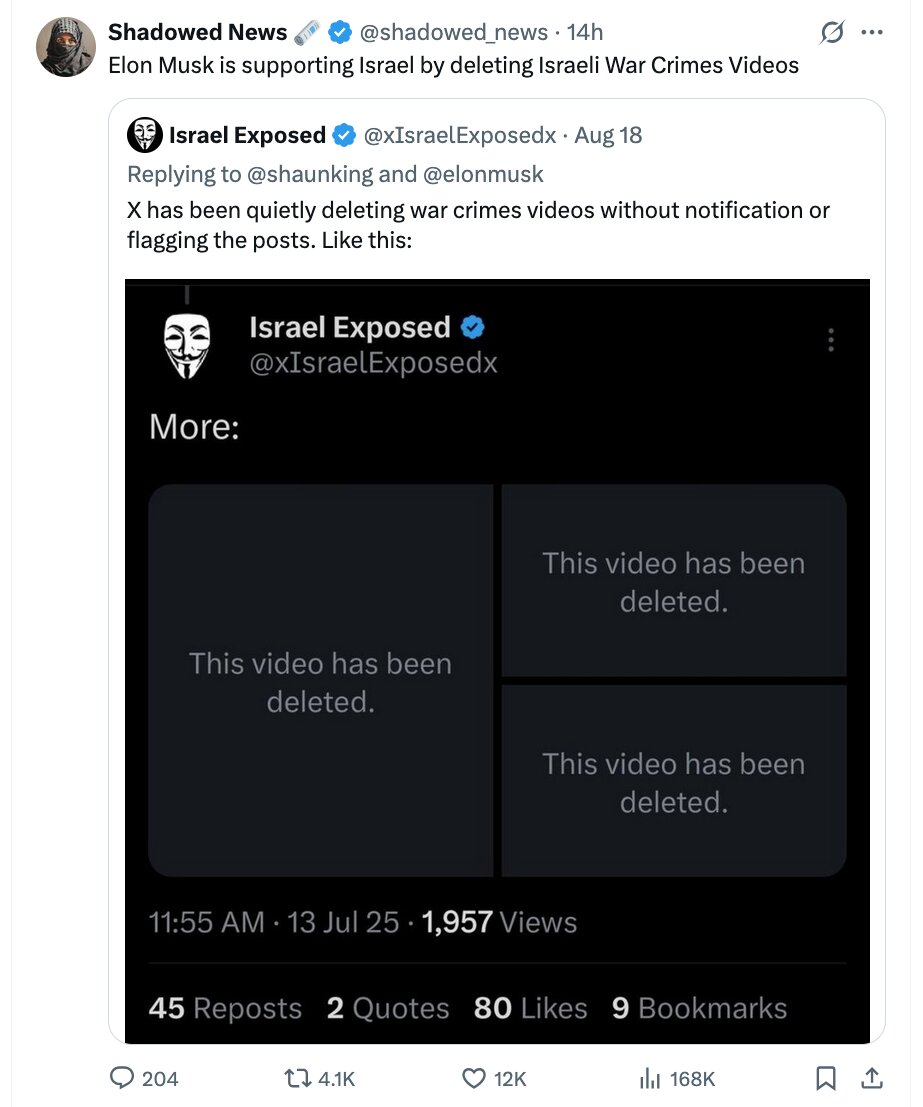
Locks, shadowbans and limited-visibility warnings for engaging the wrong posts, alongside a witness reportedly told to delete his own footage. Suppression does not prove a cover-up, but it does decide what survives online.
Read thisSources
- Reuters investigation, "Charlie Kirk purge: How 600 Americans were punished in pro-Trump crackdown" (reported November 19, 2025).
- The New York Times, reporting on Kirk critics being fired and the free-speech tensions around the wave (reported September 26, 2025).
- Reuters and related coverage describing high-follower accounts (for example, Libs of TikTok) surfacing individuals' posts and increasing employer-retaliation visibility.
- Mainstream and alternative-media framing of the episode as a self-reinforcing "backlash cycle" chilling public discussion.
This website's author is @HolonCitizen on X and YouTube/@HolonCitizen. Follow me there.
Interesting
- The defense objected as hearsay because the examiner who did the autopsy was never called.
- A former representative alleges TPUSA recruits were quizzed on Mossad during Arizona outings.
- An analyst reportedly measured a rise time five times faster than ballistic impact in the mic audio.
Related Areas
Images