Transport SUV Destroyed and Melted Down (Claims)
:::caution Legal Disclaimer Nothing on this page is a claim of fact that any living person or organization knew of, planned, participated in, or covered up any crime, or acted illegally, immorally, or unethically. This page documents questions and allegations raised in public commentary — not findings of fact. All persons and organizations named are presumed innocent; the allegations referenced are unproven and have not been established in any court. Tyler Robinson is charged, not convicted. :::
This page summarizes reported allegations that the black GMC Yukon Denali SUV that carried Charlie Kirk from the Utah Valley University venue to the hospital — a vehicle skeptics call a primary forensic surface — was scrapped, melted down, and quickly disposed of before any independent forensic testing. The claims below are presented as reported and alleged. They have not been independently confirmed by this site, and no finding has established that the vehicle's disposal was improper or that Tyler Robinson, who is charged and not convicted, or anyone else committed a crime.
The claim
In commentary circulating in mid-2026, a speaker alleged, in words to the effect: the SUV "that they took Charlie Kirk in to the hospital was chopped into a thousand pieces. It was melted down. They quickly disposed of that SUV." The framing is that if the transport vehicle carried blood-spatter geometry, tissue, and any device fragments, then destroying it before independent testing would erase evidence that could corroborate or contradict the lone-gunman account. This is an attributed characterization, not an established fact about how or why the vehicle was disposed of.
The stakes rise further given the majority conclusion among citizen investigators that Charlie Kirk was killed by an explosive device rather than a rifle round — a hypothesis that device fragments in the vehicle interior could have confirmed or refuted outright.
Why the SUV is treated as forensic evidence
Skeptics argue the interior of the transport vehicle could, in principle, preserve several categories of physical evidence: the spatter pattern and its geometry, tissue or bone fragments, and any charred residue or debris relevant to the disputed question of what struck Charlie Kirk. Because the vehicle moved him during the critical minutes after the wound, they treat its interior as a scene in its own right — one whose disposal, if accurately reported, would prevent later re-examination. Whether the SUV actually held any of this material is unverified.
The Candace Owens interior photos
Around June 26, 2026, commentator Candace Owens released two sets of photographs — four images each, watermarked "CANDACE" — said to show the interior of the black GMC Yukon Denali. As described in circulating posts, the images depict a rear-seat stain, a pale fragment on the floor sill that some commentators describe as possible bone or tissue, scattered debris, a small blue-solder-mask circuit-board (PCB) fragment, and shattered tempered glass that some viewers said matched a RØDE microphone housing. Amplifying accounts around this material included @alleytopfiles, @iluminomoly, @KaySu00, @DiligentDenizen, and @FurkanGozukara (posts dated around June 24, 2026). The authenticity, provenance, and interpretation of these photos are contested and unverified.
Tie to the exploding-mic dispute
The reported PCB fragment and the tempered-glass shards said to match a microphone housing connect this claim to the separate, disputed question of whether a device — rather than or in addition to a rifle round — was involved. That question is documented on the SUV that transported Charlie page and across the microphone analysis section. Nothing here asserts that any device caused the wound; the mic-explosion conclusion is the majority opinion among citizen investigators on X, while the government's narrative remains a rifle shot.
The open question
The unresolved question skeptics raise is one of chain of custody: who authorized the destruction of the transport SUV, when, and under what documentation, and whether the vehicle was forensically examined and released before disposal. Absent a public record of that process, they argue the destruction cannot be independently verified as routine. This is an open question, not a finding of wrongdoing.
Why it matters
If accurately reported, the early destruction of a vehicle that skeptics regard as a forensic surface would raise legitimate public-interest questions about evidence preservation in a high-profile political killing. That is why the episode is catalogued here under Cover Up (Possible) — as a reported allegation and an unresolved chain-of-custody question, not as a proven act of evidence destruction.
Counterarguments, skepticism, and innocent explanations
There are ordinary, lawful explanations that could account for the same facts:
- Biohazard and insurance salvage. A vehicle interior contaminated with human remains is a biohazard. Routine practice is to declare such a vehicle a total loss and have it professionally decontaminated or scrapped — a disposal that can look, described secondhand, like "melting it down."
- Evidence may have been collected first. Investigators can photograph, swab, and remove relevant material from a vehicle and then release the shell for disposal. Destruction of the body of the vehicle does not by itself mean no forensics were done.
- Photo provenance is unverified. The interior photos are attributed to a commentator, not to an evidence log. Their authenticity, date, and even whether they show the correct vehicle have not been independently confirmed.
- No confirmed improper order. No public record establishes that anyone directed the vehicle's destruction to defeat testing. Candace Owens and other named figures are living public commentators presumed to be acting in good faith.
Interesting In This Area
- Ten inches of soil reportedly left the courtyard on the same logic critics apply here.
- Hospital footage was reportedly seized at the destination that vehicle was driving toward.
- The exploding-mic theory is why the interior would matter forensically at all.
- Standard forensic tests were reportedly skipped, including residue work on recovered items.
Interesting In Other Areas
- Candace Owens published interior photographs of the transport vehicle in June 2026.
- A burnt object in the SUV is argued to be the transmitter itself.
- The SUV destroyed claim is set out with its counterarguments.
- Charlie's trip to hospital reconstructs the drive that vehicle made.
Other Pages In This Section
Tyler Robinson Surrender Video Not Publicly Released (Claims)
The Washington County Sheriff's Office reportedly returned "no records" for video of the surrender and booking. A 33-hour manhunt ended, and the ending was apparently not recorded.
Read this
White House Escalation Halts Intelligence Leads (Claims)
Claims that follow-up on foreign leads was blocked, escalated to a tense White House meeting, and then stopped. If accurate, the investigation narrowed for reasons never made public.
Read this
AES Tennessee Explosives Factory Explosion (Claims)
An explosives plant in Humphreys County, Tennessee blew up on October 10, 2025 — weeks after online investigators tied a Defense Department munitions contract there to this case. The page reviews how strong that link actually is.
Read thisInconclusive Ballistics, Sealed Report, and a Banned Test Revived (Claims)
The ATF reportedly could neither identify nor exclude the recovered jacket fragment as fired from the seized Mauser, so the fragment moved to an FBI lab and the report went under seal. Critics fear the answer arrives through CBLA, a lead-comparison test the FBI abandoned in 2005.
Read thisElsewhere In The Investigation
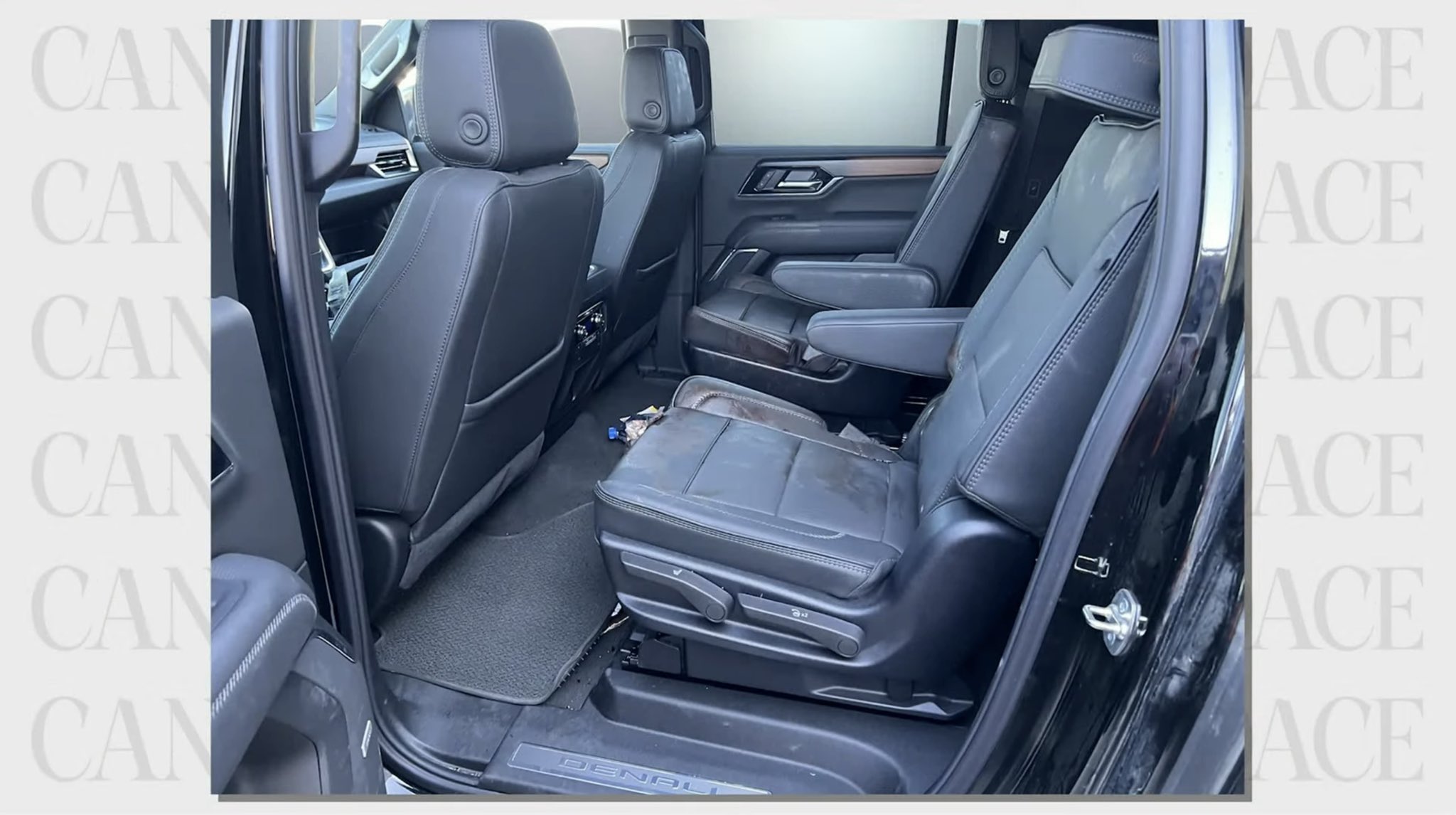
SUV Transporting Charlie — Candace Owens Photos
Photographs reportedly released by Candace Owens show the inside of the vehicle that carried Charlie to hospital. Analysts point at the glass on the seat and ask what tempered glass was doing anywhere near a rifle wound.
Read this
No ambulance, no sirens — carried into a private vehicle by his own detail. Using the car already on hand in a chaotic scene is not evidence of wrongdoing, which is why the page is about who controlled the evidence, not about rescue.
Read this
The SUV Destroyed and the ADL Floor-Sharing Claim (Claims)
Two low-confidence optics items: a claim the transport SUV was chopped up and melted down, and a list entry that an FBI building shares a floor with the ADL. Both unverified, and the second proves nothing alone.
Read this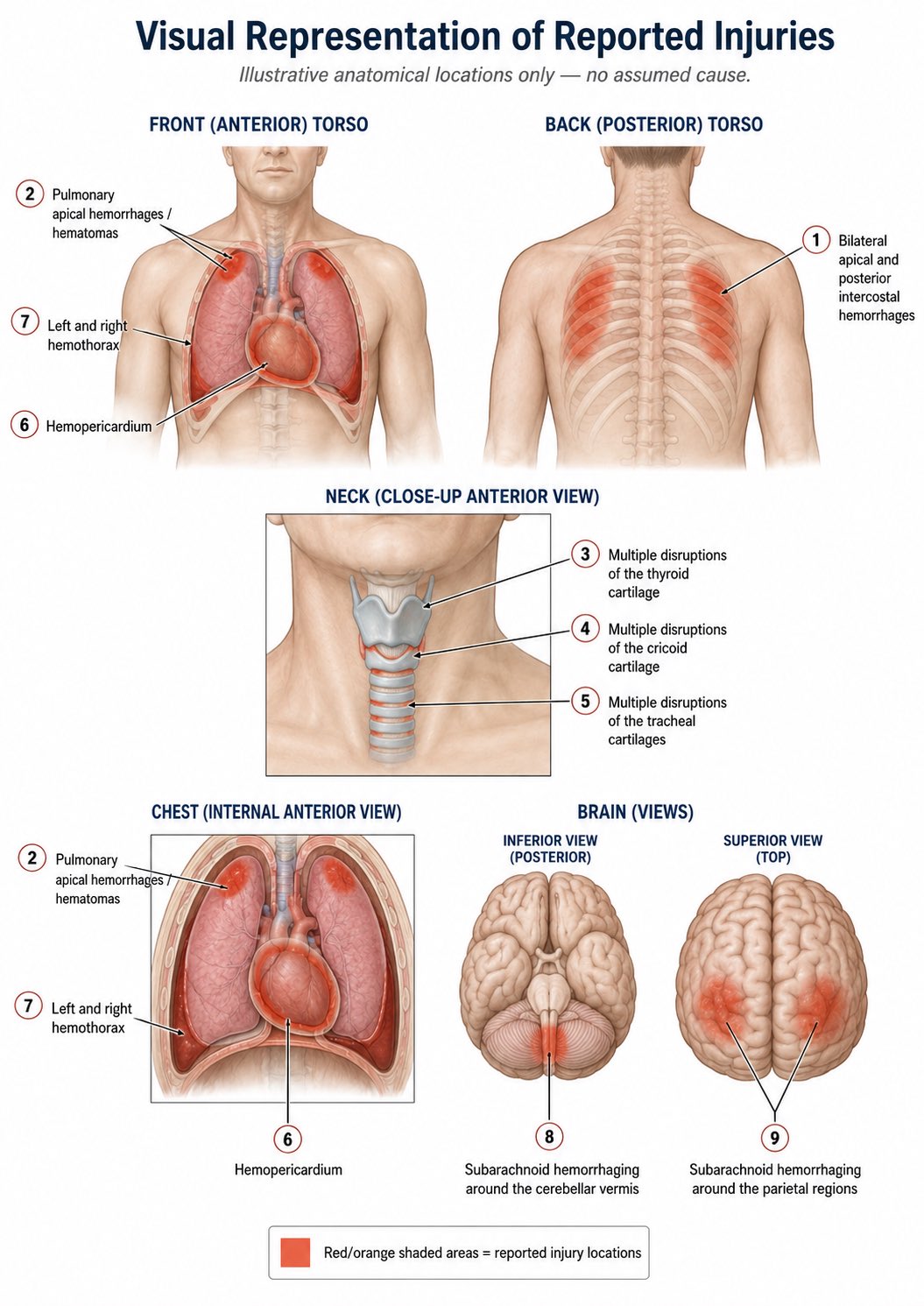
One page stating what most independent investigators had concluded by July 2026 about what killed Charlie Kirk and what did not. The official account is a single .30-06 round; this is where the reasons for rejecting it are gathered.
Read thisSources
- Commentary quote, "chopped into a thousand pieces... melted down... quickly disposed of" (mid-2026 circulating audio/notes; master investigation file).
- Two SUV-interior photo sets attributed to Candace Owens (@RealCandaceO), watermarked "CANDACE," released around June 26, 2026 — showing a rear-seat stain, a pale floor-sill fragment, debris, a blue-solder-mask PCB fragment, and shattered tempered glass.
- Amplifying X accounts around June 24, 2026: @alleytopfiles, @iluminomoly, @KaySu00, @DiligentDenizen, @FurkanGozukara.
- Related device-fragment discussion documented on the /Mic/ pages.
This website's author is @HolonCitizen on X and YouTube/@HolonCitizen. Follow me there.
Interesting
- An officer's only recording reportedly ended on the roof when his body camera died.
- Kash Patel's "see you in Valhalla" line points at a real Danish house near Goat Island.
- The surrender-site sheriff's office says it never interviewed him at all.
Related Areas
Images