Defamation
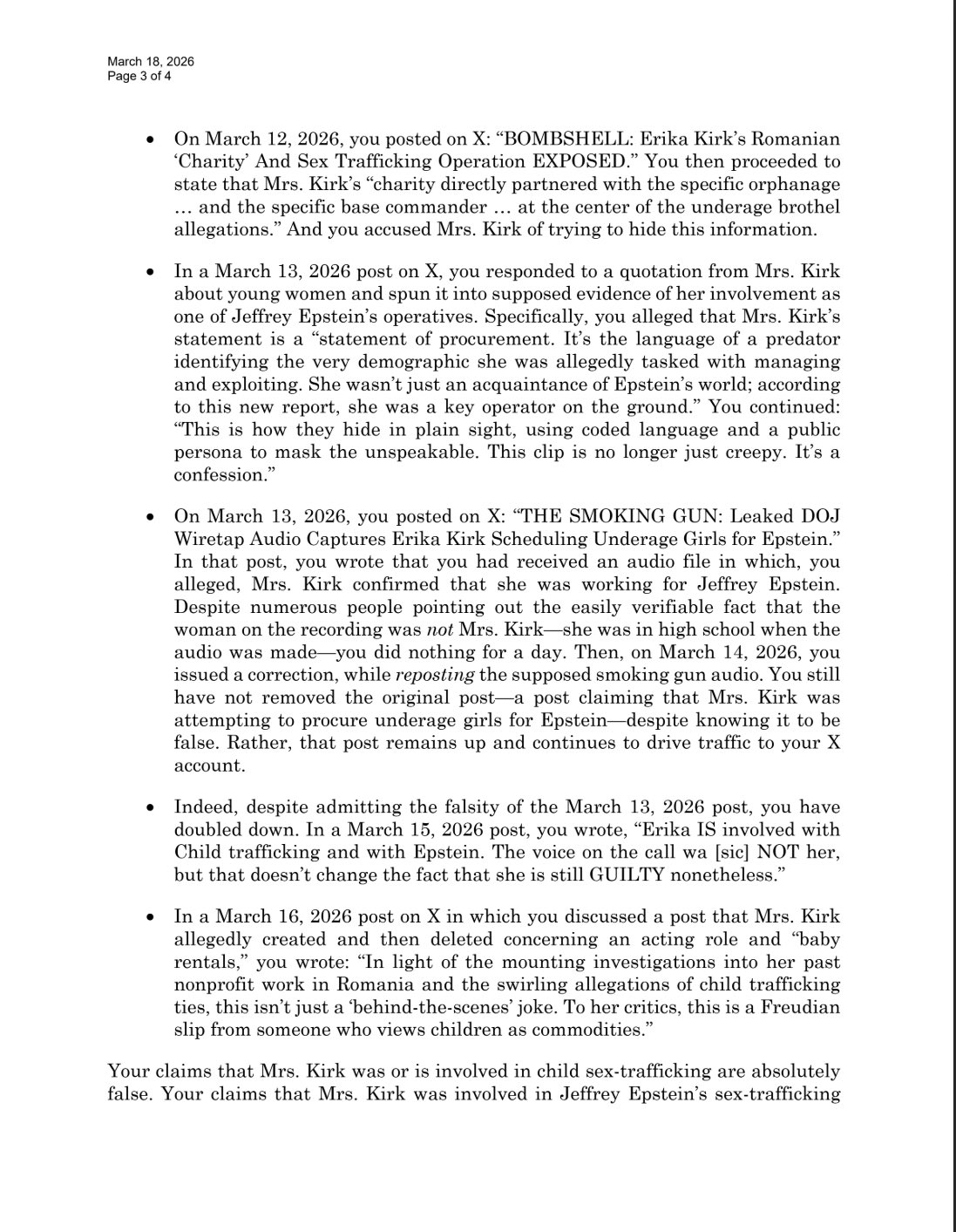
This section tracks defamation lawsuits tied to the Charlie Kirk investigation — cases where witnesses, security figures, and commentators sue each other over what has been said about September 10, 2025. These are civil disputes between living people; nothing here is a finding of guilt, and every claim is attributed to its source. Start with the first documented case below. The underlying dispute in all of them traces back to a single event: Charlie Kirk was assassinated at Utah Valley University that afternoon, and the cause of death is still argued over in public.
Documented cases:
- Brian Harpole v. Candace Owens — security chief sues the case's most prominent commentator; the Middle District of Tennessee reportedly recused en masse.
Defamation litigation matters to this investigation for a reason that has little to do with who "wins." American defamation law turns on whether the person suing is a public figure (who must prove "actual malice") or a private person (a lower bar). That threshold question forces both sides to argue, in open filings, exactly how and why someone became part of the Charlie Kirk story — which is itself a record of the case. When the parties are a security-detail figure who was in the SUV and the most prominent independent commentator on the assassination, the lawsuit becomes a second venue where disputed facts get aired.
The deeper significance is discovery. A defamation case that survives to trial can compel testimony and documents that no journalist or citizen investigator could obtain. Subpoenas, depositions, and document requests are the same tools the Fix Laws propose to apply to federal agencies — but a private lawsuit can reach them first. That is why the procedural mechanics of these cases, including an unusual mass judicial recusal reported in the Harpole matter, draw attention from people following the investigation. Each claim about why a court acted is a reported interpretation, not an established fact.
New readers should open Brian Harpole v. Candace Owens for the first and, so far, most-discussed case. This section is new and expected to grow as additional suits are filed or surface; more case pages will be added here as they are documented. For the people at the center of this case, see the Brian Harpole and Candace Owens profiles.
Public commentary
Public X/Twitter and hearing-adjacent discussion continues to treat this section as live. The recurring themes noted below are all attributed claims drawn from public commentary, not findings by this website.
Commentary in mid-2026 has connected this area to July 2026 preliminary-hearing coverage — including reported defense DNA and ballistics challenges and media exhibit rules under Judge Graf — as well as Candace Owens and TPUSA succession-donor threads where those discussions intersect these cases. Tyler Robinson remains charged, not convicted.
Interesting In This Area
- Every district and magistrate judge in Middle Tennessee reportedly recused from one defamation case.
- The Sixth Circuit is reportedly busing in an outside judge from another jurisdiction.
- Whether Harpole counts as a public figure or a private person decides the standard.
- Owens says she never named him before his podcast appearance; his filing disagrees.
Interesting In Other Areas
- Brian Harpole was security chief and in the SUV that afternoon.
- Candace Owens is the commentator whose coverage the suit reportedly targets.
- Discovery is the point: the Fix Laws propose the same subpoena power federally.
- Court gag orders limit what the criminal case can say publicly.
Elsewhere In The Investigation
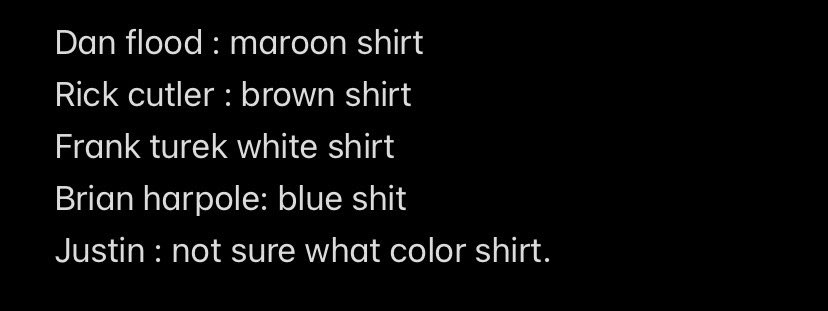
The founder of the firm reportedly guarding Charlie Kirk at UVU, and a living private citizen who denies the speculation about him and has sued over related claims. His is the name the image-search claim keeps returning to.
Read this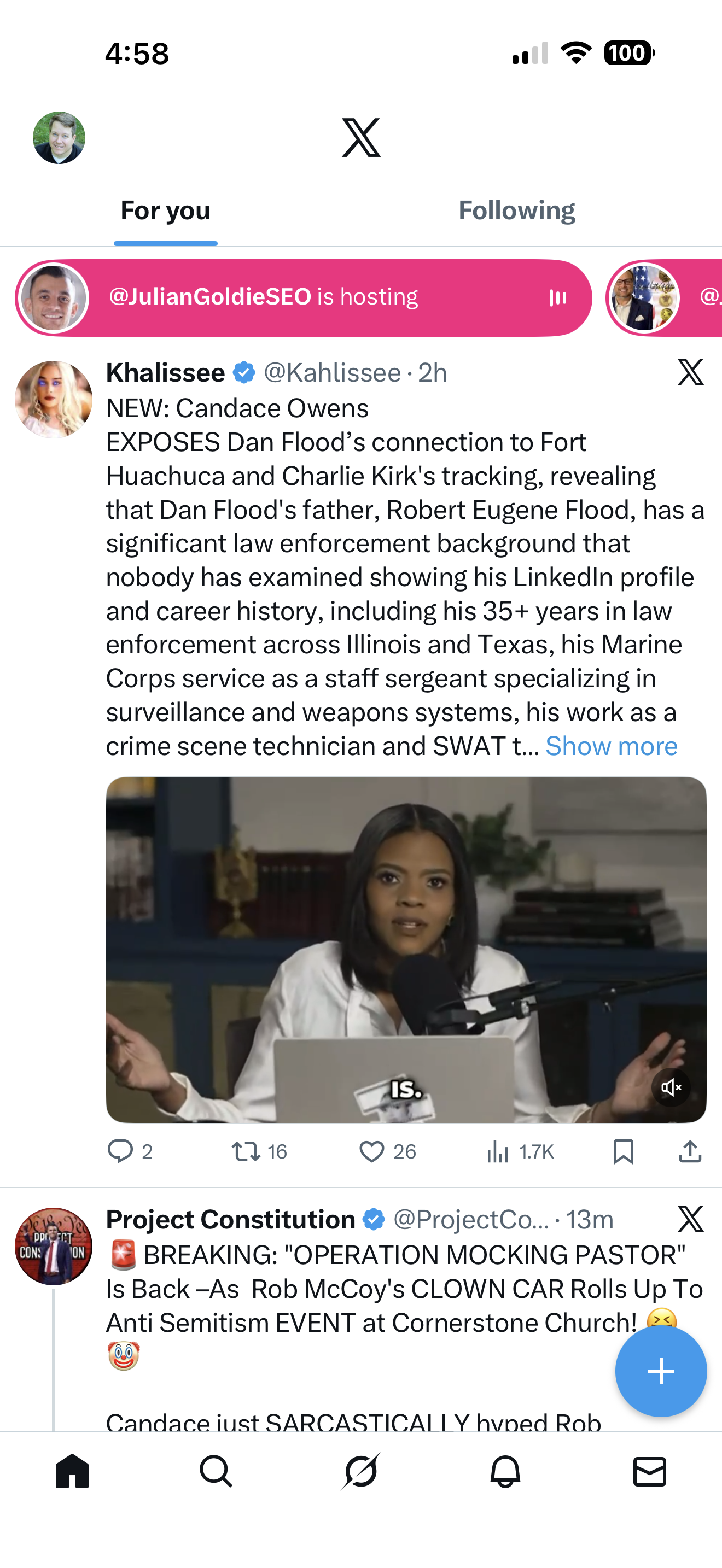
She called Charlie her best friend and brother, then ran the largest independent probe of his death. She also published the texts, the tipline and the SUV photographs the rest of the case now argues over.
Read this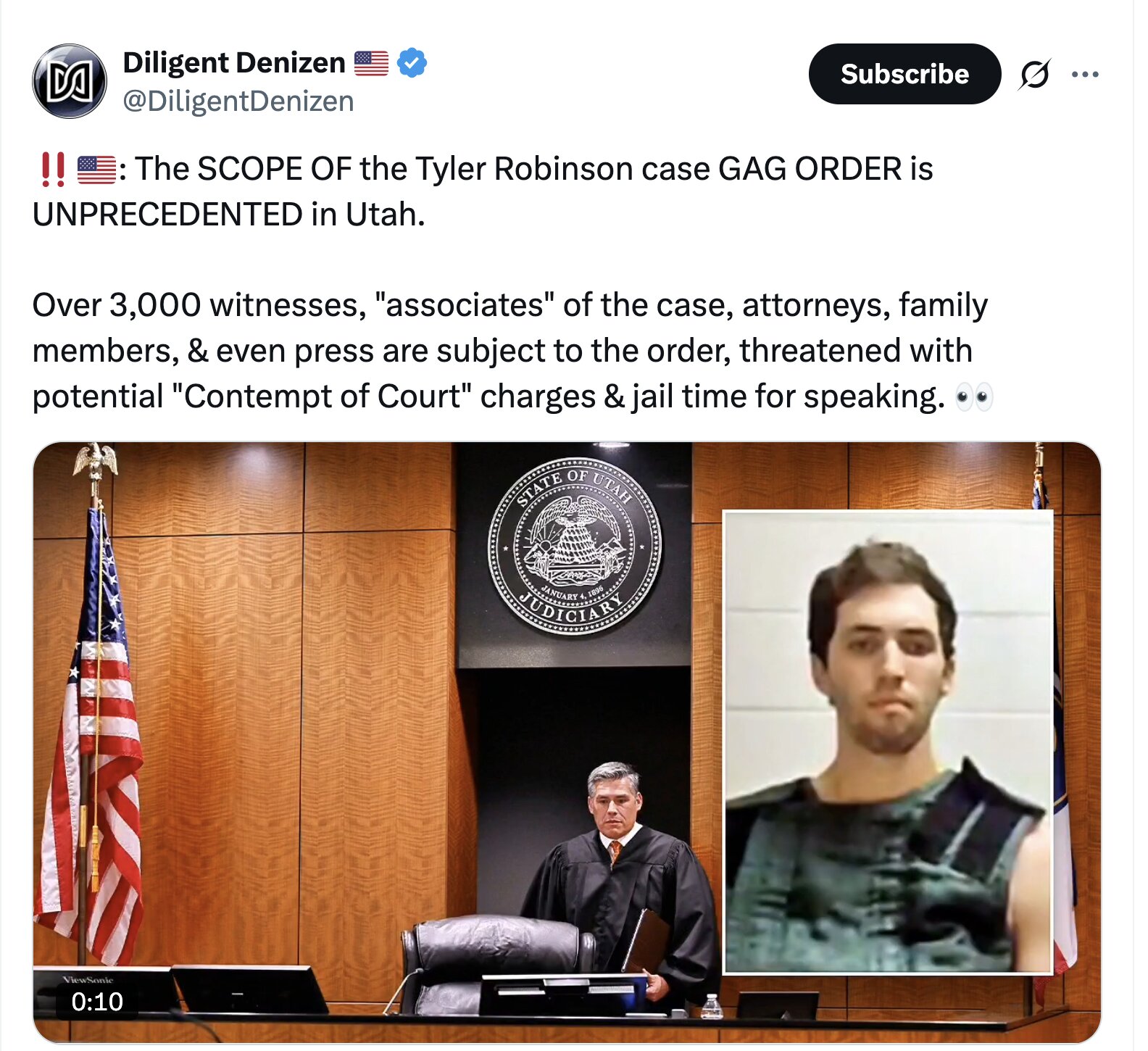
A December 2025 gag order, closed hearings, and a March 2026 motion to seal the inconclusive ATF report — opposed by a media coalition. The public record narrows in stages.
Read this
Federal agencies sit outside the state prosecutor's Brady duty, so evidence they hold can stay unreachable. The fix names them custodial parties and puts clocks on it: 30 days to respond, 60 to review classification, 90 for judicial review.
Read thisThis website's author is @HolonCitizen on X and YouTube/@HolonCitizen. Follow me there.
Interesting
- Every Middle Tennessee judge reportedly recused from Harpole v. Owens, forcing an outside judge.
- Court testimony put a Cellebrite phone extraction into the record for the first time.
- An Egyptian government Gulfstream reportedly shows Provo as its departure point.
Related Areas
Images