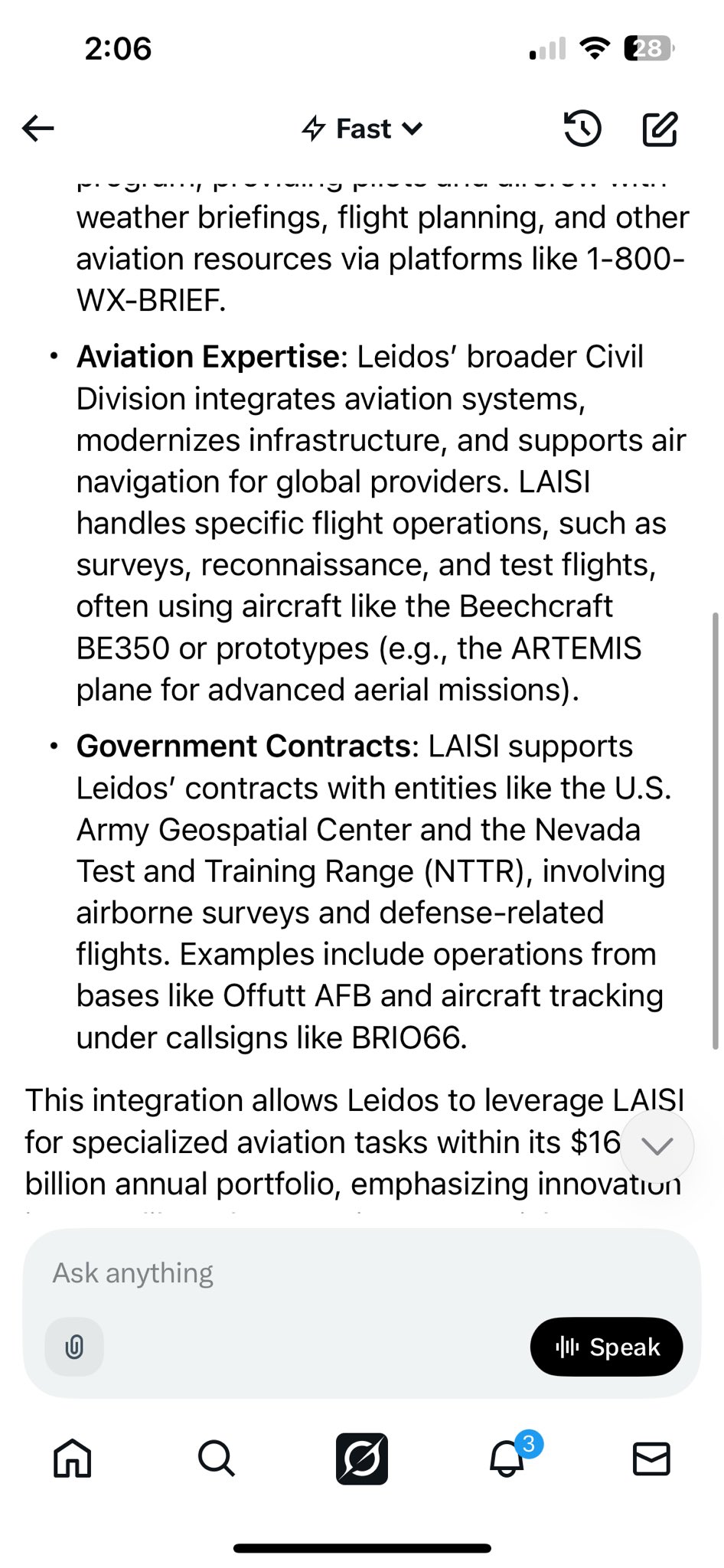
Fort Huachuca EM Expertise
The B-Field Resonant Cascade hypothesis closes its causal chain by naming an institution. According to @wtshesaid72, writing on July 15, 2026: "Fort Huachuca — the Army's EM/EW proving ground — supplied the expertise and validation needed for this operation." That is the entirety of the claim as posted. This page examines it. No version of this assertion has appeared in any filing in the prosecution of Tyler Robinson, who is charged and not convicted — see the court record.
What the post asserts
The sentence does specific work in the argument. The rest of the hypothesis describes a mechanism that would require unusual specialist knowledge to design — field strengths, timing, and site geometry all tuned to produce trauma that mimics a gunshot. A reader is entitled to ask who could possibly have engineered such a thing. The Fort Huachuca sentence is the post's answer.
Note what it claims and what it stops short of claiming. It says the installation "supplied the expertise and validation." It does not name a person, a unit, a program, a date, or a document. It does not describe how the expertise was supplied or to whom. It is a single unsourced assertion at the end of a chain of other unsourced assertions.
What Fort Huachuca is
Fort Huachuca is a US Army installation in Cochise County, Arizona. It is the home of the US Army Intelligence Center of Excellence and has long been associated with military intelligence training, and with electromagnetic spectrum and electronic-warfare testing — the installation's remote terrain and controlled airspace make it suited to such work. This is a matter of public record and is not in dispute.
The site is referenced elsewhere in this investigation in a different context; see Fort Huachuca under US Intelligence Assisted for that thread, which rests on separate claims and should be evaluated on its own terms rather than being merged with this one.
Capability is not involvement
This is the point on which the claim turns, and it should be stated plainly. That an institution possesses expertise in a field does not indicate it exercised that expertise in a given event. The inference runs: this would require EM/EW knowledge → Fort Huachuca has EM/EW knowledge → Fort Huachuca supplied it. The middle term is true and the conclusion does not follow from it. The same reasoning would implicate every electrical engineering department in the country.
For the claim to carry evidentiary weight it would need something the post does not provide: a named individual with a documented connection to the event, travel or communications records, a contract, a procurement trail, a witness, or a document. None of these appear in the post, and this site is aware of none elsewhere. No allegation of wrongdoing by Fort Huachuca, by the US Army, or by any person associated with either is made or endorsed here. The claim is reproduced because the post is reproduced in full; its inclusion is not an endorsement.
How to read it
Treat this sentence as the hypothesis's weakest link rather than its capstone. It is doing rhetorical work — supplying an agent to a mechanism that otherwise has none — rather than evidentiary work. A reader evaluating the BFRC hypothesis should set this sentence aside entirely and ask whether the mechanism itself is supported. If the mechanism cannot be established, naming a possible source of expertise for it adds nothing. If the mechanism ever were established, the question of who engineered it would then need to be answered with actual records, not with an inference from institutional capability.
Readers interested in what the investigation has actually documented about intelligence-service involvement should start with Proof of Intel Services and US Intelligence, where the claims are tied to specific records and can be checked.
Interesting In This Area
- The full post supplies no field strength, current estimate or generator specification.
- The site claims rest on service vaults and raised staging being ordinary.
- The overview calls the author-drawn diagrams the whole of the support.
- The handwritten-notes image in the post carries no caption or provenance.
Interesting In Other Areas
- Roughly a dozen lieutenant colonels reportedly met there two days before.
- A walk-in witness says he was detained and questioned on base.
- The court record contains no version of this assertion at all.
- Tyler Bowyer appears in a separate Fort Huachuca exchange from 2022.
Other Pages In This Section
The BFRC Hypothesis (Full Text)
The July 2026 post is preserved unedited so it can be read without paraphrase, then assessed line by line. Real physics terms, author-drawn diagrams, and not one field strength, current estimate, or record.
Read this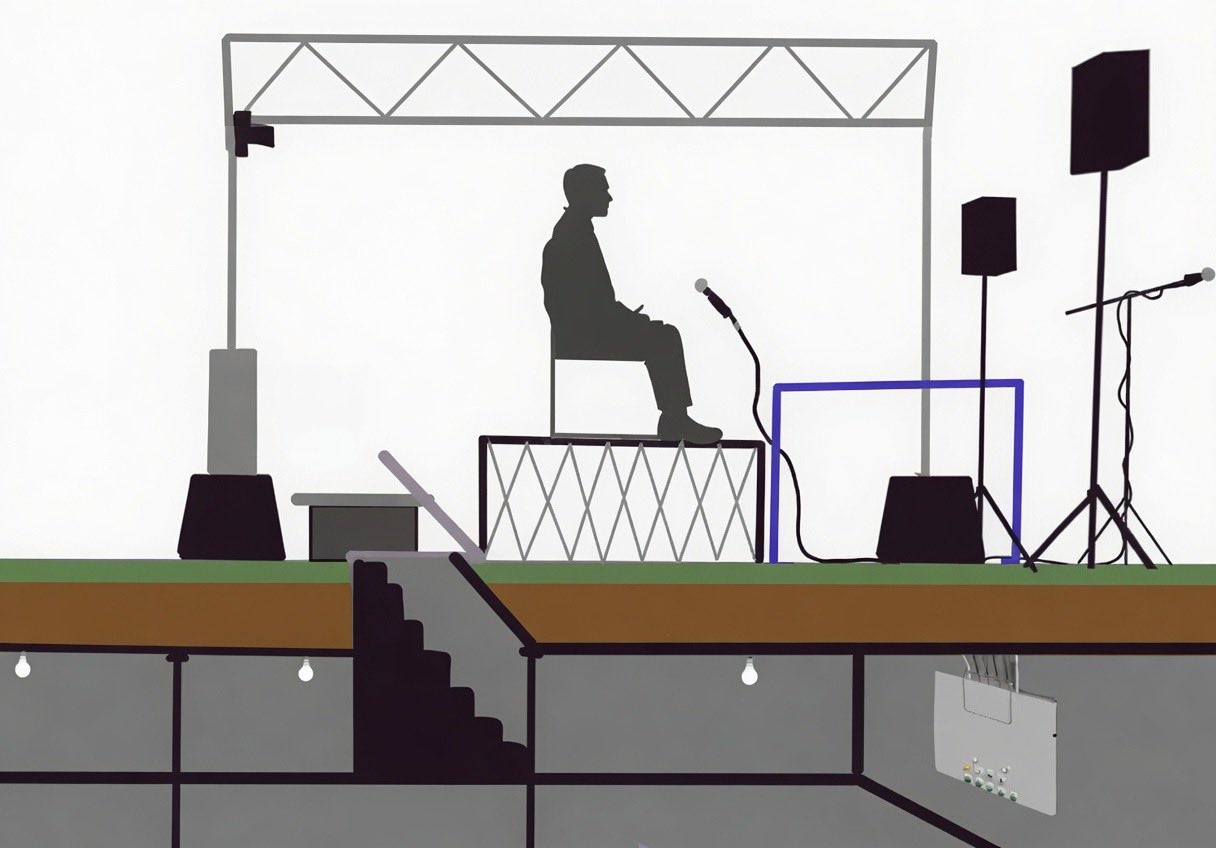
Electrocution — The B-Field Resonant Cascade Hypothesis
A single X account argues the corded microphone completed a circuit and the venue itself did the rest. It is documented here for completeness and weighed against the exploding-mic finding most citizen investigators hold.
Read this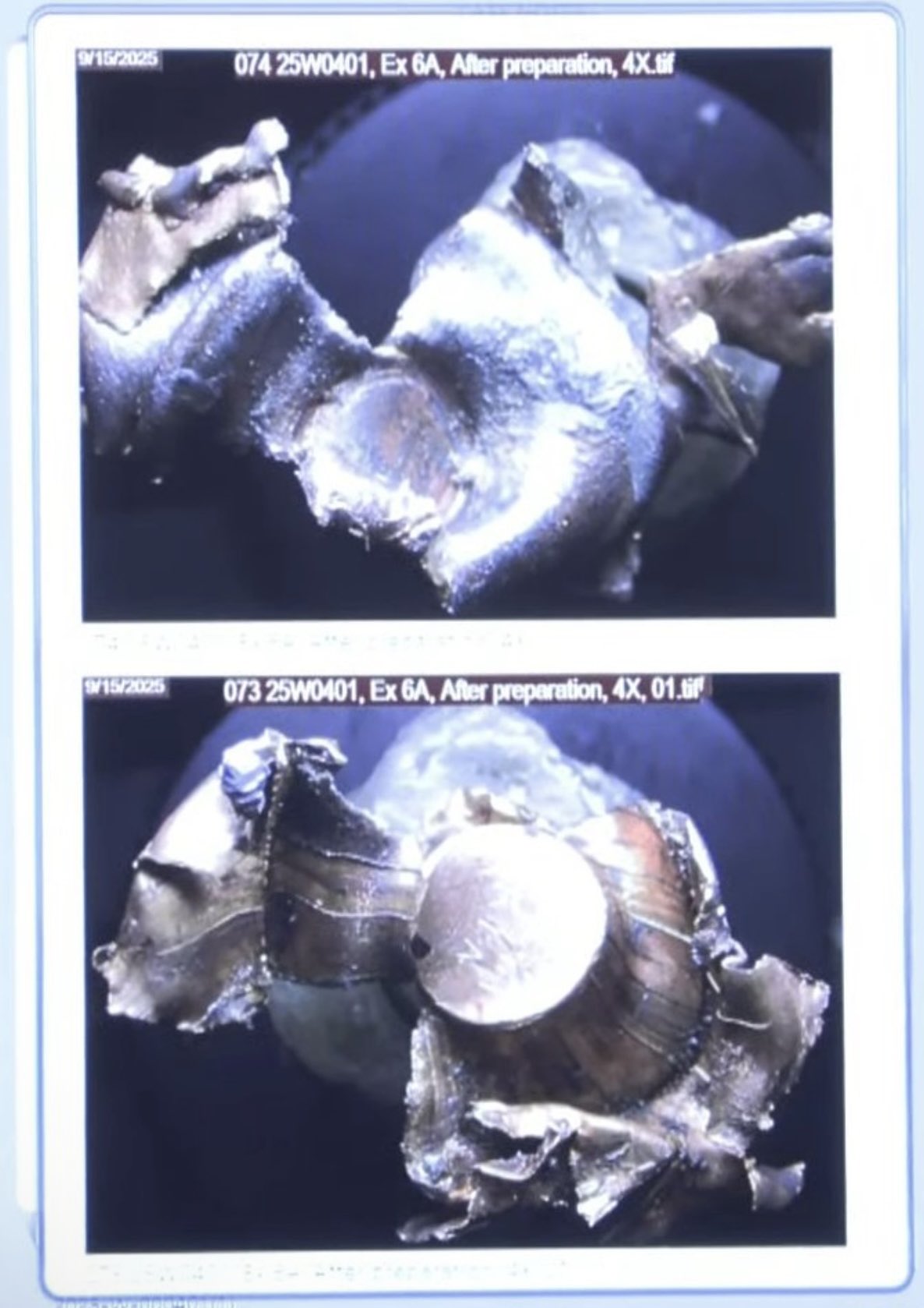
The claim is that the courtyard was the weapon — bowl geometry, an air-gapped stage, an underground tap. Every one is an ordinary venue feature reinterpreted, and the removed dirt fits a rival theory just as well.
Read thisElsewhere In The Investigation
Fort Huachuca — Sept 9 Meeting
About a dozen lieutenant colonels on base September 8, a VIP flight out on the 9th, and UVU-linked figures reportedly photographed there the same week. Timing indicators, stacked and dated.
Read thisA reported closed-door meeting of roughly a dozen lieutenant colonels, a VIP jet in and out, and a walk-in witness who says he was detained — all inside thirty-six hours before September 10. None of it appears in the state's case.
Read this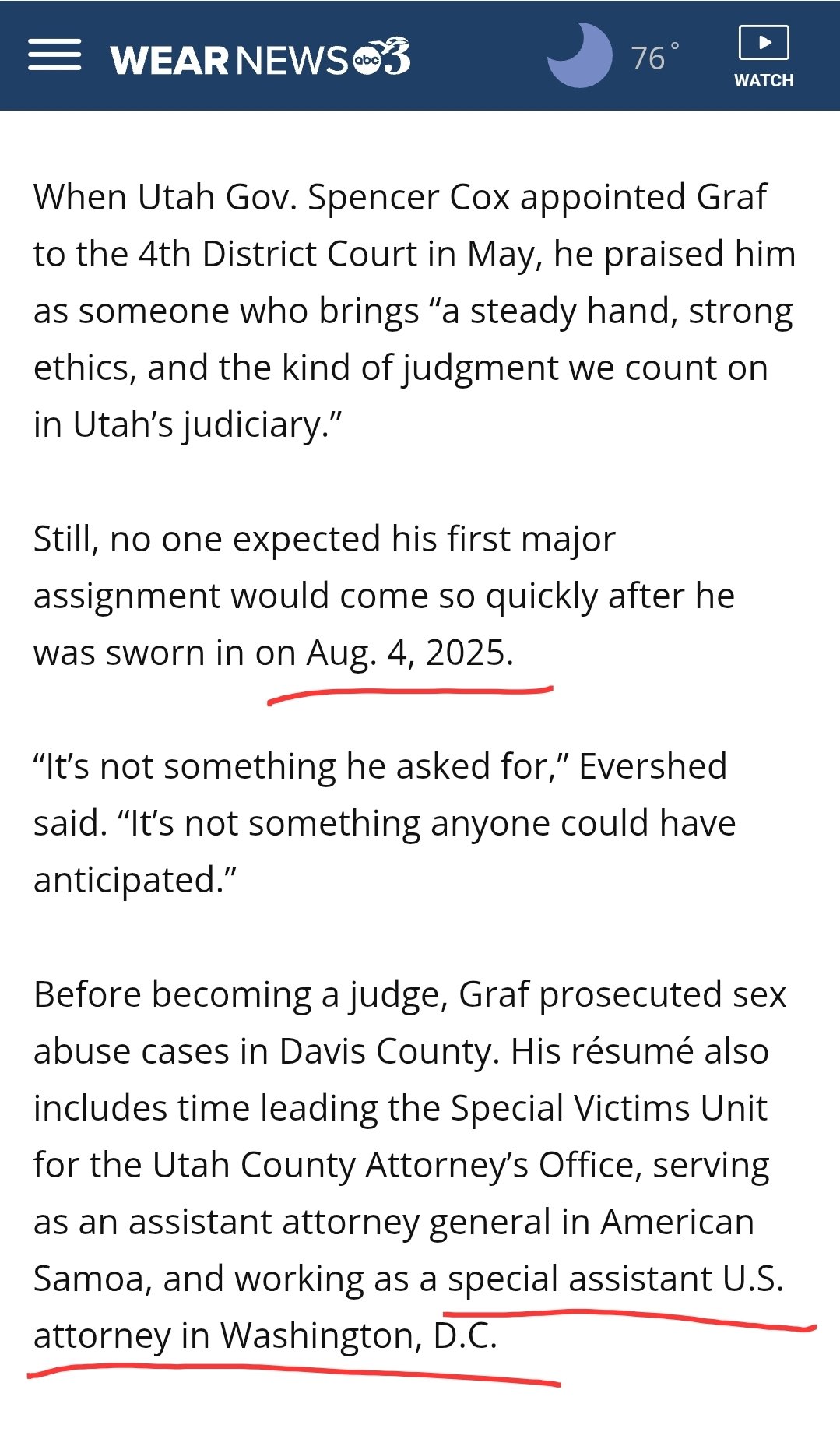
The docket as a record: judges, defence and prosecution teams, hearing days, ballistics fights, sealing motions. Where every claim on this site eventually has to meet a filing.
Read this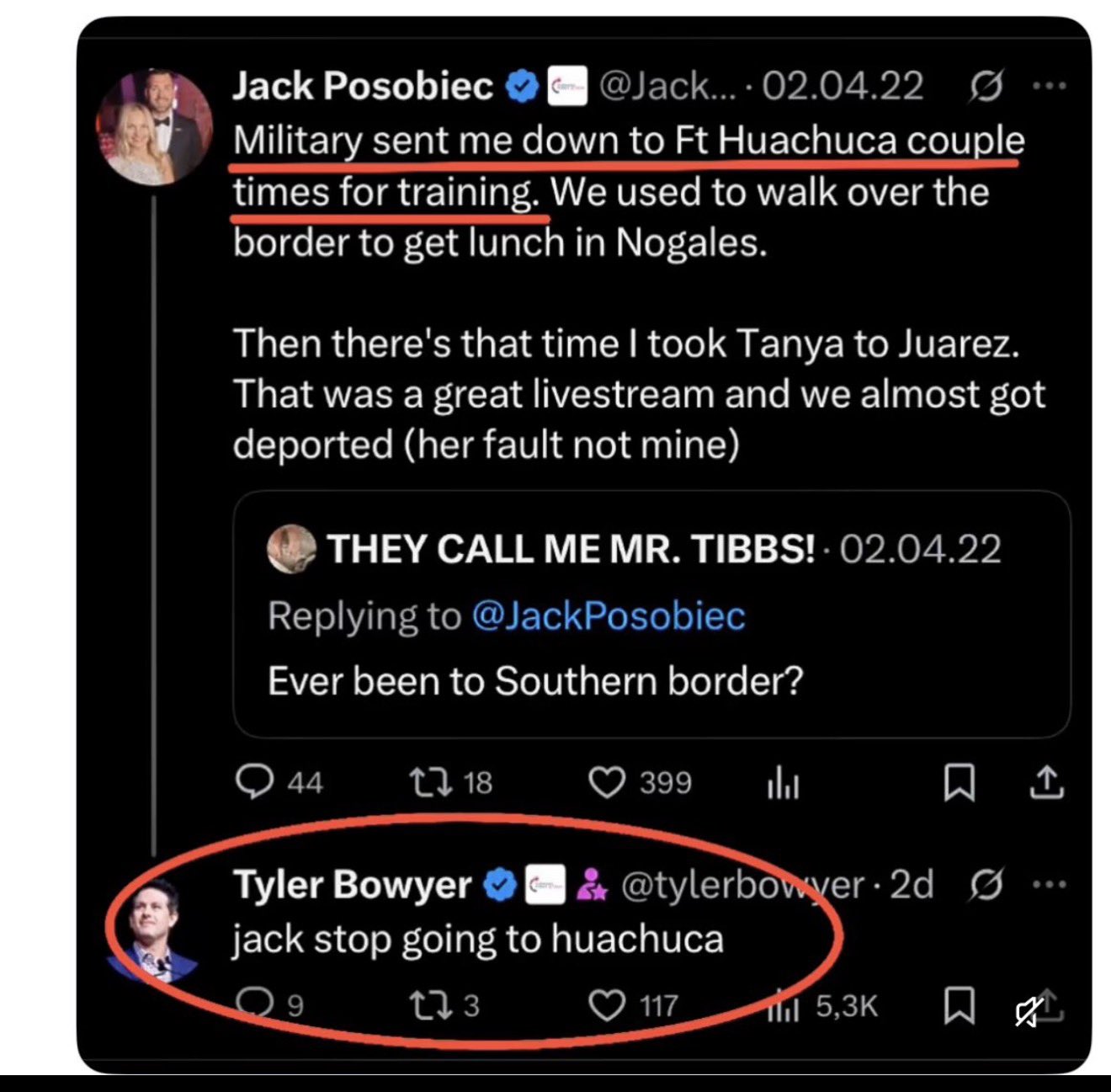
The TPUSA officer whose public framing of drones and security is measured here against what the organization later acknowledged. Documented statements, with no claim of foreknowledge.
Read thisThis website's author is @HolonCitizen on X and YouTube/@HolonCitizen. Follow me there.
Interesting
- The BFRC post points to a box on the truss behind Charlie Kirk's head.
- An Egypt-registered Gulfstream at Provo carries an unexplained ownership discrepancy.
- Reporting says the foreign-connection inquiry was shut down amid an interagency feud.
Related Areas
Images