Conclusion Logic: Evidence Thresholds
Overview
This page is a reference guide to the evidence thresholds that different U.S. legal, administrative, military, and intelligence systems use to decide whether something is serious enough to act on. It is not a claim about any specific person or institution in the Charlie Kirk case. It is intended to help readers engage with the research corpus in a disciplined way, by matching a given claim to the level of confidence the evidence actually supports.
Citizen researchers and commentators sometimes disagree about whether a given piece of evidence amounts to proof, a strong lead, or a hunch. Being clear about which threshold applies makes those conversations more productive and less prone to unfair accusations.
Cross-domain ladder of thresholds (highest to lowest)
The labels below are drawn from U.S. legal, administrative, military, and intelligence practice. Each describes a specific level of confidence used for a specific category of action.
Criminal and quasi-criminal
- Beyond a reasonable doubt — Criminal conviction by jury or bench verdict. The highest standard in U.S. law.
- Admission of guilt / guilty plea — Criminal case resolution by the defendant's own admission, under criminal-standard safeguards.
- Indictment — Probable cause found by a grand jury; a formal criminal charge, not a conviction.
- Information — A prosecutor's charging document relying on probable cause without a grand jury.
- Probable cause — Criminal procedure for arrests, search warrants, and indictments.
- Reasonable suspicion / specific and articulable facts — Brief investigative stops (Terry), limited searches; less than probable cause but more than a hunch.
Civil and administrative
- Clear and convincing evidence — Heightened civil or administrative standard (for example, fraud, civil commitment, termination of parental rights).
- Preponderance of the evidence — Ordinary civil liability; "more likely than not."
- Clear, unequivocal, and convincing — Used in certain immigration and removal determinations.
- Substantial evidence — Administrative law; enough relevant evidence that a reasonable mind might accept the conclusion.
- Well-founded fear — Asylum standard; risk need not be "more likely than not," but a reasonable probability.
- Prima facie case — Initial showing that, if unrebutted, would meet the elements of a claim.
- Preliminary injunction standard — "Likelihood of success on the merits" plus irreparable harm; varies by circuit.
- Some evidence — Minimal evidentiary floor in certain administrative or disciplinary settings.
- Arbitrary and capricious review — A judicial review standard, not an evidence standard to act, but a high bar to overturn a government decision.
Intelligence and national security
- Foreign intelligence probable cause — FISA targeting standard; probable cause that a target is a foreign power or agent.
- National Security Letter / "relevance" standard — Records "relevant" to an authorized investigation; below probable cause.
- Specific and articulable facts — Pen registers and certain data orders; records sought are relevant to an ongoing investigation.
- FBI assessment / preliminary / full investigation tiers — Internal predicates to open or expand investigations.
- Analytic confidence levels — "High," "moderate," or "low" — intelligence-community tradecraft statements accompanying judgments.
- Likelihood language — "Almost certainly," "likely," "possible" — disciplined signaling in intelligence estimates.
- Vetted / validated source — Intelligence and HUMINT handling labels about source reliability.
Military rules of engagement
- Positive identification (PID) — Sufficient certainty that a target is a legitimate military objective.
- Hostile act / hostile intent — Observed act or intent authorizing engagement under the law of armed conflict.
- Collateral damage estimate — Structured prediction of civilian harm, used with PID to decide whether to strike.
Regulatory, compliance, and screening
- Materiality (reasonable-investor test) — Securities and compliance; a fact important enough that a reasonable investor would consider it.
- Credible evidence / credible information — A common trigger to open or escalate an internal or administrative inquiry.
- Sanctions designation standards — "Reasonable basis to believe" or "credible evidence"; standard varies by statute.
- Watchlisting / screening criteria — Inclusion on screening lists under specified risk-based thresholds; distinct from criminal standards.
- OFAC "50% rule" — Compliance action triggered by ownership or control thresholds.
- Compliance red flags — Corporate AML and anti-bribery triggers for enhanced due diligence.
- Reasonable consumer expectation — Advertising and consumer-protection actions.
Media and platforms
- Two-source / corroboration rule — Newsroom policy threshold for publishing sensitive claims.
- Good-faith belief — Content-moderation or takedown triggers under terms of service or legal safe harbors.
- Derogatory information present / absent — Vetting, security, and HR review labels.
Engineering and risk
- As low as reasonably practicable (ALARP) — Engineering risk threshold for mitigation.
- Risk scoring / anomaly thresholds — Fraud and abuse triggers; ML scores crossing an action line.
Below any action standard
- Tip or lead — Unverified report; enough to log or screen, not to take coercive action.
- Open-source / bystander report — Initial unvetted claim; may justify triage only.
- Hunch or intuition — Below any action standard; may inform where to look, not justify action.
How to use this ladder
Quick guide by domain:
- Criminal court — Conviction or plea; probable cause for arrest or warrant; indictment or information to charge.
- Civil court — Preponderance or clear-and-convincing burden; prima facie to survive early dismissal; preliminary injunction standards for urgent relief.
- Administrative or agency action — Substantial evidence or some evidence; sanctions and watchlist standards as specified by statute.
- Police — Probable cause for arrests and warrants; reasonable suspicion for brief stops.
- Intelligence and national security — FISA probable cause and NSL relevance for records; assessment or preliminary investigation to open; analytic confidence levels for judgments.
- Military — Positive identification and hostile act or intent under rules of engagement; collateral damage estimate.
- Compliance and corporate — Materiality, credible information, red-flag triggers; investigations often proceed under preponderance.
- Media and platforms — Two-source corroboration; good-faith belief.
- Risk, engineering, fraud — ALARP; anomaly thresholds.
- Lead generation only — Tips, bystander reports, hunches.
Applying the ladder to the research corpus
For the Charlie Kirk case, commentators have produced a wide range of claims. Matching each to the right threshold improves the discussion:
- Documented records and official statements — Most appropriate to cite as fact, with attribution to the source.
- Specific witness accounts and corroborated reporting — Usefully framed as "reported," with the source named.
- Single-source allegations and online claims — Most appropriately described as claims or allegations pending corroboration.
- Hypotheses and theories — Clearly labeled as such, with the reasoning made explicit.
- Hunches and speculation — Useful for directing further research; not appropriate as the basis for public accusation.
This discipline is especially important when discussing living individuals. The research corpus aims to organize questions and claims — not to assert that any named person is guilty of a crime. When a claim has not yet been proven at the level of the action being urged, the claim should be framed with language matching its actual confidence level.
How this connects to other pages
This reference ties into other reform-oriented topics:
- Law 1 — law-enforcement records disclosure.
- Law 2 — intelligence-community records disclosure.
- Law 3 — mandatory investigation.
- Law 4 — trusted investigator oversight.
- Fix Overview — broader summaries of reform themes.
Why Citizen Investigators Say This Reform Matters (X Context)
X and independent coverage of the Kirk case repeatedly surface gaps this page's policy concept would address:
- ATF inconclusive fragment-to-rifle results misread online as both full exoneration and full proof—showing mismatched confidence thresholds.
- Google Trends spikes treated as court-grade attribution of Israeli searchers despite sampling noise critiques (@paramounttactcl, Tim Pool-class rebuttals).
- Joe Kent's on-record NCTC statement is higher-grade attribution than anonymous X threads—yet still not a verdict.
These are policy responses to documented transparency gaps, not findings that any living person committed a crime.
Interesting In This Area
- Discovery reform sets 30, 60 and 90-day clocks; Law 3 sets minimum duration.
- Medical transparency and event security both fail without an agreed standard of proof.
- Law 2 limits redaction by list; Law 4 gives civilians release authority.
- Politicians and churches can both judge on record rather than assumption.
Other Pages In This Section
Most of what the public knows about September 10 exists only as phone video and venue-camera footage. This proposal would freeze that material the moment a covered incident happens, with a minimum 180-day hold and criminal penalties for deletion.
Read this
A set of questions to put to any officeholder about oversight and disclosure — not a list of names. It is built so a voter can judge a record without first assuming a conspiracy.
Read thisLaw 3: Mandate the Investigation
Disclosure without investigation just releases what someone already chose to write down. This draft forces multi-agency teams with protected budgets, an independent monitor, mandatory database queries and a minimum duration.
Read this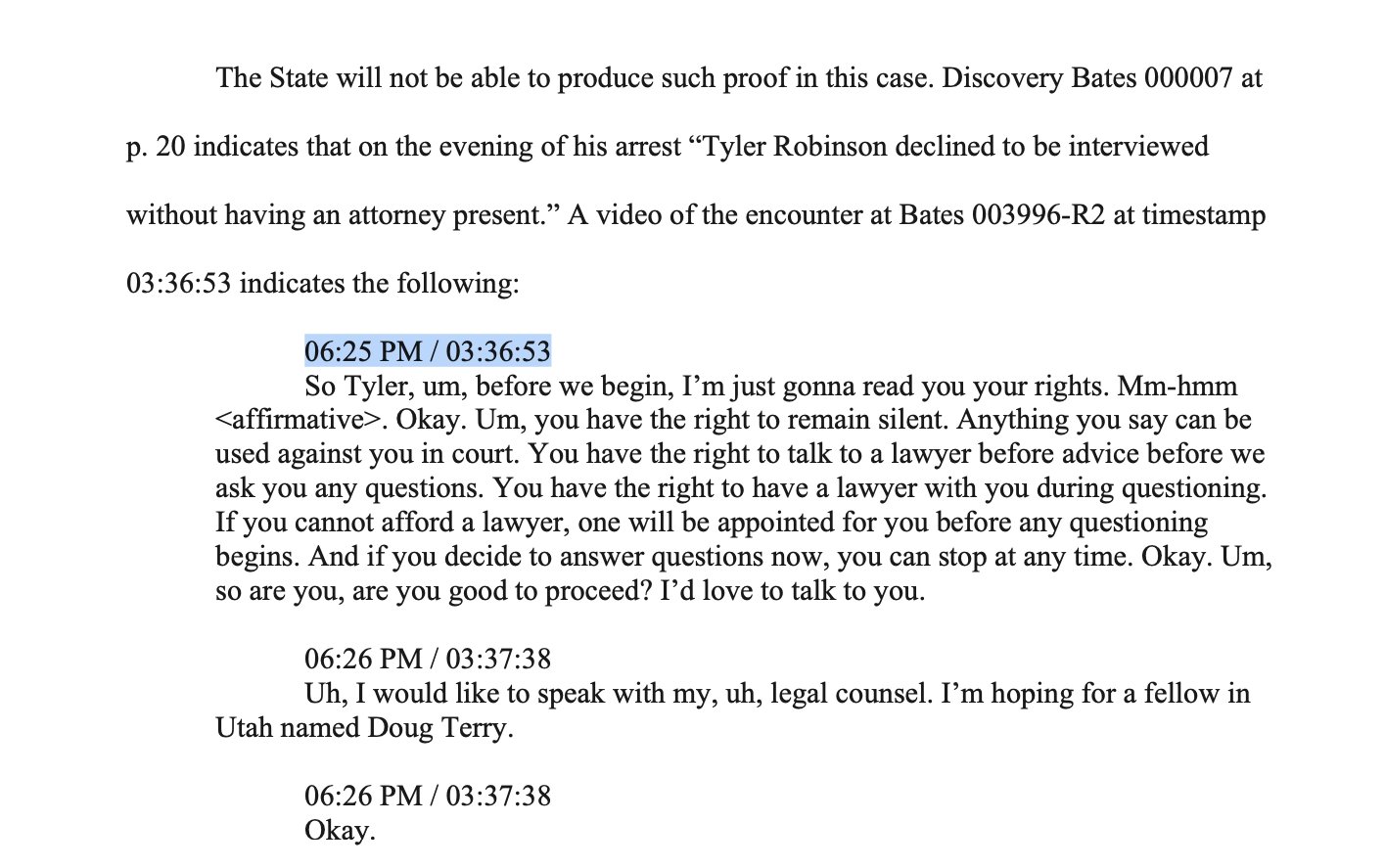
Federal agencies sit outside the state prosecutor's Brady duty, so evidence they hold can stay unreachable. The fix names them custodial parties and puts clocks on it: 30 days to respond, 60 to review classification, 90 for judicial review.
Read thisElsewhere In The Investigation
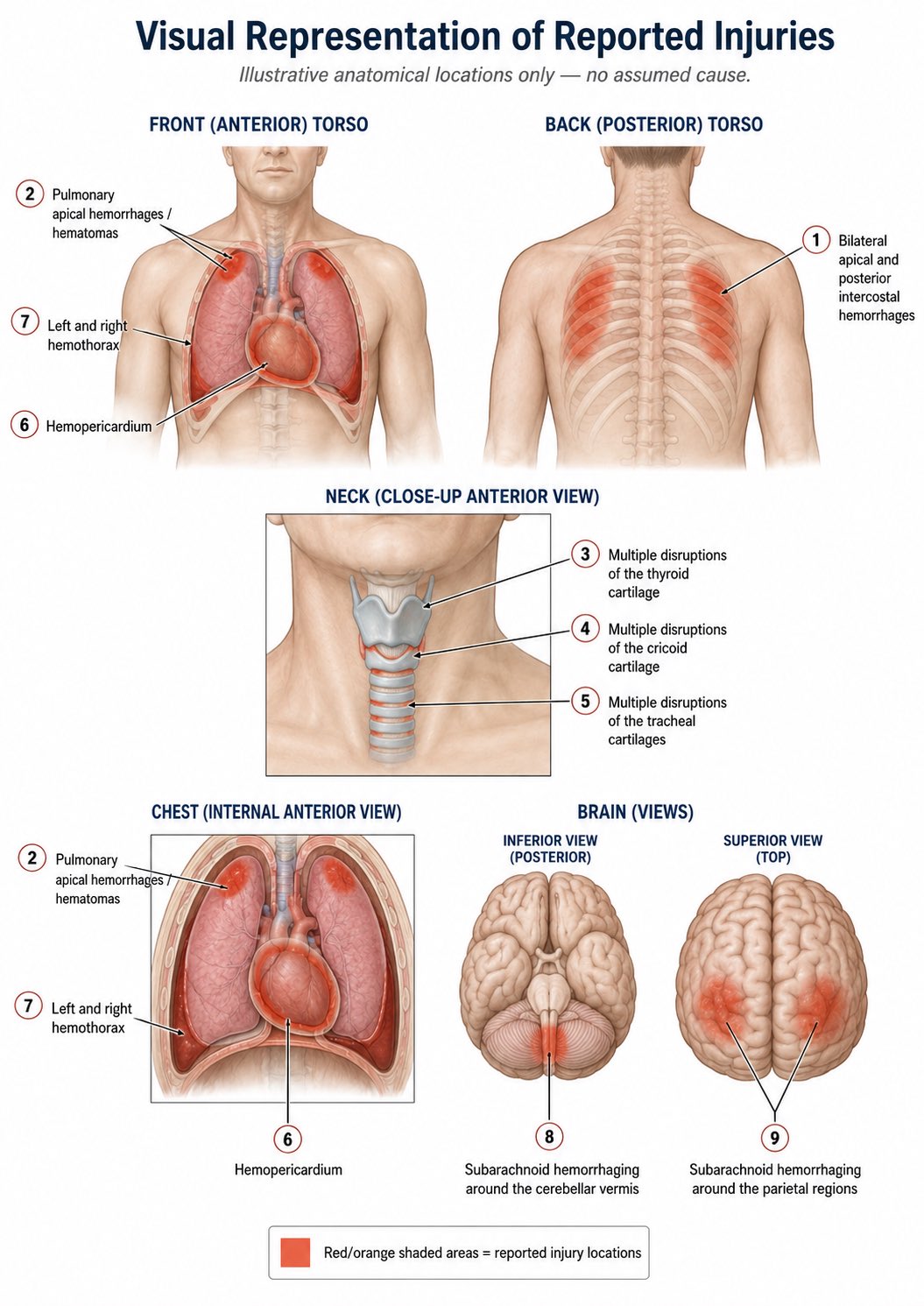
Where the citizen investigation has actually landed: not the .30-06 round of the official account, but an explosive in the microphone. Documented as of July 2026.
Read thisBallistics — ATF Inconclusive & CBLA
The ATF could not match the recovered jacket fragment to the seized Mauser. This page separates a casing from a fragment and explains why that distinction decides a great deal.
Read thisThis website's author is @HolonCitizen on X and YouTube/@HolonCitizen. Follow me there.
Interesting
- Citizen accounts describe no bomb dogs and no roof protection that day.
- The stairwell figure's backpack is fuller, not emptier, after the supposed outfit change.
- An eleven-year Steam profile was renamed and reportedly scrubbed, yet appears in no exhibit.
Related Areas
- Theories
- Proof Not Tyler
- Proof Intel Services
- Government Evidence
- Legal Investigation
- Real Killer