Discovery Rights Reform
Overview
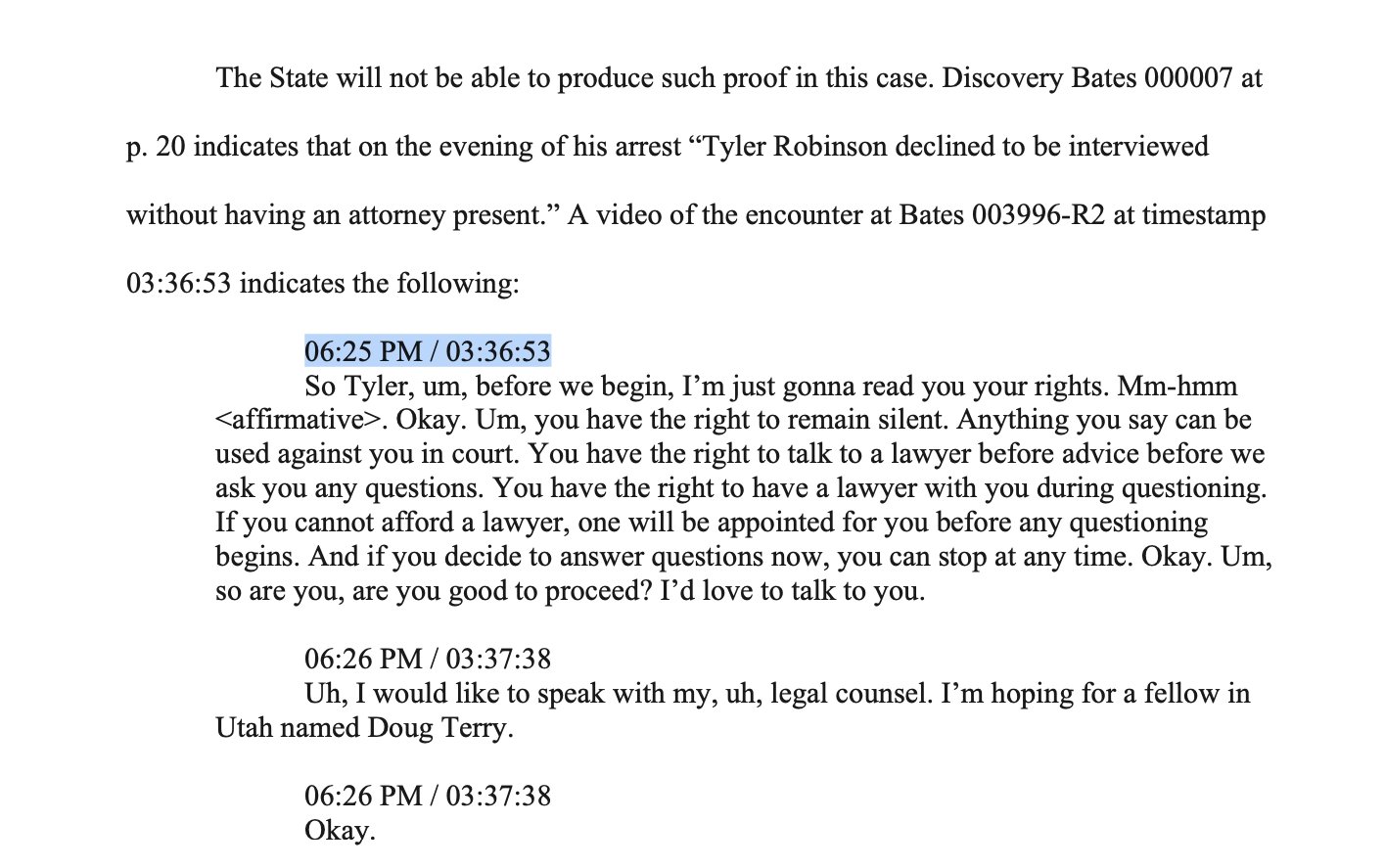
This page sketches a policy concept that recurs throughout the research corpus: reforming criminal discovery rules so that defendants can reliably obtain exculpatory or material evidence held by federal agencies, not only by the local prosecution. It is not legal advice, and it does not assume that any defense team has been denied material evidence in the Charlie Kirk case. It summarizes ideas from commentators who believe that the Supreme Court's rule in Brady v. Maryland — requiring prosecutors to disclose exculpatory material — is difficult to enforce when the material is held by an agency that is not formally part of the prosecuting office.
The basic goal is to explore how a statute might:
- Extend Brady-style disclosure duties to federal agencies as custodial parties in serious criminal cases.
- Create enforceable procedures for requesting and obtaining agency-held material.
- Impose real remedies when material evidence is withheld.
Problems this proposal is trying to address (as described)
Commentators in the research corpus argue that existing discovery practice has structural limits:
- Custodial boundary — Federal agencies often argue that material they hold is not "in the possession" of local prosecutors and therefore falls outside Brady obligations, even when the agencies played a role in the investigation.
- Classification — Classified material can be held back from defense teams even when it contains information material to guilt or innocence.
- Slow processes — Formal mechanisms such as the Classified Information Procedures Act (CIPA) exist but can be time-consuming, giving agencies leverage to delay.
- Remedy gap — When late-disclosure or non-disclosure of material evidence is identified after trial, the remedy may be limited to a new trial long after memories and evidence have faded.
- Federal-state coordination — Coordination between federal and state authorities can leave gaps through which material evidence is held but never disclosed.
These themes are presented here as concerns about incentive structures and procedural gaps, not as adjudicated findings about any specific case or defense team.
Core ideas for discovery-rights reform
Commentators sketch various possible reforms, which can be grouped into themes:
1. Custodial-party designation
A statute could specify that, in defined categories of serious criminal cases (for example, homicide, terrorism, or public-corruption cases involving federal resources), federal agencies that participated in any aspect of the investigation are custodial parties for Brady purposes. This would include the FBI, ATF, DHS components, and the Intelligence Community agencies where they contributed to the investigation.
2. Affirmative search duty
Designated custodial agencies could have an affirmative duty to search their records systems for material responsive to a defense request, with the search methodology documented and reviewable. A response of "no responsive records exist" would require a description of the search actually performed, not merely a conclusion.
3. Defense access procedures
A statutory procedure could allow defense counsel in covered cases to:
- Serve defined discovery requests directly on designated custodial agencies.
- Appeal denials to a designated federal court with authority to order disclosure.
- Request in camera review of classified or sensitive material, with protective orders where appropriate.
4. Independent classification review
For classified material asserted to be responsive, an independent classification review officer could assess whether the claim of classification is proper and whether redacted disclosure is feasible. The officer's determination would be appealable.
5. Prompt disclosure timelines
Statutory deadlines could ensure that discovery decisions do not become indefinite. For example:
- Initial responses within 30 days of a properly served request.
- Classification reviews completed within 60 days.
- Judicial review of any denial within 90 days.
6. Real remedies for non-disclosure
If material evidence is withheld in violation of the statute, available remedies could include:
- Jury instructions adverse to the prosecution.
- Suppression of related prosecution evidence.
- Dismissal with or without prejudice in extreme cases.
- Sanctions, including criminal sanctions for intentional obstruction.
- A civil cause of action for individuals convicted based on wrongful withholding.
7. Pre-indictment preservation
Agencies involved in a covered case could be subject to an automatic preservation obligation from the moment of a defined triggering event (for example, opening a full investigation, executing a search warrant, or referring for prosecution), rather than waiting for a defense request.
8. Coordinated federal-state procedure
For cases prosecuted in state court but involving federal agencies as custodians, a standardized coordination procedure could avoid the discovery gap that arises when neither prosecution nor defense has clean access to the federal material. The procedure could designate a federal liaison with defined response duties.
9. Informer and cooperator disclosure
In covered cases, disclosure obligations could include documentation about informants and cooperators whose information shaped the investigation — to the extent possible without endangering life — so that the defense can test the reliability of the information flow.
10. Training and oversight
A statutory oversight office could be charged with training agency personnel on their discovery obligations, reviewing compliance, and reporting to Congress on patterns of delay or obstruction.
Safeguards and limits
Several safeguards are central to any discovery-rights reform:
- Protection of active sources and operations — Source identities and currently active collection should remain protected through in camera and protective-order procedures.
- Prosecutorial discretion — Reforms should not unduly constrain legitimate prosecutorial discretion about charging and trial strategy.
- Due process on both sides — Standards should respect the rights of victims and witnesses as well as defendants.
- Workable burdens — Requirements should be calibrated to the seriousness of the case; minor matters should not trigger the full framework.
- Judicial administration — Courts should retain flexibility to manage their dockets, with procedural defaults that encourage efficient resolution.
These safeguards are at least as important as the rights the framework would create.
How this connects to other pages
This plan ties into other reform-oriented topics:
- Law 1 — law-enforcement records disclosure at the statutory level, complementing the case-specific discovery rights described here.
- Law 2 — intelligence-community records disclosure.
- Law 3 — mandatory investigation that would generate records requiring disclosure in parallel proceedings.
- Digital Evidence Preservation — preservation standards that must hold long enough for discovery to occur.
- Fix Overview — broader summaries of reform themes.
As with all pages in this section, the purpose here is to organize ideas and claims that have been raised — not to assert that any named individual or agency has violated discovery obligations in any specific case.
Why Citizen Investigators Say This Reform Matters (X Context)
X and independent coverage of the Kirk case repeatedly surface gaps this page's policy concept would address:
- Sealed FBI digital forensics and delayed discovery fights documented across Discovery Delays.
- Preliminary-hearing video shown to family but not broadcast—public cannot audit claims.
- ATF fragment reports and CBLA/VCM materials debated without full public exhibits.
These are policy responses to documented transparency gaps, not findings that any living person committed a crime.
Commentator coverage: Citizen journalist Ian Carroll has covered the case's discovery fights and sealed-transcript disputes in his posts, arguing that the public's inability to audit agency-held forensic material illustrates exactly the custodial-gap problem this reform concept targets.
Interesting In This Area
- Digital evidence preservation is what makes a later discovery demand worth making.
- Victim families would gain evidence access through counsel; whistleblowers gain protected channels.
- Law 4 embeds civilians with full file access, bypassing the disclosure fight entirely.
- Media reform strengthens FOIA, the other route into records agencies hold.
Interesting In Other Areas
- Federal agencies sit outside the state prosecutor's Brady duty in this case.
- Law 1 would force DoJ and FBI release; Law 2 covers intelligence.
Images
Other Pages In This Section
A nationally known speaker was killed on an open campus plaza in daylight. This framework would publish baseline standards, force transparent contracting and vetting, and require an after-action review someone outside the contractor can read.
Read this
Kirk's relatives have followed the state's case largely through the same filings any reporter can read. This proposal gives families a named liaison, timely forensic briefings, and a voice in charging decisions.
Read this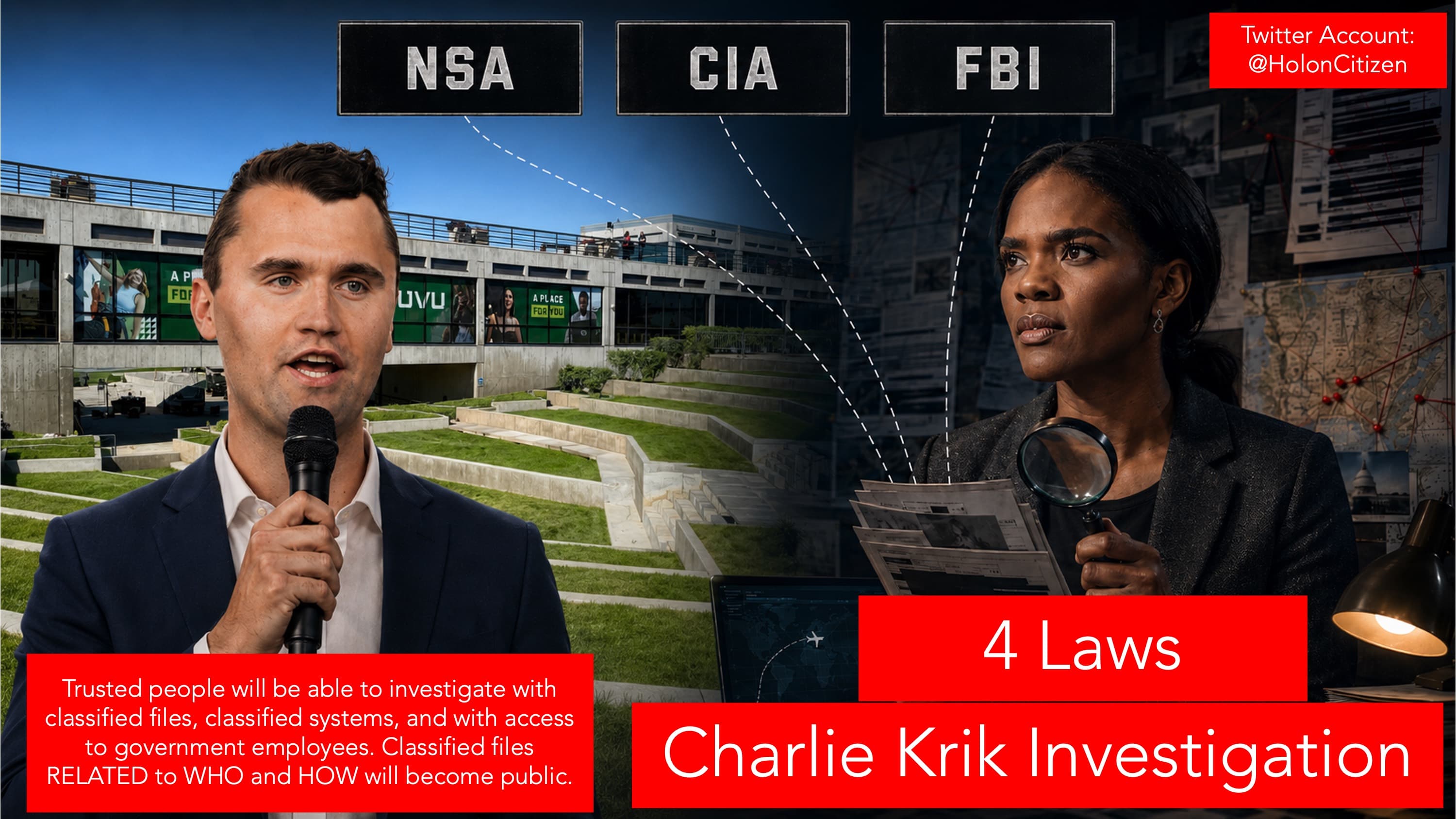
Four proposed federal laws plus twelve companion reforms — disclosure, mandatory investigation, trusted civilian investigators, and the practical fixes underneath them. Start here to see how the pieces fit together.
Read this
Foreign Influence Transparency
FARA was written for a slower century. Modernised registration and proportionate enforcement would make foreign money visible — which protects the innocent as much as it exposes the concealed.
Read thisElsewhere In The Investigation
The actual discovery fights in State v. Robinson — DNA and chain-of-custody material the defense says never arrived, sealed digital forensics, and the continuance motions that followed.
Read thisLaw 1: Charlie Kirk Investigation - DoJ/FBI Forced Disclosure Act
The full statutory text of the DoJ and FBI disclosure law, modelled on the Epstein Files Act. This is the live draft the Fix section summarises.
Read thisThis website's author is @HolonCitizen on X and YouTube/@HolonCitizen. Follow me there.
Interesting
- Congregations holding memorials cannot check the basic record themselves.
- Peters reportedly found image results vanish for people he had just named.
- Search spikes reportedly clustered on Fort Huachuca escorts the day SAM-702 flew in.
Related Areas
- Charlie Kirk Assassination — Forced Disclosure
- Government Evidence
- FBI
- (Possible) Cover‑up
- Legal Investigation
- Proof Intel Services