Barrel Dust & Bullet Diameter
Two lines of sworn testimony from the July 2026 preliminary hearing are being circulated as the strongest ballistics problem in the state's case against Tyler Robinson: the ATF firearms examiner testified that dust and debris were observed inside the barrel of the seized Mauser .30-06, and that the autopsy jacket fragment measured a diameter range of .286 to .301 inches. Robinson is charged, not convicted, and is presumed innocent.
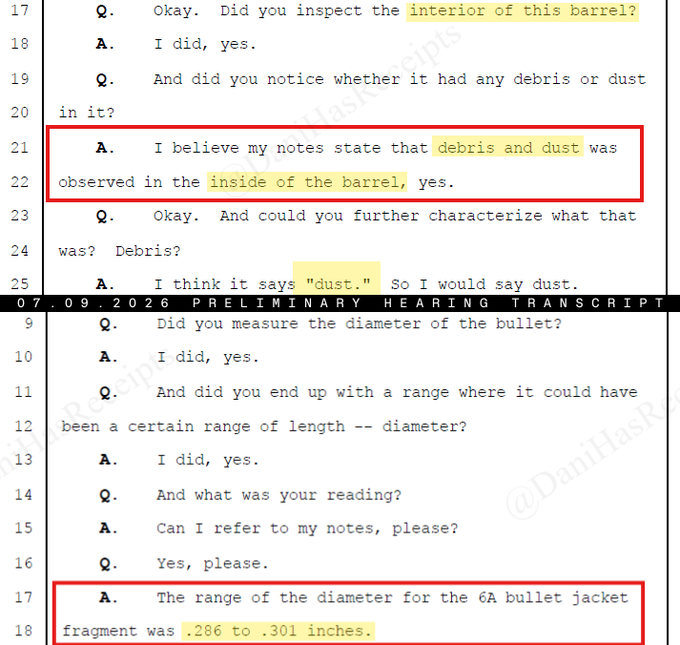
Preliminary hearing transcript excerpts as circulated on X. Source: @TheDibsterX on X, July 31, 2026. Full transcript: Preliminary Hearing — Day 4.
What the examiner actually said
The witness is Samantha Karner, the ATF firearms and toolmark examiner who compared autopsy Exhibit 6A (the bullet jacket fragment) against Exhibit 1 (the recovered Mauser). The exchanges below are transcribed on this site's Preliminary Hearing — Day 4 page.
On the inside of the barrel, under examination by defense attorney Mr. Burt:
Q. Did you inspect the interior of this barrel? And did you notice whether it had any debris or dust in it?
A. I did, yes. I believe my notes state that debris and dust was observed in the inside of the barrel, yes. ... A plethora of things. I'm not sure why something is ever in a barrel.
On the diameter of the fragment:
A. [Caliber is] a class characteristic, because a lot of firearms will have the same... caliber. ... The range of the diameter for the 6A bullet jacket fragment was 0.286 to 0.301 inches. [The direction of twist was 6 right — a class characteristic.]
Why citizen investigators flag it
@TheDibsterX posted the transcript screenshot on July 31, 2026, writing, in his words:
"According to the ATF Ballistic expert, Tyler Robinson's rifle could not have been fired, nor the bullet matches the size that rifle uses. I don't understand why is there such a large amount of people online that STILL say Tyler Robinson used this rifle to kill Charlie."
The reading behind that post has two parts. First, a rifle fired shortly before seizure would be expected to show combustion residue — fouling, soot, unburned powder — rather than settled dust, so the dust observation is treated as an argument the weapon had been sitting unfired. Second, a .30-06 fires a bullet of nominal .308-inch diameter, and a measured range topping out at .301 inches sits below that figure, which is read as the fragment not having come from a .30-06 at all.
What the testimony does not establish
Both readings are contested, and this page carries the counterarguments alongside the claim.
- Karner did not testify that the rifle could not have been fired. She was asked what she observed and answered that her notes record dust and debris. Asked what the material was, she said she was "not sure why something is ever in a barrel." No opinion about last-fired timing appears in the quoted exchange, and the transcript records no residue or last-fired analysis being offered either way.
- A fired barrel can still collect dust. The rifle was reportedly recovered outdoors, wrapped in a towel, and then moved through evidence handling before examination — see Rifle Chain of Custody and Gun Dropped Location. Time and exposure between a shot and a laboratory bench are the ordinary explanation.
- A deformed fragment measures small. A jacket that has struck a body and come apart is no longer round. Prosecution-side framing is that .286 to .301 inches brackets a .30-caliber class consistent with a deformed .308 jacket, not a different cartridge — which is also why caliber is a class characteristic, as Karner said in the same answer. @OfVoice35353 made this argument on X; @misfitpatriot_ argues separately that a soft-point .30-06 should fragment and that the non-match is being overclaimed.
- None of it makes the match affirmative either. The same examiner's report is the one that could neither identify nor exclude the Mauser as the source of the fragment — the finding covered on ATF Fragment Inconclusive and Proof Not Tyler — ATF Ballistics.
What would settle it
A barrel residue and last-fired examination, the examiner's full bench notes, and the complete measurement sheet for Exhibit 6A would answer both questions directly. None of the three has been released publicly. Those are among the laboratory disclosures the Charlie Kirk Investigation Laws are drafted to force into public view. The wider forensic gap this sits inside is mapped at Suspicious — the rifle could not be excluded, or identified and Cause of Death.
X.com posts:
Interesting In This Area
- The same examiner's report could neither identify nor exclude the seized Mauser.
- Engraved rounds were reportedly left in a towel while the backpack went along.
- The rifle was recovered outdoors in a wooded strip before reaching any laboratory bench.
- Multiple prints reportedly sat on the weapon, and no video shows firing.
Interesting In Other Areas
- The suspect-side record of the same weapon is collected on Tyler Robinson — Weapon and Rifle.
- Open questions remain about who found the rifle and how it was sealed.
- The state brief says downward travel and C7 up to C2 obliteration in the same filing.
- Defense framing treats the inconclusive comparison as exculpatory rather than neutral.
Other Pages In This Section
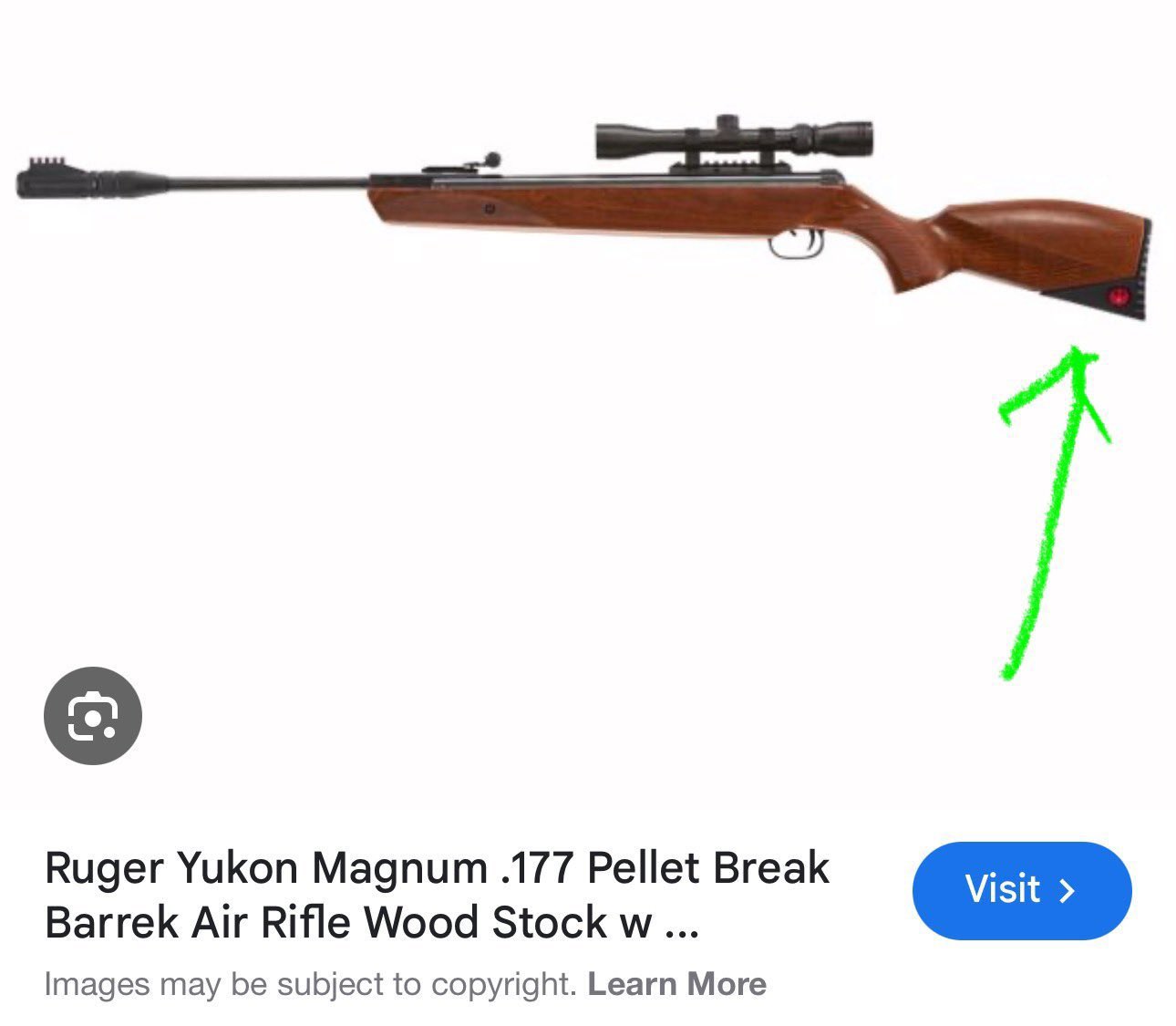
A claim recorded in the master file says a bullet was lodged in the wooden stage, and that it was removed. If a second projectile existed and left before independent documentation, it belongs in a chain-of-custody log nobody has produced.
Read this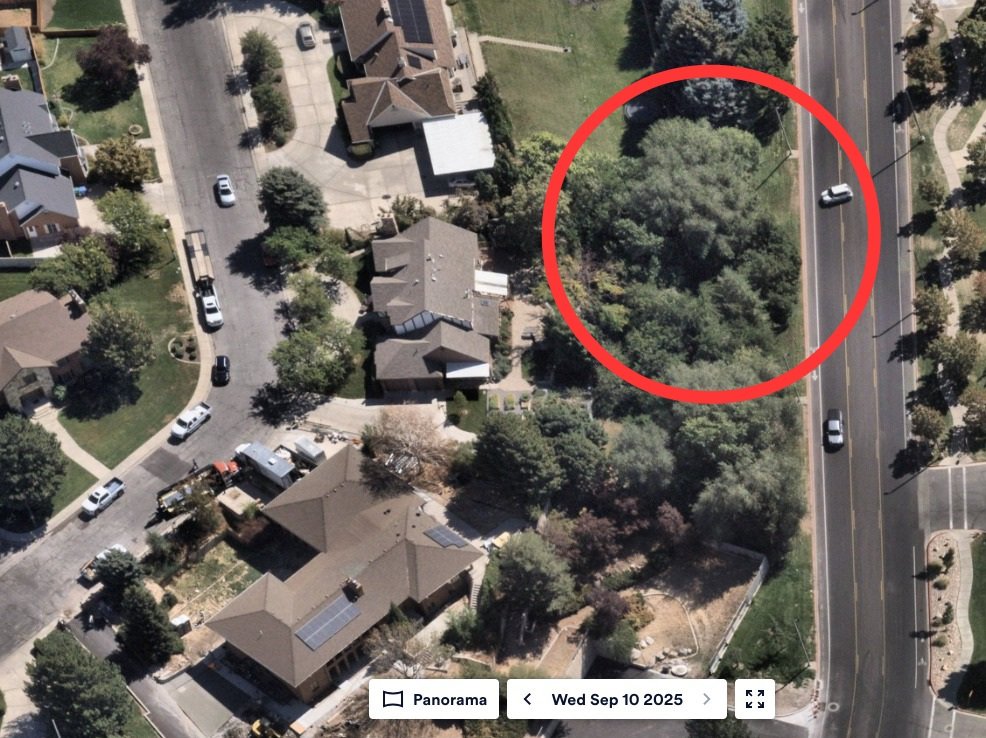
Rifle Site — White Kia Soul Turnaround (Claims)
A citizen journalist circles a wooded lot on September 10 aerial imagery and says a white Kia Soul turned around at exactly that spot that morning. No plate, no VIN, no registration — the page carries the claim and the missing links together.
Read this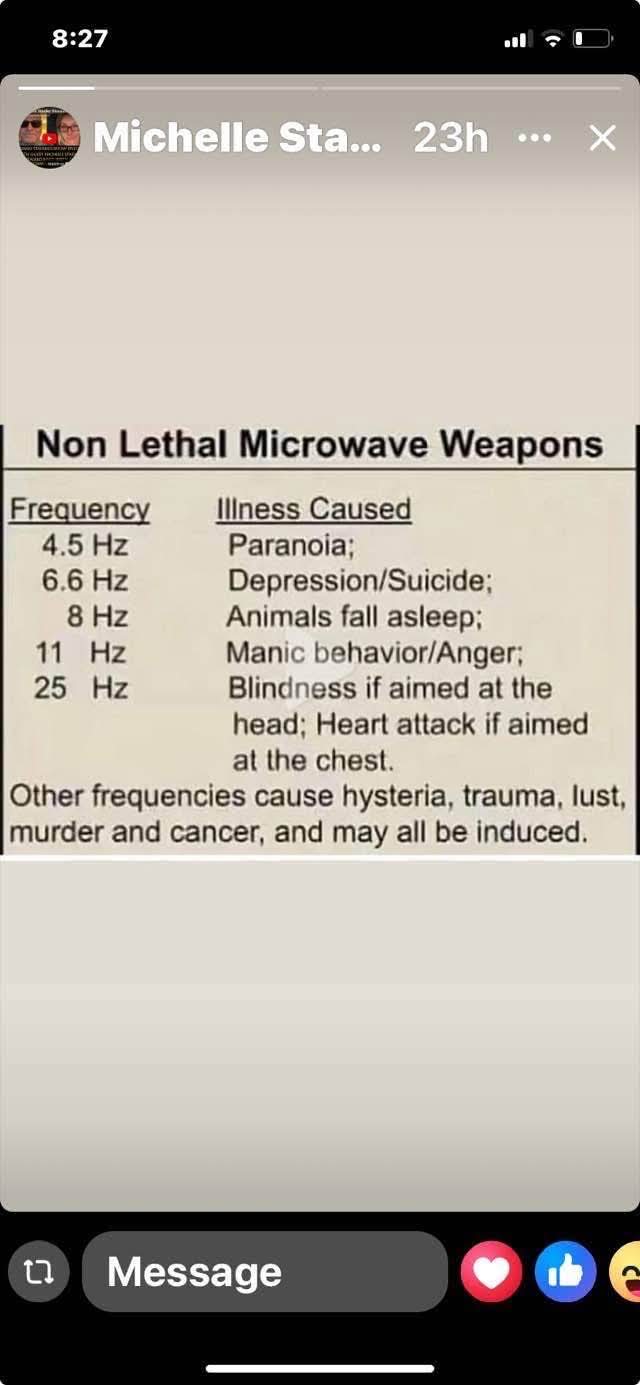
Alternative Calibers & Weapons
If the Mauser chain fails on the lab report, the energy, or the geometry, what fired instead? This page holds the proposed answers — a 9mm CornerShot from the tent, a suppressed small-bore, or no bullet at all, as in the exploding-mic theory.
Read this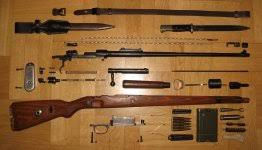
Mauser .30-06 Rifle — Official Narrative
The state's weapon: a scoped Mauser Model 98 in .30-06, tied to a grandfather and a World War I story. Commentators note the recovered rifle is a commercial 98 rather than a K98, and that M98 Mausers were not factory-chambered in .30-06 in that era.
Read thisElsewhere In The Investigation
Tyler Robinson Weapon and Rifle
Everything the record says about the Mauser attributed to Robinson — recovery, DNA claims, the inconclusive ATF comparison, and the preliminary-hearing testimony about what was found inside the barrel.
Read thisWho found the rifle, when, after which K-9 passes, and how the towel-wrapped bundle was photographed and sealed. These are ordinary evidence-handling questions, and on the public record they are unanswered.
Read thisThe prosecution's physical case needs the autopsy fragment tied to the seized rifle, and the state's own lab could not do it. Rifling consistent with numerous makes and models is a class description, not an identification.
Read this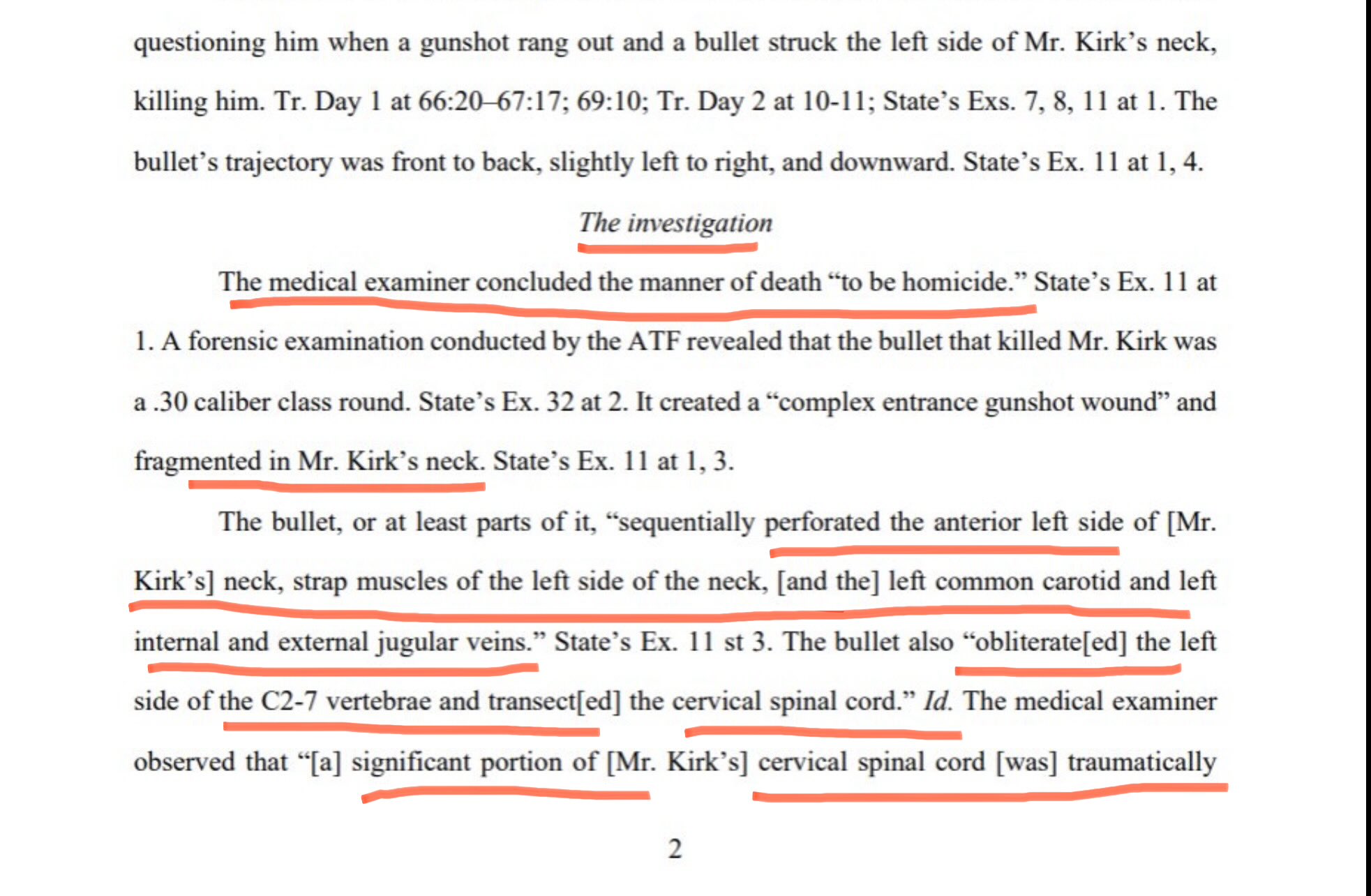
The State's Brief: Downward Trajectory vs C2–C7 Damage
The State's own probable-cause brief says the bullet travelled downward, and says the left side of the vertebrae was obliterated from C7 up to C2. Critics say those two sentences pull in opposite directions.
Read thisThis website's author is @HolonCitizen on X and YouTube/@HolonCitizen. Follow me there.
Interesting
- The unsealed report says the fragment could not be tied to the seized rifle at all.
- Even Fox News reported the judge unsealing that inconclusive ATF forensic document.
- With the shooter unidentified, Guardian coverage pivoted to old show quotes rather than ballistics.