Gun & Bullet Analysis
The government's theory requires a scoped Mauser .30-06 from the Losee rooftop to have killed Charlie Kirk. This section tests that chain — and documents alternatives. Start with the investigation index.
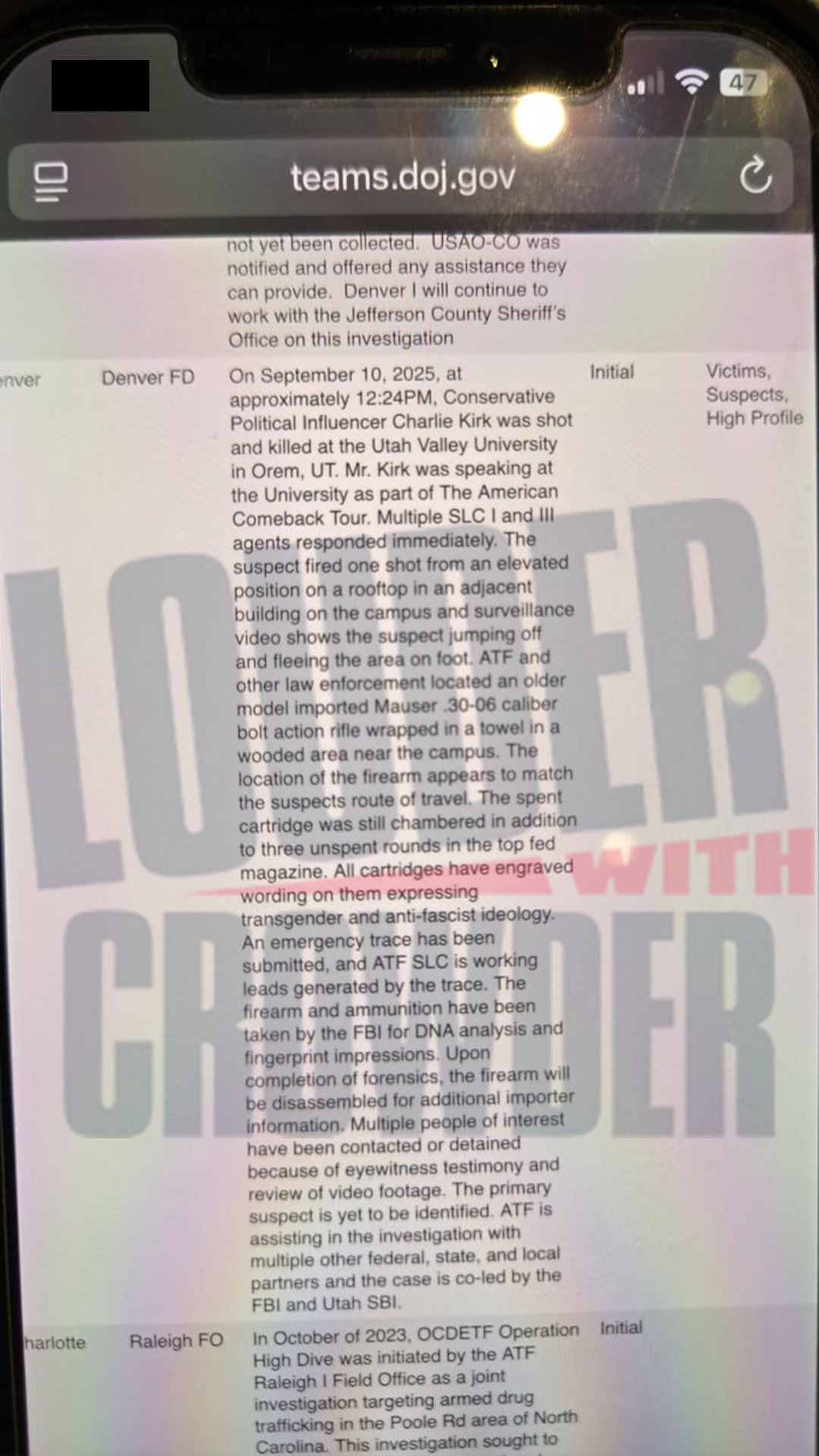
The strongest forensic gap in public filings is the September 17, 2025 ATF report: autopsy Exhibit 6A (bullet jacket fragment) cannot be matched to seized Exhibit 1 (the Mauser) — rifling fits numerous makes and models. At the July 2026 preliminary hearing the same ATF examiner testified that dust and debris were observed inside the seized rifle's barrel and that the fragment measured .286 to .301 inches — testimony citizen investigators read two opposite ways (Barrel Dust & Bullet Diameter). Commentary alleges the FBI may follow with VCM and revived CBLA lead analysis the Bureau discontinued in 2005. Tyler Robinson is charged, not convicted — see ATF Fragment Inconclusive and Proof Not Tyler.
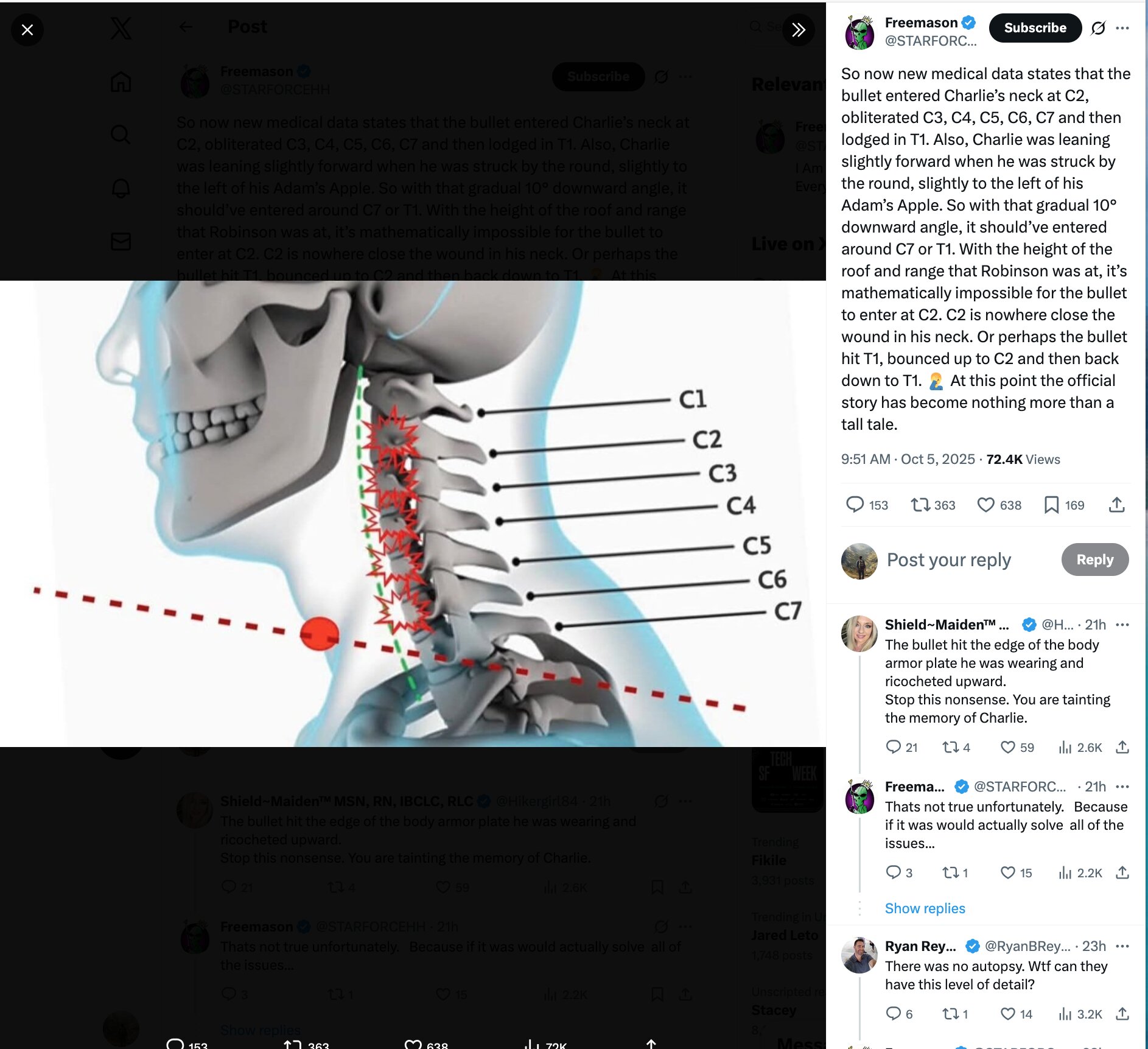
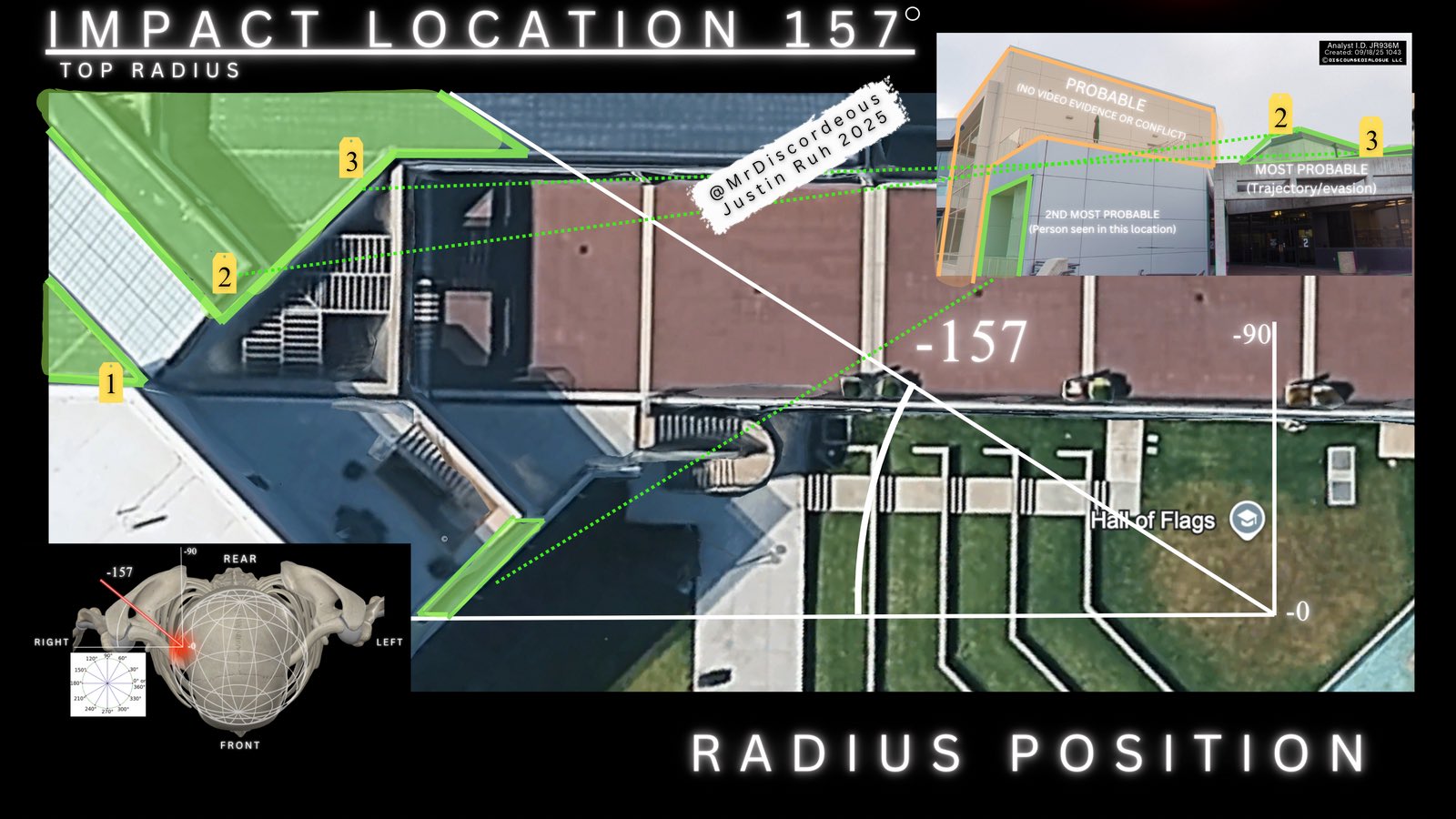
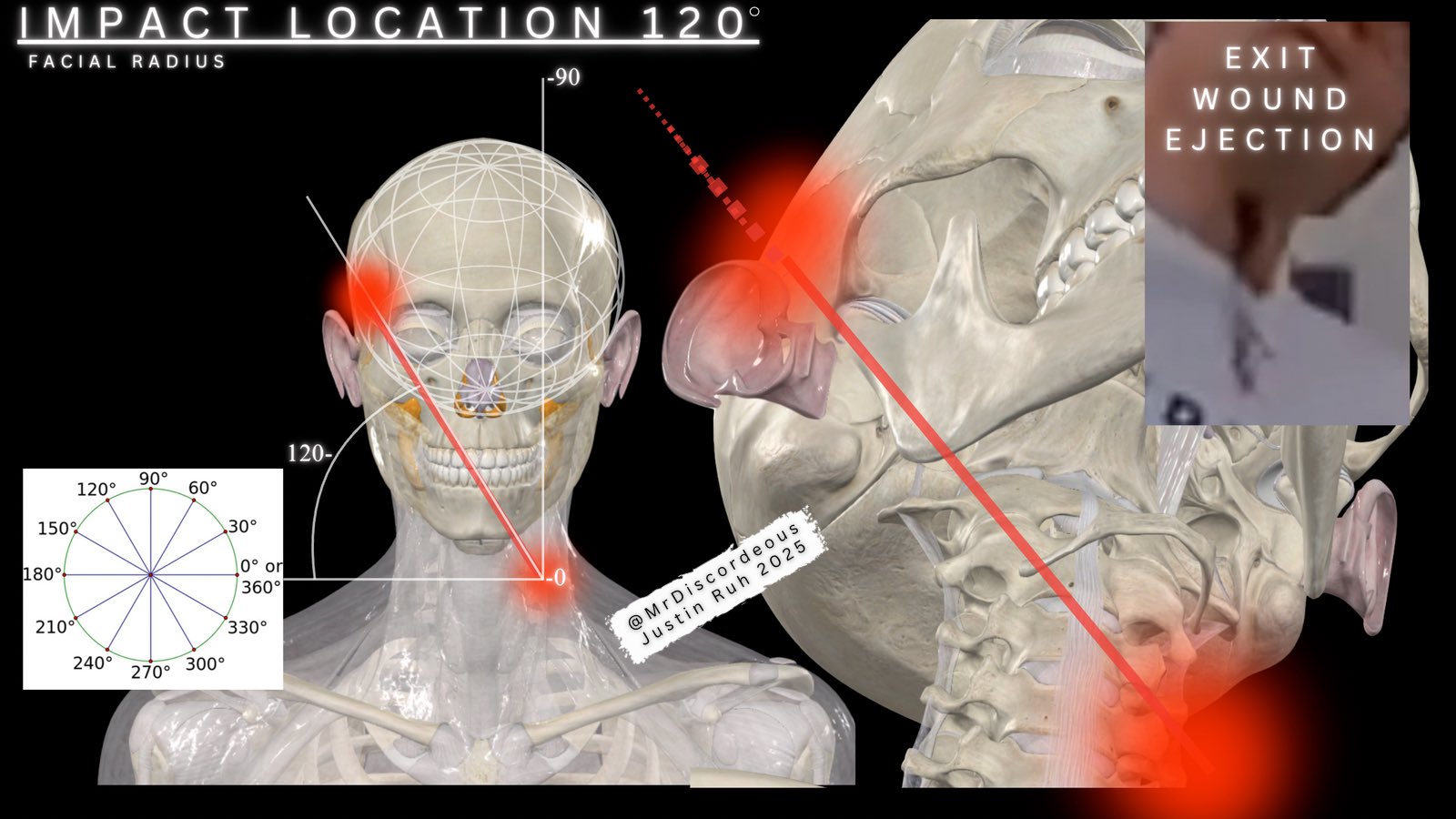
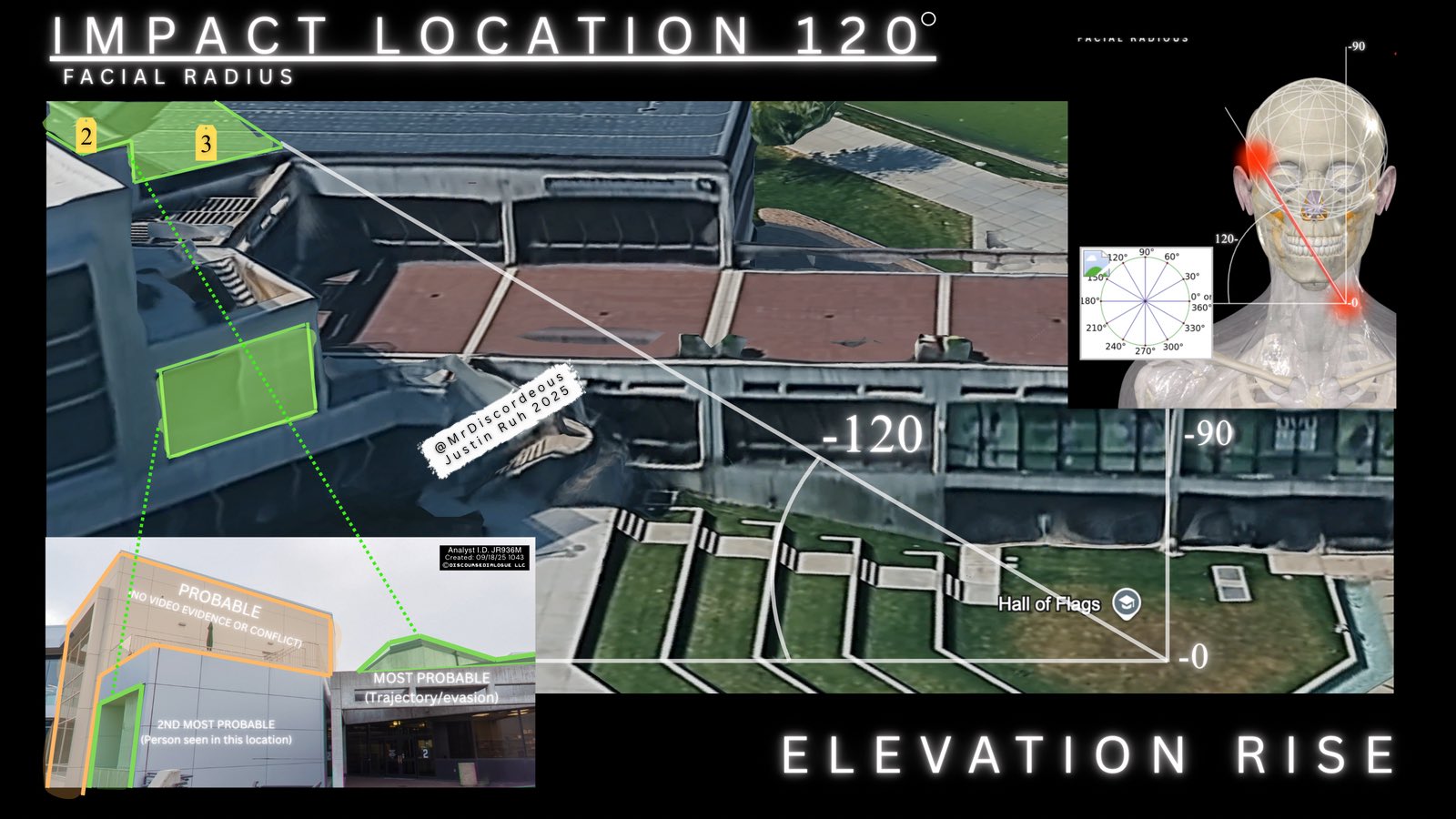
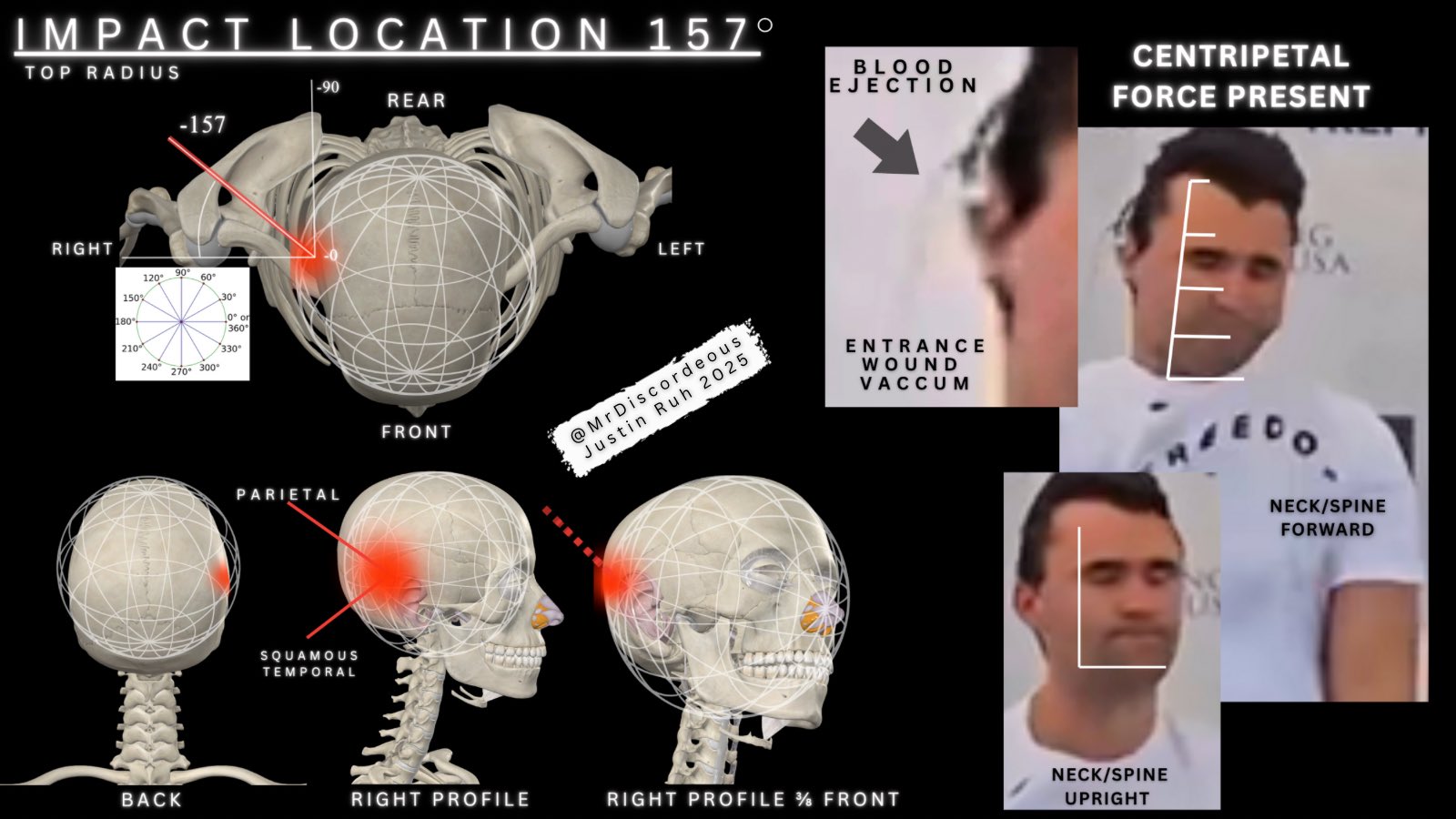
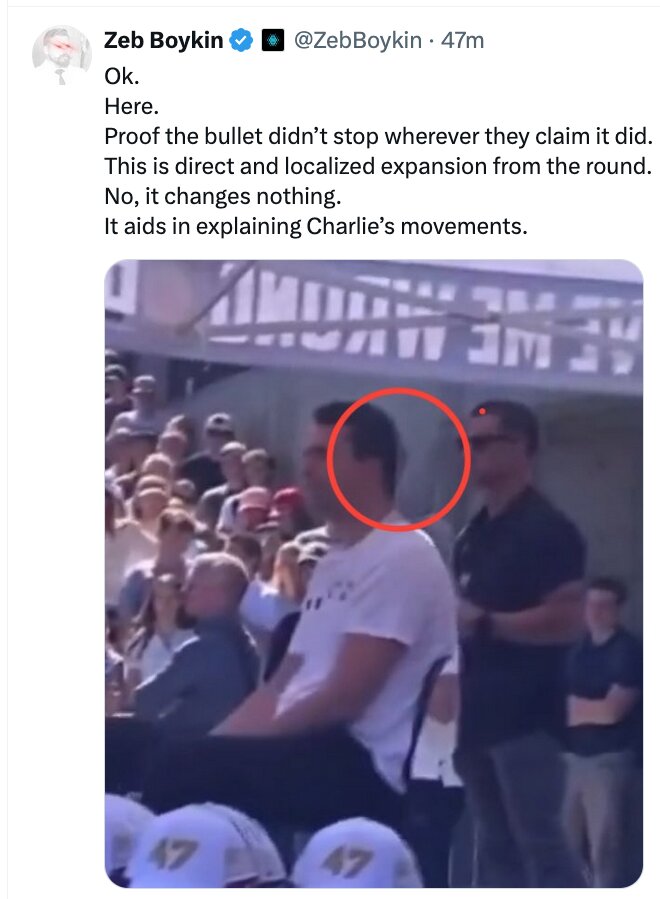
Physics and wound geometry challenge the .30-06 story even before alternative weapons enter: .30-06 carries ~3,950 Joules muzzle energy vs ~482 J for 9mm — over 8× — (.30-06 Energy Mismatch). A Losee shot at 5–9° downward would likely strike face/jaw first, not the reported entry between larynx and trachea left of the spine (Wound Trajectory & Angle). @RealCandaceO reporting adds multiple fingerprints on the gun, a rooftop filmmaker saying Tyler's gun and outfit don't match, and no video of Tyler firing.
Readers pursuing non-rifle mechanisms should see Alternative Calibers & Weapons (9mm CornerShot, shaped charges, mic devices) and Medical ballistics. Investigation Index → ATF Fragment → Energy Mismatch → Proof Not Tyler.
Laws (Charlie Kirk)
Barrel residue testing, true bullet caliber, full autopsy wound trajectory, and unsealed ATF/FBI laboratory reports are among disclosures the Charlie Kirk Investigation Laws may force into public view.
What Citizen Investigators Emphasize on X
Gun & Bullet is where many readers abandon the lone-.30-06 story: ATF inconclusive identification to the specific rifle, energy/wound mismatch charts, trajectory geometry, and missing shoot-video. Equally loud are counter-posts arguing fragmentation explains non-match and that hearing testimony keeps .30 cal in play. This overview holds both and points to Level 3 pages for exhibits-level detail. Charging documents are not a completed trial record.
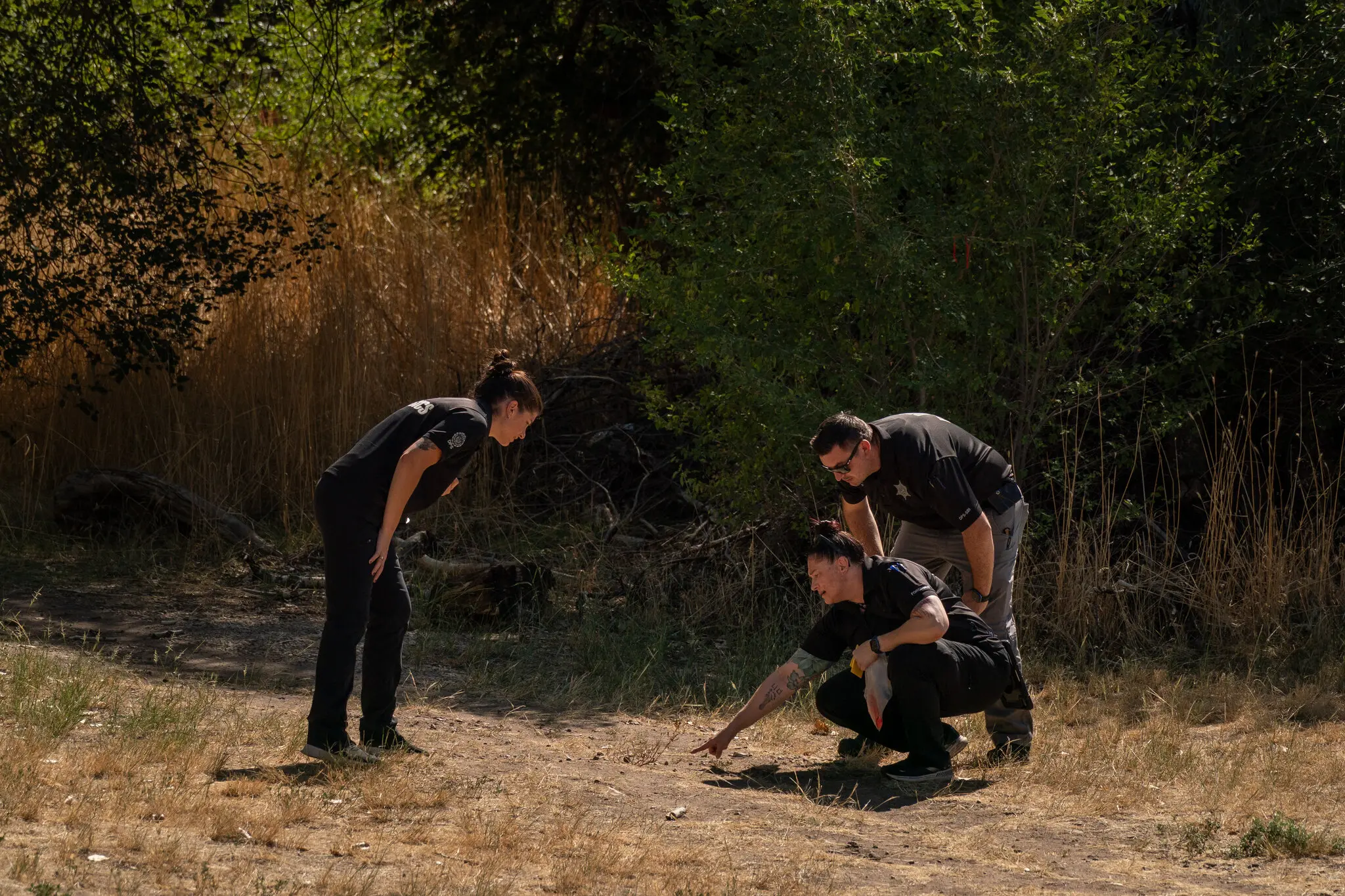
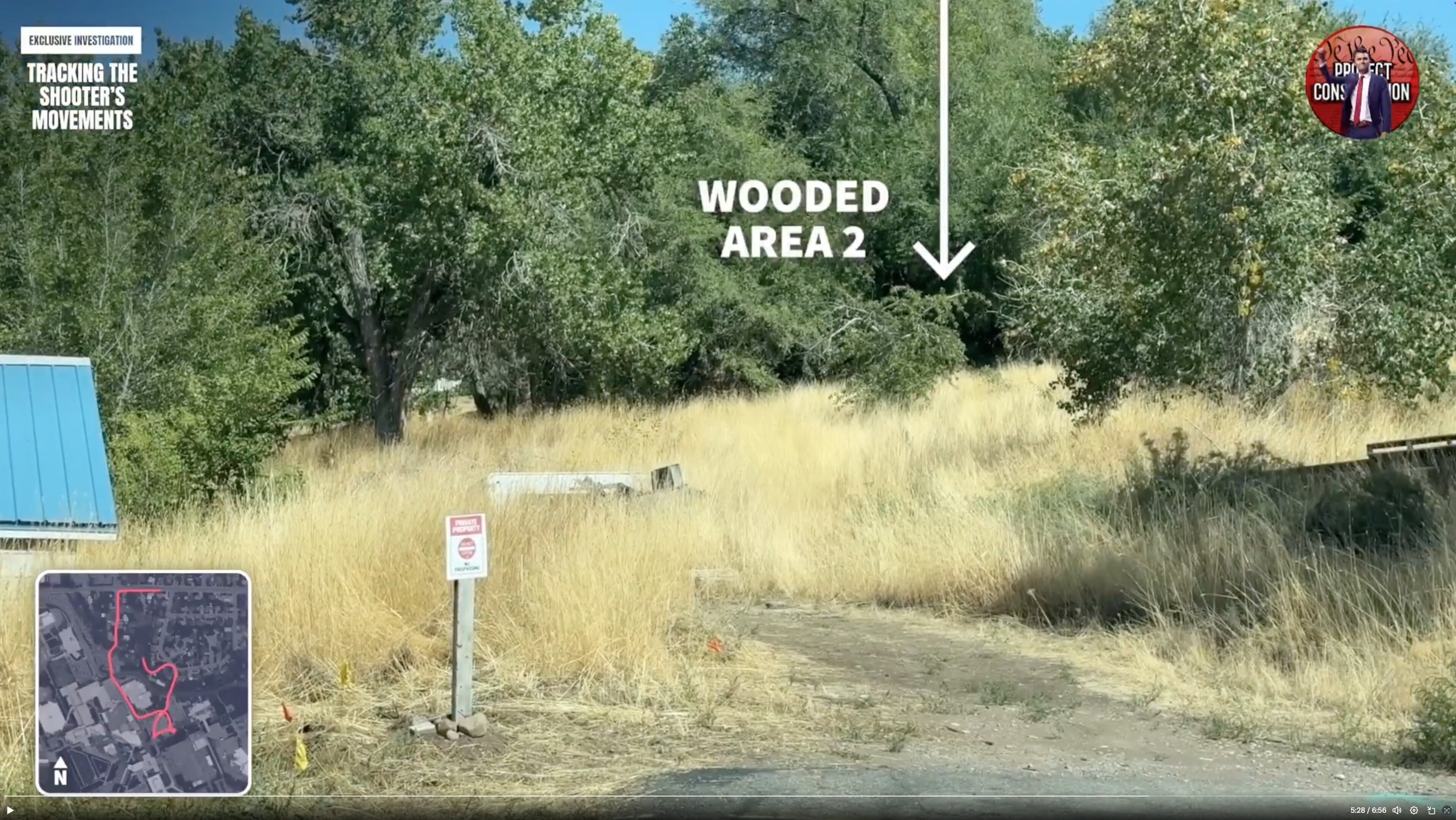
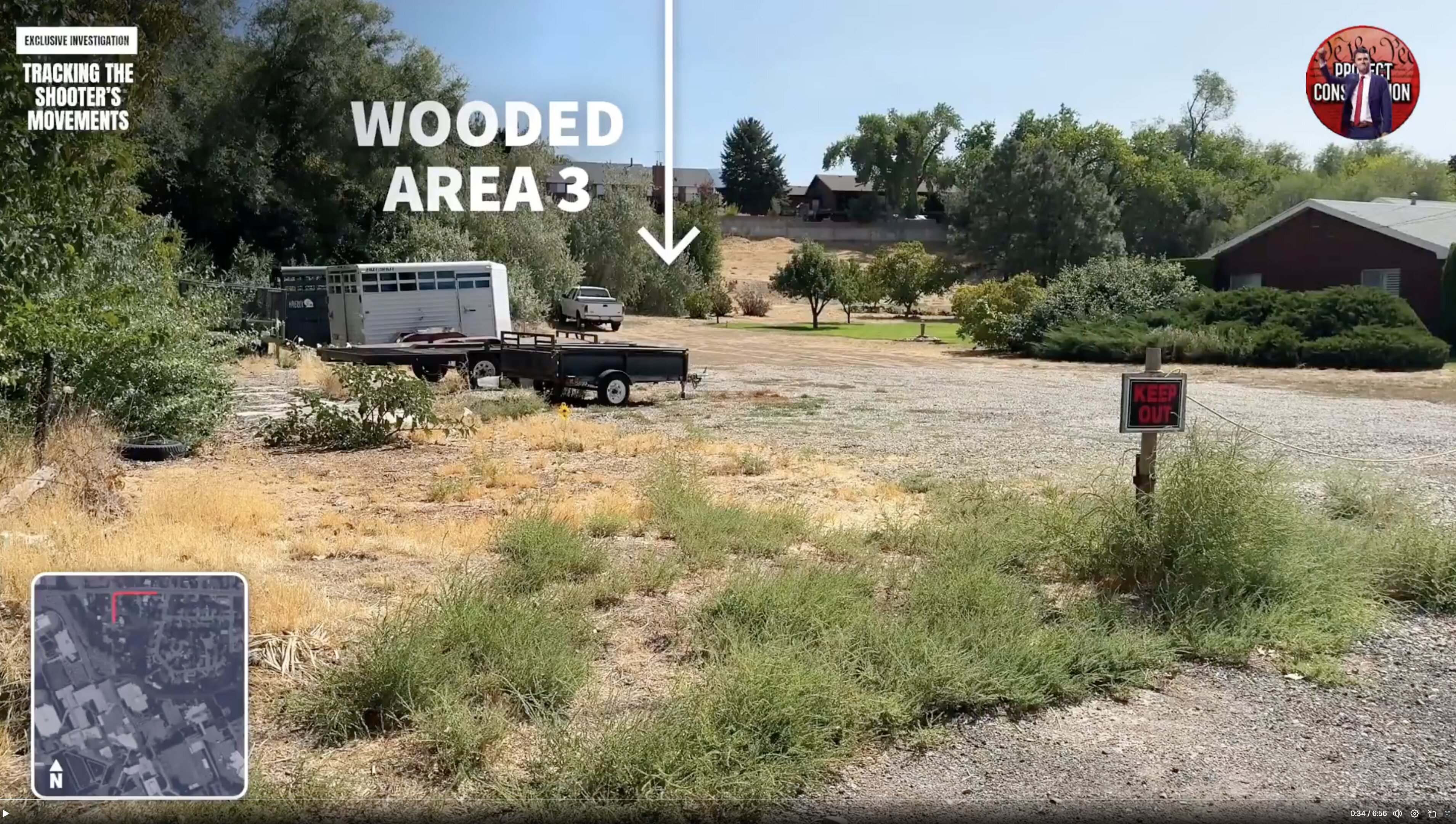
The recovery site itself is now being argued too. In August 2026 the citizen-journalist account @DiligentDenizen published dated aerial imagery circling the wooded lot he says the rifle was pulled from, and claimed a white Kia Soul turned around at that exact spot on the morning of September 10, 2025 — hours before the shooting. The vehicle identification is unverified and a white Kia Soul is a common car, so the claim is recorded as a claim: Rifle Site — Kia Soul Turnaround.
Rifle-Concealment Satire Clip (Counterpoint)
A widely shared satire video pushes back on one of the recurring skeptic arguments — that a full-length .30-06 bolt-action rifle could not realistically have been concealed and walked off campus. In the clip, two men wearing "Candace is a demon" shirts each slide a rifle down one leg of slim-fit jeans and walk on camera, with the narration: "we're going to prove to these people that a 30-06 easily fits inside slim-fitting jeans... see, we told you." It is comedy, not a controlled test — no timing, clothing, or gait comparison to the campus footage is offered — but it is recorded here because the concealment question is argued on both sides across this section, and the counter-argument belongs in the record alongside the backpack and rifle concealment analysis.
Satire clip: two men slide bolt-action rifles down slim-fit jeans to mock the argument that a .30-06 could not have been concealed. Source: @jvalentine82 on X, 2026-08-01.
Scope Zero — The Gun Owners' Counter-Counterpoint
The reply to that satire clip is that fitting is not the hard part — holding a zero is. On August 2, 2026, comedian Owen Benjamin shared a 1:56 video by an unidentified gun owner who spends the first half sliding a replica .30-06 down loose-fitting jeans while narrating in open sarcasm — "so obviously, this is incredibly inconspicuous... you could go upstairs, walk across campus comfortably" — and then turns to the point: "I wouldn't even trust that gun to be shot at a deer, let alone the most life-changing shot of my life... I think the scope might be off already, just from trying to do that... You have to sight these things in." Benjamin's framing was blunter still: "Sighting a scope takes a while and requires you shoot live ammo while you do it. Just putting the gun in your pants let alone disassembling it would make the scope useless." The argument cuts at the disassembly version of the concealment theory in particular: taking the optic off and remounting it reliably destroys a zero, so a theory that smuggles the rifle in pieces buys concealment at the cost of accuracy. It is a demonstration, not a controlled test — no group is fired before or after, and the rifle is a replica, not the seized Exhibit 1. Full transcript, Benjamin's post, and the limits of the claim: Scope Zero & Pants-Leg Concealment.
A gun owner slides a replica .30-06 down loose jeans, then argues the scope would no longer hold zero. Source: @OwenBenjamin on X, 2026-08-02.
X.com posts:
- Owen Benjamin on scope zeroing and rifle-in-pants concealment
- Engraved bullets hidden in towel — the story contradicts itself
- Aerial marker for exactly where the rifle was recovered
- White Kia Soul turned around at the weapon recovery site
Interesting In This Area
- The state's weapon is a commercial Mauser 98, not the wartime K98 many assumed.
- The ATF report could neither identify nor exclude that rifle as the fragment's source.
- Energy and trajectory both cut against a rooftop .30-06 reaching that neck wound.
- Engraved cartridges in a towel is the detail the official account carries worst.
Interesting In Other Areas
- The prosecution needs the fragment tied to that rifle, and the state lab could not.
- A March 2026 motion sought to seal that ballistics report; a media coalition opposed it.
- No gunshot-residue result is public for a case built on rooftop rifle fire.
- The defense was reportedly refused permission to photograph the fragment or attend testing.
Other Pages In This Section
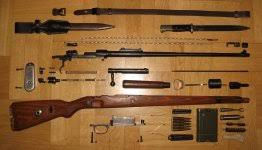
Mauser .30-06 Rifle — Official Narrative
The state's weapon: a scoped Mauser Model 98 in .30-06, tied to a grandfather and a World War I story. Commentators note the recovered rifle is a commercial 98 rather than a K98, and that M98 Mausers were not factory-chambered in .30-06 in that era.
Read thisATF Fragment — Inconclusive Match
The state's own September 17, 2025 ATF report could neither identify nor exclude the seized Mauser as the source of the autopsy jacket fragment. The rifling matched "numerous makes and models" — a class, not a weapon. The defense reportedly calls that exculpatory, and it is a large part of why independent work has moved toward a device at the podium.
Read this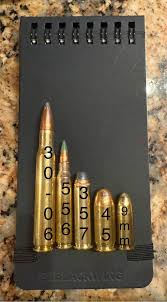
A .30-06 round carries roughly 3,950 joules against a 9mm's 482. Commentators argue the wound described publicly does not match that energy — the arithmetic is not disputed, the inference is.
Read this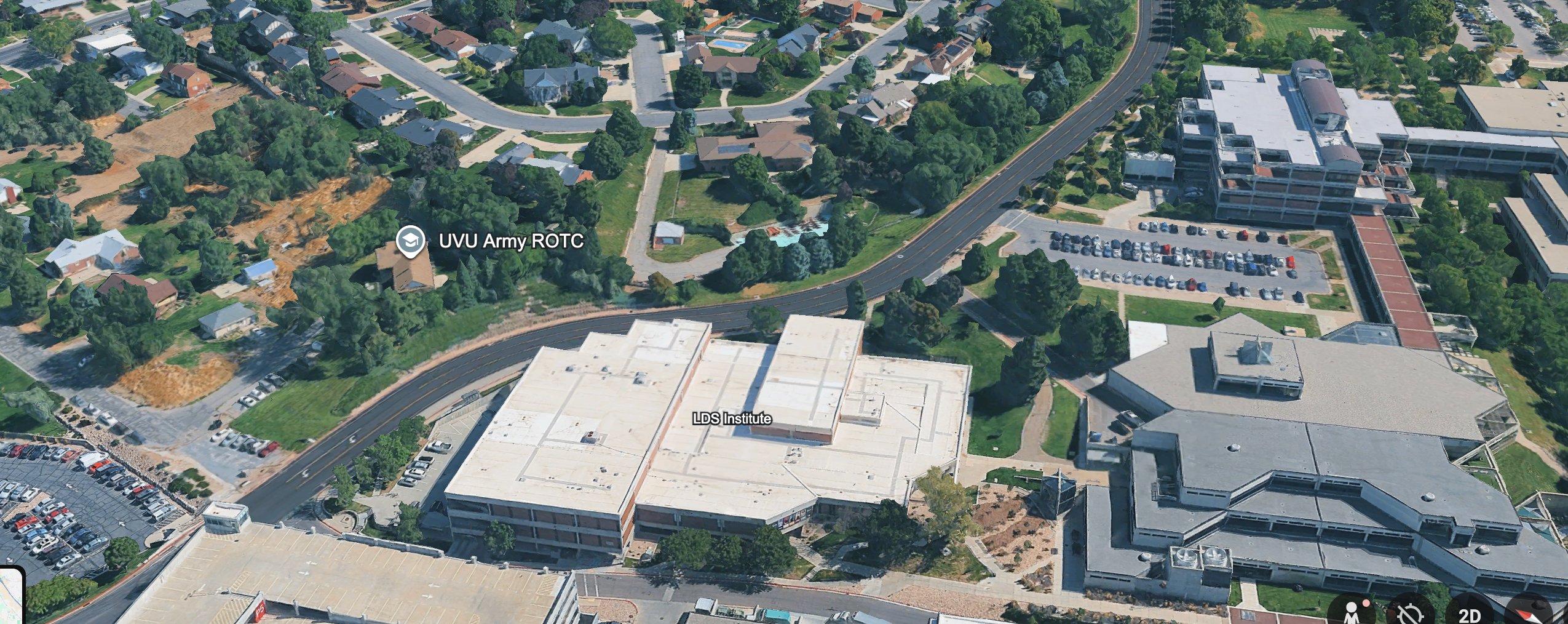
A 5 to 9 degree downward shot from the Losee roof should meet face or jaw first. The reported entry sits between larynx and trachea, left of the spine — a far more straight-on path. The geometry is the argument.
Read thisElsewhere In The Investigation
The prosecution's physical case needs the autopsy fragment tied to the seized rifle, and the state's own lab could not do it. Rifling consistent with numerous makes and models is a class description, not an identification.
Read thisBallistics — ATF Inconclusive & CBLA
The ATF could not match the recovered jacket fragment to the seized Mauser. This page separates a casing from a fragment and explains why that distinction decides a great deal.
Read this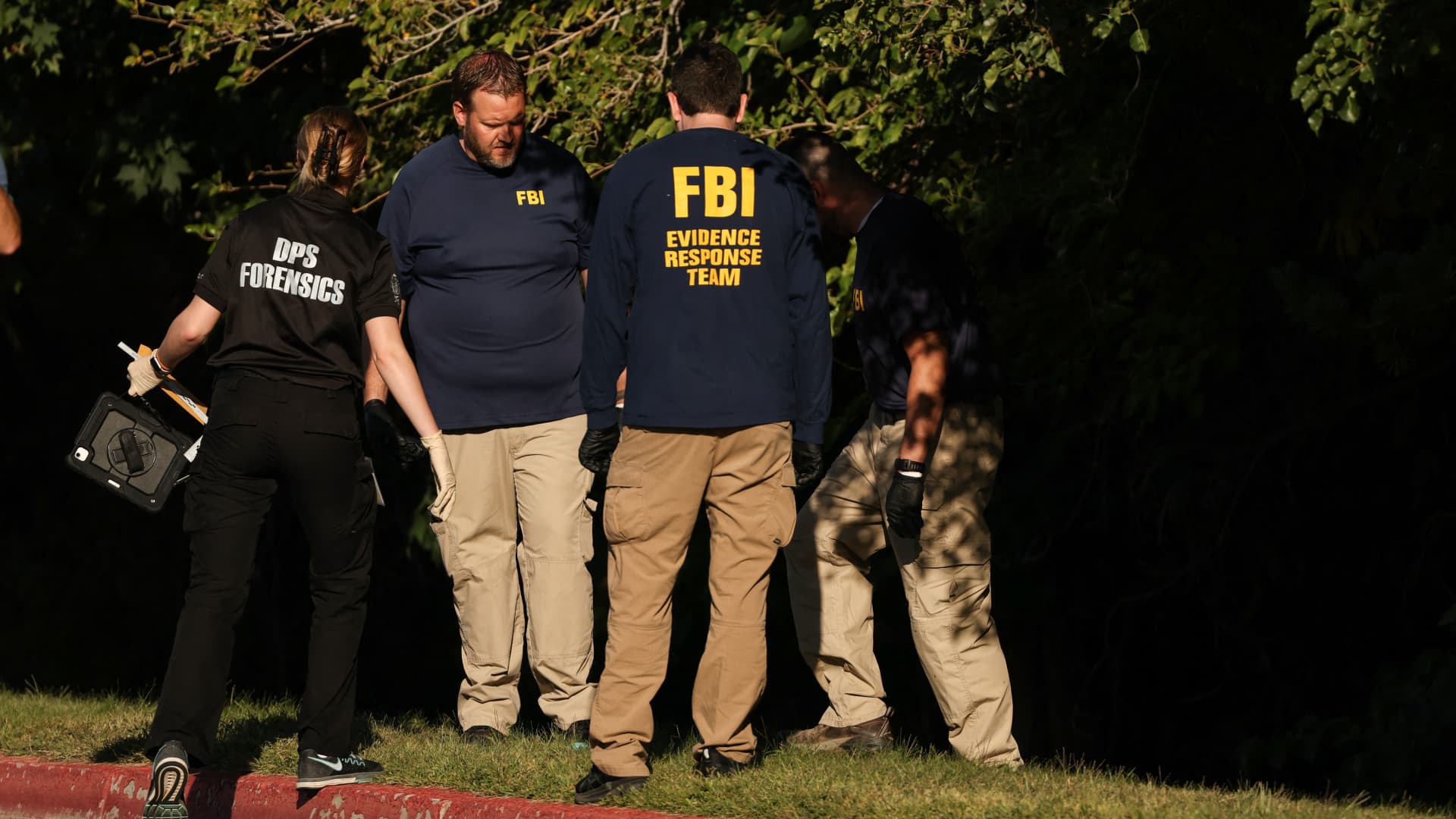
The ATF reportedly found the jacket fragment shared class characteristics with the Mauser — numerous makes and models, no individual match. The defense was then reportedly refused permission to photograph it or attend the destructive testing.
Read this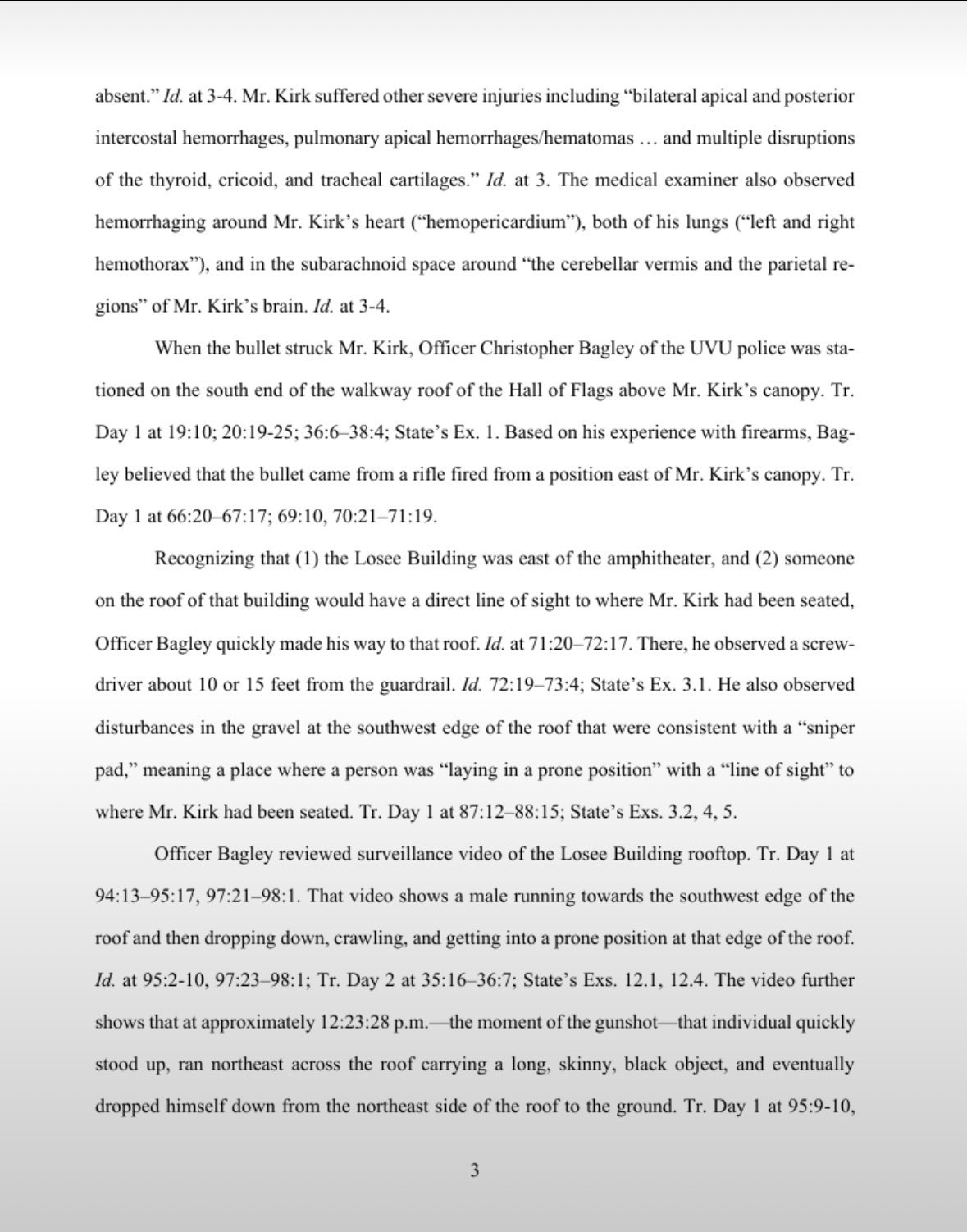
Shape Charge vs Bullet: from Medical Examiner results
The medical examiner findings quoted in the court filing — hemopericardium, bilateral hemothorax, subarachnoid hemorrhage — scored against two hypotheses side by side. The clearest place to see which mechanism the injuries actually fit.
Read thisThis website's author is @HolonCitizen on X and YouTube/@HolonCitizen. Follow me there.
Marjorie Taylor Greene Questions the Narrative
Former U.S. Rep. Marjorie Taylor Greene said on camera (August 3, 2026) that she is "very much compelled by the lapel-mic stories," that having shot a .30-06 herself "it's hard for me to go along with the traditional narrative," and that the SD-card collection and the paving of the scene two days later are "very questionable."
Source: @SenseReceptor on X. Full quotes and transcript: her profile · archived video page: MTG Questions the Charlie Kirk Narrative.
Interesting
- Testimony describes dust inside the barrel of the supposed murder weapon, not combustion fouling.
- Audio captures a man shouting "shoot me, kill me" as he is detained in the underpass.
- One analysis argues the corner crowds turned toward has no sightline to the tent.
Related Areas
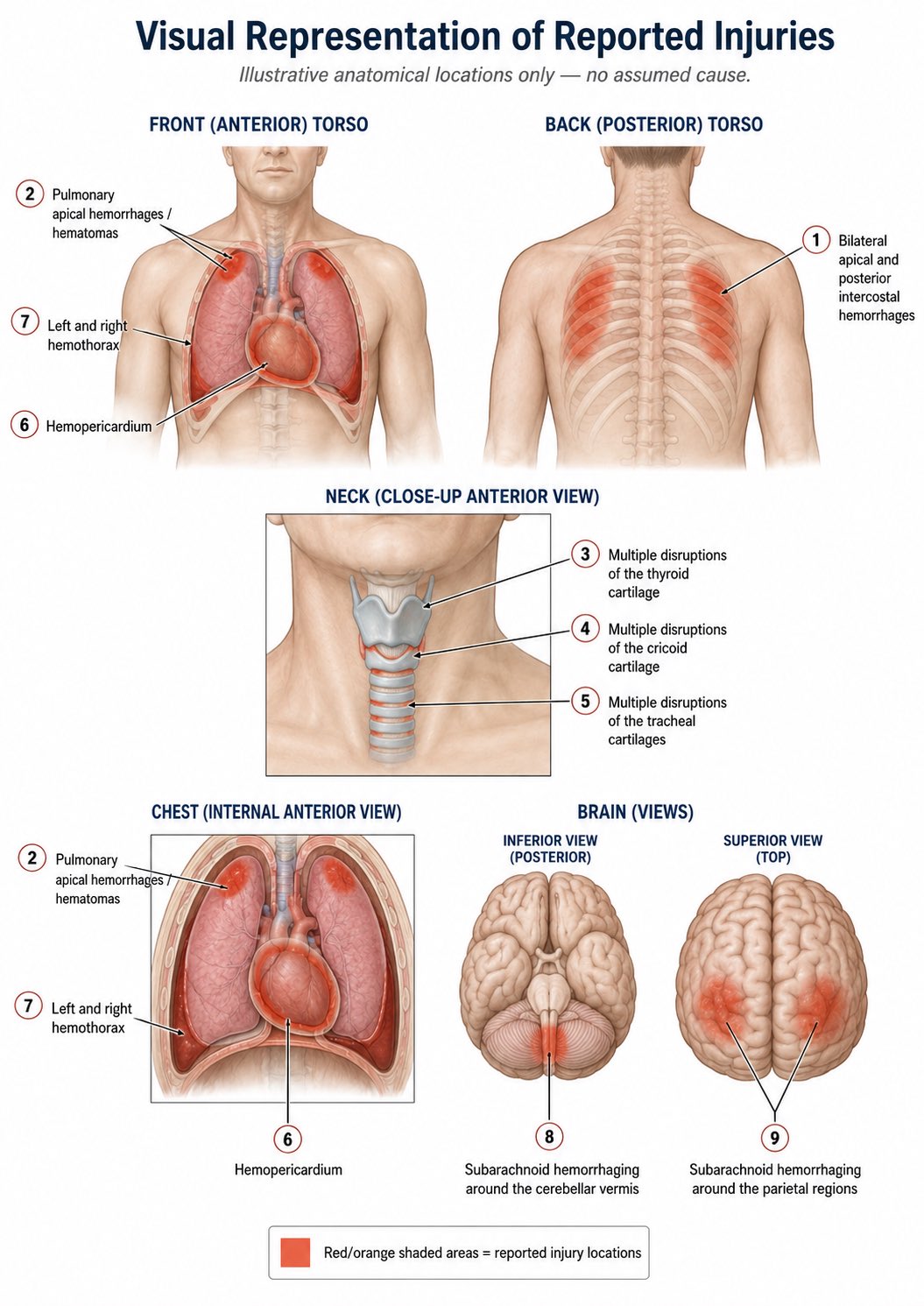
The shape charge is what killed Charlie Kirk.
Images