How the Iran War Raised His Risk
This page states the motive logic of the Iran section plainly: not that Iran acted, but that Charlie Kirk's opposition to a U.S.–Iran war placed him against the war's most powerful advocates and, in the view of many investigators, raised the incentive to remove him. This is reasoning about motive, not proof of a crime or an accusation against any named person.
The mechanism, stated simply
The chain runs:
- A U.S.–Iran war — up to and including regime change — is a high-value objective for powerful interests, described in this section as centered on pro-Israel advocacy and the broader Military Industrial Complex (see Israel's Push for War With Iran).
- Charlie Kirk had unusual access to President Trump and a large conservative audience.
- He reportedly used that access to argue for restraint — limited strikes, no regime change — and allegedly won a version of that argument (see Charlie's Stand Against the Iran War).
- A single voice able to tilt a president away from a wanted war becomes, to those who want it, an obstacle — and obstacles to enormous stakes attract enormous pressure.
The claim of this section is only step 4's implication: the Iran fight increased the set of powerful actors with a reason to want Charlie gone. It does not identify who, if anyone, acted.
Why it compounds the other motive threads
The Iran-war motive is not a standalone theory; it stacks with the donor and Israel threads:
- Money: reported donor withdrawals over Tucker Carlson and the pro-Israel break (Donor & Israel Foreign Policy).
- Policy: the Iran-war opposition documented here.
- Fear: Charlie's own reported statements that he believed he could be killed for breaking with Israel (Charlie–Israel Friction).
Investigators argue these are not three unrelated coincidences but one escalating conflict with a foreign-policy core. The friction checklist even logs a specific item: a private White House back-channel on Iran regime-change and MIC entanglement.
The honest limits
A motive is not evidence of an act. Powerful people are opposed on policy constantly without being harmed. Everything on this page is conditional — it explains why some investigators believe powerful interests cared about Charlie's Iran position, and what discovery would need to produce to move any of it from motive to fact: authenticated messages, call records, and the foreign-involvement leads the FBI reportedly declined to pursue (Foreign Leads Blocked). Former NCTC director Joe Kent has said on the record that his center's parallel foreign-nexus review was ordered to stop once a suspect was in custody — before those leads were exhausted.
X / Citizen Investigator Update (Attributed)
War-motive pages collect hypotheses that pro-escalation actors benefited from removing an anti-war organizer. Benefit ≠ proof.
July 2026 X discourse continues to cite Kent's statement that the FBI said the matter would "go over to Utah law enforcement" with foreign leads left open in NCTC's opinion. Counter-posts insist Robinson's confessions end the Iran/Israel motive debate. This site records both. No living person is declared guilty of ordering the assassination.
Interesting In This Area
- Israel is described as the loudest advocate for the war Kirk reportedly opposed.
- Commentators say the organization pivoted pro-war within weeks of his death.
- Kash Patel reportedly rebuffed an offer to examine foreign involvement in the case.
- A poll of his own audience reportedly ran ninety percent against joining the war.
Interesting In Other Areas
- Geopolitical motive theories are graded by evidence; benefit alone is never treated as proof.
- The real-killer question stays open because foreign leads were reportedly never exhausted.
- Charlie's own fear and kill warnings predate the shooting by weeks.
- Reported donor withdrawals over Tucker Carlson stack money onto the policy fight.
Other Pages In This Section
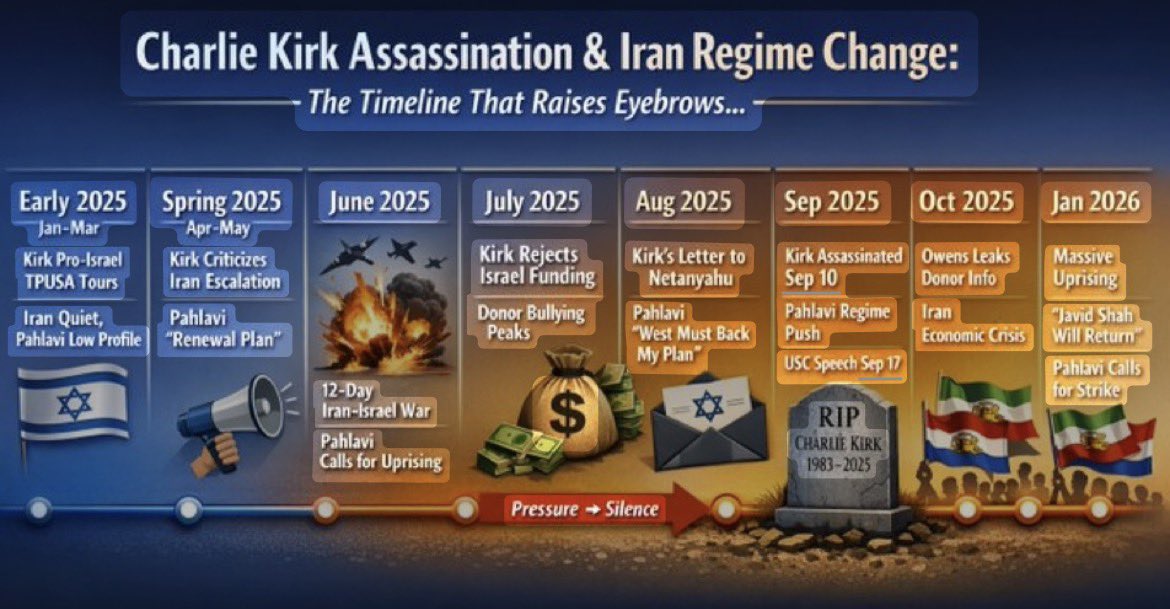
Israel's Push for War With Iran
Why a U.S.–Iran war sat at the centre of pro-Israel advocacy in 2025, and how Charlie's reported opposition put him against it. Presented as reported positions, not as a motive finding.
Read thisTPUSA's Post-Death Pivot on Iran
The claim that after Kirk died, the organization and the show carrying his name shifted toward the pro-war posture he had reportedly been breaking from — the mirror image of his final positions.
Read this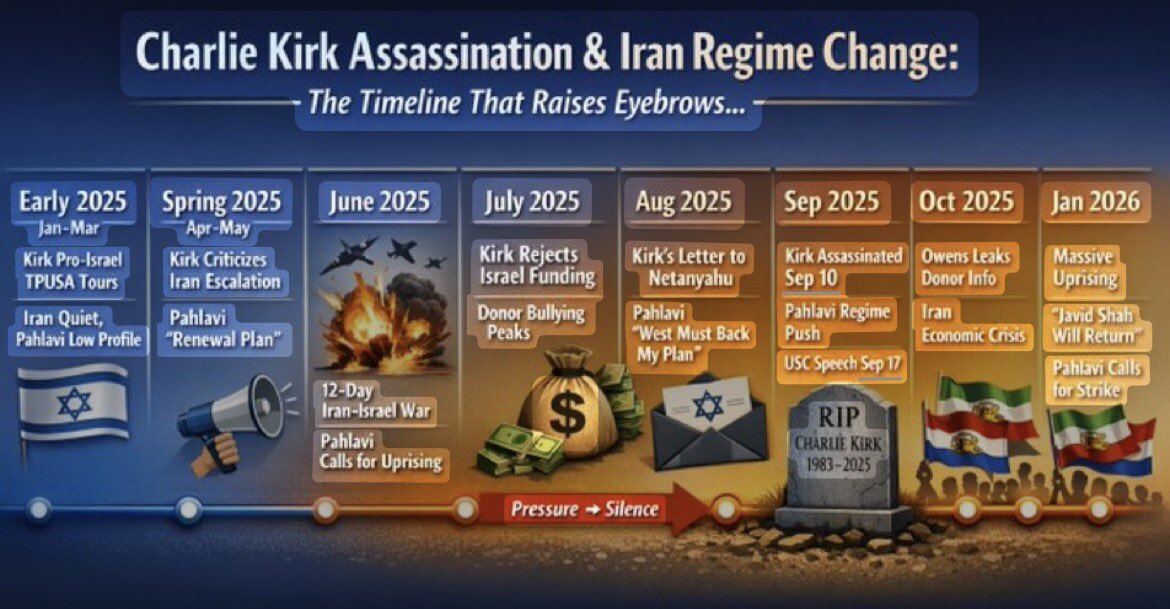
Joe Kent & the 'Murderous Cartel' Framing
A former counterterrorism director's remarks, and the far louder headline built on top of them. The narrow, checkable part is that Kent says foreign-involvement leads deserved scrutiny and that an offer to pursue them was reportedly rebuffed; the "murderous cartel" phrasing belongs to the poster, not to Kent.
Read thisElsewhere In The Investigation
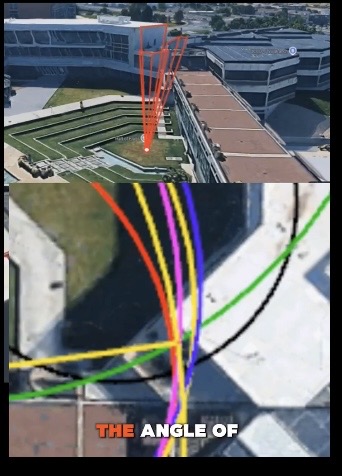
Geopolitical and Intelligence‑Service Motive Theories (Claims)
Motive frameworks arguing the killing required capabilities beyond a lone gunman — foreign-policy stakes, aircraft movements, and a blocked counterterrorism probe. No court has attributed the killing to any intelligence service.
Read this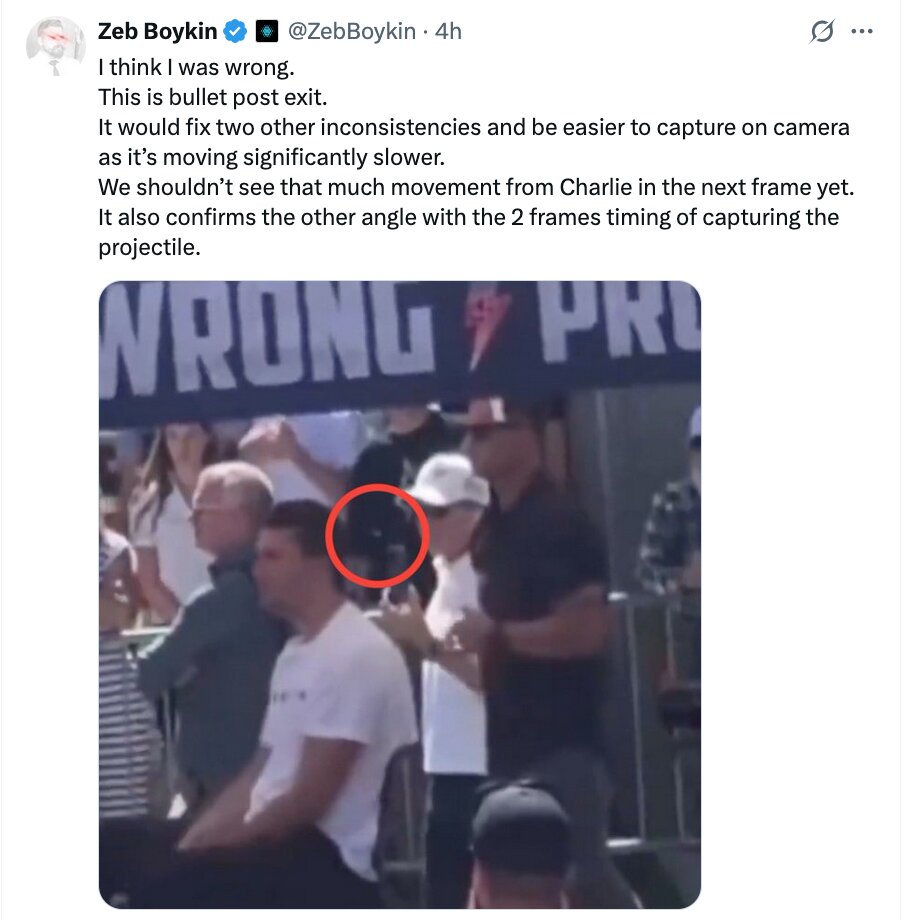
The competing theories of who killed Charlie Kirk, laid out side by side rather than merged: foreign service, domestic agency, the charged man, patsies and distraction actors. Contested readings of the public record, not court findings.
Read thisHalted foreign inquiries, an ISR jet overhead, foreign phones, VIP flights and scene control. Indicators rather than proof — but they are the indicators an intelligence service leaves behind.
Read thisEvery dated incident in which Charlie allegedly said he would be killed for breaking with pro-Israel politics — August 13, August 16, the 48-hour donor texts, and the other channels. Sorted by date, so the escalation is visible.
Read thisThis website's author is @HolonCitizen on X and YouTube/@HolonCitizen. Follow me there.
Interesting
- A sound with rise time 5x faster than ballistic impact anchors the exploding-mic theory.
- Kirk's last major call was reportedly an intervention over Iran that he refused.
- An altered-voice donor reportedly warned he would not make Christmas, per phone surveillance claims.