The 12-Day War & Operation Midnight Hammer
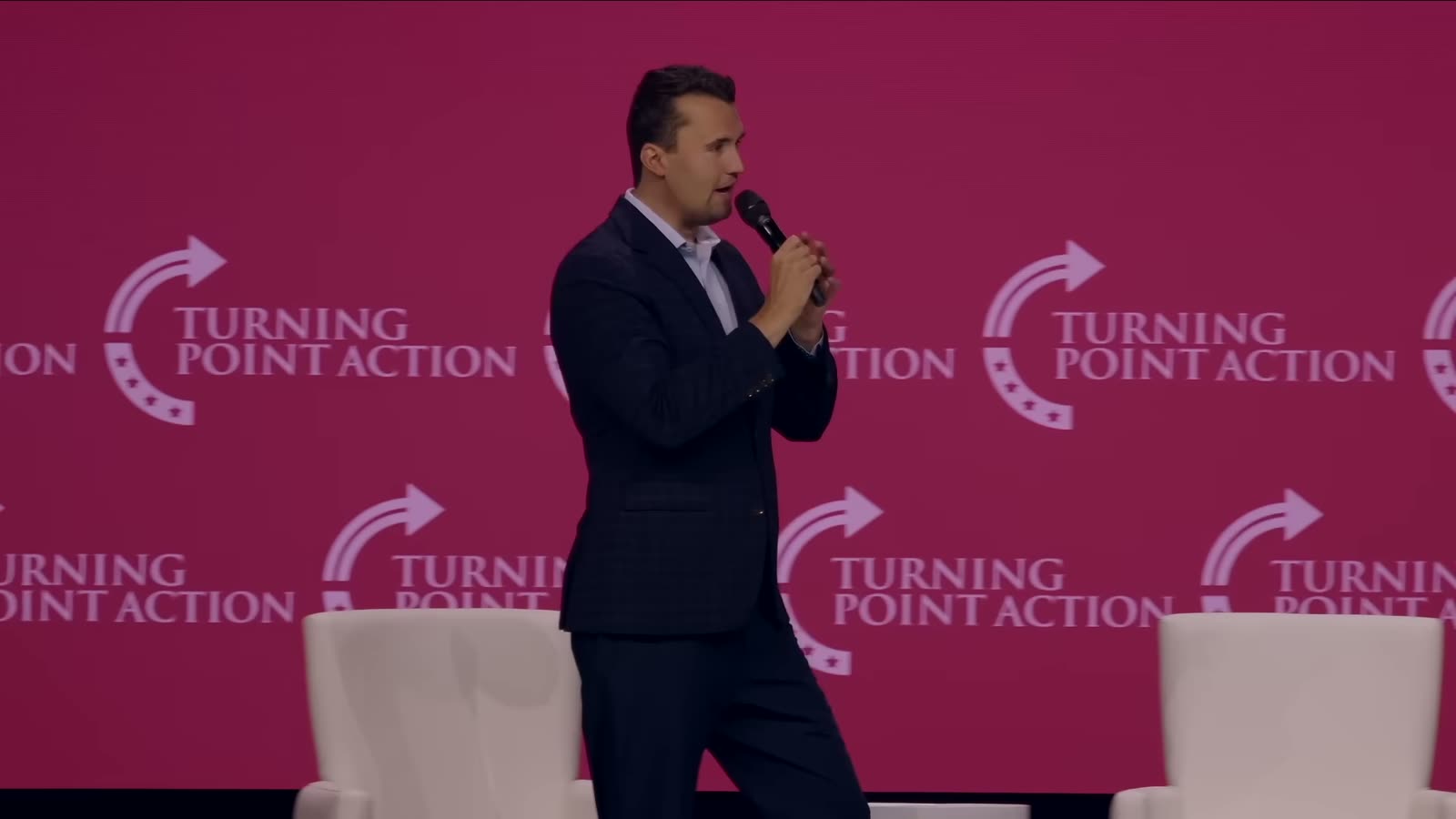
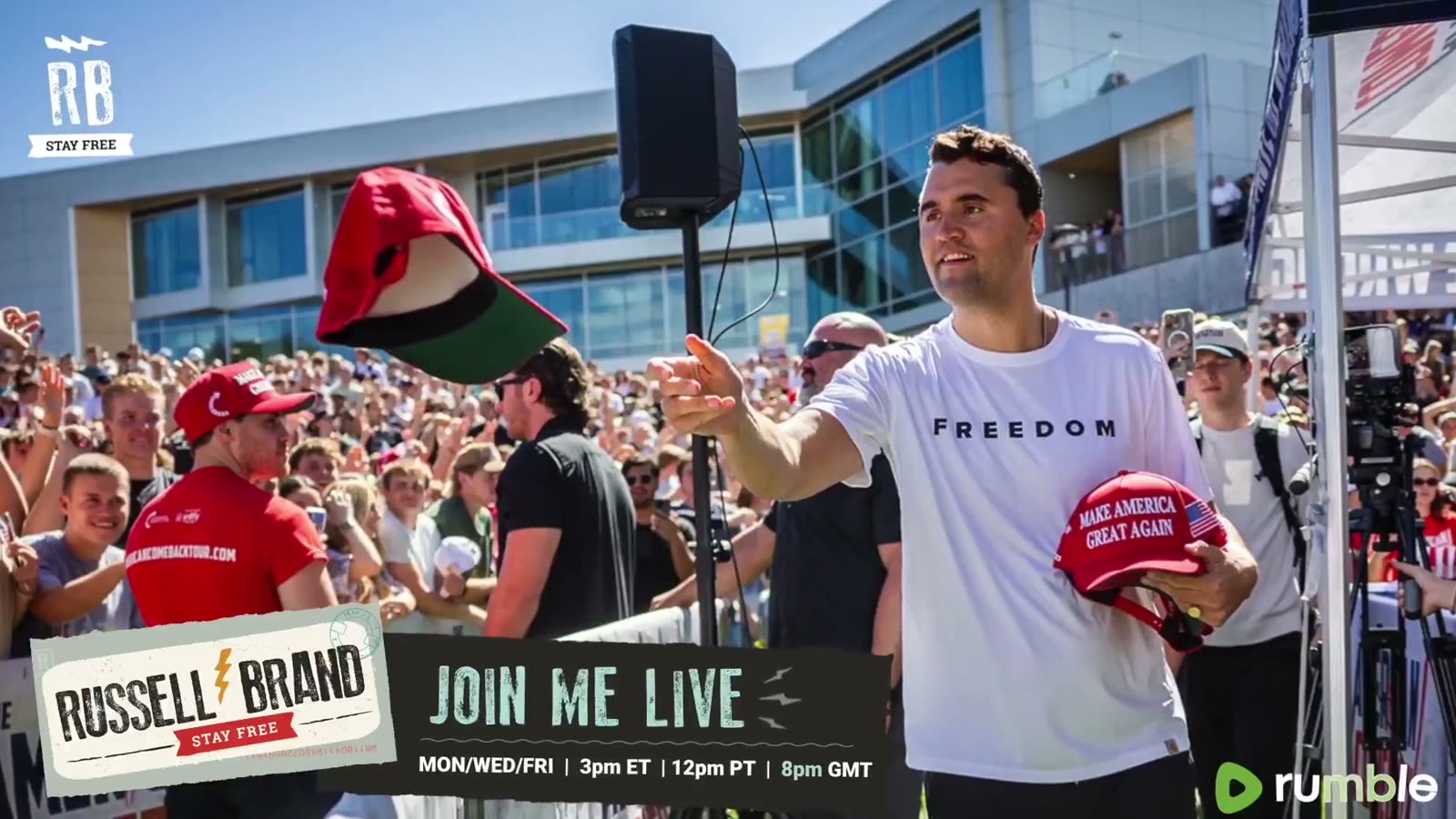
This is the context page for the Iran section: the June 2025 conflict that made "war with Iran" an immediate, top-of-government decision rather than an abstraction. Understanding this window is what makes Charlie Kirk's reported lobbying — described on Charlie's Stand Against the Iran War — significant, because his alleged intervention lands squarely inside it.
The 12-day war (June 2025)
The investigation timeline records: "June 13th: Iran and Israel's 12-day war commences." The fighting created immediate pressure on Washington to decide how far U.S. involvement would go — from intelligence and munitions support, to direct strikes, to backing regime change. That decision is the fork Charlie reportedly tried to steer.
Operation Midnight Hammer
Commentators discussing this period reference "Midnight Hammer," the name used for the U.S. strike operation against Iranian nuclear sites during the war. One widely shared account states that Charlie was "lobbying Trump against the Iran War during 'midnight hammer'" and that he pushed for action to be confined to strategic strikes on nuclear ambitions rather than a broader campaign. In that telling, the strikes that did occur reflected the limited option Charlie favored — not the wider war his opponents wanted.
Why the window matters to the case
Two things about this timeline are load-bearing for the motive thread:
- Proximity. The war and the strike decision fall in June 2025 — roughly three months before the September 10 assassination, and the same summer as the reported donor friction and "they will kill me" (KM index) warnings catalogued under Israel.
- Stakes. If a single influential voice could tilt a president toward restraint on a war that powerful interests wanted, that voice becomes a problem worth solving for those interests — the logic examined on How the Iran War Raised His Risk.
None of this proves causation. It establishes that the fight Charlie reportedly entered was real, high-stakes, and immediate — not a hypothetical.
X / Citizen Investigator Update (Attributed)
Twelve-day war / Midnight Hammer context is geopolitical backdrop. Timing arguments are circumstantial.
July 2026 X discourse continues to cite Kent's statement that the FBI said the matter would "go over to Utah law enforcement" with foreign leads left open in NCTC's opinion. Counter-posts insist Robinson's confessions end the Iran/Israel motive debate. This site records both. No living person is declared guilty of ordering the assassination.
Interesting In This Area
- Kirk reportedly went to the White House on June 18, five days into the fighting.
- The overview frames this as policy motive the lone-gunman account never addresses.
- An Iran-tagged Mossad Files package offered a competing kill mechanism entirely.
- Counter-narratives note Iran-linked networks amplified the same claims.
Interesting In Other Areas
- A July 20 military meeting sits weeks after the war and before September.
- The motive index keeps policy conflict separate from any claim about an act.
- Israel foreign leads and an Israel motive timeline are tracked page by page.
- Reported texts about being killed date from the same summer, per the timeline.
Other Pages In This Section
'Mossad Files' & the Exploding-Mic Theory
The Iran-tagged packaging of the exploding-mic theory — that the fatal mechanism was a device in the microphone rather than a distant rifle. The forensic core lives in the Microphone section; this page records how the claim travelled under a "Mossad Files" label, and what skeptics answer.
Read this
Charlie's Stand Against the Iran War
Kirk reportedly went to the White House on June 18, 2025 specifically to argue against regime change in Iran. This page collects what he said and did; whether it raised his risk is argued separately.
Read this
The X Discourse & Counter-Narratives
Both lanes on one page: the viral claims tying Kirk's Iran stance to his death, and the rebuttals — the court evidence, the skeptic pushback, and the note that hostile networks amplified the same theories. Virality is not organic proof.
Read this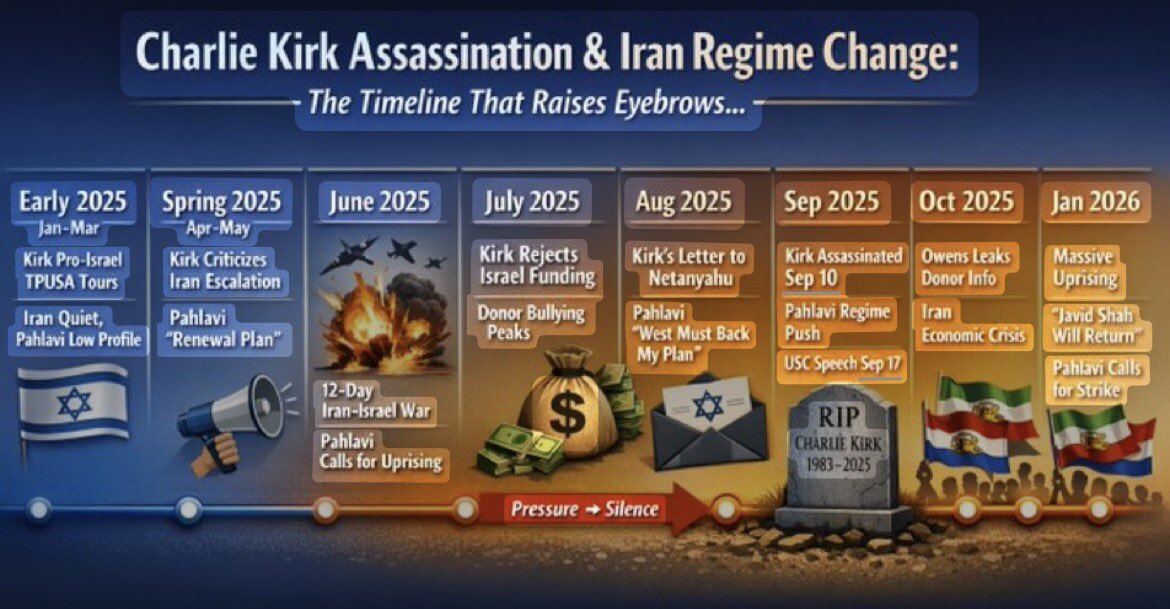
Elsewhere In The Investigation
July 20, 2025 Military & Foreign-Leaders Meeting (Claims)
The date hub for July 20, 2025, where two claims converge: SU-BTT's alleged first U.S. landing at a Nebraska Army base, and a claimed foreign-leaders military meeting on U.S. soil.
Read this
Lines of inquiry pointing at foreign-based actors, communications, travel and SIGINT data — explicitly leads, not verdicts. Read it as the open-questions list it says it is.
Read thisSeptember 2025 compressed into a single chronology of the reported break with pro-Israel donors. It is the context foreign-intelligence motive theories are built on — and the place to test them.
Read thisThis website's author is @HolonCitizen on X and YouTube/@HolonCitizen. Follow me there.
Interesting
- Trump reportedly barked back when Kirk pushed against the Iran war in June 2025.
- A FARA filing eight days after the shooting sits inside the institutional motive dynamics.
- Reported texts saying THEY ARE GOING TO KILL ME open the motive index.
Related Areas
Images

Videos
Footage related to this page. Each card opens that clip's own page, with the video, the full write-up, and its source.