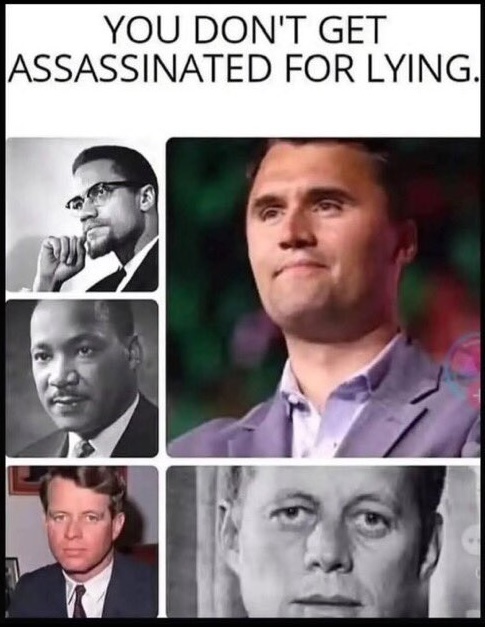
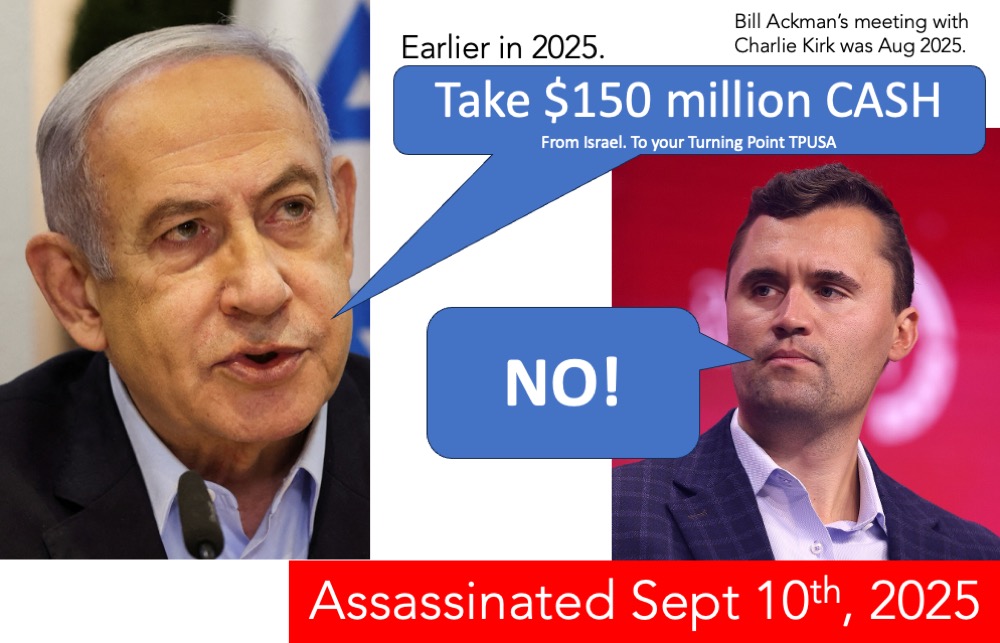
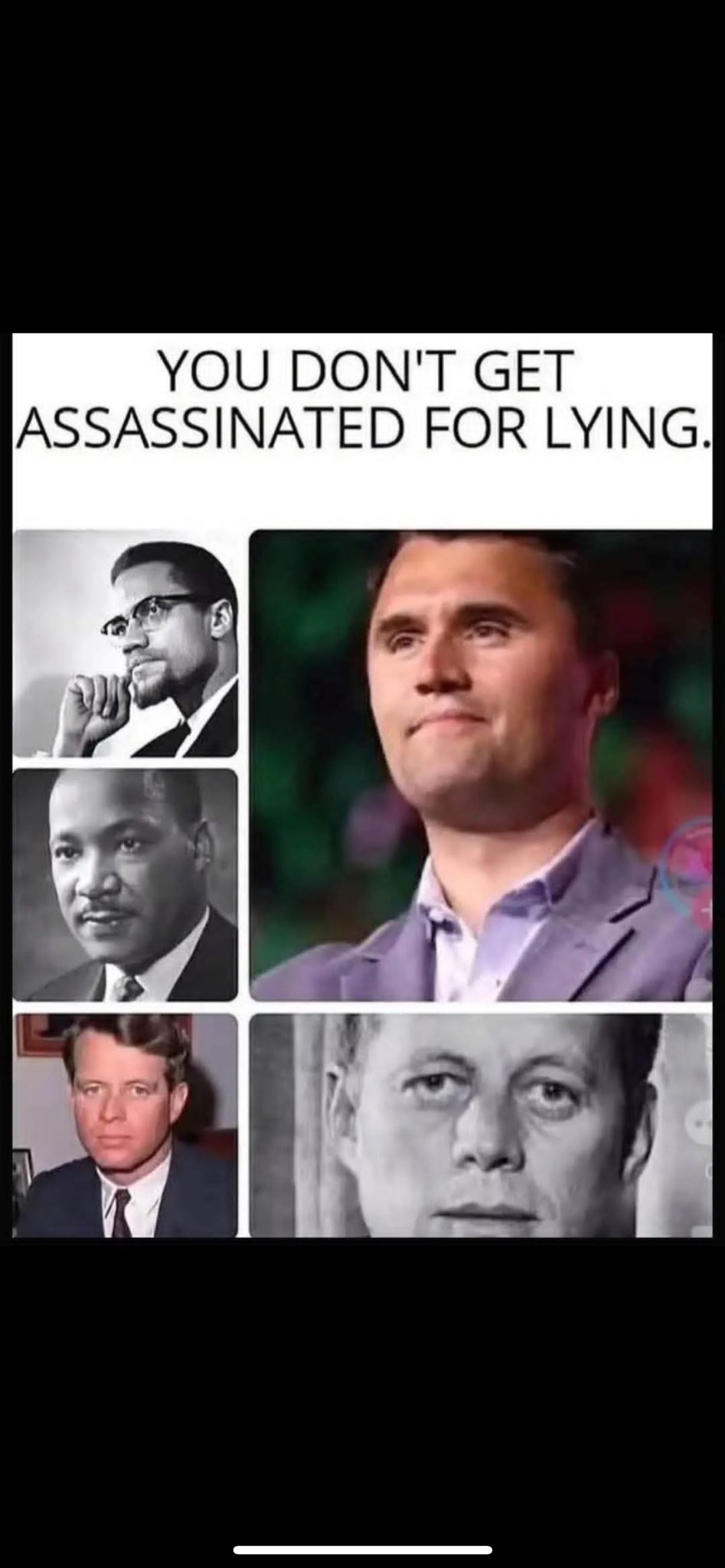
Assassinated Between Two Iran Conflicts
The single most repeated argument in the Iran-motive discourse is about timing: that Charlie Kirk was killed at the exact hinge point between Iran escalations, and that the war he opposed advanced afterward. This page collects the timing claims and the historical analogy X users apply to them. These are arguments and commentary, not proof of causation — correlation in timing is not evidence of a plot.
The core timing claim
Posts frame September 10, 2025 as suspiciously well-placed:
- "He opposed war with Iran and was assassinated between the two Iran conflicts — remarkably convenient timing for the Jewish Zionist Epstein coalition & Deep State."
- "After Charlie Kirk was assassinated, only then did the war with Iran happen."
The claim is that a voice capable of restraining escalation was removed just before the next escalation — the June 2025 fighting behind him, and further 2026 U.S.–Iran tensions ahead (see The 12-Day War & Midnight Hammer).
The JFK → Vietnam analogy
The most-shared intellectual framing borrows a Cold War parallel:
"Assassinations happen because someone wants to change the course of history. Lone-gunman hypotheses stop you from asking the question: 'What changed because of this assassination?' JFK → Vietnam War. Charlie Kirk → Iran War."
The rhetorical move is to shift attention from who pulled the trigger to what policy shifted afterward — arguing that the beneficiary of the outcome is the question a lone-gunman story discourages.
The "war resumed during his hearing" note
Commentators, including Bannon-linked accounts, pointed to irony in the calendar:
"What Charlie Kirk tried to stop was a regime-change war... Today... we're back at war in Iran" — circulated during Kirk's suspect's evidentiary hearing in 2026.
Paired with this is the claim that, immediately after his death, TPUSA shifted toward endorsing pro-war, pro-Israel candidates against America First figures like Thomas Massie — the reversal examined on TPUSA's Post-Death Pivot on Iran.
The honest limits of a timing argument
Timing arguments are suggestive, not probative. Wars escalate for many reasons; a death and a later escalation can both be real without one causing the other, and "convenient timing" is a pattern the human mind finds even in coincidence. The value of cataloguing the timeline — helped by the section's timeline image — is to make the sequence checkable, so that discovery and evidence, not vibes, decide whether the proximity means anything.
X / Citizen Investigator Update (Attributed)
Timing-between-conflicts charts help readers see sequence; they do not identify a shooter.
July 2026 X discourse continues to cite Kent's statement that the FBI said the matter would "go over to Utah law enforcement" with foreign leads left open in NCTC's opinion. Counter-posts insist Robinson's confessions end the Iran/Israel motive debate. This site records both. No living person is declared guilty of ordering the assassination.
Interesting In This Area
- Kent's echo chamber explains how a red line reportedly moved without coercion.
- The murderous cartel phrase is a poster's framing, not Kent's own words.
- Israel's push is the interest a timing argument implicitly points at.
- Counter-narratives note hostile networks amplified these claims, proving nothing either way.
Interesting In Other Areas
- The day-of timeline is where sequence claims can actually be checked.
- Egyptian jets at Provo are a separate proximity claim with its own record.
- The state's case is built entirely on one suspect and no policy question.
- The real-killer page keeps that question open without naming anyone.
Other Pages In This Section
The "Truman Show" Bubble Around Trump
Joe Kent describing, in his own words, how he believes Iran policy actually got set: an echo chamber around the president that his interviewer calls Truman Show–esque. Kent alleges no crime and never mentions Charlie Kirk, which is what makes it usable.
Read thisJoe Kent & the 'Murderous Cartel' Framing
A former counterterrorism director's remarks, and the far louder headline built on top of them. The narrow, checkable part is that Kent says foreign-involvement leads deserved scrutiny and that an offer to pursue them was reportedly rebuffed; the "murderous cartel" phrasing belongs to the poster, not to Kent.
Read this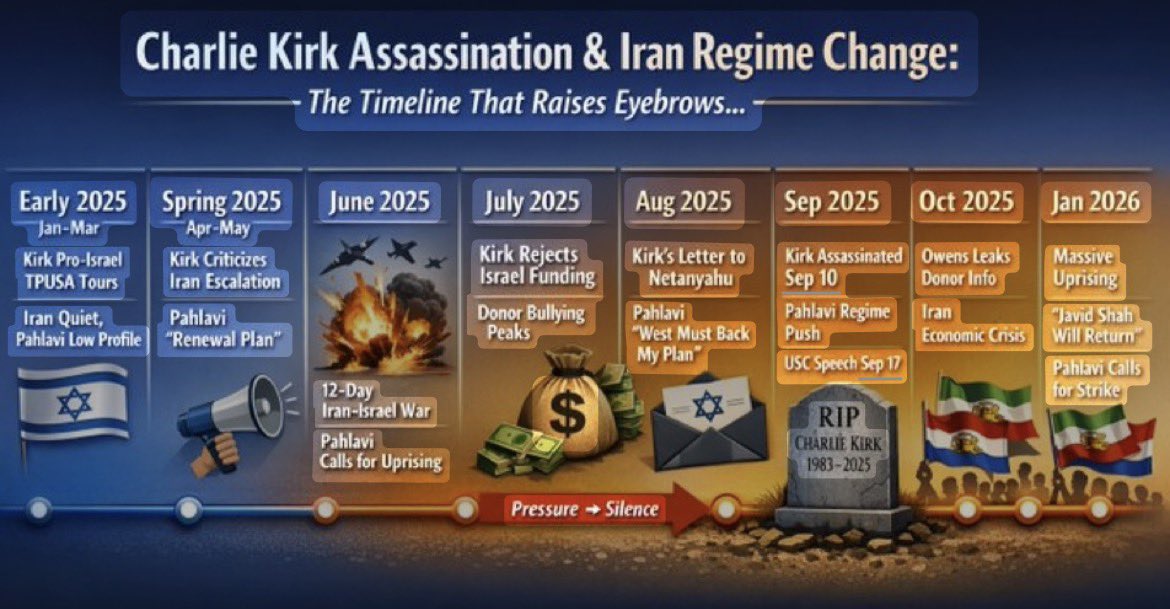
Israel's Push for War With Iran
Why a U.S.–Iran war sat at the centre of pro-Israel advocacy in 2025, and how Charlie's reported opposition put him against it. Presented as reported positions, not as a motive finding.
Read this
The X Discourse & Counter-Narratives
Both lanes on one page: the viral claims tying Kirk's Iran stance to his death, and the rebuttals — the court evidence, the skeptic pushback, and the note that hostile networks amplified the same theories. Virality is not organic proof.
Read thisElsewhere In The Investigation
September 10, 2025 – Day-of Timeline
Midnight to midnight on Utah's clock: the pre-dawn aircraft picture, the camera sightings from 8:07 AM, the 12:23:30 shot, the hospital run, and the evening flights. Every line labelled reported or claimed.
Read thisEgyptian Jets — Provo Sept 4–10
Egyptian Air Force aircraft sat at Provo Municipal from September 4 and left the morning of September 10. The flight record is public; the reason is not.
Read thisCase Overview — State v. Robinson
The caption, the docket, the charges, and what the state actually alleges — separated from what has been proven. The defense disputes the forensic links, starting with the inconclusive ATF comparison.
Read this
The competing theories of who killed Charlie Kirk, laid out side by side rather than merged: foreign service, domestic agency, the charged man, patsies and distraction actors. Contested readings of the public record, not court findings.
Read thisThis website's author is @HolonCitizen on X and YouTube/@HolonCitizen. Follow me there.
Interesting
- Kirk reportedly argued against regime change days into the war, per the June 18 record.
- A former NCTC director says a foreign-ties review was ordered stopped, per the disclosure laws page.
- An "Israel Exception" could defeat every disclosure statute, argues this threat analysis.
Related Areas
Images