Israeli Technology Inside the Investigation (Claims)
This site's Israel section tracks claims that Israeli interests had a motive in the death of Charlie Kirk. A separate thread asks a structural question that follows from it:
If Israel is treated as a suspect, why is Israeli-made software being used to extract and authenticate the evidence in the trial?
The question is legitimate to ask and does not require believing any Israeli involvement. It is exactly the kind of conflict-of-interest question a defense attorney is paid to raise.
Which is what makes the answer so striking: the defense is not raising it. Robinson's attorneys have the full extraction data and every incentive to attack the confession texts — and they are not challenging the Cellebrite evidence. This page records where Cellebrite was actually used, and holds that fact against the suspicion.
Tyler Robinson is charged, not convicted. Nothing here alleges that Cellebrite, BriefCam, any witness, or any party committed a crime. No court has found evidence tampering in this case.
The three Israeli-tech threads
| Thread | What it is | Status |
|---|---|---|
| Cellebrite | Israeli digital-forensics firm (Petah Tikva, founded 1999). Its UFED tools extracted Lance Twiggs' phone; testimony described recovering the Sept 10–11 Robinson–Twiggs texts | Confirmed in open court — an agent testified to the extraction |
| BriefCam | Israeli AI video-analytics company; reportedly used to search UVU camera footage to track Robinson's movements | Reported / unconfirmed on this site — no testimony verified here |
| Google Trends Israel spikes | Claimed Israeli-geography searches for case figures before Sept 10 | Contested — Trends cannot identify a searcher |
The X-thread argument stacks these: Israeli searches before the murder, Israeli software authenticating the texts, Israeli software tracking the suspect. Stacking is not corroboration. Three weak-to-contested items do not combine into a strong one, and two of the three have an ordinary explanation: Israel has a large, dominant security-tech export industry, so Israeli products appear in police work everywhere, in cases with no Israeli angle at all.
The strongest version of the concern
Stated at its best, and worth stating fairly:
- The evidence pipeline should not be supplied by anyone with a stake in the outcome. That principle is sound and routine in forensics — it is why labs disclose vendors, versions, and validation.
- Cellebrite's workforce includes veterans of Israeli military intelligence, including Unit 8200. This is true and unremarkable — Unit 8200 alumni founded a large share of the Israeli tech sector — but it is a real data point in a conflict-of-interest analysis, not an invention.
- Forensic tools are not infallible, and their parsing choices can materially change what a jury sees. This is the concern's best-supported element, and the Karen Read matter below is why.
The Karen Read precedent — the one item with real substance
The most substantive reference in this thread is not about Israel at all. In the Karen Read case, Cellebrite's parsing of a Google search timestamp — the "how long to die in the cold" search on a witness's phone — was disputed, and Cellebrite subsequently updated its software so that certain timestamp artifacts are flagged as ambiguous rather than presented as definitive.
Read precisely, that episode shows something narrow but genuine: tool output can mislead when an artifact is presented without its ambiguity. It shows parsing fallibility — the tool reporting a derived timestamp with more confidence than the underlying data supports.
It is routinely overstated. Posts claiming "Cellebrite was found to have altered metadata in the Karen Read trial" describe something the episode does not establish. A disputed parsing of an ambiguous artifact is not alteration of metadata, and the company correcting its software in response is evidence of a working error-correction process — the opposite of a tool that cannot be checked. That distinction is the entire difference between a reasonable discovery demand and an accusation of fabrication.
The counterarguments
These are strong and belong in full:
- Cellebrite is the industry standard, not an exotic choice. It is used in all 50 states and 150+ countries. The claim that it is "not even in the top 10 software programs used in trials" is not supported — UFED is among the most widely deployed mobile-forensics products in existence. A Utah investigation using it is what you would expect, and its absence would be more surprising than its presence.
- The vendor did not pick itself. Tool selection was made by U.S. investigators — the FBI and Utah authorities — under existing agency contracts. Reaching a foreign-orchestration conclusion requires explaining how a vendor choice made by American police becomes an Israeli decision.
- The output is checkable — that is the design. Extractions are hash-verified, and the defense receives the full device image and can independently re-process it with different tools. Fabricated messages would have to survive re-extraction by an adversarial expert.
- The defense is not challenging the extraction. This is the decisive fact in the whole thread. Robinson's defense team has the full data, an obvious incentive to discredit the confession texts, and capital-case resources to hire its own examiner — and it is not contesting the Cellebrite evidence's authenticity. The people best positioned to expose fabrication, and most motivated to, are not alleging it. Anyone arguing the texts were planted has to explain that.
- Extraction is not authorship. Cellebrite copies and parses what is on a device. Injecting a fabricated message into a phone before extraction is a different act by a different actor — one for which no evidence has been offered.
Where the claims break down
Some circulating claims should be identified plainly, because repeating them uncritically discredits the legitimate version of the question:
- "The texts are proven to be fake." No. No court, expert, or public analysis has established this. The posts asserting it cite screenshots, not analysis.
- "Cellebrite proves Israel killed Kirk and now wants Robinson convicted." This is conclusion stacking — it assumes what it needs to prove.
The irony worth naming: the fabrication theory requires Cellebrite to be both the instrument of a frame-up and a tool whose output the defense can freely re-verify. Those cannot both be true.
What would actually resolve it
Every legitimate concern here is answerable with discovery, and this is what the question should be converted into:
- The full UFED extraction report — not courtroom screenshots — with complete metadata,
- Tool version and build used, plus hash values for the device image,
- Chain of custody for both Twiggs' phone and Robinson's devices,
- Examiner credentials and validation records,
- Independent re-extraction by a defense expert using a non-Cellebrite tool — which would settle the fabrication question outright,
- Confirmation of whether BriefCam was used on UVU footage, and under what authority.
The Fix laws are the mechanism for compelling records the state has not volunteered.
The honest summary: the conflict-of-interest question is fair to ask. But the party with the data, the incentive, and the capital-case resources to prove manipulation — the defense — is not making that argument. Until it does, the suspicion runs ahead of anything in the record.
Related
- Cellebrite — Israeli Forensics Firm
- Tyler Robinson's Phone & Devices
- Phone-Extraction Filing Contradiction
Interesting In This Area
- Alleged Israeli-registered phones are the signals half of the presence claim.
- Trends spikes filtered to Israel name legal actors, medical staff and one Orem address.
- The section index sorts these threads into motive, execution-adjacent and response layers.
- Mossad capability context is carried to test plausibility, never to assert authorship.
Interesting In Other Areas
- Cellebrite tooling extracted the phones behind the confession, and the defense is not challenging it.
- Lance Twiggs' phone was extracted and entered the record though she is not charged.
- Campus camera footage was reportedly searched with Israeli video-analytics software during the manhunt.
- Foreign-nexus leads were reportedly halted before investigators could run them out.
Images


Other Pages In This Section
The contested claim of Israeli presence on campus on September 10, split into SIGINT, sightings and search patterns. Presence near an event does not establish participation in it.
Read thisCharlie–Israel Friction Checklist (Claims)
A checklist of reported friction points through 2025 — Epstein files, funding offers, platform decisions, refused invitations. Each entry is an allegation with a source attached, not a proven motive.
Read this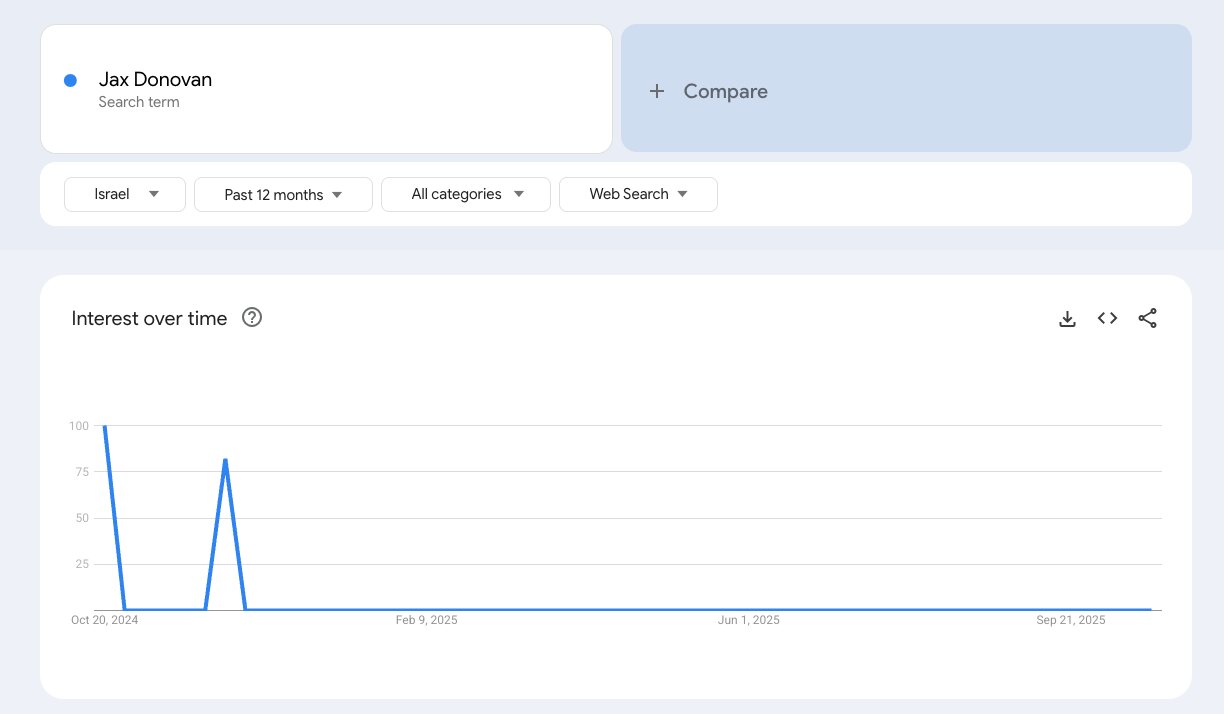
Reported Israeli Search‑Pattern and IP Activity (Claims)
The Israel section's own version of the Trends file — legal actors, medical staff, campus layouts and addresses, every item carried as an attributed claim. Aggregate interest identifies no user and no intent.
Read thisBrand says two people who were in a cabinet meeting told him foreign involvement and domestic accomplices were both taken off the table six days in. Anonymous second-hand sourcing, unconfirmed by anyone named.
Read thisElsewhere In The Investigation
Cellebrite — Israeli Forensics Firm
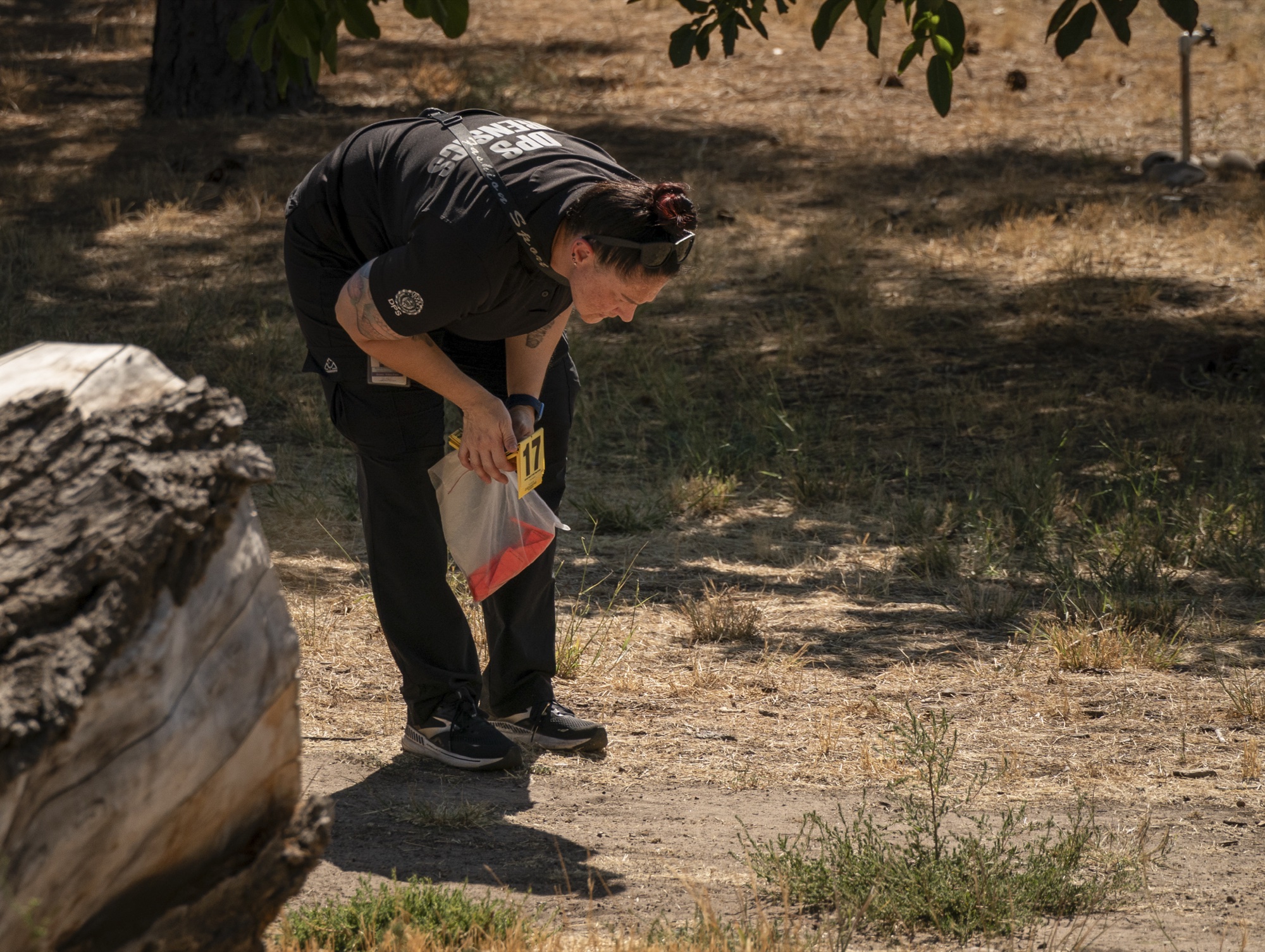
The Israeli forensics firm whose tooling extracted the phones at the centre of the case. Who built the extraction is not a neutral detail when foreign leads are part of the argument.
Read thisSealed warrants, withheld DNA mixture data, and a reported 600,000-file production. The defense reportedly asked to photograph the bullet fragment and watch the testing, and was told policy does not allow it.
Read this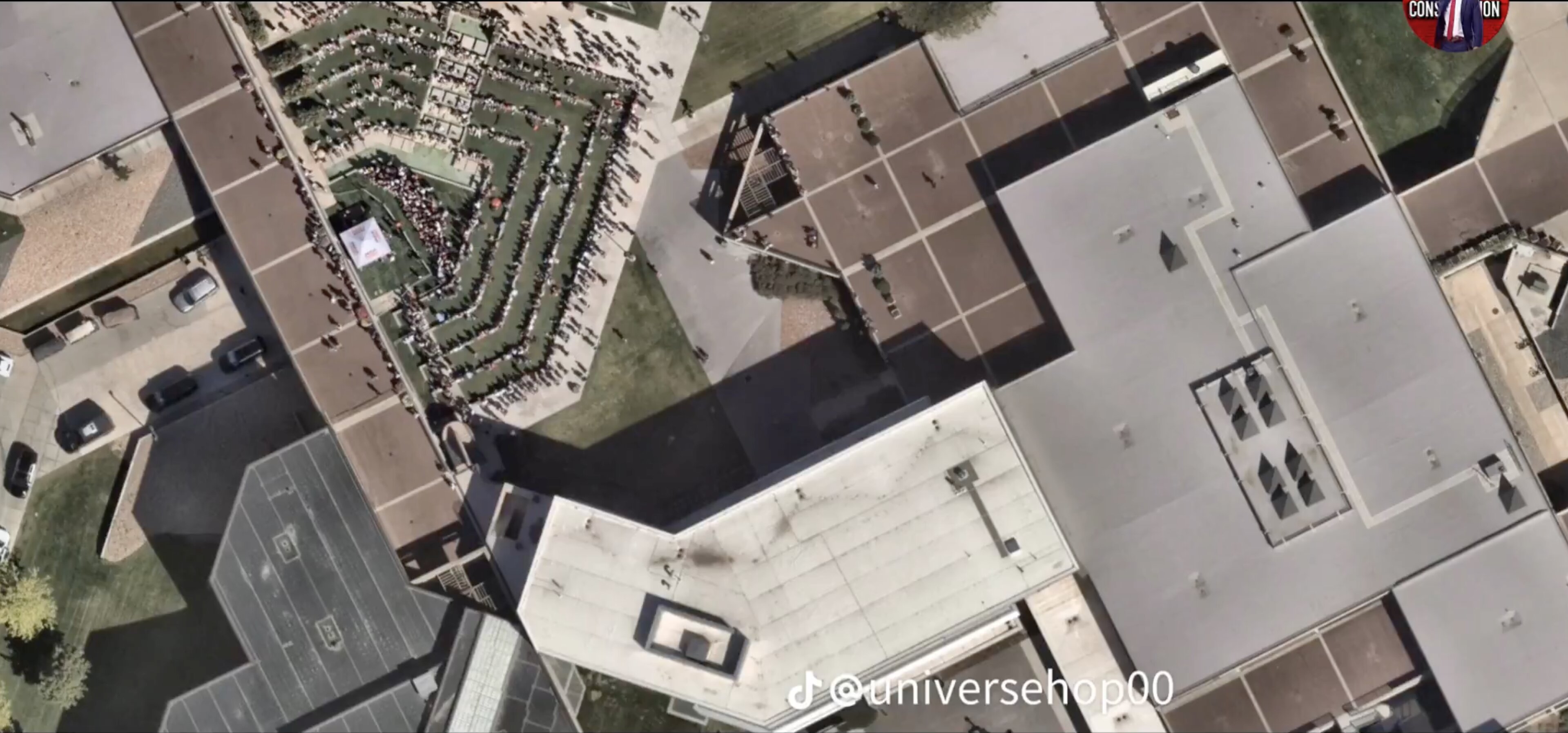
Israel IP Search Patterns (Claims)
The largest bucket in this research is a Trends country filter, not a list of workstations — and the page concedes that in its first paragraph. What survives is a dated list running from August 2024 campus layouts to a September 1 FBI name.
Read thisWashington County protocol reportedly seizes a phone at Miranda. Miranda is placed near 6:25 PM; the Discord traffic is stamped 7:57 PM, 260 miles from campus. The page documents the timing conflict without asserting forgery.
Read thisThis website's author is @HolonCitizen on X and YouTube/@HolonCitizen. Follow me there.
Interesting
- Kirk reportedly believed replacing Netanyahu would be the end of TPUSA.
- Tucker Carlson says a senior official answered "I know" about intel-agency blackmail.
- Researchers annotate a casing marked "SHOT CAME FROM HERE" near the canopy.