More Theories
Beyond the three primary suspect categories — Israel/Mossad, U.S. Intelligence, and Tyler Robinson — investigators have raised additional theories about who may have been involved in the Charlie Kirk assassination. These are presented here as lines of inquiry, not established conclusions.
Satirical LEGO-animated music video referencing Charlie Kirk's RØDE mic, via @RickyTheGuido, July 24, 2026. IPFS CID Qmd6zPTaBkhDSqCA9nEVrx1e7JsgAEUV7qSDu1pGELiPZJ.
TPUSA Internal Conflict Theory
Some investigators have suggested that individuals within TPUSA itself — or within the donor network that funds TPUSA — may have had motive to remove Charlie Kirk. Kirk was the founder and public face of TPUSA, but the organization is governed by a board and funded by donors whose interests do not always align with Kirk's public positions. Reported tensions over foreign policy, organizational direction, and financial control have been cited as potential motive dimensions.
Interesting claims in this area:
- Kirk's widow Erika Kirk became TPUSA CEO within days of the assassination, prompting questions about organizational succession planning
- TPUSA donors with documented ties to foreign policy lobbying organizations were reportedly present at or connected to UVU event planning
- Internal disputes over Kirk's evolving foreign policy positions — particularly on Israel — had reportedly created friction with major donors in the months before his death
These claims involve living persons and are presented as investigative hypotheses only. No criminal charges have been filed against any TPUSA-connected individual. In particular, nothing here should be read as suggesting that Erika Kirk, any TPUSA board member, or any TPUSA donor had knowledge of, or any role in, Charlie Kirk's death; the succession timing is recorded as a question raised in commentary, not as evidence of anything.
Foreign Government Theory (Non-Israel)
Some investigators have raised the possibility that a foreign government other than Israel — potentially acting through cut-outs or in coordination with domestic actors — may have had interest in removing Kirk. Kirk's America First foreign policy positions were opposed by multiple foreign governments with significant intelligence presence in the United States.
Potential actors named in this category by investigators include foreign states with documented influence operations in American conservative political circles. These theories are less developed than the Israel/Mossad and U.S. Intelligence theories and have fewer specific evidentiary hooks.
Combination / Multi-Actor Theory
Several experienced investigators have concluded that the most likely explanation is not a single actor from a single country or institution, but a coordination between multiple interests — for example, domestic intelligence providing operational cover while foreign actors provided the operational execution, or vice versa.
This theory explains features of the case that single-actor theories struggle with:
- The simultaneous precision of the killing and the breadth of the subsequent cover-up
- The apparent involvement of multiple agencies and institutions in suppressing the investigation
- The failure of any single entity to "own" the cover-up — which suggests distributed responsibility
Staged or Faked Assassination Theory
A small subset of investigators has argued that the assassination may have been staged — that Kirk is not dead, or that the killing was orchestrated to achieve a political outcome rather than actually eliminate Kirk. This theory has very limited evidentiary support and is not actively pursued by most serious investigators. It is noted here for completeness.
What All These Theories Share
All theories beyond the lone-shooter account share a common implication: that the official investigation has been corrupted or suppressed. Whether the entity blamed is a foreign intelligence service, a domestic agency, TPUSA insiders, or a combination, the claim that the FBI is not conducting a genuine investigation is the point on which virtually all alternative theories agree. That claim is contested and unproven. This is why the four proposed laws — forcing disclosure, mandating investigation, and installing trusted independent investigators — are the necessary precondition for resolving which theory is correct.
See: Fix the laws — all four proposals
Laws (Charlie Kirk)
- The subscriber identities behind the foreign cell phones at UVU and any wire transfers to Tyler Robinson or Lance Twiggs and NSA SIGINT queries run on the suspects and planes are things that the Charlie Kirk Investigation Laws may result in powerful truths coming out that aren't out yet.
Competing Claims After July 2026 Prelim Coverage (Attributed)
Additional theories share a suppressed-investigation premise; require separate evidence bars.
Official track: Prosecutors argue Robinson's DNA, rifle recovery, surveillance, and confessions. Defense/OSINT track: fragment ballistics language, timeline gaps, clothing/limp anomalies (including Trump Jr. public commentary clips), roof second-person videos, courtyard paving. Foreign/intel track: Kent NCTC claims, phone SIGINT stories, donor-motive narratives.
This page maps theories; it does not declare the "real killer" as a site finding beyond what courts eventually adjudicate.
Interesting In This Area
- Israeli cellphone signal claims near UVU remain unverified but are widely discussed.
- N1098L and an alleged security stand-down anchor the domestic-agency case.
- The rifle-to-wound mismatch is the sharpest documented challenge to the official account.
- Patsy claims and cover-up indicators are logged as unproven allegations.
Interesting In Other Areas
- TPUSA donor friction over Israel reportedly sharpened in the weeks before September 10.
- Joe Kent says the FBI stopped his inquiry before the leads were exhausted.
- Proof Not Tyler gathers the ballistics and acoustics arguments against the lone-shooter account.
- The motive threads include warnings he reportedly gave three separate people.
Other Pages In This Section
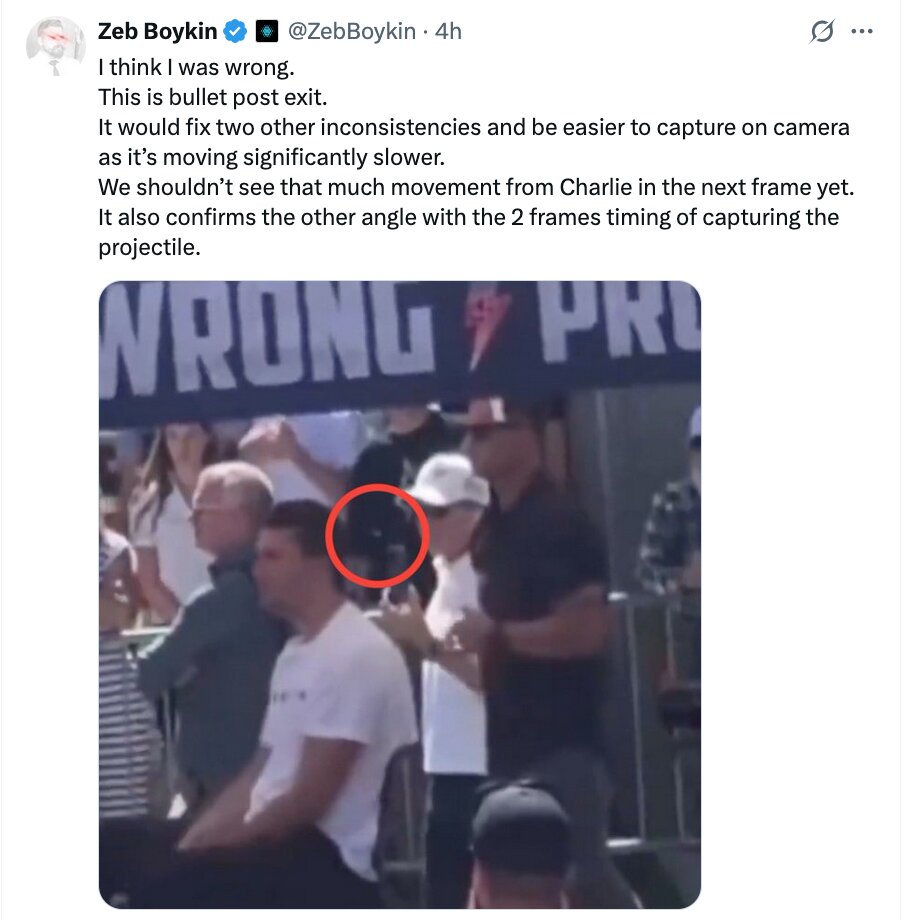
The competing theories of who killed Charlie Kirk, laid out side by side rather than merged: foreign service, domestic agency, the charged man, patsies and distraction actors. Contested readings of the public record, not court findings.
Read thisTheory: Tyler Robinson — Official Suspect
The government's case against the charged man, set beside the documented challenges to it: the rifle-to-wound mismatch, the acoustic timing, the gaps in his day. He is charged, not convicted, and the page is written so you can weigh both sides.
Read this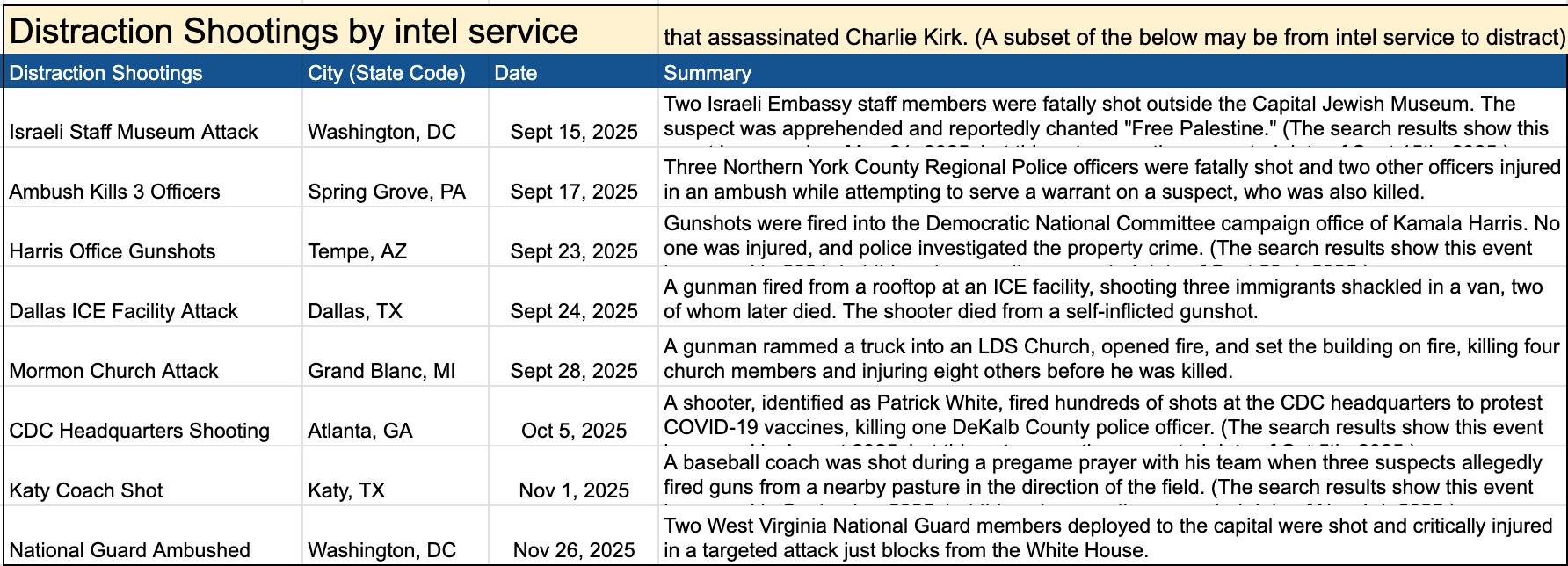
Charlie Kirk had begun breaking publicly with the pro-Israel consensus on the right, and this page follows the motive and capability argument built on that. Every operational claim in it — the alleged signals, the paving, the halted foreign leads — is recorded as contested. No court has found that any foreign service ordered his death.
Read this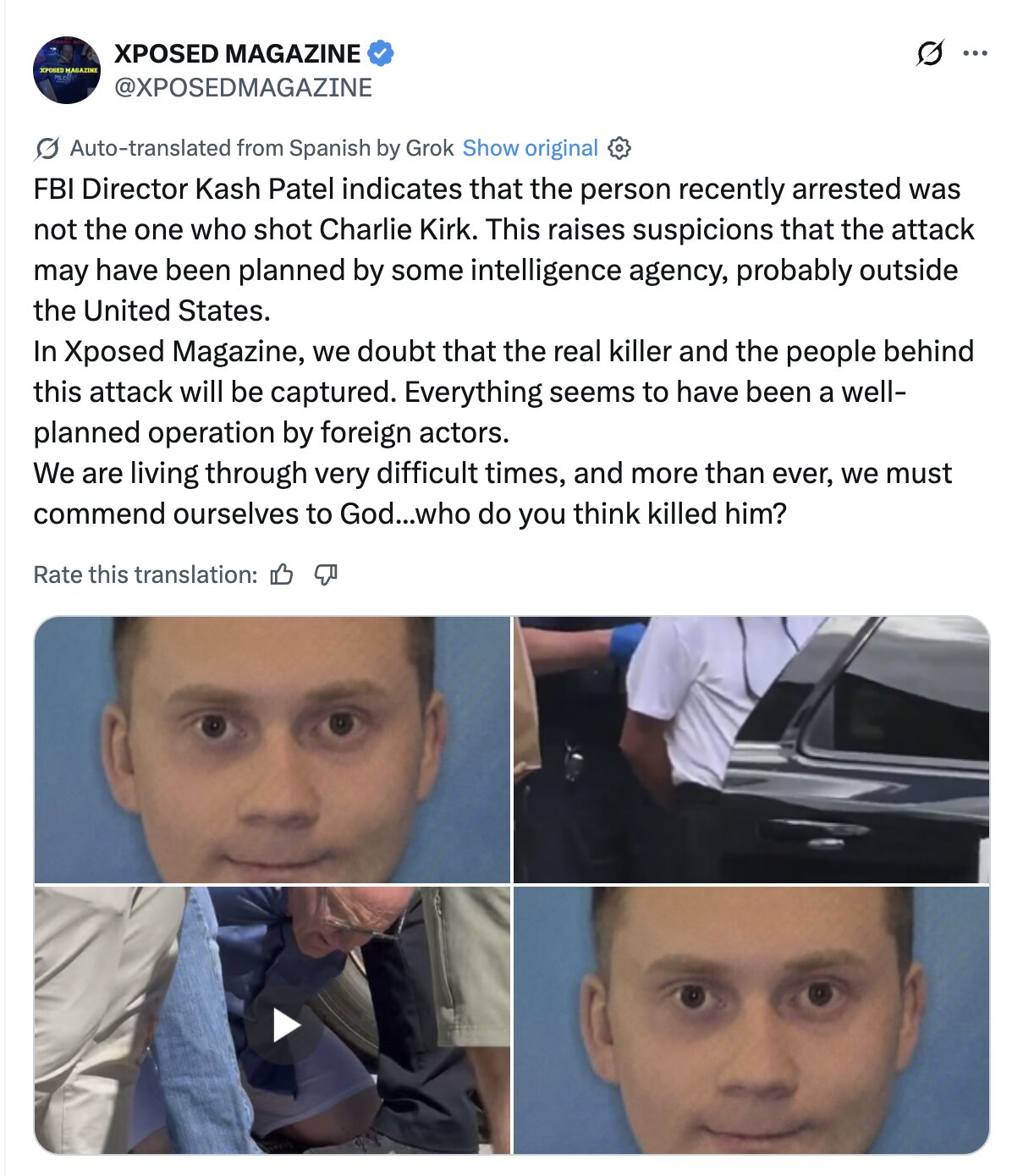
Alleged Patsies and Distraction Actors (Claims)
If a sophisticated operation killed Charlie Kirk, some of the people who drew the cameras were not the killer. This page compiles those distraction claims — every one an unproven allegation, none a finding of guilt.
Read thisElsewhere In The Investigation
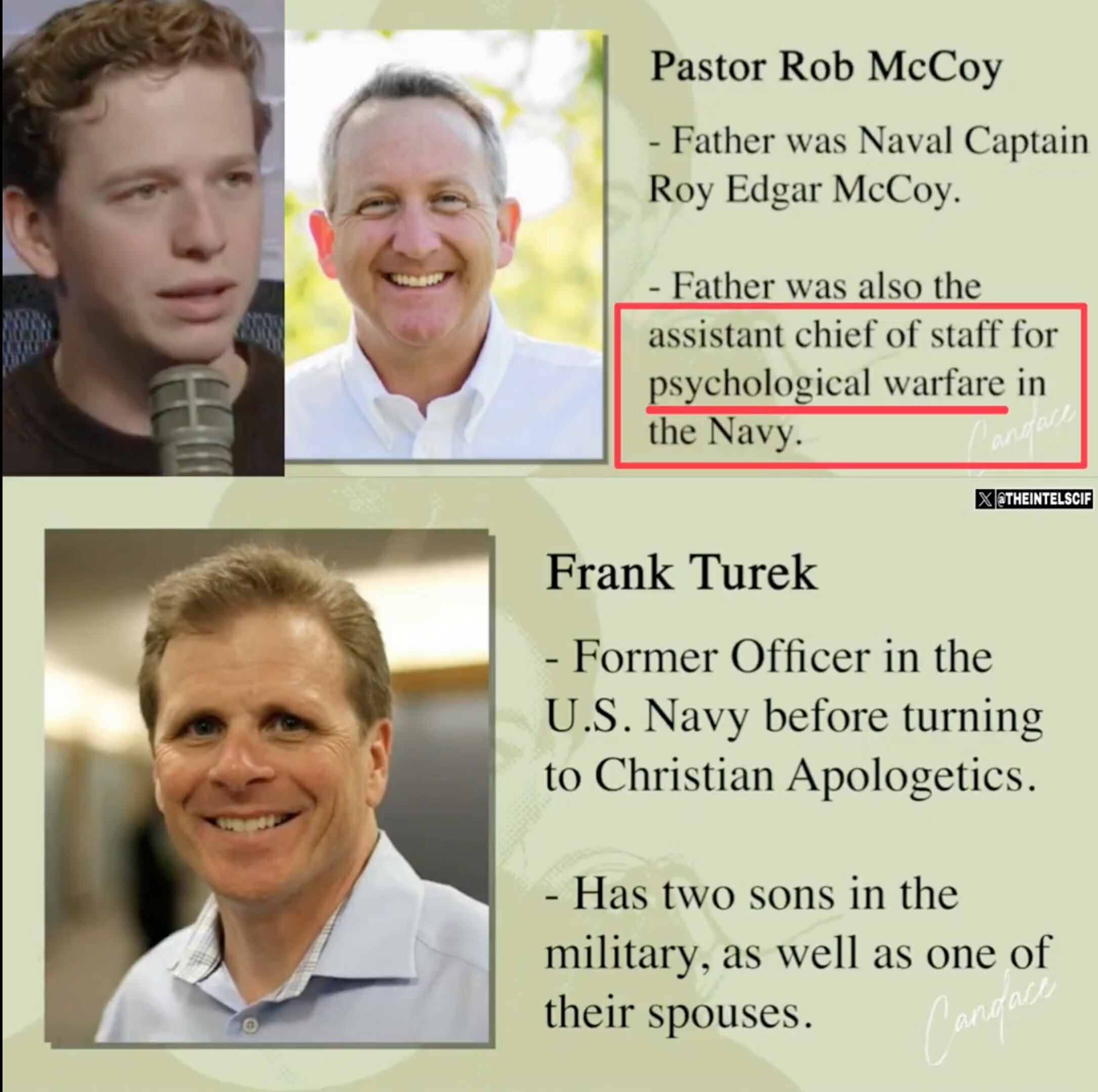
The organization Charlie built, the donors who funded it, and the internal friction in the weeks before September 10. Read it alongside the motive threads; much of the reported pressure ran through here.
Read this
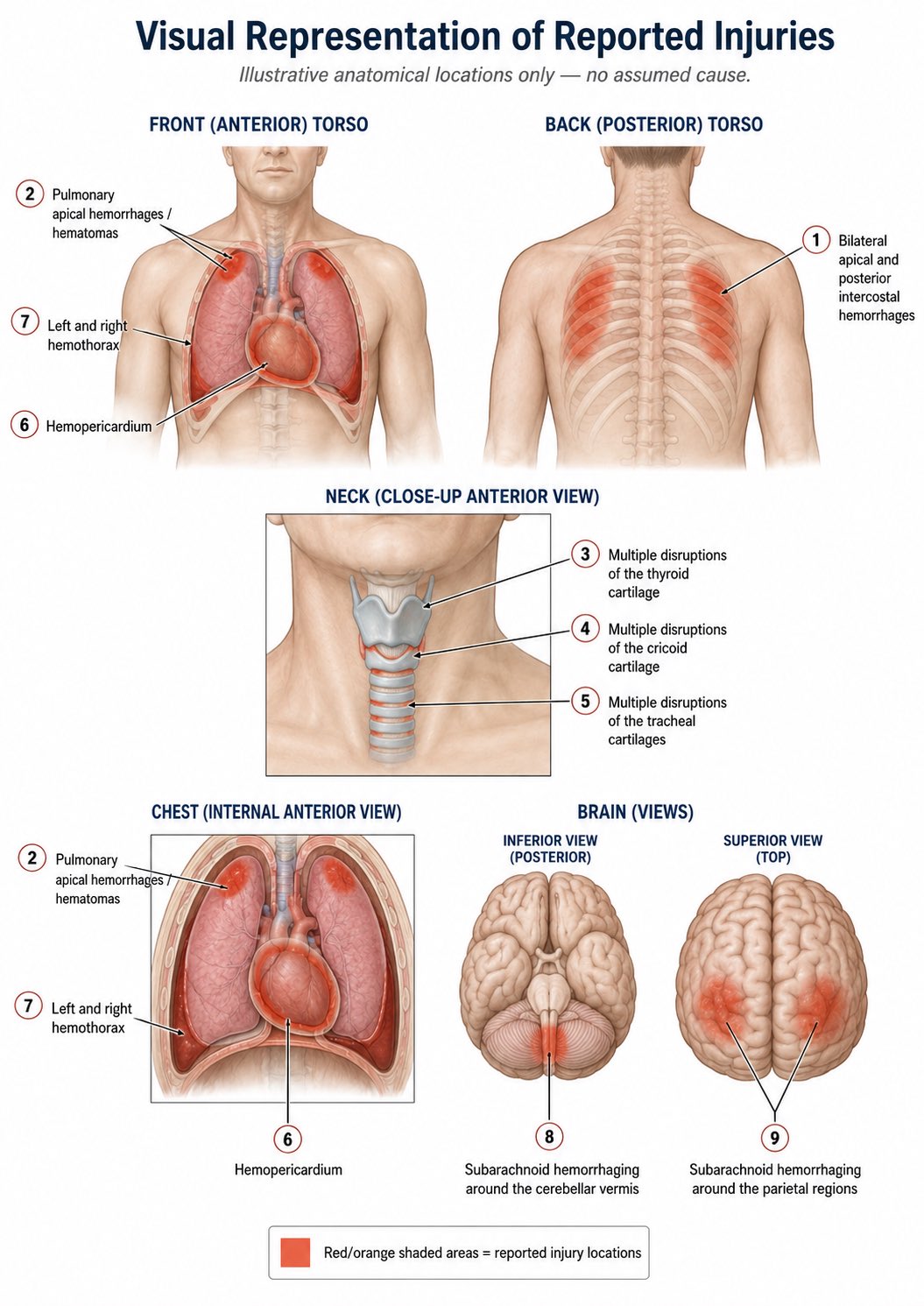
The hub for every argument that Tyler Robinson did not cause Charlie Kirk's death — ballistics, acoustics, identity gaps, and the standard physical tests that were reportedly never run.
Read this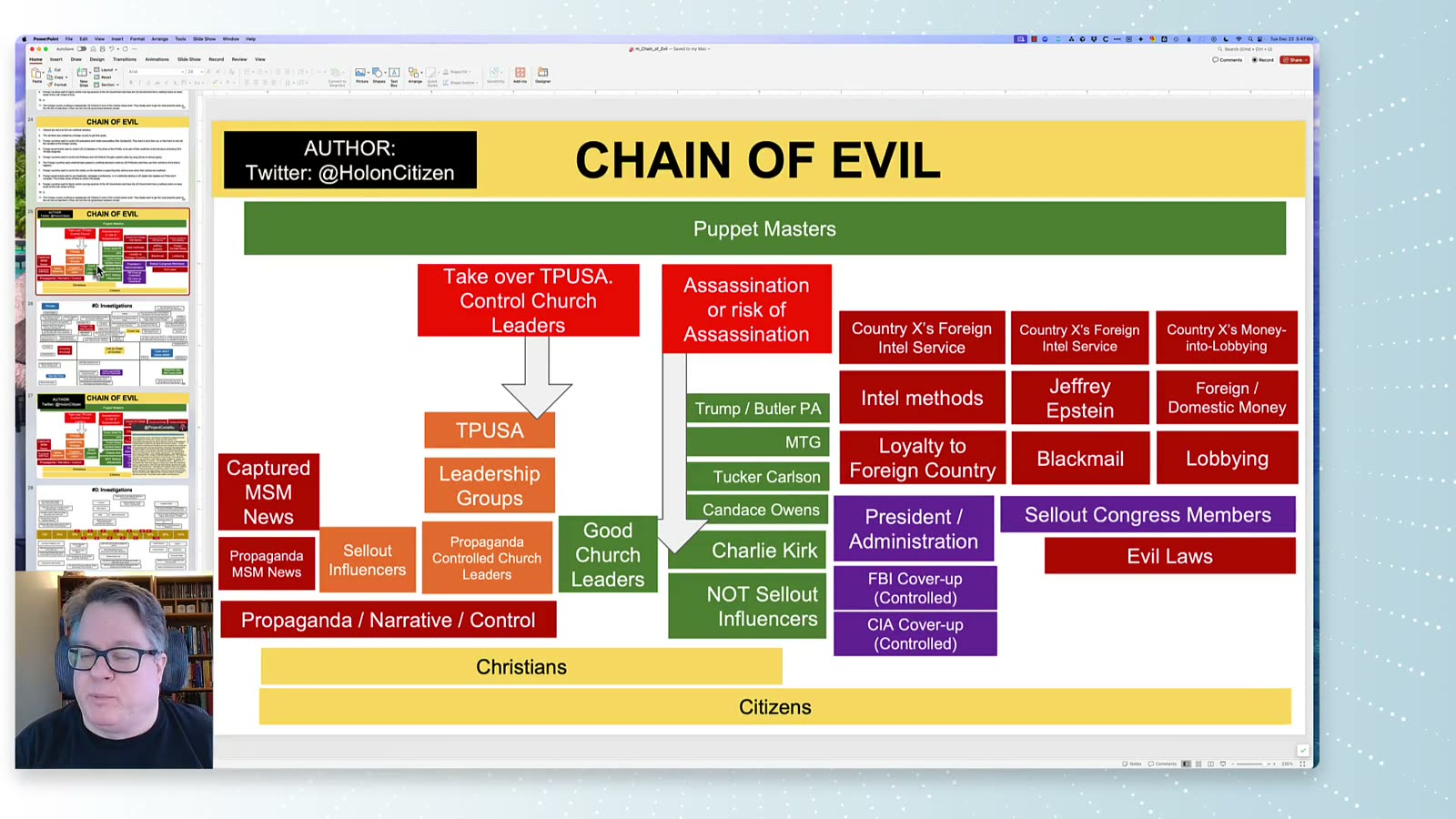
This website's author is @HolonCitizen on X and YouTube/@HolonCitizen. Follow me there.
Interesting
- Signal activity near campus anchors the Israel and Mossad theory investigators keep returning to.
- One researcher counts 60 foreign phones beside Charlie Kirk at the moment of death.
- A sitting intelligence director says the FBI shut down his foreign-nexus probe.