← Law Enforcement
Officer Bagley — Body Cam Died on Roof
Clip narrating reported testimony about Officer Bagley's body cam ending while he was still on the roof. Source: @JOKAQARMY1 on X, July 6, 2026.
A citizen-journalist clip posted by @JOKAQARMY1 on July 6, 2026 narrates what it presents as courtroom testimony from Officer Bagley, and raises a question about why his body-worn camera footage from the day of the shooting reportedly ended while he was still on the UVU rooftop. Everything below is reported and framed as an open question — none of it establishes wrongdoing. Rooftop footage from the minutes after Charlie Kirk was killed is among the most consequential material in the case, which is why the gaps in it are catalogued alongside the wider record-keeping problems.
The Reported Testimony
According to the narration and the audio in the clip, Officer Bagley was asked about his body cam footage and gave the following account:
- His body cam footage "appears to end while [he was] still on the roof," according to the questioner reviewing it.
- Asked why, he reportedly said he believed the battery had died — "it was just right at that moment."
- Asked whether he ever turned it back on, charged it, or swapped in a new battery that day, he reportedly said no — that he "didn't go back" because it was "too chaotic."
- The recording is described as 27 minutes and 35 seconds long, starting when he was "at the holding flags" and ending while he was still on the roof, before crime-scene tape had been put up.
- It is described as the only body cam footage he had that day.
The Screwdriver Reference
The clip states that, at the point the footage reportedly ends, Officer Bagley found a red and black screwdriver, and that a photograph of the screwdriver was admitted into evidence. The narrator raises this to question whether the discovery is documented on camera, noting the still image exists in the record.
How the Poster Frames It
The poster treats the "battery died" explanation with skepticism, asking "how many times Officer Bagley's body cam died after 27 minutes of being on the job," and grouping it with what the poster calls "so many other incidences in this Charlie Kirk assassination case."
That skeptical framing is the poster's opinion, not an established fact. Body-worn cameras genuinely running out of battery mid-shift is a common, well-documented occurrence, and Utah law (Utah Code § 77-7a-104) requires an officer to document in a written report any time a camera is not activated — a paper trail that could independently confirm or refute the account. Nothing in the clip establishes that Officer Bagley intentionally stopped recording or that any footage was destroyed. This page presents the reported testimony and the open questions it raises, not a conclusion.
Why It Matters
The rooftop of the Losee Center is where the charging narrative places the shooter, and gaps in the on-scene recording record are a recurring theme investigators raise across the case — see the broader pattern of missing body cam and surveillance footage. Related documented body-cam questions include Washington County's reported claim of zero surrender footage and the UVU campus police rooftop coverage.
Status: Alive
X.com posts:
Additional source: Candace Owens podcast — claim that other police officers contacted the program calling the sudden body-cam blackout highly implausible (anonymous, uncorroborated). For the full person profile see Chris Bagley; for how this testimony sits against the rest of the sworn record see Testimony and Who Testified.
Additional X Claims (July 2026 Hearing Window)
@TPostMillennial (July 6, 2026) posted video-framed coverage stating that former UVU officer Chris Bagley described finding a red-and-black screwdriver on a rooftop after the murder, with a photo entered into evidence. @realtoriabrooke the same day summarized that Bagley's body-cam footage reportedly ended on the roof before crime-scene tape went down, with testimony that the camera died. @CarpentrySol (July 7, 2026) called the timing "convenient," tying the dead body cam to unanswered UVU CCTV questions. These are public commentary and news-aggregation claims, not findings of intentional spoliation.
A separate long-running claim, restated by @Villgecrazylady (December 18, 2025), is that the screwdriver was first associated with the woods near the rifle, that Kash Patel later told Fox News it was found on the roof, and that the tool is not listed in charging documents. That is an attributed discrepancy claim. No living person is accused here of planting or destroying evidence; the page records what investigators on X are arguing about the record gaps.
Police Officers Reportedly Call the Blackout Implausible (Claim)
On her podcast, Candace Owens stated that other police officers contacted her program about Bagley's testimony and told them his account of the sudden body-cam blackout is highly implausible. Their reported reasoning tracks the same "charging stand" logic Ryan Matta raised: a camera docked overnight should not drain by midday.
Weigh this carefully. The officers are unnamed, their claim is not sworn testimony, they have not been shown to have any knowledge of this specific device or agency's equipment, and the claim has not been corroborated in any court record. Serving officers offering a professional read on equipment behavior is commentary, not evidence — and the ordinary explanations remain fully available: batteries degrade with age, a camera taken off the charger early or used earlier in the shift can die mid-shift, and Utah's non-activation reporting statute exists precisely because gaps happen routinely. The device logs — battery level at shift start, charge history, power-off event — would settle this with records rather than argument. Nothing here establishes that Officer Bagley disabled his camera or did anything wrong.
:::caution Legal Disclaimer Nothing on this page constitutes a finding of wrongdoing, criminal conduct, ethical violation, or participation in any crime by Officer Bagley (Chris Bagley) or any other living person. This site documents questions and claims that have circulated in public commentary — not findings of fact. All persons named are presumed innocent. :::
Interesting In This Area
- The recording ran 27 minutes and 35 seconds, ending before crime-scene tape went up.
- It was reportedly the only body-camera footage that officer had from the entire day.
- Washington County reportedly produced no surrender video at all, a second gap in the record.
- A screwdriver photo entered evidence, but its woods-versus-roof location is disputed in public statements.
Interesting In Other Areas
- An officer reportedly testified the screwdriver lay 15 to 20 feet past the roof railing.
- UVU's high-definition surveillance was never released publicly, a separate hole in the record.
- Chris Bagley was reportedly the first officer to reach the Losee Center roof.
- Utah law requires a written report whenever a camera is not activated — see hearing testimony.
Other Pages In This Section
The cluster of officials who left in the months after the case — the sheriff who handled the surrender, the university president, and others. Timing is recorded; implication is not.
Read this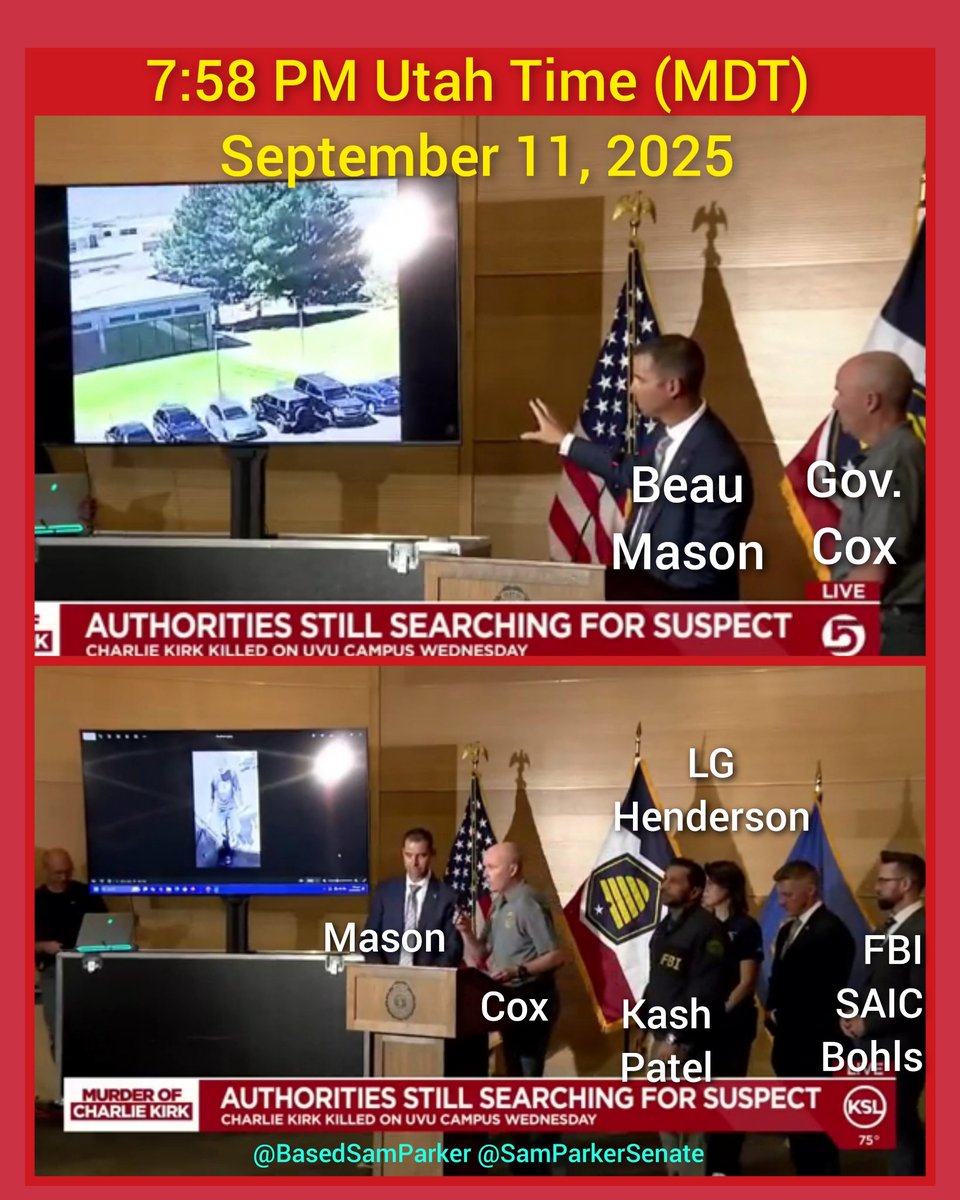
Utah DPS & Commissioner Beau Mason
The state's most visible law-enforcement voice in the first forty-eight hours. He announced the recovered rifle and released the enhanced suspect stills — some of them, timeline analysts argue, after a surrender was already being arranged.
Read this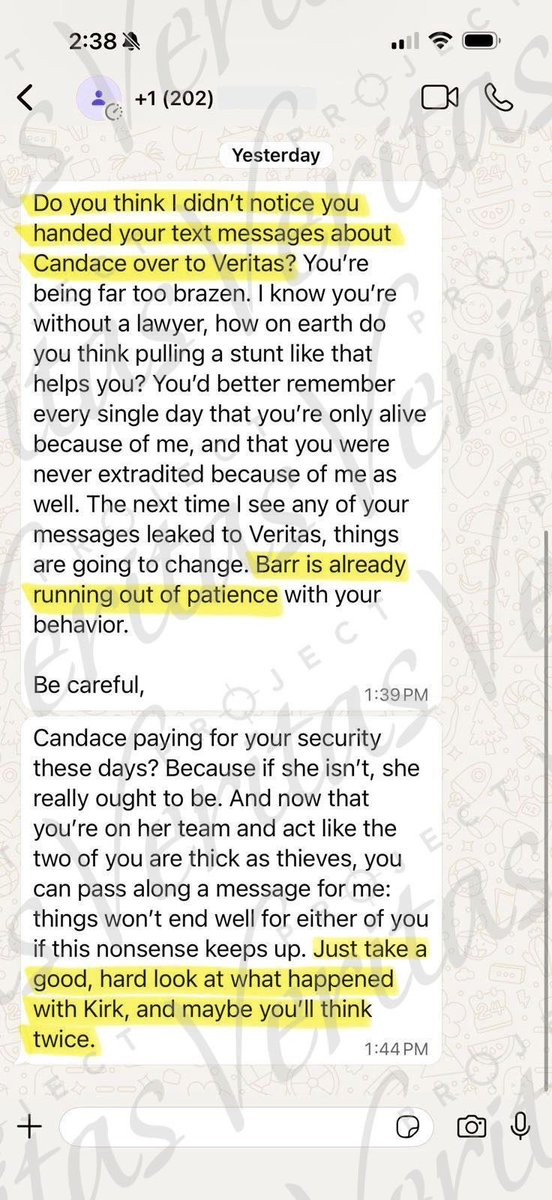
A deliberate pointer page. It marks only the three places federal conduct touches the state and local chain — custody transfer, scene control and discovery — and sends the rest to the Bureau's own section.
Read this
Who found the rifle, when, after which K-9 passes, and how the towel-wrapped bundle was photographed and sealed. These are ordinary evidence-handling questions, and on the public record they are unanswered.
Read thisElsewhere In The Investigation
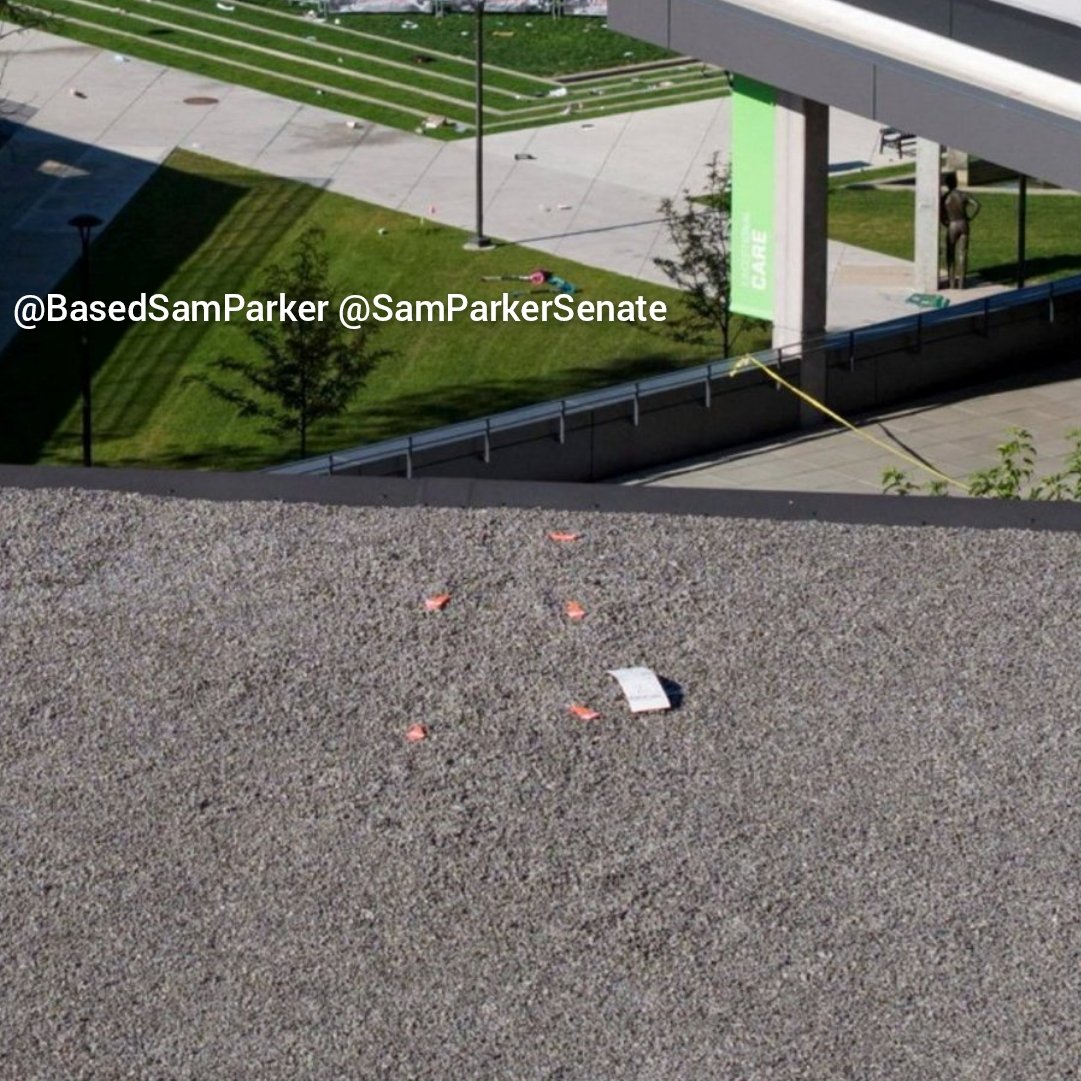
The Screwdriver and the Crime-Scene Tape
An officer reportedly testified he found a screwdriver 15 to 20 feet past the roof railing, protected by crime-scene tape. Helicopter footage circulated afterwards is said to show neither. Two records of the same few square feet.
Read thisScheduling fights, camera access, roommate-testimony disputes and delay motions pushed the preliminary hearing into July 2026. Each one changed what the public could see before it changed what a jury could hear.
Read this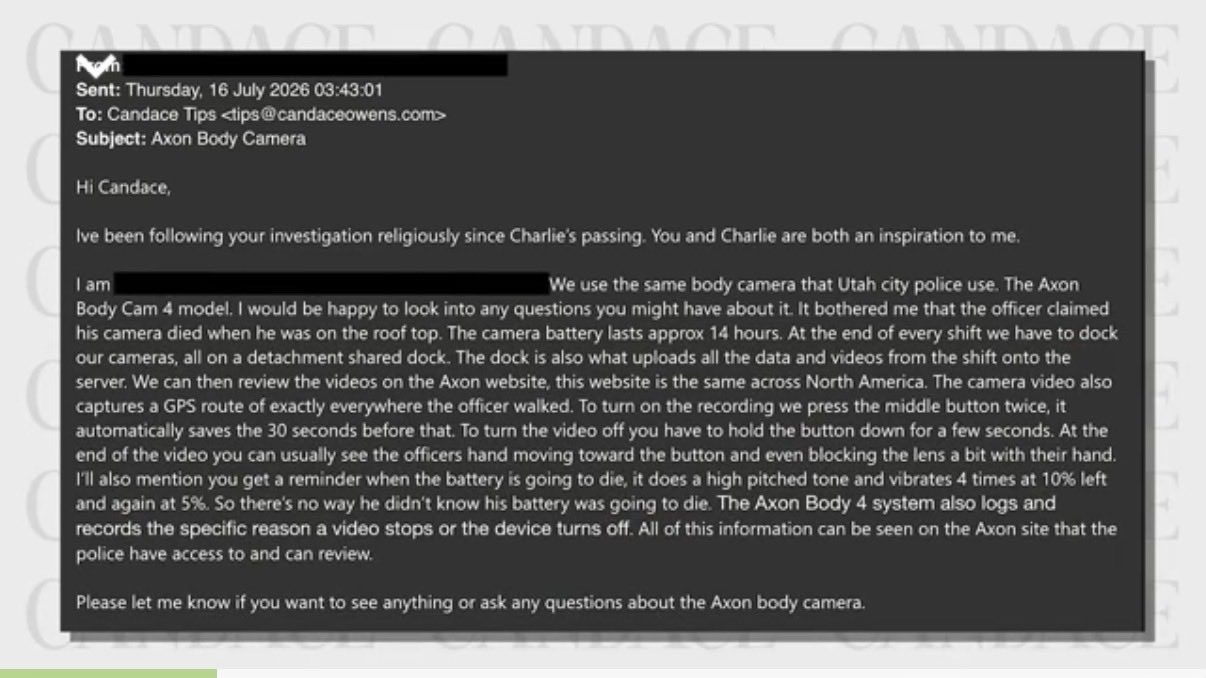
The former UVU officer reported to be first onto the Losee Center roof, and the witness whose body-camera recording stopped there. His preliminary-hearing testimony is where the screwdriver enters the record.
Read thisUVU HD Surveillance Never Publicly Released (Claims)
The affidavit tracks a suspect across campus almost entirely on university cameras, yet only grainy re-encoded clips have reached the public. The original DVR exports and their per-frame timestamps have not.
Read thisThis website's author is @HolonCitizen on X and YouTube/@HolonCitizen. Follow me there.
Interesting
- The lead investigator reportedly learned the courtyard was paved from the news, not his agency.
- Kirk reportedly called an August donor gathering an 'intervention', with a funding offer he refused.
- A combative meeting the day before reportedly preceded his 'they are going to kill me' message.