← Law Enforcement
Mauser Rifle Chain of Custody
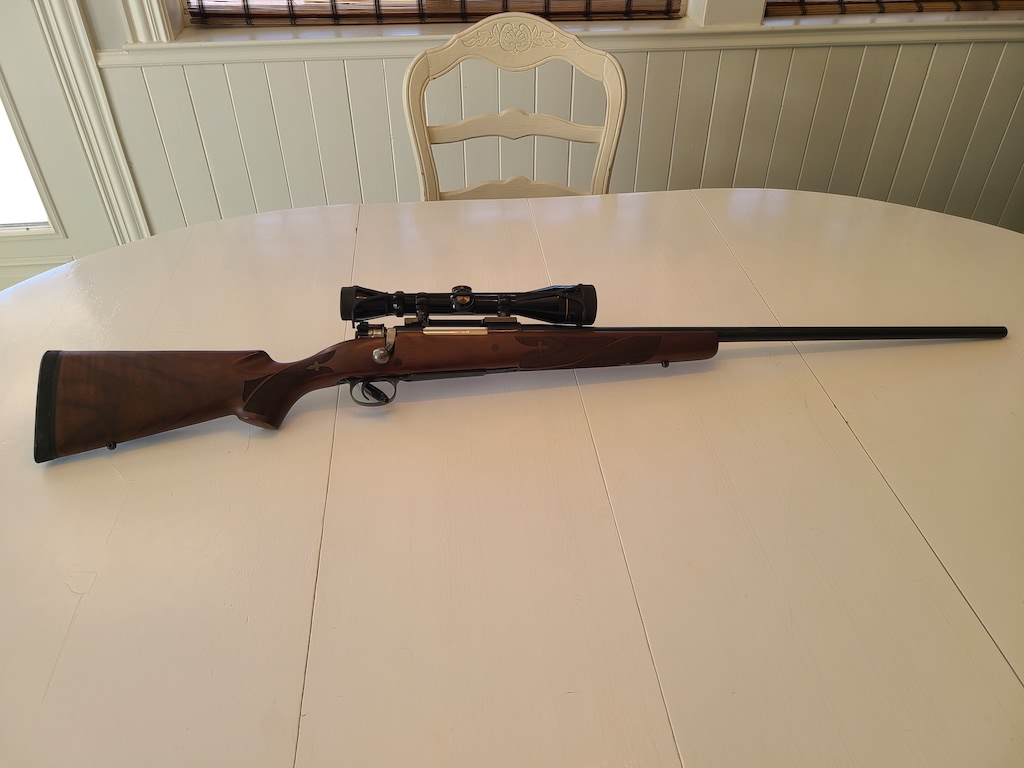
This page covers the weapon evidence in the Charlie Kirk case — a bolt-action Mauser rifle allegedly tied to the charged suspect, Tyler Robinson — and the reported forensic problem with matching it to the bullet. For the full ballistics analysis, see Ballistics.
The rifle only matters if the rifle is what killed him. Citizen investigators on X have concluded by large majority that Charlie Kirk was killed by an explosive device rather than by a bullet — see the exploding-microphone finding — which makes the chain of custody on this weapon a question about the state's account rather than about the cause of death.
The Weapon Allegedly Tied to the Suspect
A bolt-action Mauser rifle is described as the weapon allegedly tied to Robinson. Robinson is the charged defendant and has not been convicted; the connection of the rifle to him is an allegation, not an established fact.
The Reported ATF Non-Match
According to @SteveCameronPr1 and others, the ATF reportedly could not match the bullet to the rifle allegedly tied to Robinson. That reported non-match is presented here as a forensic problem and an open question about the strength of the physical evidence, attributed to its sources rather than stated as a court finding.
If the recovered bullet cannot be matched to the recovered rifle, it raises the question of how the weapon evidence ties to the charged suspect. That is the question this page surfaces; it does not resolve it.
A Broader Ballistics Claim
There are broader claims, recorded in the master investigation notes, that the FBI is using a "banned CBLA test" — Comparative (Compositional) Bullet Lead Analysis — in the ballistics work. The notes describe the sequence this way: the ATF reportedly "cannot match the bullet fragment to Tyler Robinson's alleged rifle," and the analysis was then handed to the FBI for CBLA. Per the notes, CBLA was used from the 1980s until 2005, when the FBI "permanently abandoned it due to flawed scientific, statistical, and interpretive validity."
The notes cite the Jimmy Yates precedent — a 1991 conviction for murdering his wife that relied on FBI lead-analysis matching a bullet in his car to the crime scene, before the science was later discredited — as the example of how the technique put innocent people in prison. The framing in the notes is a defense concern that a discontinued method could be revived to "manufacture a match" while the defense is "drowning in 600,000 document files."
That entire claim is included only as an attributed allegation from the research notes and is not stated as fact; no official source has confirmed that CBLA is being used in this case. The detailed ballistics treatment, including this CBLA claim and any official responses, belongs in the Ballistics section.
Citizen Investigator Claims on X
@JGlasseir (July 10, 2026) stated that ballistic experts "of Utah State CANNOT confirm the bullet found in Charlie was shot by the Mauser Model 98 found in the woods on September 11, 2025," linking mainstream coverage of the vintage hard-to-trace rifle. The March 31, 2026 cluster (@EvanAKilgore, @BowesChay, @daviddunn177) paired the same non-match theme with Sheriff Brooksby's resignation.
A July 10, 2026 X thread summarizing the preliminary hearing stated that fragments from Kirk's body "could not be identified or excluded" from the recovered rifle — language the defense is said to highlight — while prosecutors still point to DNA on the rifle, a spent casing, a towel, and other physical links. That is a contested-forensics summary, not a verdict.
Separately, citizen analysts (e.g. @Ariana_J_21) argue recovered jacket-fragment measurements (~0.286–0.301" in their posts) are too small for a full .30-06 (0.308") profile and that heavy fragmentation is inconsistent with common non-frangible .30-06 loads. Those are online technical arguments, not published peer-reviewed ballistics reports. For full mechanism debate, see Ballistics and Wound Analysis.
Open chain-of-custody questions raised online
- Who first found the rifle, when, and after which K-9 passes?
- How was the towel-wrapped item photographed and sealed?
- Where do ATF vs Utah State vs FBI lab reports diverge in language ("cannot match" vs "cannot identify or exclude")?
Interesting In This Area
- The charging document describes a stiff gait that reportedly vanished on the rooftop.
- A defense continuance was sought because ATF and FBI files were not produced.
- The sheriff who took the surrender resigned as posts circulated the reported non-match.
- Dispatch described all black, helmet and mask, not the T-shirt imagery released later.
Interesting In Other Areas
- Lab language "cannot identify or exclude" is not "different gun" — the distinction matters.
- The Mauser was found wrapped in a towel in woods north of campus.
- Citizen investigators conclude by large majority that an explosive device, not a bullet, killed him.
- Notes allege a discontinued lead-analysis method was revived after the ATF result — unconfirmed.
Other Pages In This Section
Suspect Manhunt & Misidentification
The first-hours description — dark hat, flag shirt, dark jeans, a stiff right-leg gait — set against the man eventually charged. A witness says the photo he was shown was someone else.
Read this
Prosecution & Court Proceedings
State of Utah v. Tyler Robinson: the docket, the change of presiding judge, the December gag order, and the fight over ATF and FBI files. Prosecutors wrote that they do not intend to offer evidence from the seized electronics.
Read this
Orem PD sent UVU the ticket link a week before the event, then said afterwards it was "not involved." The joint public-order unit UVU pays for every year was never activated.
Read thisSix campus officers for an event with a documented threat history, and rooftops treated as outside the detail's jurisdiction. A pre-event email through the chief's chain the day before is a documented item researchers want disclosed.
Read thisElsewhere In The Investigation
Mauser .30-06 Rifle — Official Narrative
The state's weapon: a scoped Mauser Model 98 in .30-06, tied to a grandfather and a World War I story. Commentators note the recovered rifle is a commercial 98 rather than a K98, and that M98 Mausers were not factory-chambered in .30-06 in that era.
Read thisThe prosecution's physical case needs the autopsy fragment tied to the seized rifle, and the state's own lab could not do it. Rifling consistent with numerous makes and models is a class description, not an identification.
Read this
Explosive in Mic Likely Killed Charlie
The finding citizen investigators on X have converged on: a device at the microphone, not a round from a roof. It is the single largest divergence between the public record and the government's account.
Read thisBallistics — ATF Inconclusive & CBLA
The ATF could not match the recovered jacket fragment to the seized Mauser. This page separates a casing from a fragment and explains why that distinction decides a great deal.
Read thisThis website's author is @HolonCitizen on X and YouTube/@HolonCitizen. Follow me there.
Interesting
- On the roof, the camera stopped recording before crime-scene tape even went down.
- Named civilians would pick their own FBI and intelligence team members, bypassing the chain of command.
- A proposed law would make obstructing citizen investigators a fifteen-year federal crime.
Related Areas
Images