Media Response
The press response to Charlie Kirk's killing unfolded in three overlapping waves: breaking-news coverage on September 10–11, a sustained political-violence debate, and — through 2026 — granular courtroom and evidence reporting as the Tyler Robinson capital case advanced.
Breaking News: September 10–11
Major outlets deployed live blogs, maps, and manhunt tickers within hours:
- Wire services labeled the shooting a targeted public killing and tracked the evolving suspect search (AP; CNN live archive).
- The New York Times published visual reconstructions and a later meta-story on editorial judgment during graphic breaking news (maps piece; judgment-calls piece).
- The Washington Post framed the killing within democratic fragility and national-security lenses (security angle; democracy essay).
Official statements that day — including a premature FBI custody announcement later corrected — became part of the media record itself (Legal: Official Statements).
Political Violence and Policy Response
Coverage quickly linked the assassination to broader American political violence:
- Bipartisan outcry against violence appeared in network live blogs (NBC).
- Reuters reported a planned Rubio summit on political violence for July 2026 (Reuters).
- Opinion pages placed the killing in historical patterns of public-figure attacks (Washington Post opinion).
Memorial politics — including the posthumous Presidential Medal of Freedom — received parallel coverage (Presidential Medal of Freedom).
Workplace Retaliation and Speech Backlash
A distinctive secondary story tracked firings and discipline over social-media comments about the assassination:
- Reuters investigated more than 600 firings, suspensions, and investigations in a post-assassination crackdown (Reuters).
- The New York Times documented 145+ workplace actions with personal vignettes (NYT).
- The Verge connected downstream prosecutions — such as a Prairieland zine sentencing — to the wider chilling-effect debate (Verge).
These pieces highlight an irony many outlets emphasized: a killing debated as an attack on free speech triggered its own wave of employment consequences for speech about the event.
2026 Court Coverage as Media Story
As pretrial proceedings intensified, press attention shifted to procedure and ethics:
- Camera access rulings and hearing delays (Fox News; ABC7).
- ATF ballistics unsealing and defense motions citing inconclusive results (Fox News; PBS).
- June 2026 contempt finding against a prosecutor over media statements (AP; Guardian).
Tyler Robinson is the accused and has not been convicted; courtroom reporting describes motions and rulings, not final guilt.
Citizen Investigators and the Parallel Media Ecosystem
Alongside legacy outlets, podcasters, X threads, and YouTube channels supplied an alternative news layer — often faster on flight-tracking and censorship claims, slower on lawyer-vetted court details (Mainstream vs Alternative Media). The full article index lives on Media Articles; suppression claims on Media Censorship.
Laws (Charlie Kirk)
- Records of coordinated official media messaging and FBI requests to delete eyewitness video and who ordered social-media takedowns of evidence are not public yet; the Charlie Kirk Investigation Laws could bring these powerful truths out.
Citizen Investigator Claims on X
Response-pattern critiques: outlets that led with ideology profiles over scene forensics; rapid adoption of federal talking points; under-coverage of GRAMA dumps and hearing exhibits. Alternative media is criticized for over-certainty in reverse. Healthy standard: attribute, date, and separate charging facts from theories.
Interesting In This Area
- Wire copy rarely carries sealed discovery, message logs, or citizen flight paths.
- A premature custody announcement travelled further than the correction that followed.
- Deseret News quoted the governor on phrases engraved into recovered cartridge casings.
- A TPUSA replacement sat for a Fox interview within hours of the death.
Other Pages In This Section
A presidential proclamation issued on what would have been Charlie's thirty-second birthday, running alongside a capital case that had barely begun. Memorial programming and unanswered questions on the same calendar.
Read this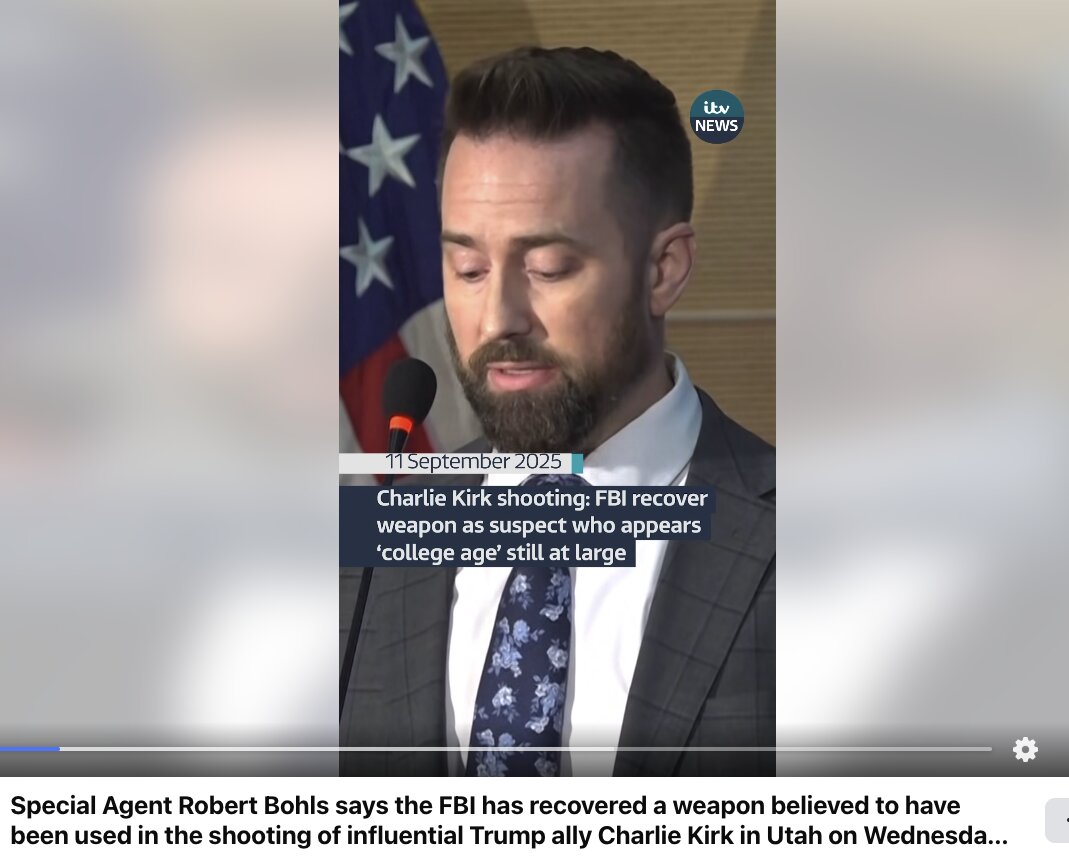
What CNN, NBC, ABC, CBS and PBS carried from the September 2025 breaking coverage through the 2026 courtroom rulings — and, just as usefully, what they never carried at all.
Read this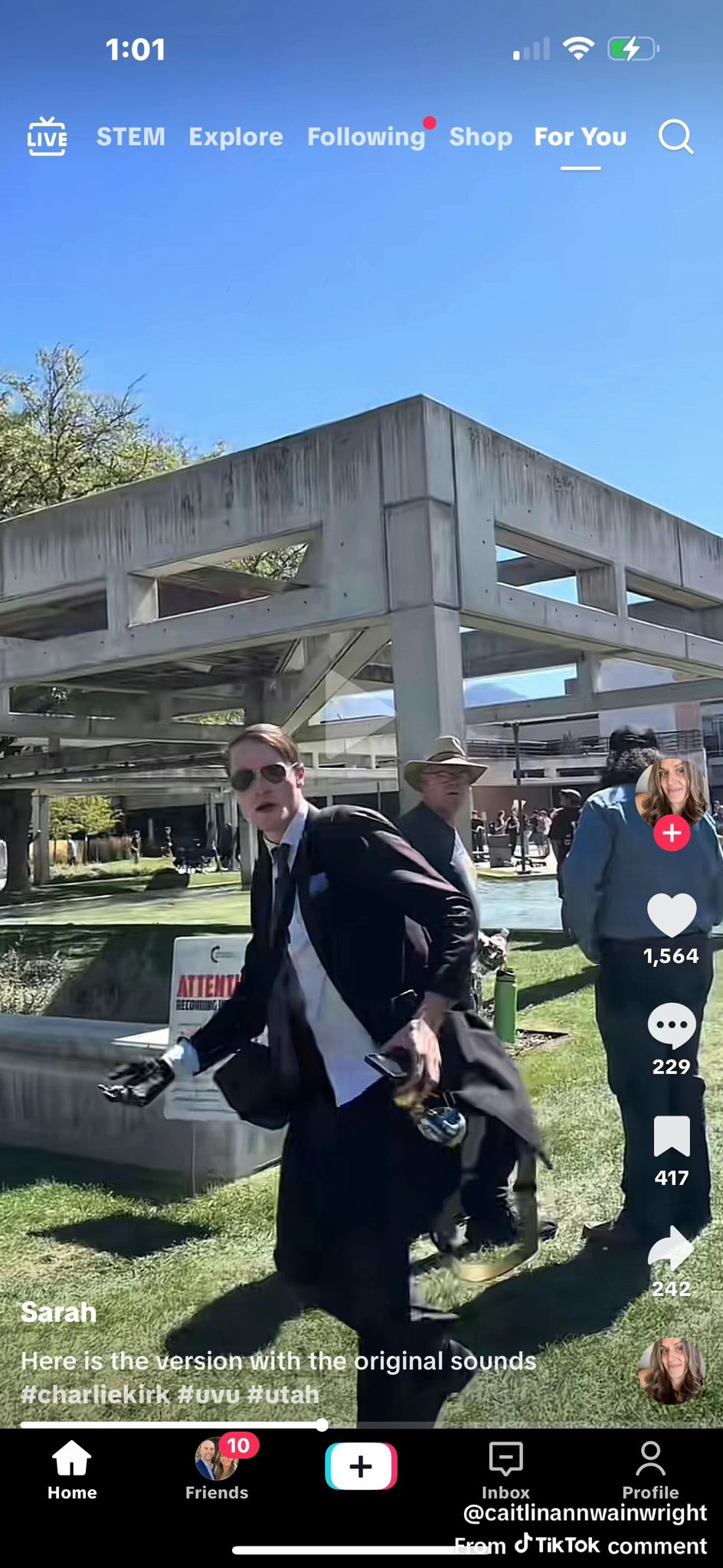
X, YouTube and TikTok did most of the investigating and most of the distorting. Moderation claims, viral outrage cycles and the overlap with court gag orders sit on one page.
Read thisClaims of suppression and information control drawn from public reporting — what was removed, who asked for it, and what the platforms will not say about individual actions.
Read thisElsewhere In The Investigation
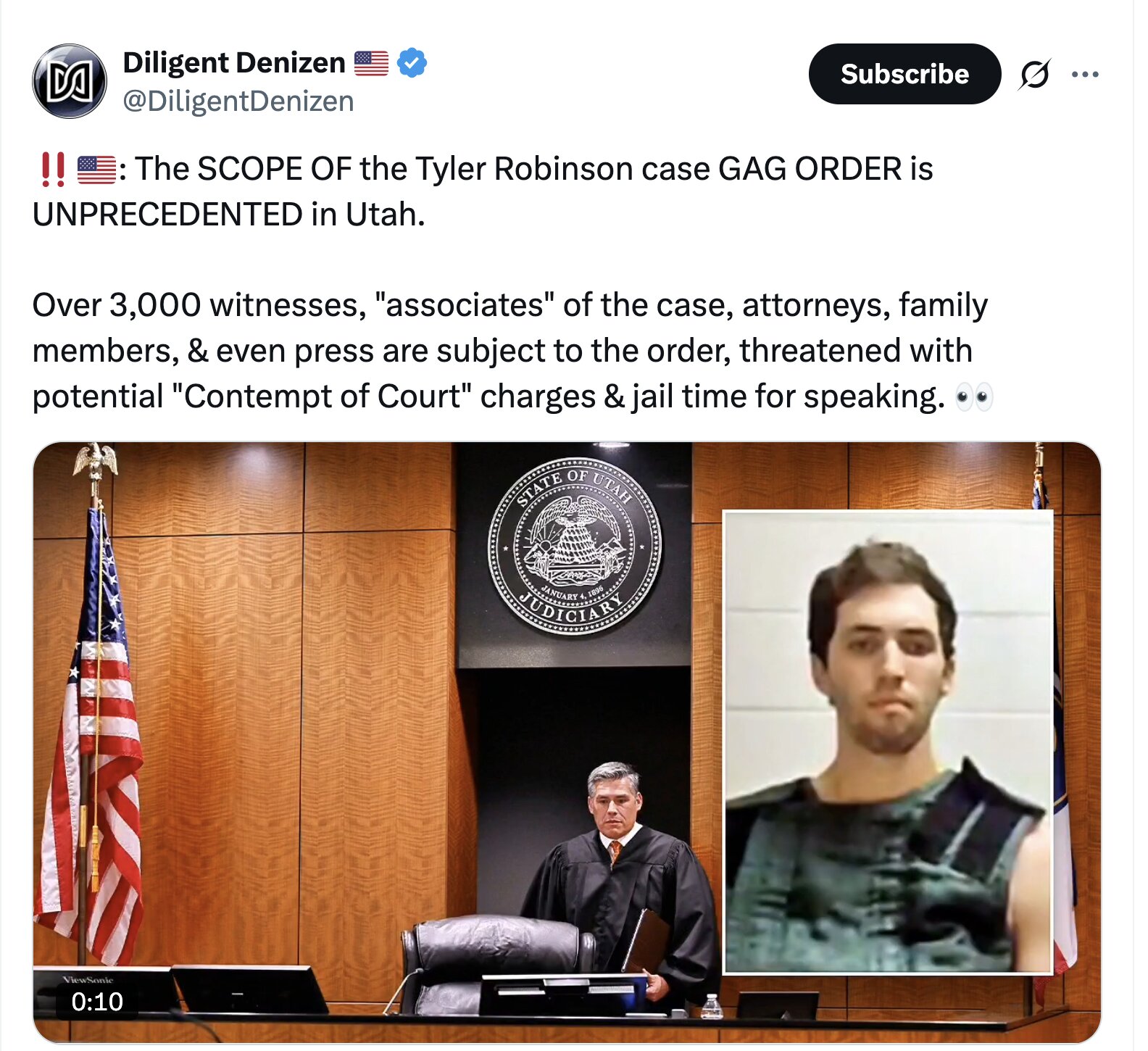
A December 2025 gag order, closed hearings, and a March 2026 motion to seal the inconclusive ATF report — opposed by a media coalition. The public record narrows in stages.
Read thisThis website's author is @HolonCitizen on X and YouTube/@HolonCitizen. Follow me there.
Interesting
- The broadcast networks abandoned scene-integrity questions once a suspect was named.
- Commentators say the roof figure performs a trained lateral crawl with no limp.
- Figures were reportedly seen on three other UVU rooftops that day.
Related Areas
- Podcast Coverage
- Censorship Overview
- After: Media Narratives
- Videos Overview
- Photos Overview
- Your Actions Fix It