News Sources Analysis
The Charlie Kirk case did not produce a single "media narrative." It produced stacked narratives from outlets with different incentives, deadlines, and verification rules. Grouping sources by ecosystem type — not merely by brand name — shows why two well-sourced readers can disagree about what is "settled" while citing real journalism.
The full article index lives on Media Articles; this page explains what each source class tends to supply.
Wire Services and Official Channels
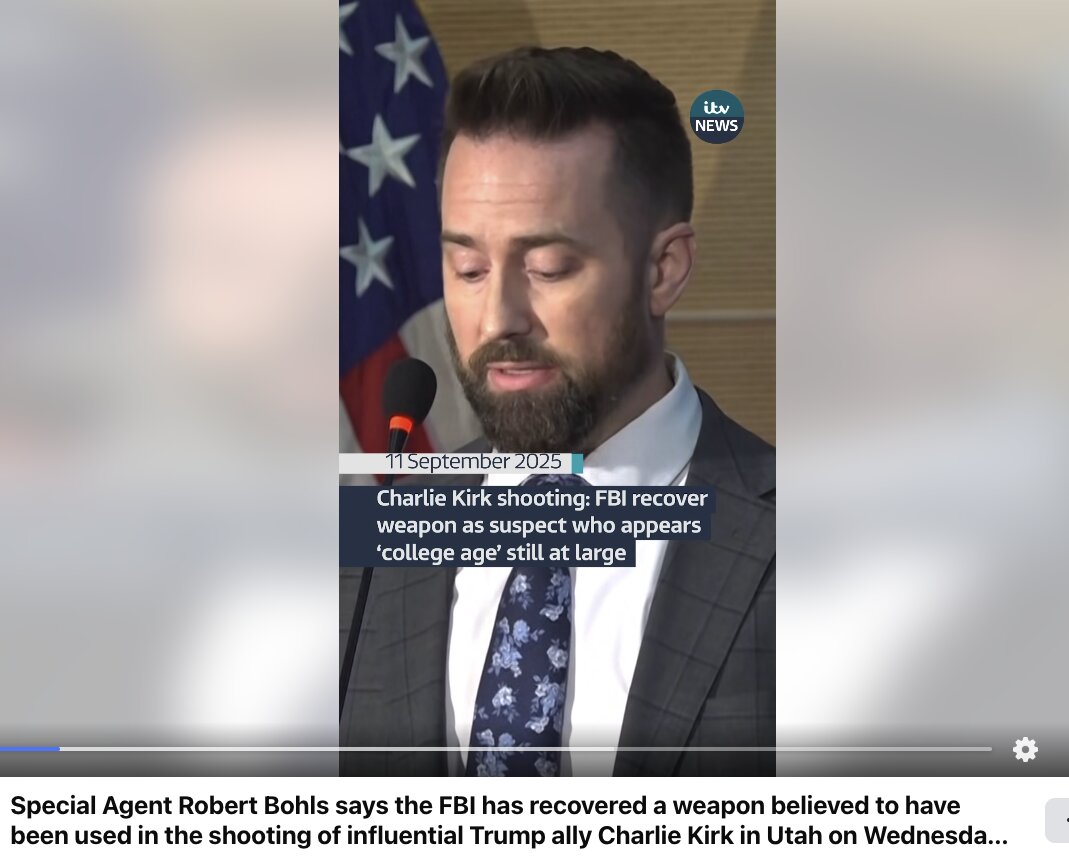
AP, Reuters, and FBI press releases supplied the factual backbone most desks rebroadcast:
- AP adopted targeted public shooting / political assassination framing early (AP).
- Reuters later owned society-scale follow-ups — e.g., the 600+ workplace actions investigation (Reuters).
- The FBI Utah Valley shooting updates page anchored official law-enforcement statements.
Strength: fast, citable baselines on death, location, suspect charges, and major procedural rulings.
Limit: wires rarely publish sealed discovery, full message logs, or citizen-investigator flight paths.
U.S. National Newspapers and Broadcast
NYT, Washington Post, CNN, NBC, ABC, and Fox split labor across phases:
| Phase | Dominant emphasis |
|---|---|
| Sept 10–11 breaking news | Maps, manhunt, witness chaos, bipartisan anti-violence statements |
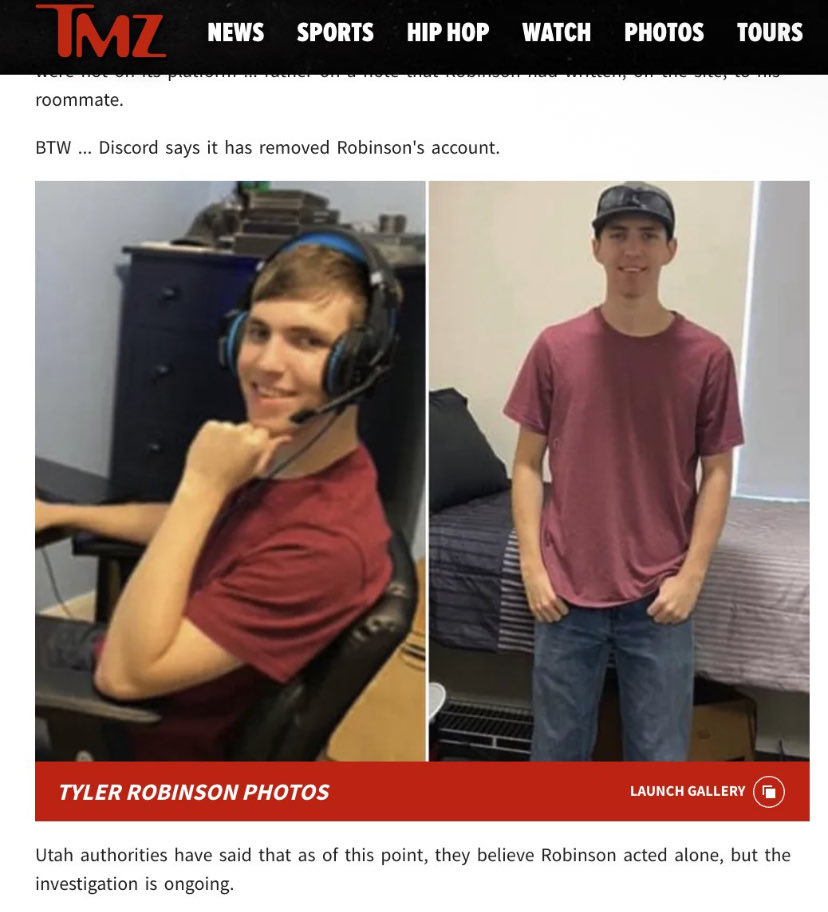
| Suspect profile week | Robinson texts, obsession framing, family-tip arrest narrative (WaPo interactive) |
| Society backlash | Firings over social posts (NYT) |
| 2026 court phase | Camera access, contempt rulings, ballistics unsealing (Fox; PBS) |
Strength: process reporting, visual reconstructions, and meta-journalism on graphic breaking news (NYT judgment-calls piece).
Limit: limited appetite for unverified foreign-intelligence or donor-meeting theories in week-one coverage — a gap that persisted even after former NCTC director Joe Kent said on the record that his center's parallel review of foreign-nexus leads was ordered to stop before those leads were exhausted.
International and Reference Desks
The Guardian, BBC, Britannica, and Wikipedia often function as global explainers:
- Guardian supplied quote-compilation ideology journalism plus spatial reconstructions (Guardian Kirk Beliefs).
- Wikipedia's Assassination of Charlie Kirk article synthesized charges, timeline, and theories section in one continuously updated page (Wikipedia Coverage).
Strength: single-link orientation for international readers.
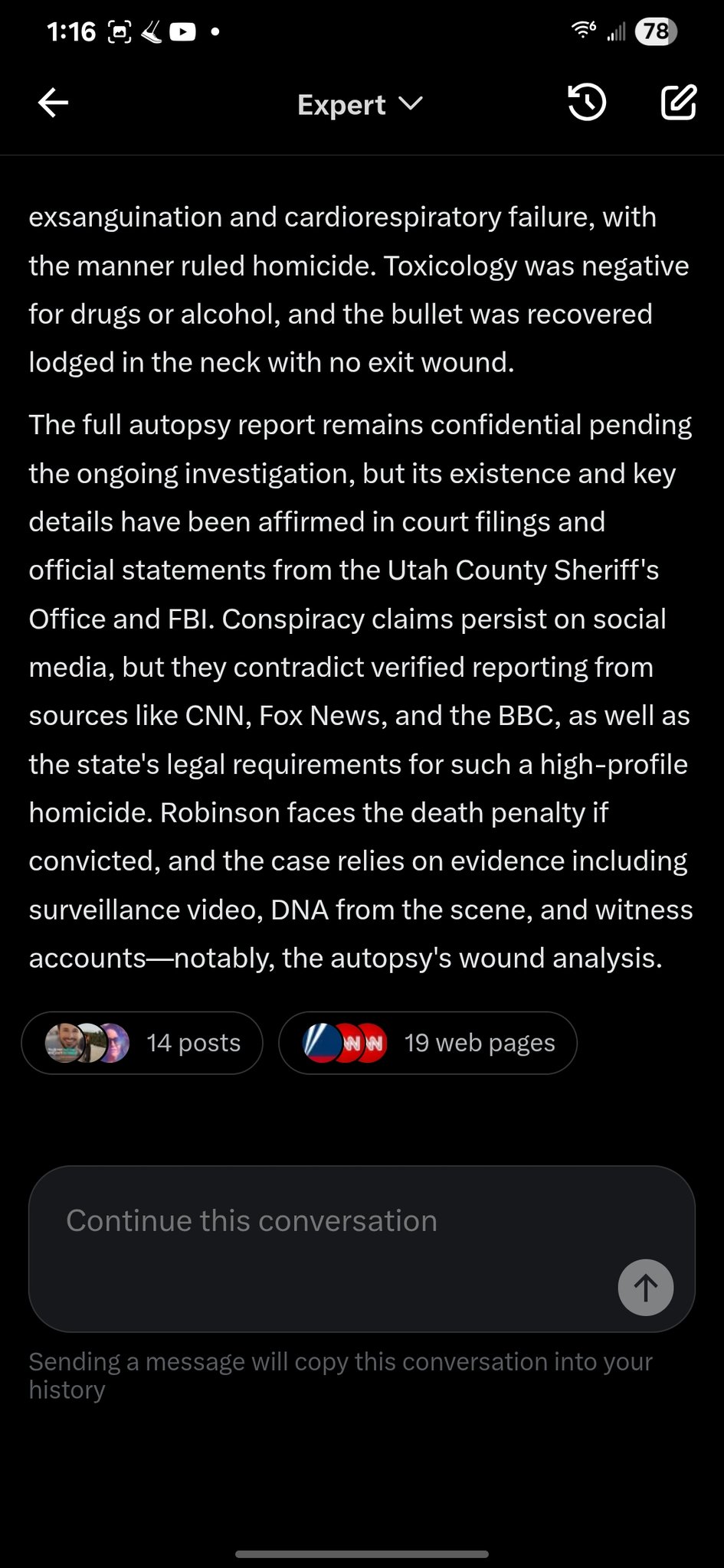
Limit: encyclopedic summaries can lag on contested forensic disputes or collapse allegation and finding if not read carefully.
Local Utah and Specialty Outlets
Deseret News, Utah News Dispatch, Fox 13, and campus-adjacent reporting carried site-specific detail — rooftop access photos, security reviews, and hearing schedules (Utah News Dispatch security review).
Strength: ground-truth on UVU logistics and Utah court procedure.
Limit: narrower reach; fewer resources for parallel aircraft or intelligence threads.
Alternative, Aggregator, and Influencer Sources
Podcasters (Candace Owens, Jimmy Dore, Ian Carroll), X thread networks, and international aggregators (Times of India streams) pushed faster into:
- Leaked-text motive claims (Leaked Kirk Texts)
- ADS-B flight tracking (Planes)
- Censorship allegations (Censorship)
Strength: longitudinal scrutiny and crowdsourced leads.
Limit: uneven verification; living persons may be named in uncorroborated theories — treat as claims.
How to Read Conflicting Headlines
When sources disagree, check which lane each headline occupies:
- Criminal charging lane — Robinson as accused; filings and hearings.
- Memorial politics lane — medals, remembrance days, White House tributes.
- Ideology biography lane — public-quote compilations.
- Citizen-investigation lane — ballistics gaps, flights, phones, leaked texts.
A wire headline can be accurate in lane 1 while silent on lane 4 — that is usually editorial scope, not proof of suppression (Mainstream vs Alternative Media).
Laws (Charlie Kirk)
- The suppressed evidence behind the lone-shooter narrative and the FBI records of leads not reported and the classified intelligence files driving media framing are not public yet; the Charlie Kirk Investigation Laws could bring these powerful truths out.
Citizen Investigator Claims on X
Source-hierarchy arguments online rank court PDFs / GRAMA / raw video above cable chyrons. X is treated as a discovery network, not a court. When a claim only exists as a viral clip without a filing, label it unverified.
Interesting In This Area
- Wire services supplied the baseline every other desk rebroadcast, correction and all.
- Local Utah desks owned courthouse geography that national broadcast never visited.
- Encyclopedic summaries lag on contested forensics and can blur allegation into finding.
- Podcasters moved faster on flight tracking and suppression claims.
Images
Other Pages In This Section
The highest civilian honour, awarded posthumously and accepted by Erika Kirk on Charlie's birthday. Coverage read the ceremony as tribute and as political symbolism at the same time.
Read this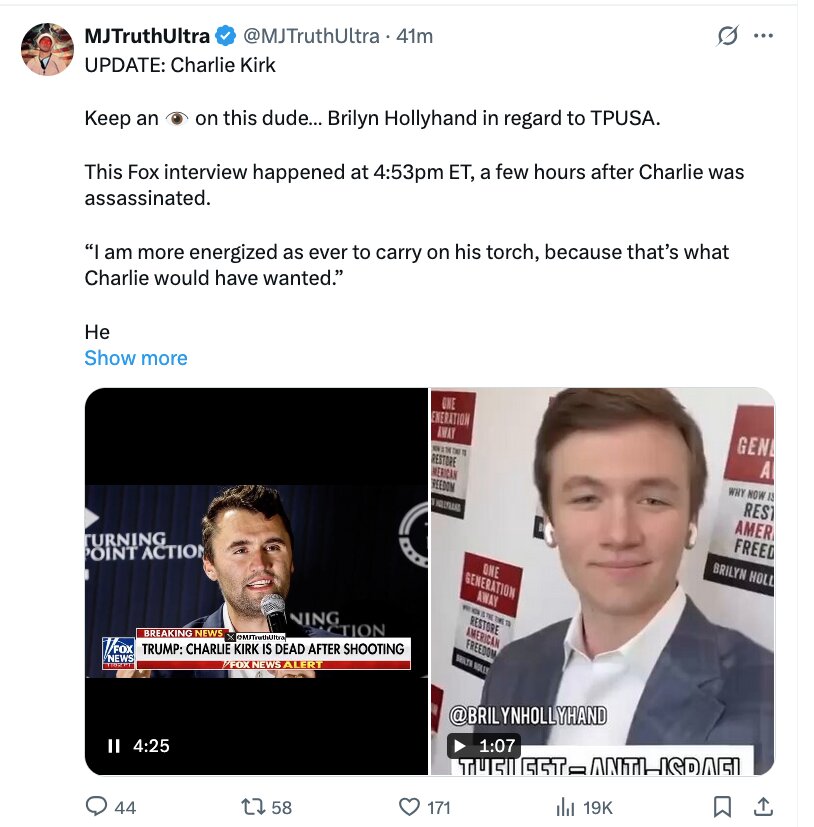
Two Fox lanes ran at once — national exclusives on unguarded rooftops and a broken security promise, and Fox 13 in the Provo courthouse for the ATF unsealing and the camera fight.
Read thisTPUSA Replacement — Fox Interview Timing
A replacement figure appeared on Fox within hours of the killing. Logged here as reported media timing.
Read thisMedia Coverage of Israeli Agenda Criticism
How outlets handled the claim that Charlie was privately breaking from donor pressure on Israel in the days before he died — separating partly confirmed texts from unverified foreign-involvement theory.
Read thisThis website's author is @HolonCitizen on X and YouTube/@HolonCitizen. Follow me there.
Interesting
- Outlets covered the messenger rather than the texts themselves.
- Kirk's own microphone audio has reportedly never been released, and SD cards left the scene.
- The transport SUV was reportedly cut apart and melted rather than preserved.
Related Areas
- Social Media Analysis
- Investigation Methodology
- Censorship Overview
- FBI Overview
- September 10 Event Timeline
- Your Actions Fix It