Medical
Medical and forensic questions can confirm or demolish the official account of how Charlie Kirk died — but no autopsy report is public, so this section organizes reported facts, expert interpretations, and labeled claims. Start with the Investigation Index.
- Investigation Index
- Death Timeline
- Charlie's Injuries
- Ballistics & Wound Analysis
- Shape Charge vs Bullet
- Trajectory vs C2–C7 Damage
- Missing Spinal Cord Question
- Lapel Mic & Audio
- Trial & Autopsy Report
- Charlie Kirk Autopsy Report
- Charlie Kirk Medical Examiner Report
- Charlie Kirk Medical Examiner Name
- Autopsy Report Not Public
- Utah Autopsy Law (SB0082)
- Autopsy — subsection
- Charlie Trip to Hospital
- Events at Hospital
- Hospital — subsection
- Site Changes / Paving
- Timpanogos Facility
- Timpanogos 911 Call (Claims)
- ER Cleared Before Shooting (Claims)
- Surgeon Warned Before Surgery (Claim)
- Patients Moved to Another Wing
- Patients to Another Hospital
- Buses to Move Patients
- Patient Medical Records Transferred
- CK File Sent to Wrong Hospital
- Hospital Leader
- Cameras Removed / FBI
- Hospital Bullet Claims
- Doctors
- Military Backgrounds — Staff (Claim)
- Medical Examiner
- Doctors Question the ME Report
- Dr. Deirdre Amaro (Chief ME)
- Staff Changes
- Israel Searches (Medical)
- Doctor DC Phone Call
- Witness Conflicts
Medical evidence is central because mechanism-of-injury determines whether the Tyler Robinson frame is even physically possible. The ATF inconclusive bullet-jacket match, wound trajectory disputes, and Canon XA55 stage detonation audio all point away from a simple rooftop .30-06 kill — while the state still pursues capital charges. Until the ME file opens, every medical page here is a map of questions, not a diagnosis.
The substance splits into autopsy opacity, hospital routing, and witness narrative. Autopsy: SB0082 tightened photo sharing months before the event; fragments exist per court filings yet viral no-autopsy claims persist. Chief medical examiner Dr. Deirdre Amaro — the official who would have signed the report — reportedly resigned in July 2026 with no stated reason, per attributed commentary. Hospital: Charlie went to Level IV Timpanogos by SUV with a new CEO/surgeon and reported cleared ER / FBI footage seizure threads. July 30–31 2026 Candace Owens tips split into five focused pages: wing move, transfer to another hospital, buses/shuttles, group file transfer, and Charlie's chart before the shot — all still unverified. Witnesses: Chest vs neck descriptions may match a rigged mic for chest that hit neck instead. Site: Sunday paving may have destroyed traces that autopsy never publicly documented.
The Investigation Index, Autopsy, and Trial & Autopsy Report sections cover the fragments question; the Death Timeline and Timpanogos Facility sections cover transport; and Ballistics and the Mic bridge sections cover mechanism. Related non-medical angles on the same physics appear in the Gun & Bullet and Mic sections.
This website does not assert as fact that any living person named here committed a crime, did anything wrong or illegal, or had any knowledge of or involvement in the assassination. Names appear here only in the context of public discussion. Nothing here is a finding by this website.
Public commentary
As of mid-2026 citizen discussion on X, the most widely discussed medical disputes are:
- Autopsy sealed vs fragments in court — hearing-watch accounts say COD is GSW neck / homicide, while the full ME report remains non-public (@stratagemmer, @Joshua_the_car notes).
- SUV transport + second vehicle — @ProjectConstitu hospital-contractor narrative (McCoy / physician parking) still widely shared and still unverified by released CCTV.
- Glass-in-SUV vs rifle — @realstewpeters / mic-theory camp vs @alexboge / rifle-physics camp; both cite video.
- ATF inconclusive Mauser match — continues to undercut a simple ballistics slam-dunk in public filings discussed on trial pages.
Readers should start at Trial & Autopsy Report and Ballistics & Wound Analysis, then hospital transport pages.
Video
Candace Owens relays an anonymous account about Timpanogos Regional Hospital on September 10, 2025. Source: @danksterintel on X, July 30, 2026.
In this 100-second clip, Candace Owens says she was told that Timpanogos Regional Hospital moved its emergency-room patients to a different wing around 10am on September 10, 2025 — more than two hours before Charlie Kirk was shot — and that by roughly 11:30am those patients were shuttled with their files to Intermountain / Utah Valley Hospital. Community posts the next day added a sharper claim: that a Charlie Kirk medical file appeared at the receiving hospital before the 12:24 PM shot.
Two hospitals carry this story and they are easy to confuse. Timpanogos Regional Hospital in Orem — MountainStar Healthcare / HCA, Level IV — is where the ER was allegedly cleared and where Kirk was actually treated. Utah Valley Hospital in Provo — Intermountain Health, Level II — is the destination the shuttles and files allegedly went to. Posts saying "UVU ER" are wrong: UVU is Utah Valley University, the shooting site, and has no emergency room.
The source is anonymous and the account is uncorroborated. No hospital log, transfer record, or shuttle contract has been produced, and ordinary explanations — a drill, a facility failure, a census imbalance, or advance surge posture for a large public event — have not been ruled out. Timpanogos Regional Hospital, Intermountain Health, and their staff are not accused of anything. Start with the umbrella page ER Cleared Before Shooting, then the focused claims: wing, other hospital, buses, patient files, CK chart before shot.
X.com posts:
- Candace Owens reports Utah chief medical examiner Amaro resigned
- Candace Owens: Timpanogos ER cleared hours before shooting
- Mario Nawfal: Owens wing + Intermountain transfer quote
- Nikki Rosier: CK file at UVH ER ~11:30am (claim)
- Doctors say ME report injuries don't fit rooftop bullet
- State's brief: downward trajectory vs C2-C7 obliteration
- Court filing lists injuries far beyond the neck wound
- Missing spinal cord question and witness "dime size" wound statement
- Former hospital worker: surgeon was pediatric and ex-military
Best understanding of when this happened
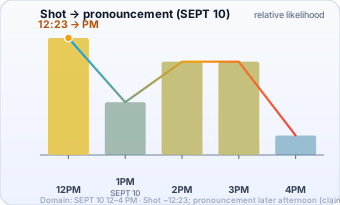
Best understanding: shot ~12:23 PM; pronouncement later the same afternoon at Timpanogos (exact minute disputed across reports).
Date range (working model): SEPT 10 12–4 PM · Shot ~12:23 → pronouncement later PM
The chart below is not a government finding. Bar height is relative likelihood from public claims. Domain is trimmed to non-trivial likelihood.
Interesting In This Area
- A court filing lists injuries far beyond one neck wound — chest, brain, airway.
- The report exists and is sealed; that is different from no autopsy happening.
- Transport went 5.8 miles to a Level IV centre past a closer Level II.
- The examiner findings are scored against two mechanisms rather than assumed to fit one.
Interesting In Other Areas
- A .30-06 carries roughly 3,950 joules, which commentators say the wound does not match.
- Citizen investigators on X mostly conclude a charge at the microphone killed him.
- Canon XA55 audio reportedly separates a distant blast from a louder stage event.
- Cause of death is where these medical findings meet the state narrative.
Images
Other Pages In This Section
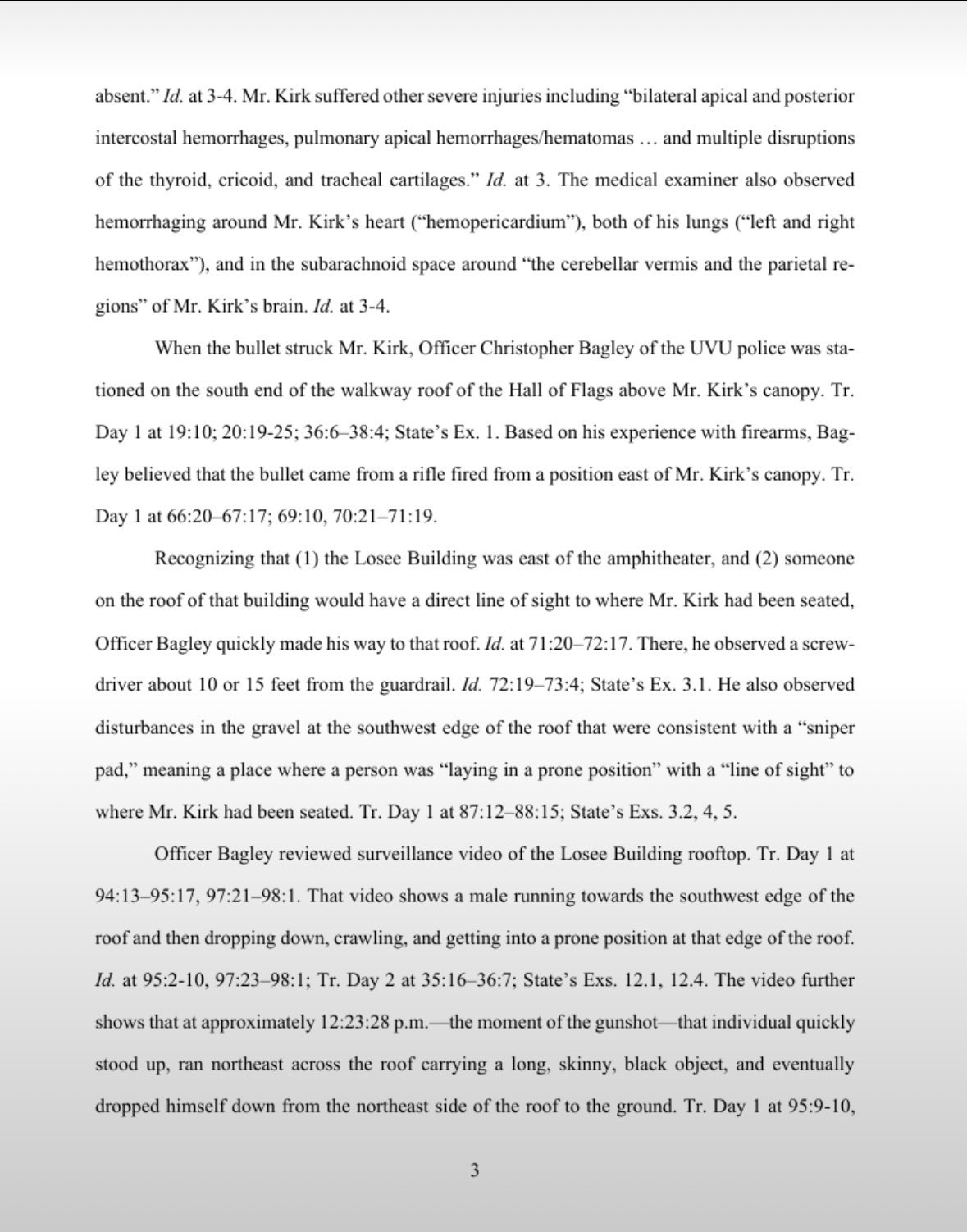
A July 2026 court filing lists injuries far beyond one neck wound — hemopericardium, bilateral hemothorax, brain hemorrhage, lung hematomas, airway cartilage disruptions. The full list is what most arguments here are missing.
Read thisShape Charge vs Bullet: from Medical Examiner results
The medical examiner findings quoted in the court filing — hemopericardium, bilateral hemothorax, subarachnoid hemorrhage — scored against two hypotheses side by side. The clearest place to see which mechanism the injuries actually fit.
Read thisTwo different claims get blurred together: that no autopsy happened, and that one happened and the report was never released. The second is the accurate one, and it is why almost nothing here is settled.
Read this
A Level II trauma centre sat 4.2 miles from the courtyard; the transport went 5.8 miles to a Level IV. The page sets that deviation against the argument that a chaotic scene made it reasonable.
Read thisElsewhere In The Investigation
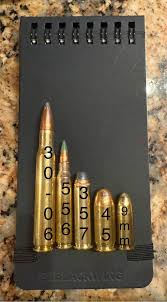
A .30-06 round carries roughly 3,950 joules against a 9mm's 482. Commentators argue the wound described publicly does not match that energy — the arithmetic is not disputed, the inference is.
Read this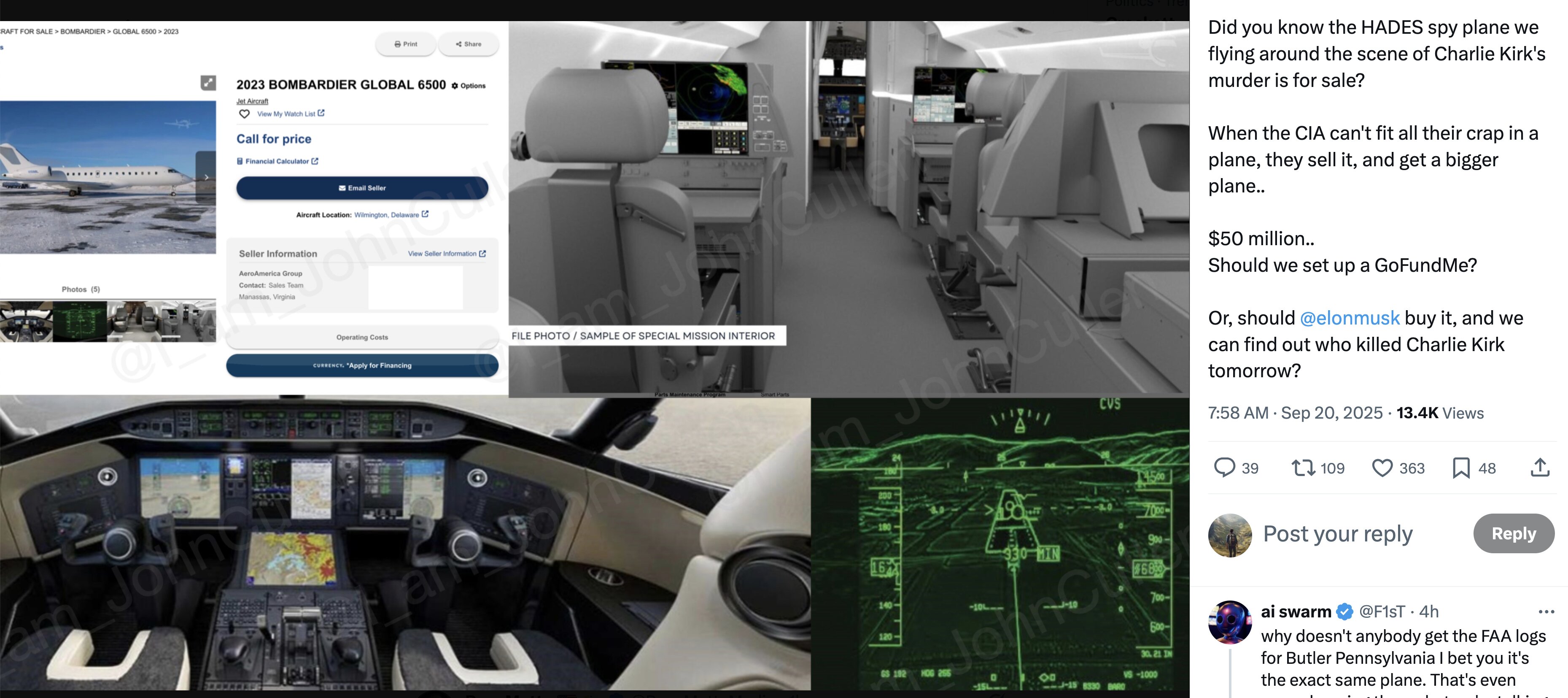
Explosive in Mic Likely Killed Charlie
The finding citizen investigators on X have converged on: a device at the microphone, not a round from a roof. It is the single largest divergence between the public record and the government's account.
Read this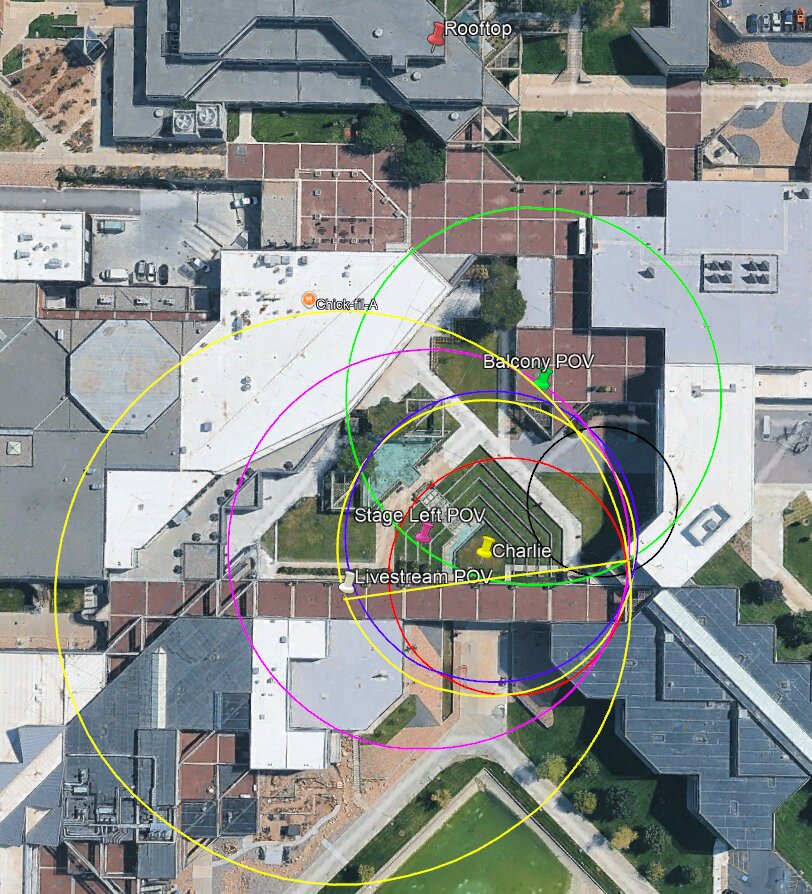
Canon XA55 Audio — Three Booms and Stage Detonation
Professional four-channel audio recorded about forty-six meters from the tent. Researchers say it separates a distant blast from a much louder event at the stage — two sounds, two places.
Read this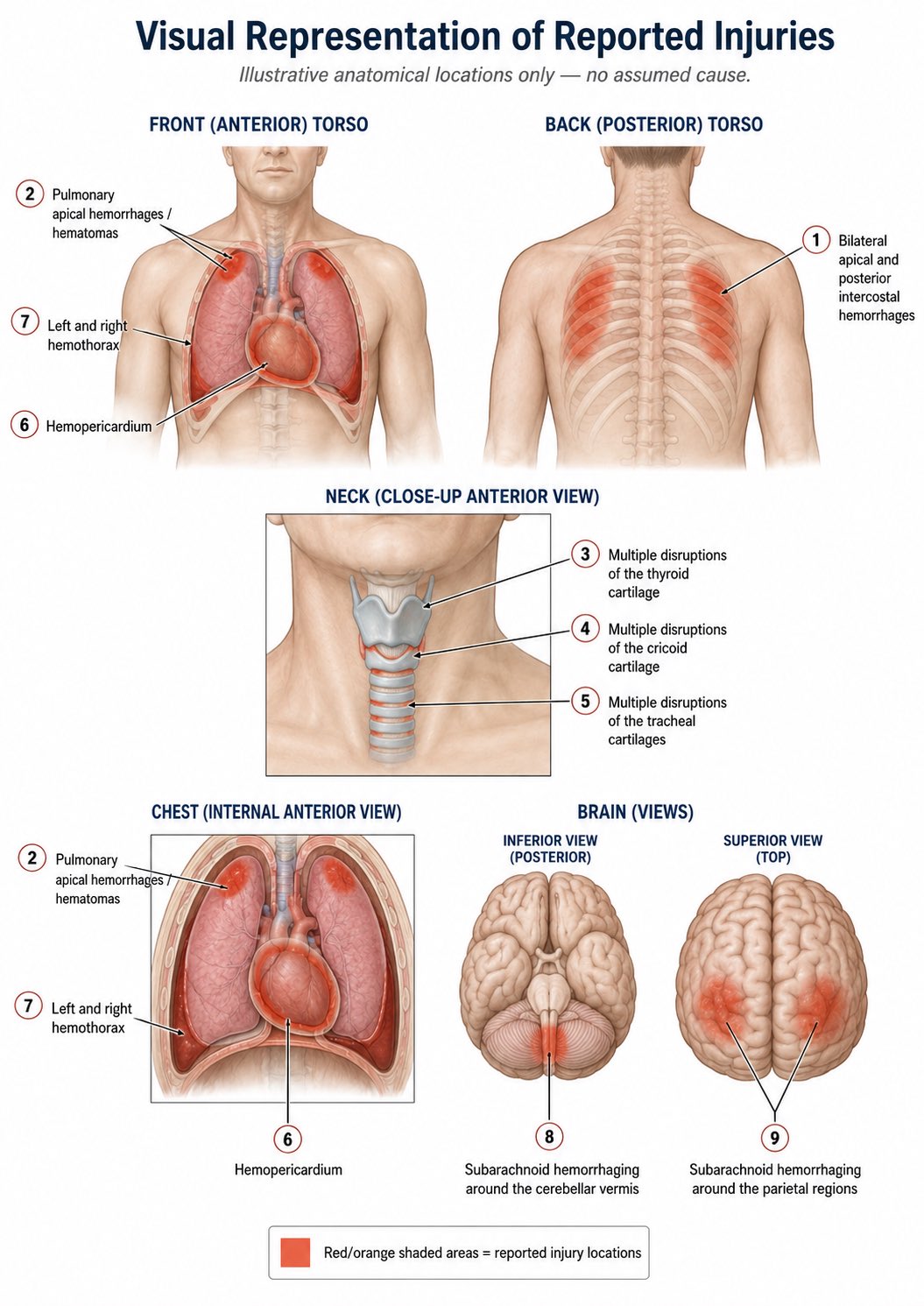
One page stating what most independent investigators had concluded by July 2026 about what killed Charlie Kirk and what did not. The official account is a single .30-06 round; this is where the reasons for rejecting it are gathered.
Read thisThis website's author is @HolonCitizen on X and YouTube/@HolonCitizen. Follow me there.
Interesting
- No named doctor ever went on record saying the bullet did not exit.
- A chief was reportedly texted about rooftop concerns before the event.
- Six officers and a last-minute detail were the entire protective layer that day.
Related Areas
The shape charge is what killed Charlie Kirk.
Video — The Longer Owens Cut
2 minutes 32 seconds — the longer cut of the Candace Owens segment on Timpanogos Regional Hospital, including her setup and her appeal for shuttle records. Video originally posted by @ArtifexMemor, amplified by @MarioNawfal on X, July 31, 2026.
This is the same account as the 100-second clip above, carried at greater length. The tip itself is word-for-word identical: emergency-room patients reportedly moved to a different wing in the 10 o'clock hour, then told at roughly 11:30am that they would be shuttled with their files to Intermountain / Utah Valley Hospital — all of it more than two hours before the shot.
What the longer cut adds is the reasoning on either side. Before the tip, Candace Owens is asking where the hospital witnesses to that day have gone. After it, she argues that a transfer of that size cannot be trace-free — someone drove the shuttle, someone booked it, someone received it at the other end — and asks those people, and any transferred patient, to come forward. She suggests checking satellite imagery and local shuttle-company bookings for the day.
Her conclusion is stated as a conditional, and this site treats it that way: "if we are able to prove that this took place beyond a shadow of a doubt with paperwork, then I would say foreknowledge of Charlie's assassination can no longer be disputed." No paperwork has been produced. The source remains anonymous, the account remains uncorroborated, and Timpanogos Regional Hospital, Intermountain Health, and their staff are not accused of anything. Full treatment: ER Cleared Before Shooting and Patients Moved to Another Hospital.