Canon XA55 Audio — Three Booms and Stage Detonation
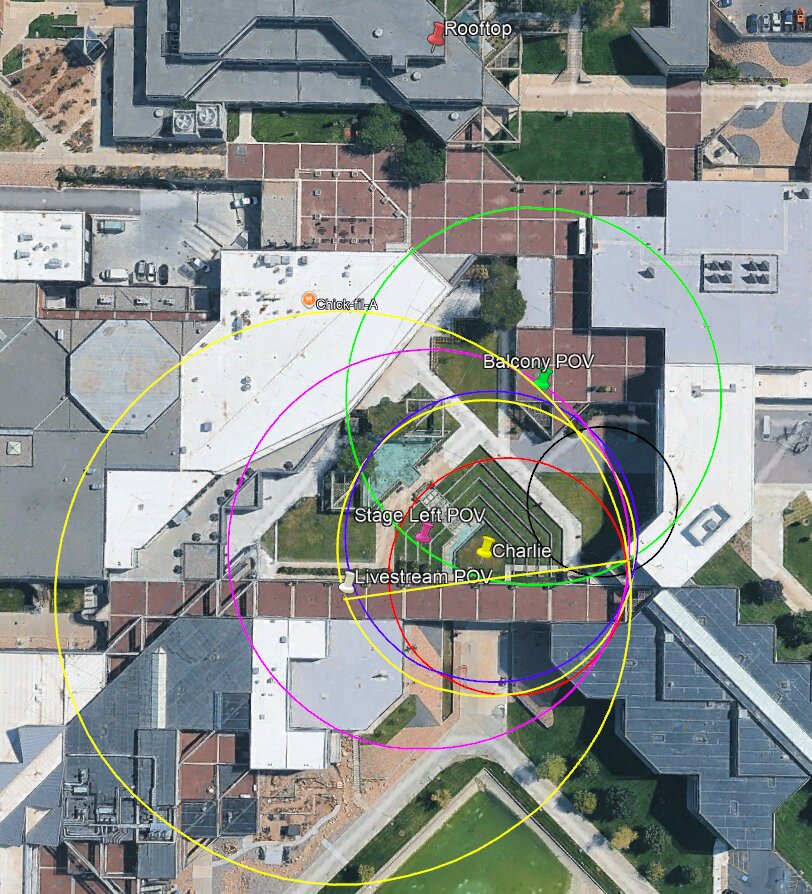
The strongest audio argument for the exploding-mic theory comes not from phone footage but from a Canon XA55 professional broadcast camera at UVU on September 10, 2025. Compiled analysis in Charlie_Kirk.txt describes uncompressed four-channel audio at 48,000 samples per second from a camera roughly 46 meters from the tent — far enough to act as an acoustic buffer, close enough to resolve timing phone codecs smear together.
Satirical LEGO-animated music video referencing Charlie Kirk's RØDE mic, via @RickyTheGuido, July 24, 2026. IPFS CID Qmd6zPTaBkhDSqCA9nEVrx1e7JsgAEUV7qSDu1pGELiPZJ.
Why professional audio matters
Phone recordings near the stage compress dynamic range and merge events into one loud burst. The Canon recording is described as separating high frequencies arriving first (spread over 100+ milliseconds) — consistent with a supersonic crack-before-boom sequence — rather than all frequencies arriving simultaneously as a point-source bomb would at distance.
Three distinct low-frequency events
Analysts cite three separated peaks:
| Offset | Event | Interpretation |
|---|---|---|
| +114 ms | Early energy | Mach cone / supersonic precursor |
| +202 ms | Muzzle blast | Rifle fire ~120 meters from camera |
| +321 ms | Stage detonation | Loudest low-frequency peak — origin ~46 m at the tent |
The third event is argued to be neither echo nor reflection but the strongest low-frequency peak in the recording, originating at Charlie's position.
If a rifle fired ~120 m away and a separate detonation occurred at the stage ~185 ms later, analysts treat that as two locations — not one rooftop shooter.
Shotgun mic overload vs clean built-ins
The Canon's external shotgun microphone reportedly captured 733 supersonic N-wave signatures in under 200 microseconds each; the best phone recording captured 123 (~6× fewer).
The shotgun mic clipped 122,844 samples — described as overwhelmed because the sound source was in its line of fire. Built-in camera mics captured cleaner audio with near-zero clipping and zero correlation between the two signal paths — same conclusion from independent channels.
Distance cross-check
The +202 ms muzzle blast places the rifle at ~120 m; separate video analysis estimated ~127 m (within ~6%). The +321 ms stage event maps to ~46 m — the tent area.
Charlie_Kirk.txt notes this as the 11th recording independently confirming the same multi-event pattern on professional uncompressed audio.
Visual companions to the “stage boom” claim
Audio is not the only non-phone record people cite for a near-tent energy event. High-frame video packages (including work amplified by @BlakeBednarz) argue that fabric above the tent / canopy shows a vibration ring and outward debris inconsistent with a sole distant rifle. Those clips are not Canon audio — but investigators treat them as a cross-modal check: if the XA55’s louder peak is truly at ~46 m under the tent, some optical disturbance at the tent is what one would expect. Full motion arguments live on the video frame analysis page; this page only notes that audio two-event claims and tent-surface claims are often paired in public discussion.
A third acoustic-adjacent claim — that a PA / speaker path carried a body-worn detonation louder than a distant crack — appears in master-file notes under “speakers: loud sound from exploding mic?” and is unproven without board logs and gain settings. It is listed here so researchers know to request sound-system multitracks alongside the Canon masters.
Implications for Tyler Robinson and the mic theory
- A 120 m rifle plus a 46 m stage detonation does not reduce to a single Tyler rooftop shot.
- The stage peak aligns with lapel mic placement and video shirt movement.
- The shaped-charge demo smoke question is answered by scale — a micro-charge would not match a large breaching charge.
What would resolve the audio dispute
- Release of raw Canon XA55 channel files with chain of custody
- Independent acoustic lab replication on uncompressed masters
- Synchronized comparison to UVU tent and Gun & Bullet timelines
In-Section Links
Laws (Charlie Kirk)
- The raw uncompressed Canon XA55 four-channel masters, the chain of custody for that camera's SD media, and an independent acoustic-lab reading of the +202 ms muzzle blast versus the +321 ms stage peak are not public yet; the Charlie Kirk Investigation Laws could bring these powerful truths out.
Citizen Investigator Claims on X (Two-Event Audio)
(Acoustic claims — attributed to the investigators and commentators named.)
- Investigators who conclude there was a stage-local energy event continue to cite professional camera audio (Canon XA55 class discussions) separating a distant crack from a louder near-field event at the tent — summarized in the body of this page.
- Defenders of the government's narrative, such as @alexboge (July 2026), argue that multi-angle HD video lacks the flash, smoke and fabric rupture a neck-destroying contact explosive would produce, and point to the hearing's GSW + fragments wording; investigators answer that a gram-scale charge under a shirt would not produce a breaching-size cloud, and that the ATF fragment comparison was inconclusive.
- @grok automated replies on X have repeated the government-side crack-bang reading — AI replies are not primary evidence, and they do not address the separate louder peak at ~46 m that this recording reportedly shows.
This website does not assert as fact that any living person named here committed a crime or knew of the assassination in advance. Names appear only in the context of public discussion and reporting. Nothing here is a finding by this website.
Interesting In This Area
- Frame analysis and this audio are the two independent legs of the mic theory.
- A breaching-size shaped-charge demonstration is the wrong scale for the gram-scale device compared here.
- Competing theories put the charge in the pendant, the earpiece, or the battery.
- Six forensic physics claims include a pre-wound flinch and absent cavitation.
Other Pages In This Section
Several witnesses told reporters within minutes that Charlie Kirk was shot in the chest. Candace Owens argues those descriptions never matched the visible neck wound.
Read thisCeiling Mudded / Painted Under the Courtyard Building
A third surface after the soil and the pavers: the concrete underside next to the tent, reportedly re-mudded or painted. Blast blowback goes up as well as down.
Read this10 Inches of Dirt Hauled Away Immediately
Before the Sunday landscaping crew arrived, an earlier team reportedly stripped about ten inches of soil from under the tent. That soil is where residue theories say PETN would have settled.
Read this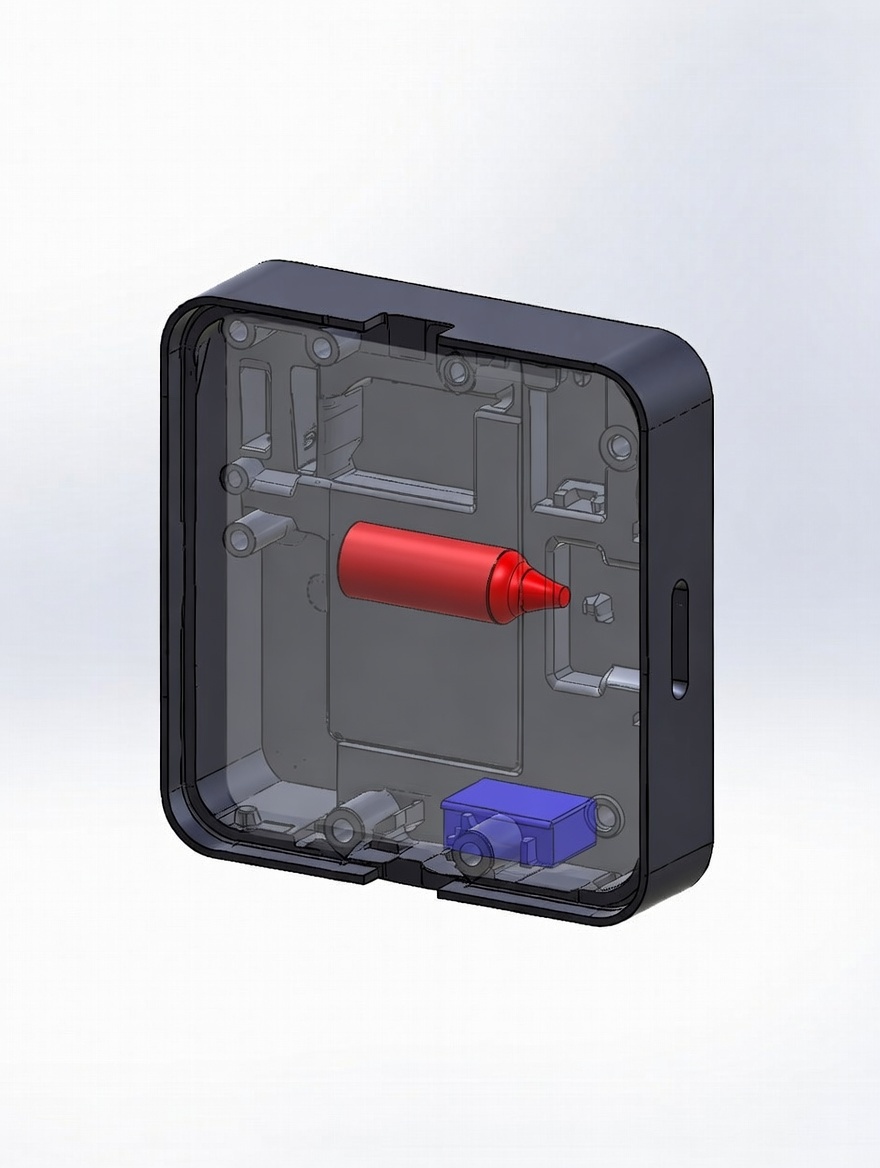
Mic vs Pendant — Competing Internal-Device Theories
Two placements for the same explosion at the collar: the lapel transmitter, or a shaped charge in the crucifix. The argument turns on anchoring, wound direction and veteran analysis.
Read thisThis website's author is @HolonCitizen on X and YouTube/@HolonCitizen. Follow me there.
More angles in this section
Audio analysts treat the Canon channels as independent of phone compression; the visual counterpart is the mic explosion video analysis, which argues shirt fabric expands before a classic bullet path. If that stage boom came from a body-worn transmitter, the RØDE Wireless PRO hardware page and the AV team under-shirt setup are the next technical stops. Combat veterans who publicly said they saw an explosion rather than a textbook rifle wound are collected on the Rob O'Neill / Gen. Holt NEWSMAX page. Debris that would have to survive a device failure is discussed in the SUV interior photos and the burnt object / transmitter claim. Chemistry and lab tests that still have not been released publicly sit under high explosive, residue on fabric, and the residue cover-up hub; industrial-procurement context is on the DoD contract and AES factory pages.
Interesting
- Blast blowback rises too, and the ceiling beside the tent was reportedly repainted.
- The file records a bullet lodged in the stage wood that no public ATF summary mentions.
- The wound trajectory and angle point to about 50 yards, not the official 150.
Related Areas
- Gun & Bullet Analysis
- Proof Not Tyler
- Tyler Robinson's Rifle
- Videos
- Medical & Wound Analysis
- Theories