The Exploding Pendant — Shaped-Charge Crucifix Theory
A variant of the exploding mic theory proposes that the concealed explosive was not in the lapel microphone at all, but inside Charlie Kirk's crucifix pendant. The argument was advanced in a December 2025 X thread by a user identifying himself as a former U.S. Marine Corps explosive breacher (@cletus_jethro), and was reshared on June 21, 2026 by investigator @matt82704417 (Matthew St Baker). The claims below are presented as the authors' analysis and opinion, not established fact.
Satirical LEGO-animated music video referencing Charlie Kirk's RØDE mic, via @RickyTheGuido, July 24, 2026. IPFS CID Qmd6zPTaBkhDSqCA9nEVrx1e7JsgAEUV7qSDu1pGELiPZJ.
Screenshots of the @cletus_jethro thread laying out the shaped-charge crucifix argument and PETN blast math. Source: @matt82704417 on X, June 21, 2026.
The Theory in Brief
According to @matt82704417, the source "is a military man with expertise in using shaped charges" who "shows the math." As summarized in the post:
"He believes there was a microscopic amount of explosive, in cone shaped charge, placed in the top of Charlie's crucifix pendant. The weight and strength of the silver box chain would act as an anchor against the recoil when the charge was fired — detonated by a third party. The crucifix was positioned under Charlie's shirt at a slight angle, under the letter D in FREEDOM. It was pointing directly at the area of the neck where we see the injury, AFTER the strange shirt movement. If a bullet was shot, we'd have seen the damage to the neck before any shirt movement."
The post is tagged to @RealCandaceO, @BlakeBednarz, and @baroncoleman.
Why a Pendant, Not the Lapel Mic
The thread author argues that the location of the charge matters because a charge must be anchored to be effective and accurate. According to @cletus_jethro:
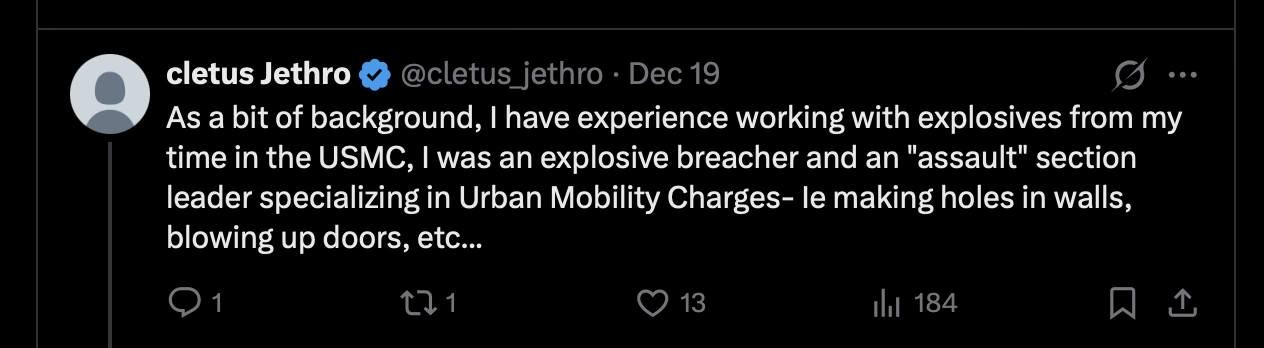
- Background: "I have experience working with explosives from my time in the USMC, I was an explosive breacher and an 'assault' section leader specializing in Urban Mobility Charges — ie making holes in walls, blowing up doors, etc."
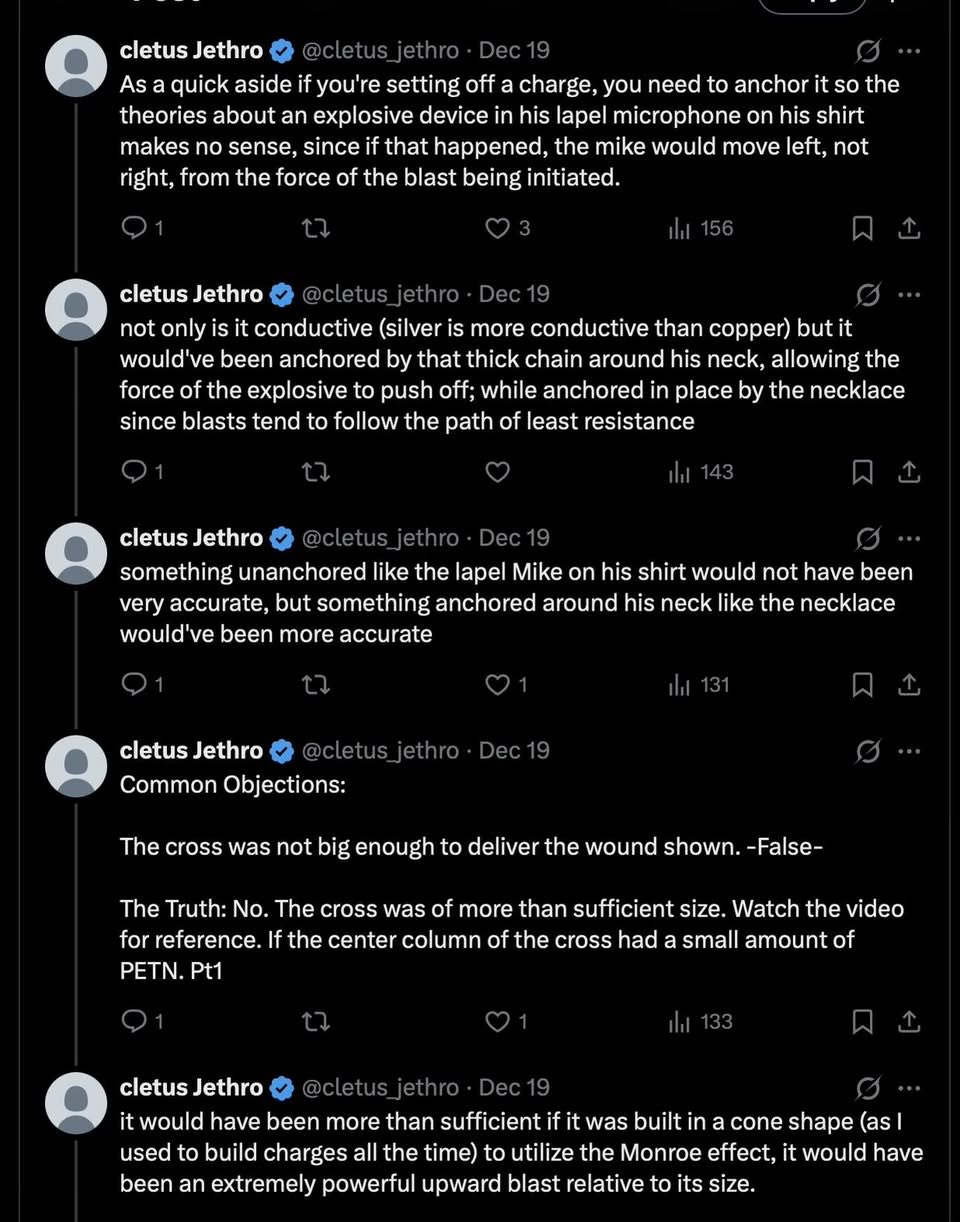
- Anchoring: "if you're setting off a charge, you need to anchor it so the theories about an explosive device in his lapel microphone on his shirt makes no sense, since if that happened, the mike would move left, not right, from the force of the blast being initiated."
- The silver chain as anchor: "not only is it conductive (silver is more conductive than copper) but it would've been anchored by that thick chain around his neck, allowing the force of the explosive to push off; while anchored in place by the necklace since blasts tend to follow the path of least resistance."
- Accuracy: "something unanchored like the lapel Mike on his shirt would not have been very accurate, but something anchored around his neck like the necklace would've been more accurate."
The investigators' answer: @cletus_jethro's objection assumes a lapel mic clipped loosely to the outside of the shirt. On September 10 the RØDE transmitter was reportedly routed under the shirt and held magnetically against the chest — anchored against the body, the condition he says a charge needs. His argument moves the charge a few inches along the collar; it does not move it off Charlie's body, and it agrees there was no rifle wound. See the exploding-mic evidence hub.
The Cross Was Large Enough — The Monroe Effect
Responding to a common objection that the crucifix was too small to inflict the wound, @cletus_jethro states it was of "more than sufficient size." His argument: "If the center column of the cross had a small amount of PETN," and was "built in a cone shape (as I used to build charges all the time) to utilize the Monroe effect, it would have been an extremely powerful upward blast relative to its size." The Monroe effect (the principle behind shaped charges) focuses explosive energy in a single direction.
The PETN Argument
The thread relies on PETN (pentaerythritol tetranitrate) as the proposed explosive:
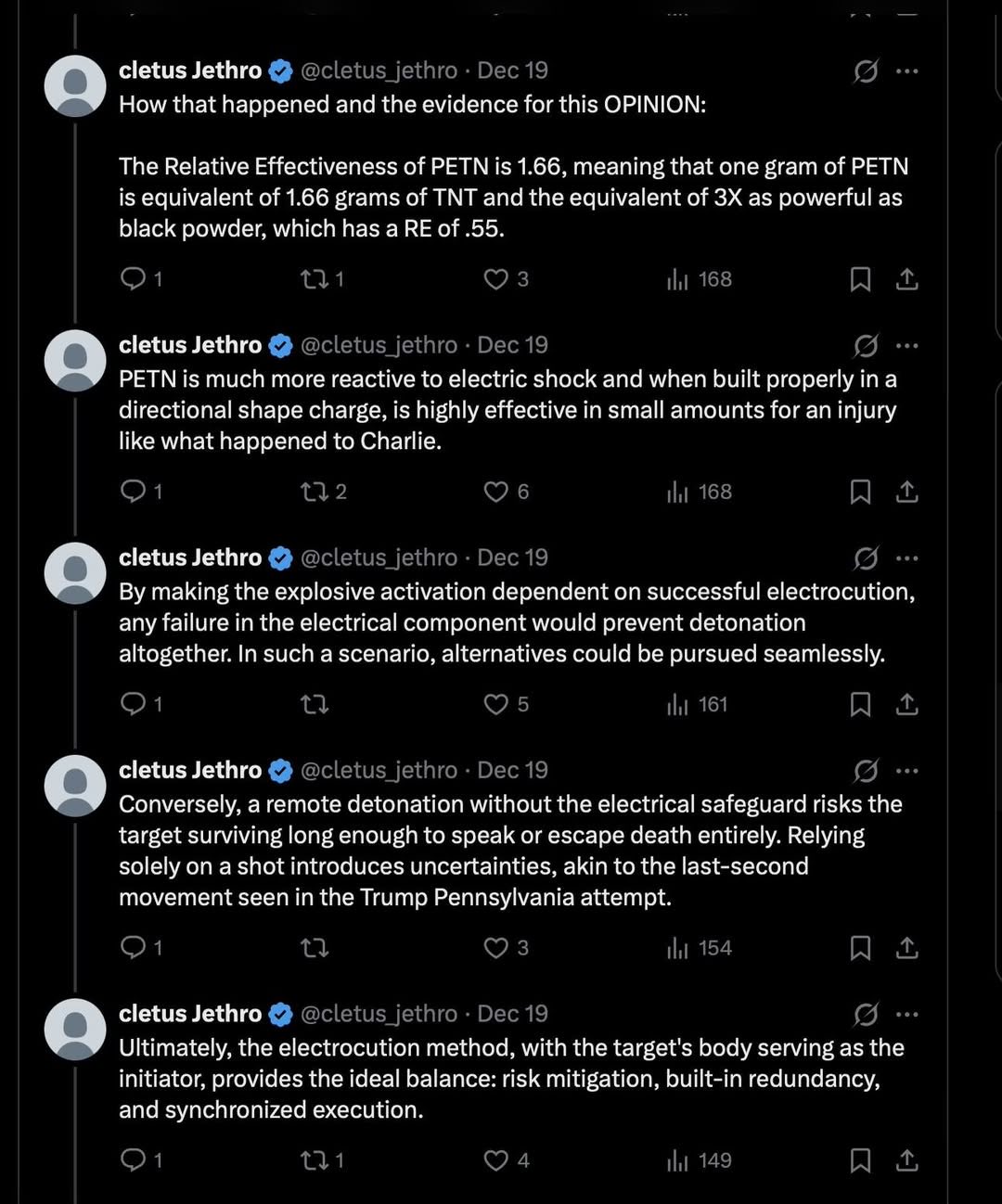
- Relative effectiveness: "The Relative Effectiveness of PETN is 1.66, meaning that one gram of PETN is equivalent of 1.66 grams of TNT and the equivalent of 3X as powerful as black powder, which has a RE of .55."
- Electric sensitivity: "PETN is much more reactive to electric shock and when built properly in a directional shape charge, is highly effective in small amounts for an injury like what happened to Charlie."
The Electrocution-Initiated Detonation Claim
The electrocution idea below — the victim's body as the firing circuit — appears to be a fed-slop narrative. Nothing has corroborated it: no burn, arc mark, or current path has been reported. The evidence points to an explosive at the microphone, and a charge of this kind needs no electrocution to be fired. The thread's words are reproduced below only as the record of what was posted.
The most distinctive claim in the thread is that the charge may have been triggered through the victim's own body acting as the initiator:
- "By making the explosive activation dependent on successful electrocution, any failure in the electrical component would prevent detonation altogether. In such a scenario, alternatives could be pursued seamlessly."
- "Conversely, a remote detonation without the electrical safeguard risks the target surviving long enough to speak or escape death entirely. Relying solely on a shot introduces uncertainties, akin to the last-second movement seen in the Trump Pennsylvania attempt."
- "Ultimately, the electrocution method, with the target's body serving as the initiator, provides the ideal balance: risk mitigation, built-in redundancy, and synchronized execution."
The Blast-Velocity Calculation
The thread closes with a calculation arguing the charge would behave differently from a rifle round — loud like a gunshot, but without an exit wound:
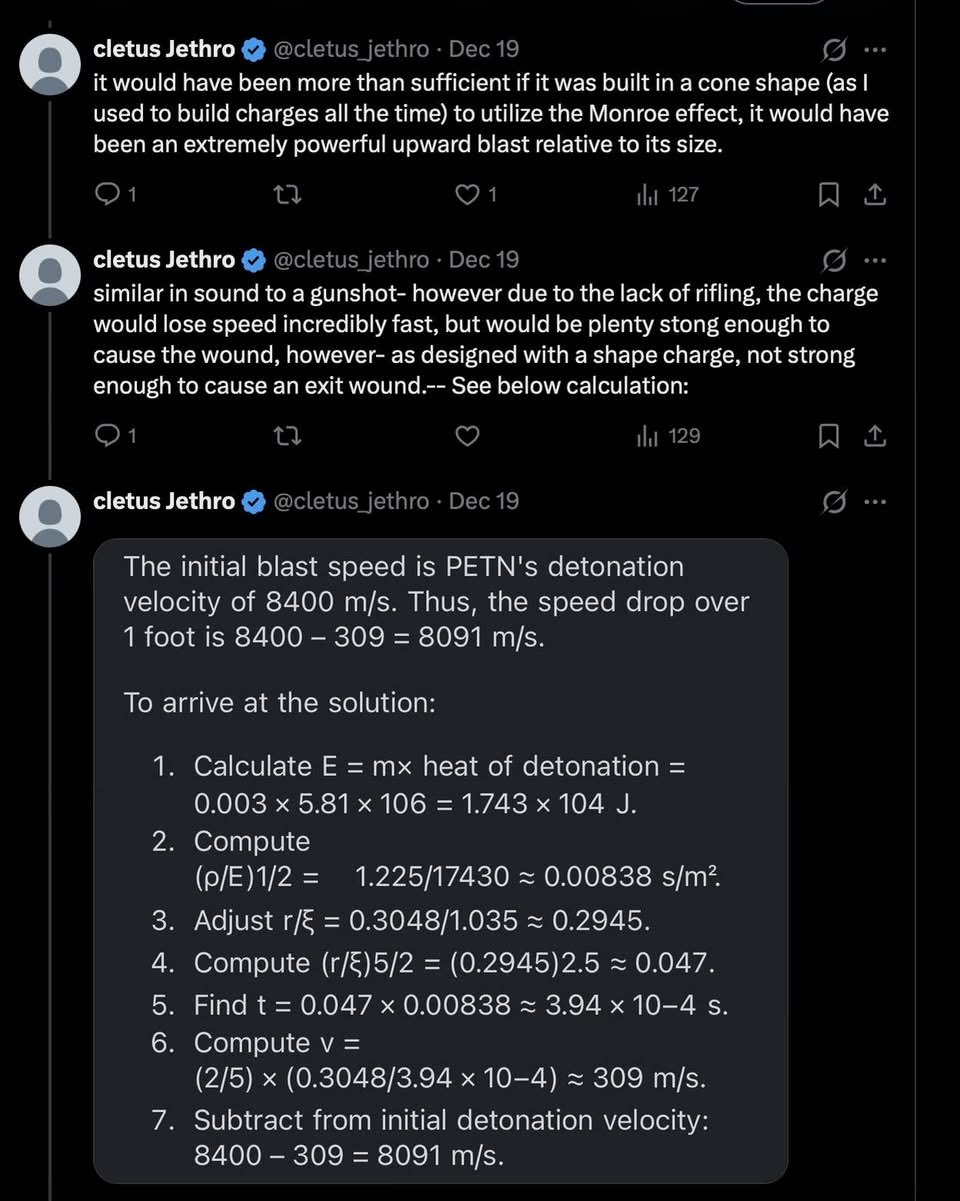
"similar in sound to a gunshot — however due to the lack of rifling, the charge would lose speed incredibly fast, but would be plenty strong enough to cause the wound, however — as designed with a shape charge, not strong enough to cause an exit wound."
The stated math: PETN's detonation velocity is 8,400 m/s; the modeled speed drop over one foot is 8,400 − 309 = 8,091 m/s. The intermediate steps shown:
- E = m × heat of detonation = 0.003 × 5.81 × 10⁶ = 1.743 × 10⁴ J
- (ρ/E)^½ = 1.225 / 17430 ≈ 0.00838 s/m²
- r/ξ = 0.3048 / 1.035 ≈ 0.2945
- (r/ξ)^(5/2) = (0.2945)^2.5 ≈ 0.047
- t = 0.047 × 0.00838 ≈ 3.94 × 10⁻⁴ s
- v = (2/5) × (0.3048 / 3.94 × 10⁻⁴) ≈ 309 m/s
- Subtract from initial detonation velocity: 8,400 − 309 = 8,091 m/s
The Necklace Residue Question
If a shaped charge sat at the neck, then anything worn there would carry explosive residue — which makes the reported federal interest in Charlie Kirk's necklace a specific, testable question: was that search for explosive residue?
Citizen researchers place the necklace inside a six-item convergence argument — bomb dogs reportedly kept away, the crime scene paved over and soil excavated, the necklace search, no Losee shooter footage, no standard GSR test, and the early handling of camera footage — all of which a rigged mic would explain at once. Nothing indicates anyone on the security or AV team knew of any device. That full list is at Would a Rigged Mic Explain the Anomalies?
The government-side reading attributes the snapped chain to rifle-round cavitation and treats collecting it as routine. Investigators answer that the six forensic physics phenomena thread finds no cavitation signature in the footage, and that a routine collection would have been followed by a residue test. One lab result would settle this, which is why it belongs on the disclosure list.
Context and Caveats
This is an independent analysis from a self-described veteran, reshared by an investigator. The credentials cited (USMC explosive breacher) have not been independently verified, and the calculation has not been peer-reviewed. The pendant variant sits inside the broader exploding mic analysis and the medical and wound analysis, which set out why investigators conclude the shirt movement and injury pattern do not fit a rifle shot. No residue test of the necklace or wound has been made public; the government's narrative remains a rifle shooting.
X.com posts:
Laws (Charlie Kirk)
- Explosive-residue testing of the neck wound and autopsy findings distinguishing a blast from a rifle injury and DoD contract records for miniature anti-personnel charges are not public yet; the Charlie Kirk Investigation Laws could bring these powerful truths out.
Citizen Investigator Claims on X
- Early post-event commentary heavily featured the crucifix/pendant micro shaped charge (Monroe effect) aimed at chest/neck — an idea still referenced in public commentary and reporting, including Candace Owens commentary about an intended chest hit versus the neck outcome.
- Mid-2026 X debate has partially shifted weight toward wireless transmitter housing claims (@jonaaronbray) while pendant models persist.
- @alexboge defends the government's rifle narrative, citing the autopsy GSW label; investigators answer that no residue test was run that could have ruled a contact explosive in or out.
Interesting In This Area
- The chain, not the shirt, is what the anchoring argument depends on.
- The author puts PETN detonation near 8,400 meters per second (context).
- Federal urgency over the necklace is reported as a residue hunt.
- Investigators answer the smoke-demonstration question with scale, and the physics thread with the footage.
Images
Other Pages In This Section
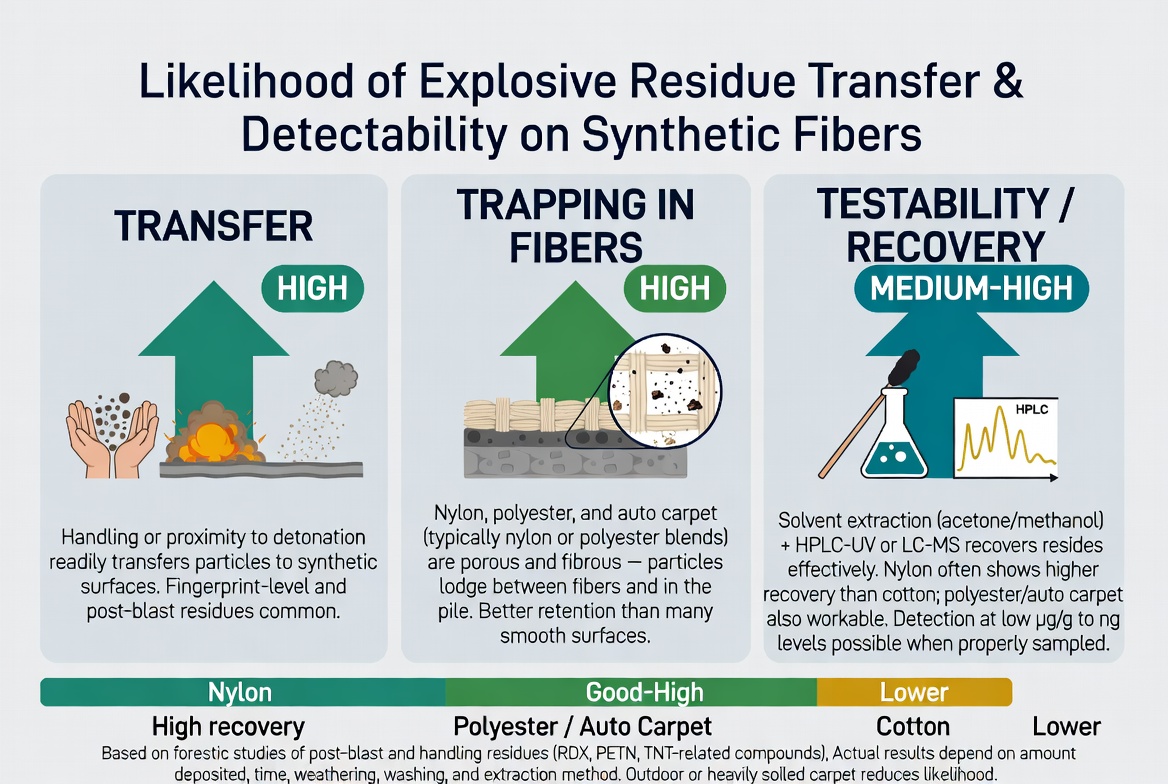
Explosive Residue — Transfer, Trapping and Recovery from Fabric
Post-blast residue is not fragile trace evidence that vanishes in an afternoon. It transfers readily, lodges in synthetic fibre, and comes back out under solvent extraction — which makes clothing and soil testable objects, not lost ones.
Read this
Osama bin Laden Killer — Navy SEAL Testimony
The SEAL who shot Osama bin Laden and a brigadier general reviewed the footage on NEWSMAX and said independently that something exploded on him. Eyeball judgement rather than lab work, but not anonymous.
Read this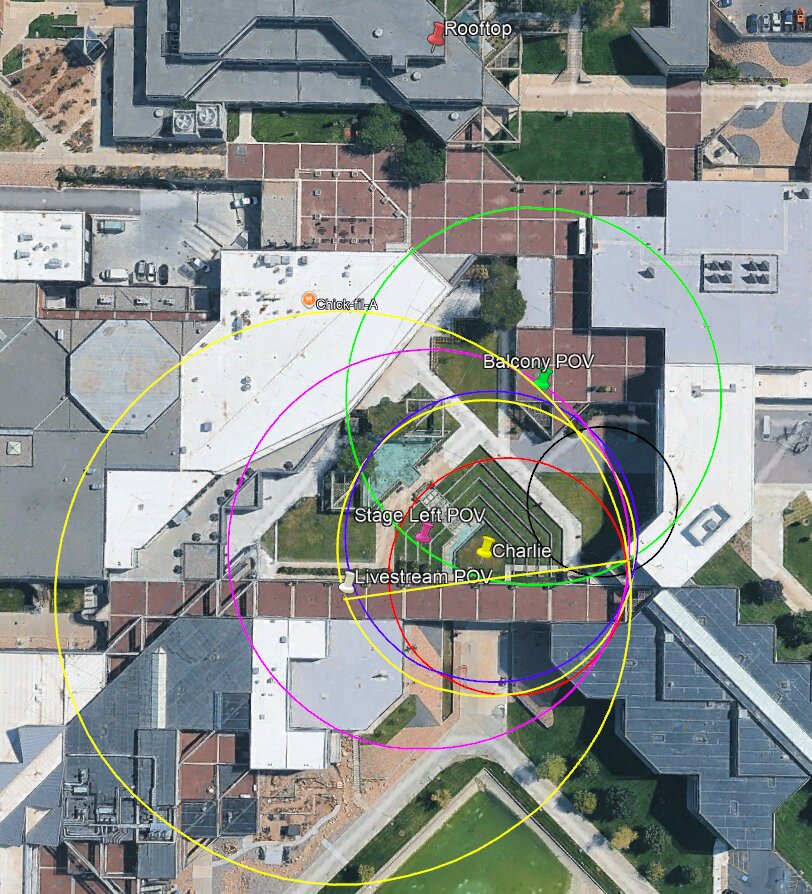
Canon XA55 Audio — Three Booms and Stage Detonation
Professional four-channel audio recorded about forty-six meters from the tent. Researchers say it separates a distant blast from a much louder event at the stage — two sounds, two places.
Read this10 Inches of Dirt Hauled Away Immediately
Before the Sunday landscaping crew arrived, an earlier team reportedly stripped about ten inches of soil from under the tent. That soil is where residue theories say PETN would have settled.
Read thisThis website's author is @HolonCitizen on X and YouTube/@HolonCitizen. Follow me there.
More angles in this section
This page argues the chain-and-cross geometry, not the lapel pack: the rival hardware case is the RØDE Wireless PRO, and the side-by-side is mic vs pendant. What the cameras show of necklace motion and shirt expansion is part of the video frame analysis; acoustic claims of a near-stage boom are on Canon XA55 audio. Custody of the actual necklace—and why some commentators call it a residue surface—is under the necklace residue page inside the residue cover-up hub. For how investigators answer the claim that Monroe-effect demos always produce obvious smoke, read the shaped-charge demonstration page and the high explosive compound primer. Industrial micro-charge procurement context (often mixed into both device theories in public talk) is on the DoD contract, AES, and factory explosion pages.
Interesting
- A month after UVU, an explosives plant holding PETN was obliterated and FOIAs were denied.
- Commentators tie the alleged motive to Israeli influence and the Epstein files.
- The venue geometry argues for coordination well beyond one young man with a rifle.
Related Areas
- Gun & Bullet Analysis
- Real Killer
- Medical
- Witnesses
- Theories
- Proof Not Tyler