High Explosive — RDX, PETN and TNT-Class Compounds
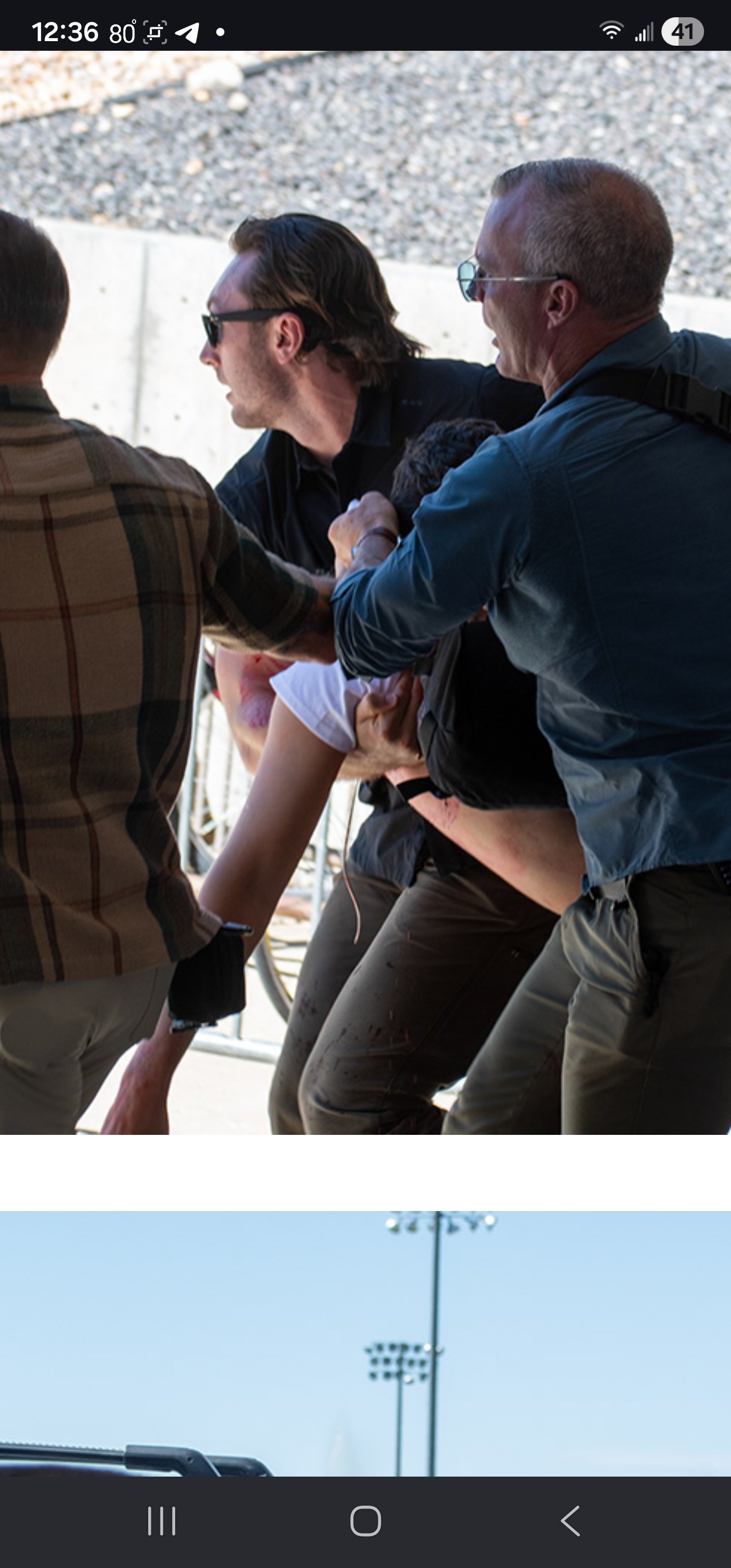
The immediate aftermath at UVU. Everyone in this frame was within a few feet of Charlie Kirk's chest — the transfer distance that matters if a high-explosive charge functioned there. No conduct by anyone pictured is alleged. Posted by @jonaaronbray on X, July 31, 2026. IPFS CID QmUWjLJiWpwqzNiWFSv9nAiWjuREwSN8u1pJZZZceazW8L.
The exploding-mic theory does not claim an ordinary firework or a battery fire. It claims a high explosive — the class of energetic material that detonates rather than burns, propagating a supersonic shock front through itself. That distinction is the whole argument. A deflagration pushes; a detonation shears. The wound signature proponents point to on the Mic vs Pendant and shape charge vs bullet pages only makes sense with the second category.
The three compounds that keep appearing
Three names recur across the citizen-investigator threads, and they are the same three that forensic laboratories treat as the standard post-blast panel:
- RDX (cyclotrimethylenetrinitramine) — the base of C-4 and of most military demolition charges. High detonation velocity, moldable when plasticized, and the compound most often recovered in published post-blast fabric studies.
- PETN (pentaerythritol tetranitrate) — the explosive in detonating cord and in many miniature initiators. Candace Owens has raised PETN by name in her coverage of what the federal search of Kirk's effects may have been looking for; that framing is summarized on the Removing Explosive Residue Cover-Up hub.
- TNT-related compounds — trinitrotoluene and its degradation and manufacturing byproducts, which persist as chemical markers even when the parent charge is fully consumed.
None of these is exotic. All three are routinely detected by the laboratory methods described on the Explosive Residue page, and all three are in the standing reference library of any federal forensic lab.
Why the size argument matters here
The recurring question put to the mic conclusion is scale: a lavalier transmitter is small. Investigators answer that high explosives are energy-dense enough that "small" is not disqualifying — a few grams of RDX or PETN in a shaped geometry directs almost all of its output along one axis, which is the mechanism demonstrated on the Demonstration of a Shaped Charge page and argued in detail on the Exploding Pendant page. The smoke-and-flash question raised with a breaching-size demonstration is answered on that page: a gram-scale charge under a shirt is not a breaching charge, and the footage shows its own blast signature in the fabric.
The procurement thread runs in parallel. A paralegal who says she has handled DoD procurements flagged an April 2025 Accurate Energetic Systems contract described as covering miniaturized anti-personnel demolition charges, and the company profile and subsequent factory explosion are documented on their own pages. That contract is a public record, and investigators conclude the device used at Utah Valley University appears to have come from it — the DoD contract under which AES was to deliver miniaturized anti-personnel charges.
What a high explosive leaves behind
This is where the theory becomes testable rather than rhetorical. A detonation of RDX, PETN or a TNT-class compound never consumes itself completely. Unreacted particulate and characteristic byproducts deposit on every nearby surface — fabric, skin, upholstery, soil, and any object carried on the body. In the frame at right, several people are within arm's length of Kirk's chest; if a charge functioned there, their clothing is a substrate.
According to @jonaaronbray on X, July 31, 2026, quoting the forensic literature:
"Residues of military/high explosives (e.g., RDX, PETN, TNT-related compounds) have been detected on fabric after detonations or simulated post-blast conditions. One HPLC study recovered RDX at low concentrations (around 3–4 μg/g) from nylon and cotton cloth exposed in post-blast scenarios; recovery varied strongly by fabric type (better from nylon than cotton; none from denim in that work)."
The recovery numbers, the fabric-by-fabric differences, and the laboratory methods are broken out on the Explosive Residue page. The short version: a high explosive is one of the easiest things in forensic chemistry to find, if anyone swabs for it.
What is not established
- No explosive residue result has been publicly released for any item connected to September 10, 2025 — positive or negative, for RDX, PETN, TNT compounds, or anything else.
- No agency has stated that a high explosive was present at the event; the government's narrative is a rifle gunshot wound. Investigators' reasons for concluding otherwise are on the Mic hub.
- The AES DoD contract (details) is a matter of record; its delivery records have not been released. Nothing indicates anyone on the security or AV team, or any person visible in the photograph above, knew of any device.
- The compound list is a forensic panel, not a finding. RDX, PETN and TNT appear here because they are what a laboratory would test for — not because any of them has been detected.
Claimed Visual of the Detonation Debris
An August 2026 slow-motion clip by @ProjectConstitu shows what the poster describes as exploded black plastic shards falling from underneath Charlie's shirt as he collapses — presented as debris from a PETN detonation of the belt-worn mic transmitter, the exact compound class this page covers. The claim is the poster's, not a finding. Video and write-up: Black Shards Falling From Charlie Kirk's Shirt.
Competing energetic stories: PETN-class vs LiPO vs “low-flash” PBX
Public discussion mixes at least three energetic stories under the same “mic exploded” slogan:
- Military high explosive (PETN / RDX / TNT-class micro-charge or EFP) — the subject of this page, often tied to the DoD mini anti-personnel contract and AES timeline.
- Consumer LiPO thermal runaway / internal short — no intentional military fill; the pack’s own cell fails. See LiPO short / battery runaway.
- Low-flash / low-smoke PBX-class fill (including ear-canal IEM variants) — one answer to the smoke-demo question; see exploding earpiece (IEM) and the shaped-charge demo page.
These are not interchangeable forensically. PETN/RDX leave characteristic organic residue panels; LiPO runaway leaves fluorinated electrolyte / metal-oxide signatures; a true detonation also differs in overpressure shape from a battery vent. The absence of any public residue panel means the authorities have not released the one test that would say which of the three it was. Investigators' conclusion that an explosive at the mic killed Charlie Kirk rests on the video, audio, wound and debris evidence together; the residue panel would identify the compound.
X.com posts:
- Explosive residue recovery from fabric — RDX, PETN, TNT
- Black shards fall from under Charlie's shirt, slow-motion
Interesting In This Area
- A $440,494 contract for miniaturized anti-personnel charges was due August 25, 2025.
- One HPLC study pulled RDX at three to four micrograms per gram from nylon.
- The smoke-cloud question is answered by scale: a micro-charge is not a breaching charge.
- The AES plant in Tennessee blew up weeks after researchers named it.
Other Pages In This Section
LiPO Short Charge / Battery Runaway — Non-PETN Mic Failure
Not every exploding-mic post means military fill. This fork argues the transmitter's own lithium-polymer cell went into thermal runaway — a different failure, and a completely different list of things a lab would look for.
Read this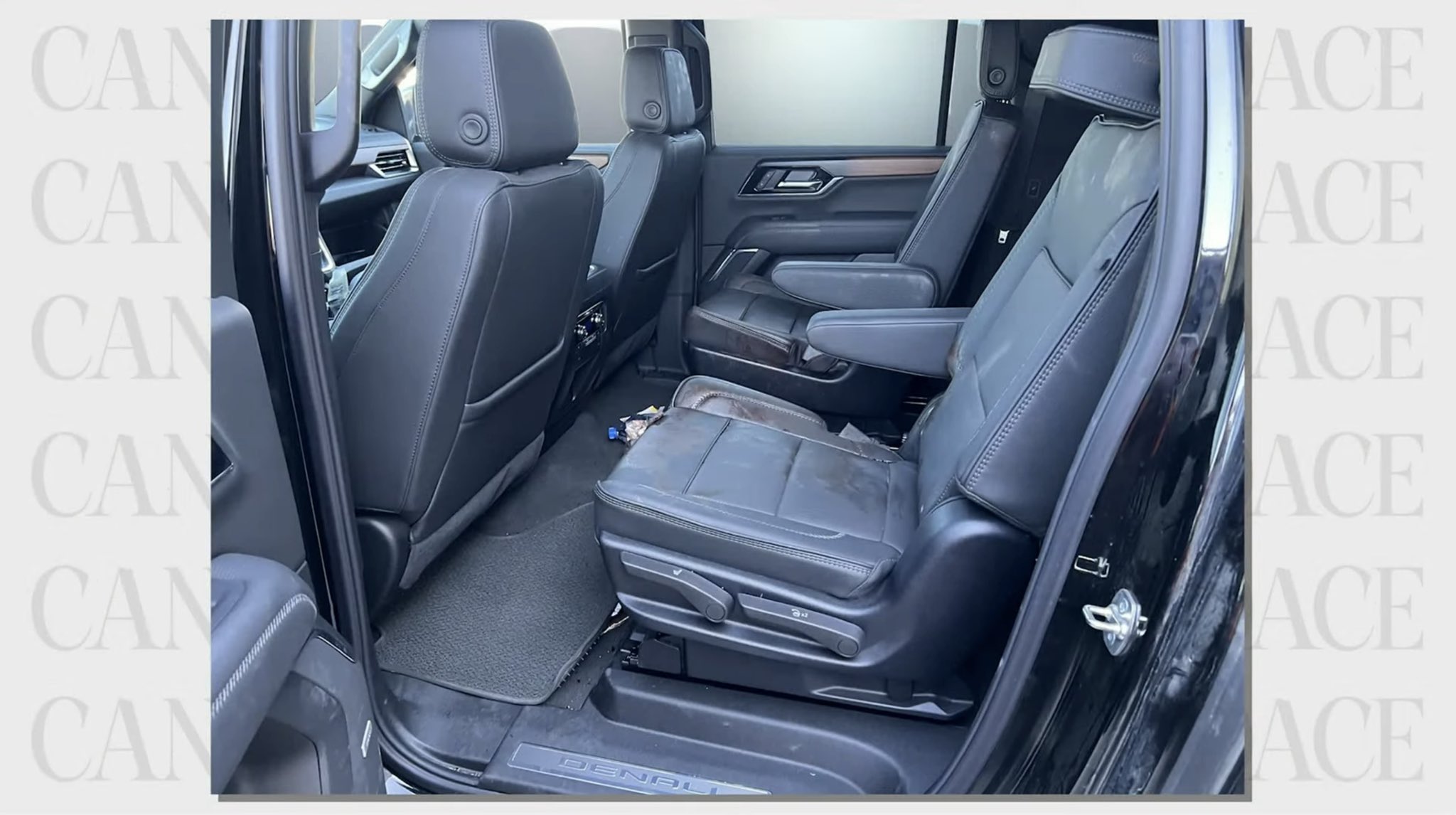
SUV Transporting Charlie — Candace Owens Photos
Photographs reportedly released by Candace Owens show the inside of the vehicle that carried Charlie to hospital. Analysts point at the glass on the seat and ask what tempered glass was doing anywhere near a rifle wound.
Read this
The DoD Contract — Miniaturized-XS Anti-Personnel Charges
A paralegal who says she handles defense procurements walked through a USASpending contract for miniaturized anti-personnel charges. Its delivery deadline is August 25, 2025 — the same day the AmFest flyer dropped.
Read thisFBI Seized Clothing From Charlie's Security Team
The clothing worn by the people closest to Kirk in the minutes after the shot is exactly the substrate residue testing works on. Whether it was ever tested is the question; the claim itself is secondhand and unverified.
Read thisThis website's author is @HolonCitizen on X and YouTube/@HolonCitizen. Follow me there.
More angles in this section
The site’s other pages ask what a charge of this type would look and sound like. Frame-level claims of outward fabric motion before a linear wound vector are collected in the mic explosion video analysis, while the Canon XA55 audio thread argues for a second, closer boom at the tent. Hardware that would have to house any energetic is described on the RØDE Wireless PRO page, and investigators who prefer a chain-anchored device over a lapel pack should read the exploding pendant and mic vs pendant comparison. Procurement context for miniature military charges is on the DoD contract and AES company pages, with the factory blast one month later and Heber–Nashville delivery-day flight as timeline companions. What residue such compounds leave on cloth, soil, and vehicles—and what happened to those surfaces—is tracked under explosive residue on fabric and the residue cover-up section.
Interesting
- Federal contract records for a Tennessee explosives maker list miniature anti-personnel charges.
- The thread's author states a USMC explosive breacher background that nobody has verified.
Related Areas
- Shape Charge vs Bullet — wound scoring
- Forensic Tests That Were Skipped
- Ballistics and Bullet Analysis
- Competing Theories of the Killing
- Evidence Tyler Robinson Is Not the Shooter
- Laws That Would Force Disclosure