Osama bin Laden Killer — Navy SEAL Testimony
Two elite military veterans with firsthand combat experience reviewed the Charlie Kirk assassination footage on NEWSMAX and stated independently: something exploded on Kirk. The testimony of Rob O'Neill — the Navy SEAL who shot and killed Osama bin Laden — and Brigadier General Blaine Holt directly contradicts the official .30-06 rifle narrative.
Satirical LEGO-animated music video referencing Charlie Kirk's RØDE mic, via @RickyTheGuido, July 24, 2026. IPFS CID Qmd6zPTaBkhDSqCA9nEVrx1e7JsgAEUV7qSDu1pGELiPZJ.
Brig. Gen. Blaine Holt and Rob O'Neill (the Navy SEAL who killed bin Laden) on NEWSMAX: "Something exploded on him." Source: @jamiburns45 on X, April 23, 2026.
Who Is Rob O'Neill
Rob O'Neill served in SEAL Team 6 (Naval Special Warfare Development Group — DEVGRU), the United States military's Tier 1 counterterrorism unit. He is one of the most decorated special operations veterans in American history. On May 2, 2011, O'Neill fired the shots that killed Osama bin Laden during Operation Neptune Spear in Abbottabad, Pakistan. He identifies himself in the NEWSMAX segment as a SEAL Team 6 sniper who has "killed more than a handful of people" in direct combat — making his eyeball assessment of wound and ballistics patterns among the most credible testimony available from any civilian commentator.
Who Is Brigadier General Blaine Holt
Brigadier General Blaine Holt (ret.) served in the United States Air Force and accumulated extensive experience in combat operations, intelligence, and strategic planning. He is a frequent military analyst and commentator. In the NEWSMAX segment he appears alongside Rob O'Neill to discuss the Charlie Kirk assassination investigation.
Key Statements from the NEWSMAX Segment
Host to Rob O'Neill: "You know about ballistics, you shot bin Laden. What bothers you the most about this investigation?"
Rob O'Neill: "Thanks for having me. A lot of things bother me about this. Nothing in particular, it's not like I'm out there saying big lie or a conspiracy or something like that. I'm just saying, I've been in a lot of shootings. I've killed more than a handful of people, and this thing looked shady off the bat. I mean, just I've killed people closer than I saw the camera. And I've never seen a shirt move like that. That looks like an explosion to me."
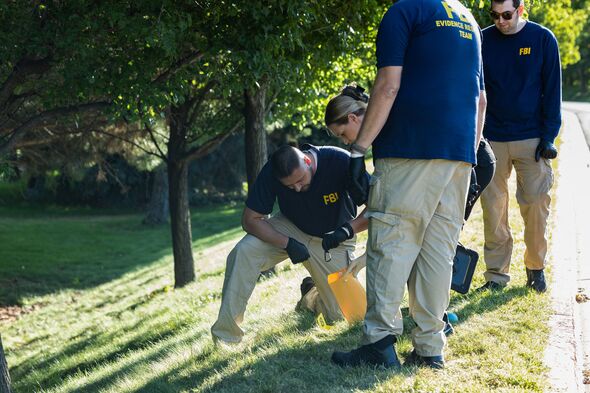
Rob O'Neill on the scene cleanup: "The just the fact that no one started doing first aid, it's Charlie Kirk. They were more concerned about getting sim cards out of cameras, removing cameras, and then getting him off the X somehow there. Didn't seem a lot of concern for his life. It seemed like just cleaning up. And then I mean, I've been told they paved it over a couple days later."
Rob O'Neill on Erika Kirk and Candace Owens: "And then you get Erica Kirk behind all the razzle dazzle, and she's really quick to forgive the alleged shooter, which technically says that was him, because I forgive him, but that you can't forgive Candace Owens for having an opinion or asking questions. And they mock people by saying, oh, I'm just asking questions. Yeah, I'm a COT6 sniper. I'm asking a lot of questions, no one wants to answer them."
Host on the 30-06 narrative: "So this rifle, this 30-odd six, it's a powerful rifle. What do you make of this narrative that the bullet might have hit Charlie's spine, which would explain why the damage wasn't what you would typically see with a rifle like that from that range?"
Brig. Gen. Blaine Holt: "No, no, that's not what happened. Wait, did you say you don't think that's what happened? Absolutely not. I'm with Rob, something exploded on him. But I don't have to get into the details because I'm not in a court of law having to prove it. Here's what bothers me is there are millions of vets with Rob's training. Training in combat arms as low as mine is. That day where they seemingly solved the case in about eight hot seconds. And we know better, you're not going to take a 30-odd six with a kid who's never killed anybody up onto a roof. He takes his first life and does all the things that Rob says he did. So what bothers me, Rob, in all of this is that they know that we know better."
The Screwdriver on the Rooftop
Rob O'Neill on the physical evidence: "The screwdriver that probably wouldn't have worked to take it apart or put it together in the first place was left on the rooftop anyway. So he jumped off the roof and put it back together without the screwdriver. The problem didn't work anyway. Put it back together, wrapped it up and put it nicely in a bunch of trees and then ran off and started texting someone like English was a second language. I mean, the whole thing is just shady. You can clearly see an exit wound on Charlie's left hand side."
The screwdriver argument is significant: if Tyler Robinson allegedly field-stripped the rifle on the rooftop (which the official narrative implies), the tool for doing so was left behind. Robinson allegedly then jumped off the roof, reassembled the rifle WITHOUT the screwdriver, wrapped it, concealed it in trees, and subsequently appeared at a restaurant. The physical and logistical sequence described by the prosecution does not withstand basic scrutiny, according to O'Neill.
The Zach Kureshi "We Got Our Guy" Tweet
Brig. Gen. Holt identified a critical 90-minute window: "I'm more interested in a gentleman named Zach Kureshi who tweeted out, 'well, we got our guy.' They didn't name him at the time. We got our guy and then 90 minutes later, oh, we don't got our guy. Well, that's 90 minutes that a real killer could have fled the scene."
The tweet — a premature announcement of an arrest followed by a rapid retraction — represents a significant anomaly in the official timeline. A genuine lone-gunman scenario would not typically produce a situation where authorities claim to have "got their guy" before a suspect is actually in custody.
Why Military Expert Testimony Matters
Both O'Neill and Holt have direct experience with what high-powered rifle rounds do to human bodies at close range. The .30-06 cartridge carries approximately 3,950 Joules of muzzle energy — over eight times the energy of a standard 9mm handgun round. According to independent ballistics analysis, such a round striking a human spine would produce catastrophic, unmistakable tissue destruction inconsistent with the publicly described injury pattern.
O'Neill and Holt are not claiming definitive proof of a conspiracy. Their expert assessment is that the observable physical evidence — the shirt movement, the wound characteristics, the scene cleanup priorities — does not match what a standard high-powered rifle shot produces. Their combined testimony provides the strongest credentialed challenge to the official narrative to date.
Gen. Holt on justice: "Follow the normal boring steps to a murder investigation and just follow them transparently for the country because it's high interest. And again, we'll stop asking questions. This is just for me. It's just about the truth. You know, we didn't get the truth in 1963. They killed Lee Harvey Oswald, and then they killed Jack Ruby. So we never got the truth. And I feel like it just keeps happening and we don't want it to happen again."
Transcript Summary
From the NEWSMAX video segment, @jamiburns45, April 23, 2026 (approximately 6 minutes and 15 seconds):
- Rob O'Neill (Navy SEAL, DEVGRU / SEAL Team 6, killed bin Laden): Shirt movement "looks like an explosion." Scene cleanup was prioritized over medical aid. SIM cards removed from cameras. Scene paved over days later. Screwdriver left on roof negates the rifle reassembly narrative.
- Brig. Gen. Blaine Holt: "Something exploded on him." The .30-06 spine narrative is rejected. Zach Kureshi's premature "we got our guy" tweet gave a real killer a 90-minute window to flee.
- Both veterans cite the Lee Harvey Oswald parallel — cases where the truth was suppressed and the alleged killer was silenced before any legitimate investigation could be completed.
X.com posts:
Laws (Charlie Kirk)
- Explosive-residue testing on Kirk's clothing and microphone and who authorized paving over the rooftop crime scene and which agents removed the SIM cards from cameras are not public yet; the Charlie Kirk Investigation Laws could bring these powerful truths out.
Public commentary
- Retired military voices on X and television, including commentary associated with Rob O'Neill and other veterans with special-operations experience, have said on camera that the footage looks like an explosion, not a rifle wound.
- Commentator @alexboge, defending the government's rifle narrative, invokes shaped-charge engineering norms (liner, stand-off, rigid fixation). Investigators answer that the device they describe is a gram-scale micro-charge held against the body under the shirt, not a classic breaching charge — see the shaped-charge demo — and they point to the pager and Hezbollah supply-chain operation (the "Grim Beeper" case) as proof such devices are fielded in ordinary electronics.
- These are television and X commentary rather than sworn, cross-examined testimony.
O'Neill's remarks about priorities at the scene describe what he saw on video. Nothing indicates anyone on the security or AV team knew of any device.
This website does not assert as fact that any living person named here committed a crime, did anything wrong or illegal, or had any knowledge of or involvement in the assassination. Names appear here only in the context of public discussion and reporting. Nothing here is a finding by this website.
Interesting In This Area
- Frame analysis and audio reach the same conclusion by different routes.
- Table jumpers and the missing device belong to one custody question.
- Stew Peters says he tied the theory to the AES order first.
- Witnesses told reporters chest, while footage shows a neck-area wound.
Interesting In Other Areas
- Broadcast networks carried the early chest description and then quietly dropped it.
Images
Other Pages In This Section
RØDE Wireless PRO — The Microphone on Kirk's Shirt
The RØDE Wireless PRO on Kirk's shirt: what the hardware actually is, how it mounts, and how large the transmitter body is. Every device theory on this site has to fit inside those dimensions.
Read this
Several witnesses told reporters within minutes that Charlie Kirk was shot in the chest. Candace Owens argues those descriptions never matched the visible neck wound.
Read thisLandscaping Crew Replaced Dirt With Cement / Pavers
Soil was hauled out of the tent courtyard and pavers went down over the exact spot where Charlie Kirk fell. If that ground would have shown residue, it is gone.
Read this
Stew Peters — AES and the Exploding-Mic Claim
Stew Peters states that he was the one who tied the exploding-mic theory to the AES defense order, two weeks before the plant blew up. The page records his claim and asks readers to help check the dates.
Read thisElsewhere In The Investigation
What CNN, NBC, ABC, CBS and PBS carried from the September 2025 breaking coverage through the 2026 courtroom rulings — and, just as usefully, what they never carried at all.
Read thisThis website's author is @HolonCitizen on X and YouTube/@HolonCitizen. Follow me there.
More angles in this section
The technical case the veterans are reacting to is laid out in the video frame analysis and the Canon XA55 audio two-event analysis. The body-worn hardware under discussion is the RØDE Wireless PRO, with placement details on the AV team setup page. The question of why no breaching-size smoke and flash appears is answered on the shaped-charge demonstration page; the rival internal-device camp is exploding pendant versus lapel mic in mic vs pendant. Aftermath debris and residue questions continue through the SUV photos, burnt object, high explosive, and residue cover-up pages. For the industrial-procurement story that media figures later packaged with the mic theory, see the DoD contract, AES, factory explosion, and Stew Peters AES/mic pages.
Interesting
- The ground where Kirk fell was reportedly sealed under pavers within days.
- Fear messages cluster on September 9, reportedly sent over Signal.
- On video the day before, Kirk clashed with Ben Shapiro over Israel.
Related Areas
- Gun & Bullet Analysis
- Real Killer
- Podcast Coverage
- Proof Not Tyler
- Witnesses
- Media