Chris Bagley
:::caution Legal Disclaimer Nothing on this page is a claim of fact that Chris Bagley committed any crime, destroyed or tampered with evidence, or acted illegally, immorally, or unethically. He is a living person, has not been charged with anything, and is presumed innocent. This page documents his reported testimony and the questions raised about it in public commentary — not findings of fact. Body-worn cameras genuinely do fail, and every claim below is attributed to its source. :::
Christopher "Chris" Bagley is a former Utah Valley University campus police officer who, by the reported account, was the first officer to reach the roof of the Losee Center — the position the state's charging narrative identifies as the shooter's perch in the killing of Charlie Kirk on September 10, 2025. He was the State's first live witness on 07/06/2026 — Preliminary Hearing Day 1 in State of Utah v. Tyler Robinson (full transcript: Day 1). Roster: People on Witness Stand. He is a witness, not a suspect.
| Field | Reported Value |
|---|---|
| Full Name | Christopher "Chris" Bagley |
| Role on Sept 10, 2025 | UVU campus police officer; first reported responder to the Losee Center roof |
| Connection to CK Case | Found the red-and-black screwdriver and disturbed gravel on the roof; testified at the 2026 preliminary hearing |
| Reported roof arrival | ~12:44 p.m. — roughly 21 minutes after the ~12:23 p.m. shot |
| Body-cam recording | Single recording reported as 27 minutes 35 seconds, ending on the roof |
| Employment status | Reportedly resigned from UVU in January 2026 |
| Evidence Rating | MODERATE (court testimony reported; interpretations contested) |
| Status | Alive — never charged, presumed innocent |
The rooftop timeline he testified to is one strand of the larger dispute over how Charlie Kirk was murdered — see the mic and explosive analysis.
Connection to the Charlie Kirk Case
Bagley matters to the investigation for one reason: he is the person who reportedly first reached the alleged sniper's nest and found the screwdriver that prosecutors later tied to Tyler Robinson's DNA. Because his body-worn camera reportedly stopped recording as he arrived, the most significant physical scene in the case — the roof, the gravel, and the discovery of the screwdriver — has no video record and rests on later testimony instead. That is a documentation gap, not evidence of misconduct.
Reported Testimony
According to courtroom-testimony narration circulated by @JOKAQARMY1 and @realtoriabrooke (July 6, 2026), and coverage from @TPostMillennial the same day:
- Bagley heard the shot at roughly 12:23 p.m. and reached the Losee Center roof at about 12:44 p.m.
- He reportedly found a red-and-black screwdriver and disturbed gravel on the roof; a photograph of the screwdriver was admitted into evidence.
- Asked about footage that "appears to end while you're still on the roof," he reportedly said he believed the battery had died — "just right at that moment."
- Asked whether he turned it back on, charged it, or swapped a battery that day, he reportedly said no, because it was "too chaotic."
- The recording is described as 27:35 long, beginning at the flag-holding area and ending on the roof before crime-scene tape went up — the only body-cam footage he had that day.
- He was reportedly accompanied on the roof by another person carrying a badge, whose name he reportedly never obtained.
Full detail lives on the two dedicated pages: Officer Bagley — Body Cam Died on Roof and Officer's Body Camera Died on the Roof (Claims).
Police Officers Reportedly Call the Blackout Implausible (Claim)
On her podcast, Candace Owens stated that other police officers contacted her program about Bagley's testimony and told them his account of the sudden body-cam blackout is highly implausible. The officers are unnamed, their claim is not sworn testimony, and it has not been corroborated in any court record.
This is presented as an attributed opinion from anonymous sources — it is not a finding that Bagley disabled his camera or did anything wrong. Serving officers offering a professional read on equipment behavior is commentary, not evidence. The ordinary explanations remain fully available: batteries degrade, cameras get taken off the charging stand early, a unit used earlier in a shift can die mid-shift, and Utah's own reporting statute exists precisely because non-activation happens routinely. See the testimony hub for how this claim sits against the record.
Anonymous Axon Body Cam 4 Tip Email (Claim)
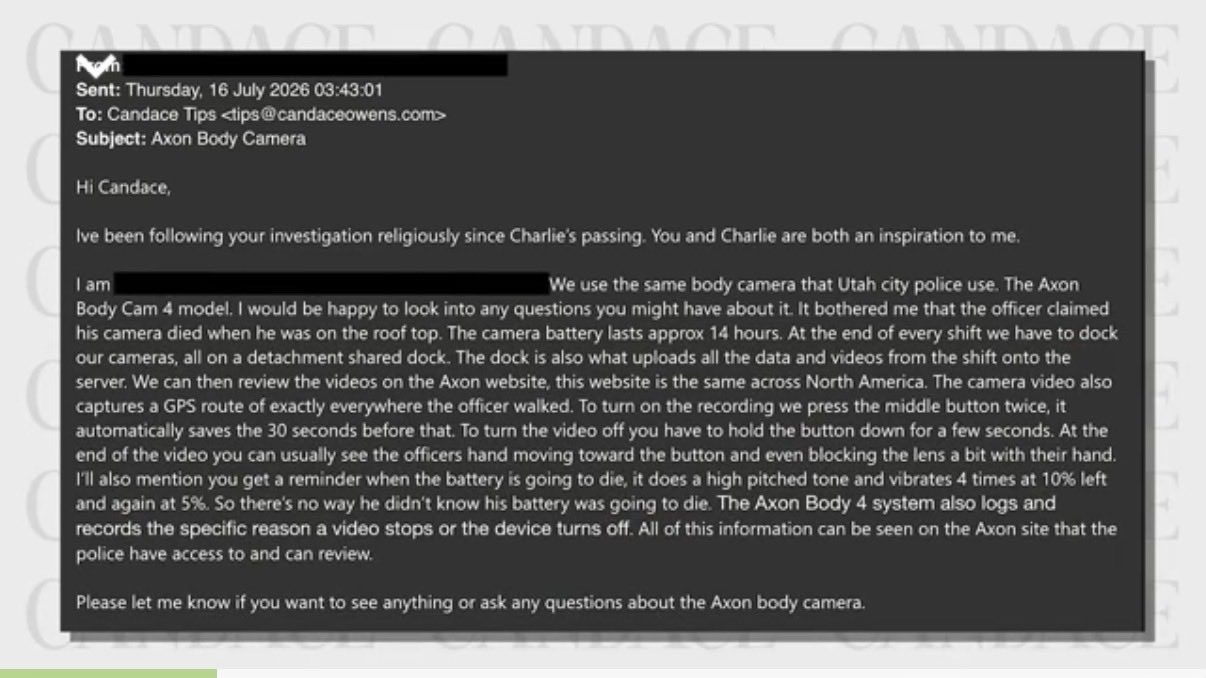
Anonymous email screenshot (sender redacted) sent to the Candace Owens tips line. Shared by @tsorama on X, July 17, 2026, quoting @TheCKFiles1.
A screenshot circulated on X shows an email sent to the Candace Owens tips line (tips@candaceowens.com, dated July 16, 2026) from a person whose name is redacted in the image. According to the emailer, they use the same body camera Utah city police use — the Axon Body Cam 4 — and offered the following account of how that device behaves:
- The battery lasts approximately 14 hours, and cameras are docked on a shared detachment dock at the end of every shift, which uploads all video and data to the Axon server.
- The recording also captures a GPS route of everywhere the officer walked.
- Turning recording on is a double-press of the middle button, which auto-saves the prior 30 seconds; turning it off requires holding the button down, and the officer's hand is usually visible reaching for the button at the end of a clip.
- The system gives a low-battery warning — a high-pitched tone plus four vibrations at 10% and again at 5% — so, in the emailer's words, "there's no way he didn't know his battery was going to die."
- The Axon Body 4 system logs the specific reason a video stops or the device powers off, all reviewable on the Axon site police can access.
The emailer said it "bothered" them that "the officer claimed his camera died when he was on the roof top," and offered to answer further questions about the device.
This is an anonymous, uncorroborated tip — not proof of anything. The sender's identity, agency, and device configuration cannot be verified from a screenshot, and the exact model, firmware, and battery age of the camera Bagley actually carried are not established here. It is a professional opinion from an unnamed person, not sworn testimony or a forensic exam of the device. Batteries genuinely degrade, and a unit used earlier in a shift or taken off the dock early can still die mid-shift. What the account does do is describe records that could settle the question — battery level at shift start, the GPS walk route, and the logged power-off reason — which is exactly why those device logs belong on any disclosure list. Nothing here shows that Chris Bagley disabled his camera or did anything wrong; he is a witness, not a suspect, has not been charged, and is presumed innocent.
Mystery Second Officer Reportedly Identified as Alan Robertson (Claim)
Candace Owens episode clip reportedly identifying the second officer on the Losee rooftop. Source: @ProjectConstitu on X, August 3, 2026.
According to an August 3, 2026 post by @ProjectConstitu amplifying a Candace Owens episode, the plain-clothes officer Bagley testified he could not name has now reportedly been identified. Per the post (nearly verbatim):
Officer Bagley testified he was on the Losee building rooftop with a plain-clothes officer… but claimed he couldn't remember the man's name or anything about him. Candace just identified him. Bystander footage from 12:47 PM shows the second man clearly. He is Officer Alan Robinson of the Utah State University Department of Public Safety — not even a UVU officer. Robinson had only joined the USU police force the summer before. On paper he was a relative newcomer sent over as general reinforcement. Yet in the early footage he appears to be the one directing activity on that rooftop. Officer Bagley, for reasons still unexplained, could not (or would not) name him under oath.
In the video, Owens credits "Muppet Masher" on X with the identification and says the officer "had just joined the USU police force the summer before," pointing to a Facebook announcement of his hiring. She adds that in the early footage "he actually seems like he's the person that's immediately in charge," and asks why anyone would follow directions from a rookie officer from a different campus — while herself hedging with "seemingly, allegedly."
Caution: this is an influencer identification from bystander footage, not an official confirmation. Neither UVU, USU, nor the court has confirmed the identity of the second officer. Nothing here establishes that Bagley or Robertson did anything wrong — both are living persons, neither is charged, and both are presumed innocent. An officer genuinely failing to recall the name of an unfamiliar officer from another agency during a chaotic mass-casualty response is an ordinary, innocent explanation.
The Statute and the Resignation
Commentators cite Utah Code § 77-7a-104, which they say requires body-camera activation and a written report whenever a camera is not activated — a paper trail that could independently confirm or refute the battery account. Bagley reportedly resigned from UVU in January 2026.
Neither point establishes wrongdoing. Statutory-compliance questions are for the court to resolve, and an officer's later departure has many ordinary explanations — including the pressure of being publicly named in a case of this magnitude.
Open Questions
- Does a written non-activation report under Utah Code § 77-7a-104 exist for September 10, 2025, and what does it say?
- What are the body-cam device logs — battery level at shift start, charge history, and power-off event — which would settle the battery question with records rather than argument?
- Who was the second person with a badge on the roof, and does that person's body-cam footage exist?
- Why did reaching the roof reportedly take 21 minutes after the shot?
- Do the anonymous officers cited by Candace Owens have direct knowledge of this device and agency's equipment, or are they generalizing from their own departments?
Counterarguments and Innocent Explanations
- Batteries do fail. Mid-shift body-cam failure is a common, well-documented occurrence.
- One camera is not the scene. The roof was also documented by other responders, photographs, and forensic processing.
- Anonymous is not authoritative. Unnamed officers reading a transcript are not equivalent to a forensic examination of the actual device.
- He is a witness, not a suspect. Bagley testified under oath and has never been accused of an offense by any authority.
- Presumption of innocence. Robinson is charged, not convicted; Bagley is not charged at all.
Status: Alive
Interesting In This Area
- Alan Robertson was reportedly identified as the second man on that roof.
- David Hull followed him onto the stand as the next State witness.
- Candace Owens says serving officers called the blackout implausible.
- Kathryn Nester pressed chain of custody and the rooftop search on cross.
Interesting In Other Areas
- The screwdriver and the crime-scene tape is the object his testimony turns on.
- Losee Center is the building; the body-cam gap is the hole in its record.
- The dedicated body-cam page sets out the statute requiring a non-activation report.
- No muzzle flash or recoil appears in the footage of that roof.
Other Pages In This Section
A Peak Prosperity analyst whose ballistics breakdown argues the wounding pattern fits a fragmenting high-velocity 9mm rather than the .30-06 of the official account. His stated opinion, attributed to him, and one reason the weapon question stays open.
Read this
The State's lead case agent, who walked the court through the surveillance the prosecution says shows its defendant on campus. He also reportedly learned about the courtyard paving from news reports.
Read this
Cited in commentary over a reported Epstein-files phone call and over the early single-shooter framing. Documented with attribution; no assertion of knowledge or involvement is made here.
Read thisElsewhere In The Investigation
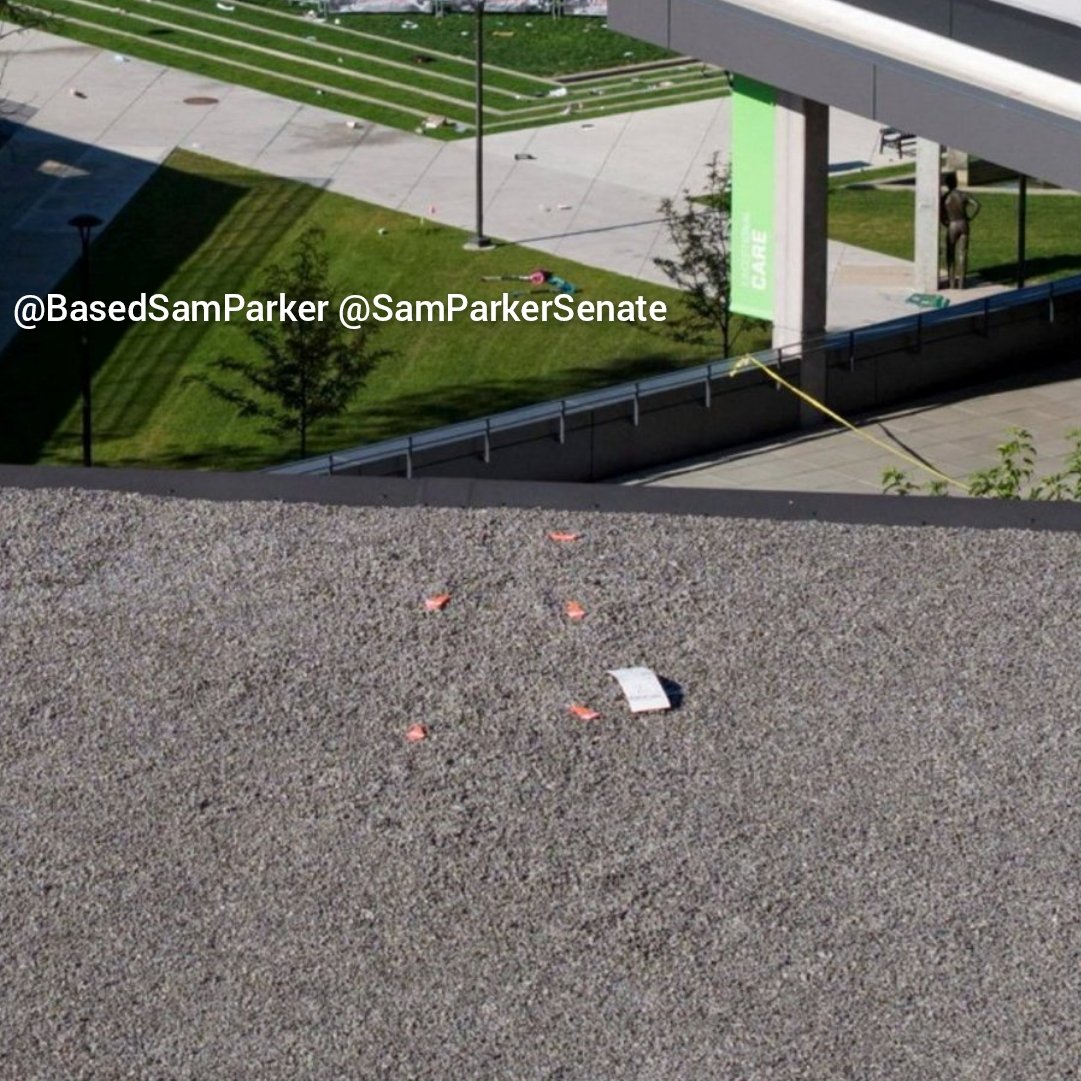
The Screwdriver and the Crime-Scene Tape
An officer reportedly testified he found a screwdriver 15 to 20 feet past the roof railing, protected by crime-scene tape. Helicopter footage circulated afterwards is said to show neither. Two records of the same few square feet.
Read thisOfficer Bagley — Body Cam Died on Roof
The body camera on the officer who reached the roof reportedly died there. The minutes it would have covered are the exact minutes everyone is arguing about.
Read this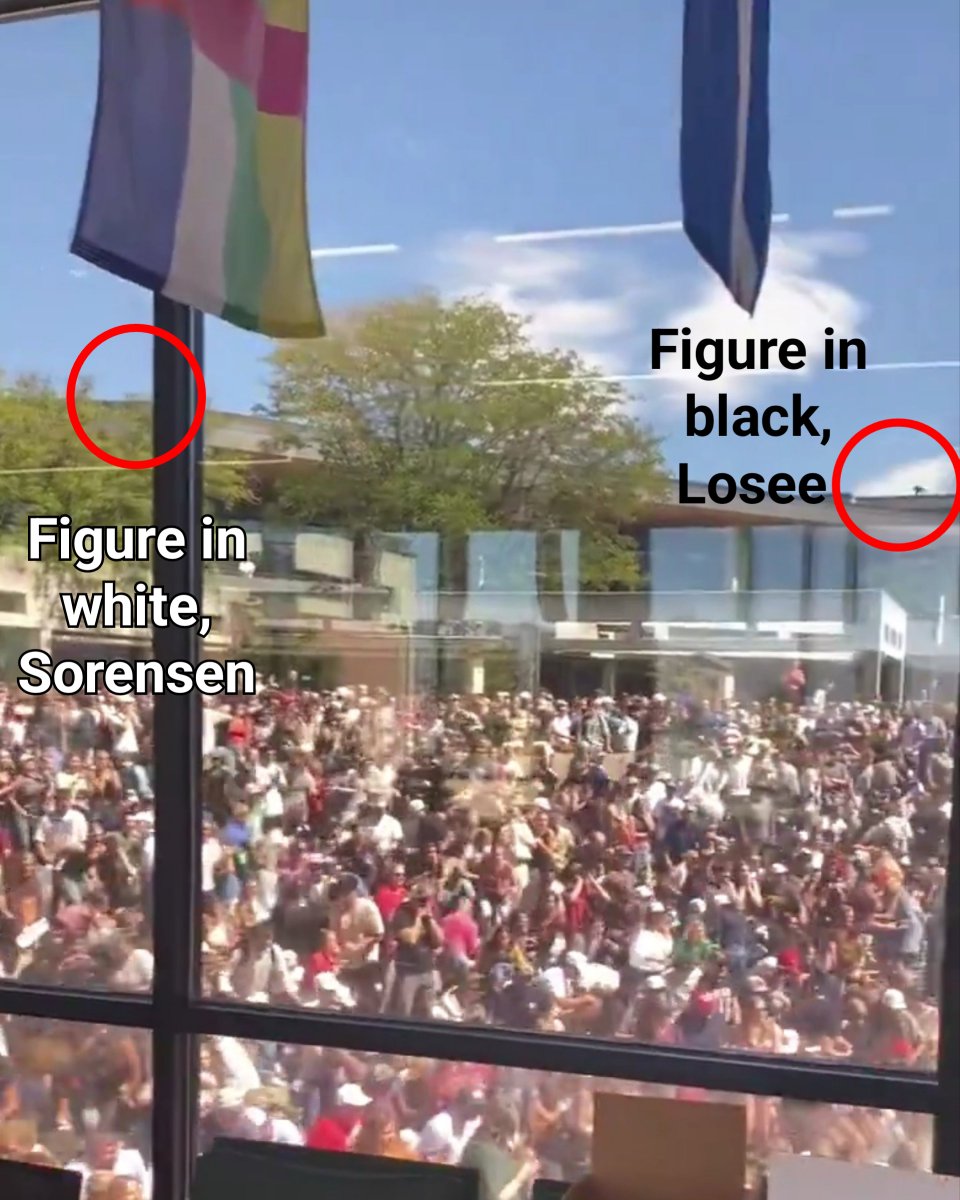
Losee Center (Alleged Sniper Rooftop)
The roof the government says the shot came from. Every part of it — line of sight, the lip, the drop, the screwdriver — has been measured by people who do not accept that account.
Read this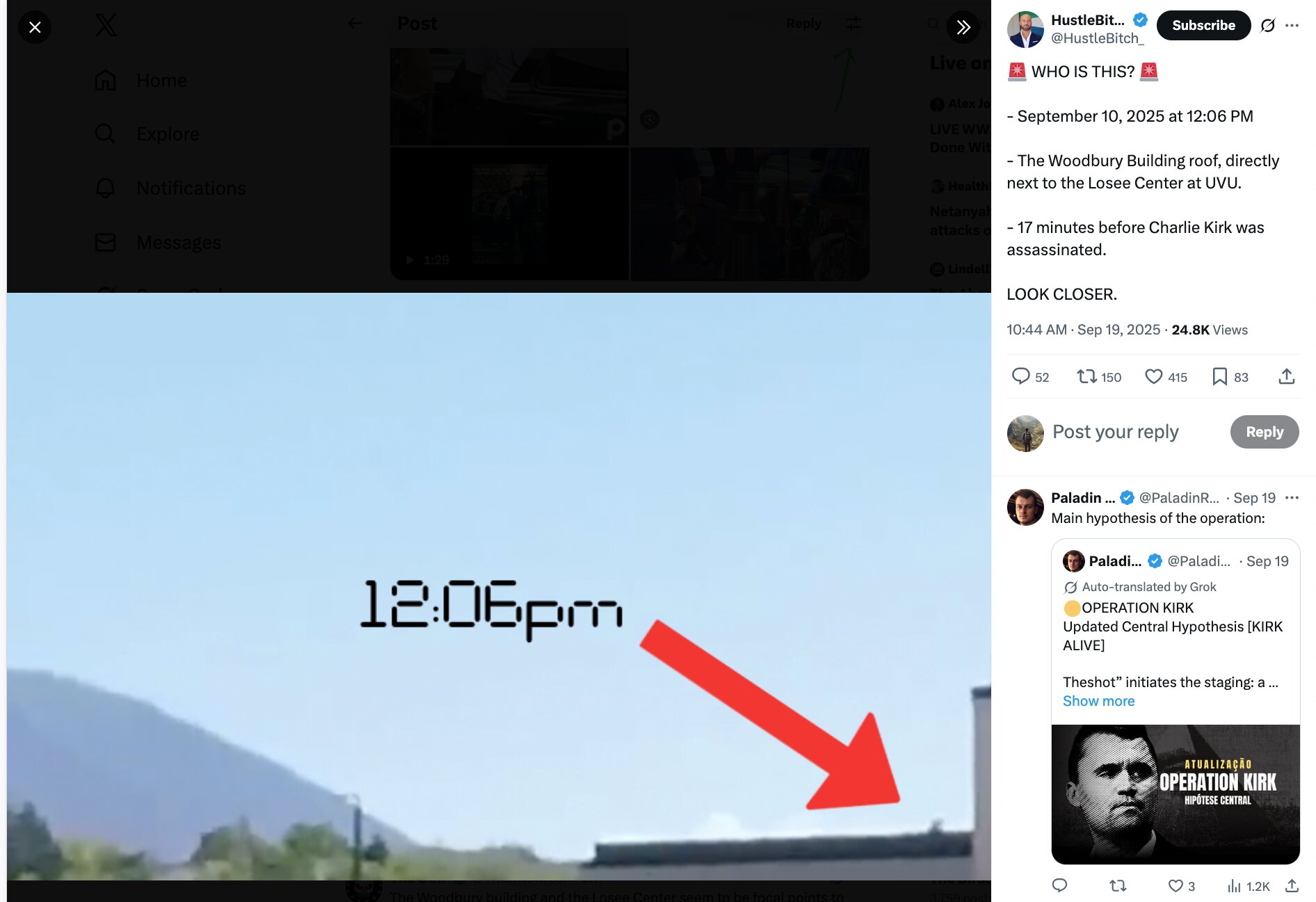
Officer's Body Camera Died on the Roof (Claims)
The first officer reported to reach the roof arrived with a body camera that stopped recording, so the discovery of the screwdriver rests on testimony alone. Batteries do fail; device logs would settle it.
Read thisSources
- Courtroom-testimony narration, @JOKAQARMY1 on X (July 6, 2026).
- @realtoriabrooke and @TPostMillennial coverage of the screwdriver and body-cam testimony (July 6, 2026).
- Ryan Matta — the "charging stand" open question.
- Candace Owens podcast — claim that other police officers contacted the program calling the sudden body-cam blackout highly implausible (anonymous, uncorroborated).
- Master investigation file,
Charlie_Kirk.txt— "Officer Bagley Body Cam Died on Roof" section.
X.com posts:
- Axon Body Cam 4 tip email disputing Bagley battery-died claim
- Candace Owens reportedly identifies mystery rooftop officer as Alan Robertson
This website's author is @HolonCitizen on X and YouTube/@HolonCitizen. Follow me there.
Interesting
- The Pentagon's top intelligence official is named over military flight SAM-702.
- Kirk reportedly wrote he could be "wiped out at any time" long before 2025.
- An explosives manufacturer sits in the entity index beside TPUSA-linked LLCs.