Anatomy Overlay on the Speaker Profile
 Next Image
What This Image Shows
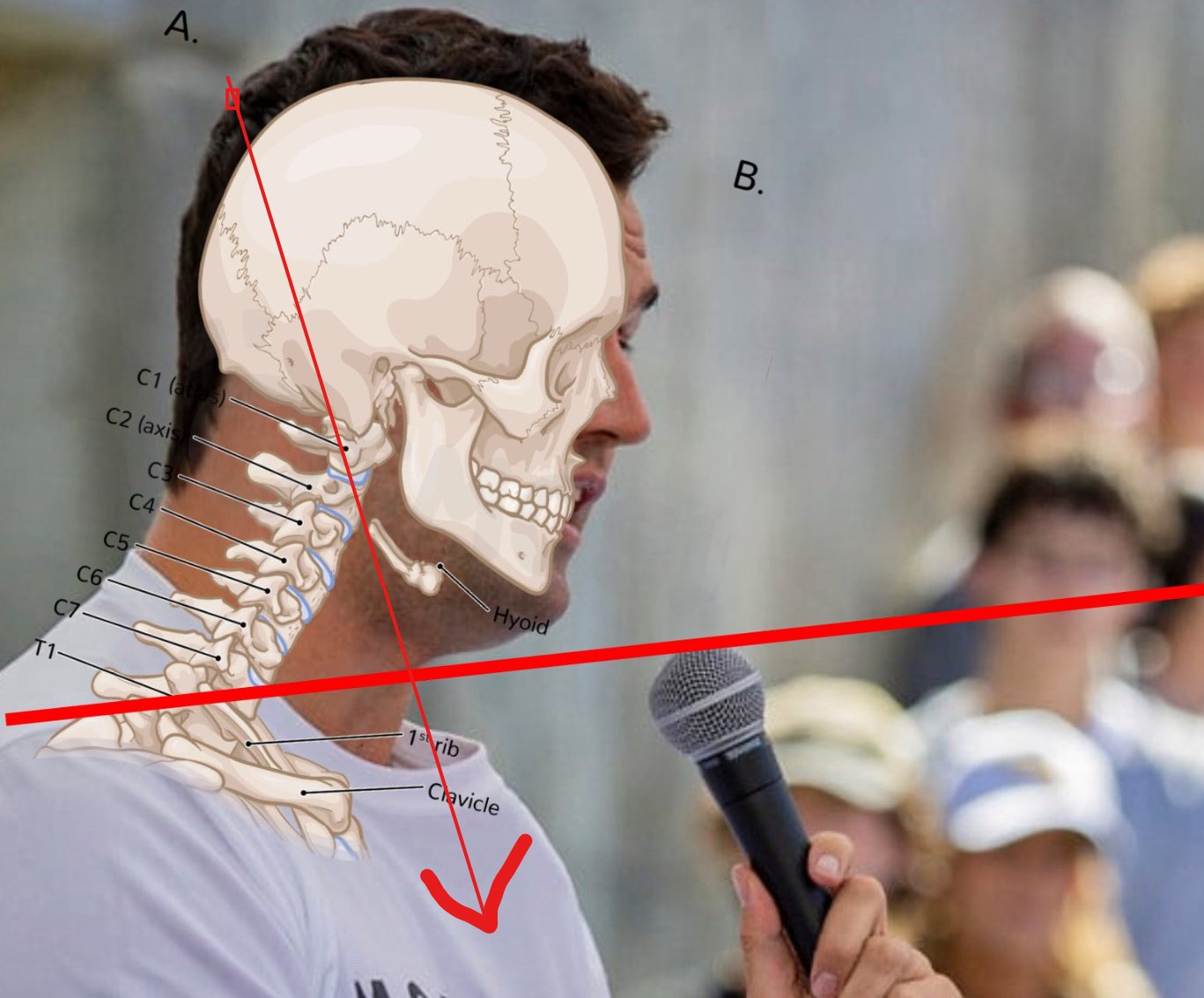
A composite that registers an anatomical illustration directly onto a side-profile photograph of a man speaking into a black and silver wireless microphone, with a blurred crowd behind him. The overlay labels C1 (atlas), C2 (axis), C3 through C7, T1, the hyoid bone, the first rib, and the clavicle, and adds red lines and an arrow along with two lettered markers, A and B.
The technique is straightforward and is the standard method for this kind of argument: scale a labeled skeleton to the visible head and shoulders in the photograph, then read off which vertebra sits behind a given point on the skin. The two lettered markers are the analyst's candidate positions, and the red arrow shows the path being proposed between them.
The accuracy of any such overlay depends entirely on the scaling and on the subject's head position at that instant, and small errors in either move the apparent entry level by a full vertebra or more. That is exactly the margin the whole dispute turns on, since the argument against the rooftop account rests on the difference between an entry at C2 and an entry down at C7 or T1. See Wound Trajectory Angle, Trajectory and Wound Mismatch, and Ballistics and Wound Analysis.
This website's author is @HolonCitizen on X and YouTube/@HolonCitizen. Follow me there.
Where This Image Appears
This image is used on the following investigation pages:
Related Areas
- Cluster: Ballistics and the Gun
- Section: Gun & Bullet Analysis
- All photos: Photos
More In This Cluster
- Previous: Lateral Spine Render Used in Angle Analysis
- Next: WRONG Official Narrative