ATF Report Page 2: Inconclusive Comparison
 Next Image
What This Image Shows
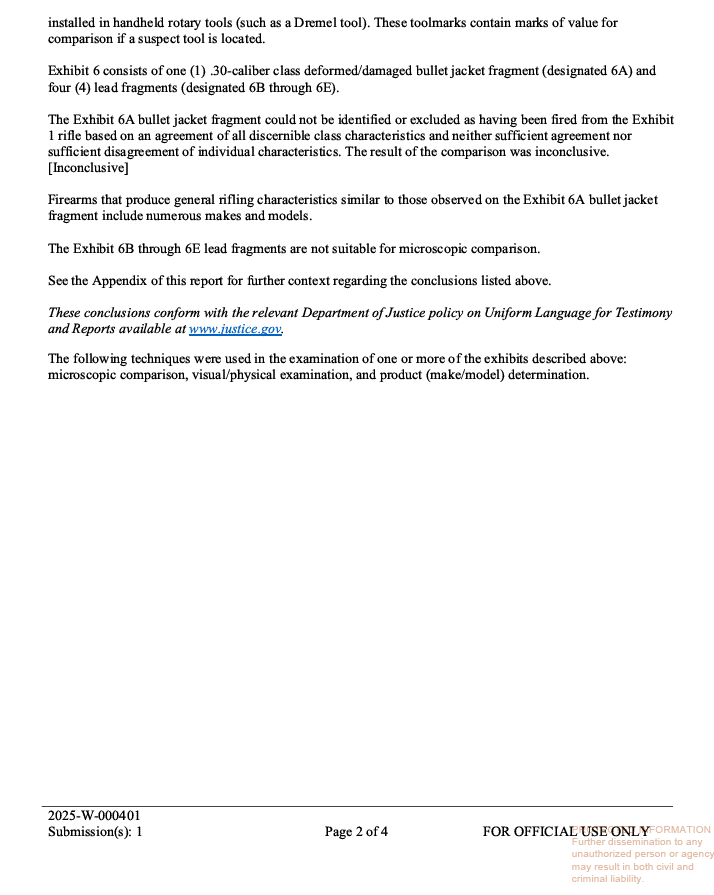
Page two of a four-page official forensic examination report, carrying a case number, page number, and a restrictive distribution warning in the footer. This is the primary document behind most of the ballistics argument on this site, and it is worth reading in its own words rather than through summaries.
The visible text records that Exhibit 6 consists of one .30-caliber class deformed and damaged bullet jacket fragment, designated 6A, and four lead fragments, designated 6B through 6E. It states that the Exhibit 6A bullet jacket fragment could not be identified or excluded as having been fired from the Exhibit 1 rifle, based on an agreement of all discernible class characteristics and neither sufficient agreement nor sufficient disagreement of individual characteristics. A separate passage on the same page addresses toolmarks made by bits installed in handheld rotary tools such as a Dremel, noting that such marks contain features of value for comparison if a suspect tool is located.
Two things follow. The fragment does not tie the rifle to the wound and does not rule it out — the class characteristics match a large family of firearms, and the individuating detail needed for an identification is absent. And the engraved cartridges were made with a rotary tool that, if it were ever located, could itself be matched. Neither point has been resolved publicly. See ATF Fragment Inconclusive, ATF Inconclusive Ballistics, and Ballistics Sealed and CBLA.
This website's author is @HolonCitizen on X and YouTube/@HolonCitizen. Follow me there.
Where This Image Appears
This image is used on the following investigation pages:
Related Areas
- Cluster: Ballistics and the Gun
- Section: Gun & Bullet Analysis
- All photos: Photos
More In This Cluster
- Previous: Post: Three Specks Before the Collar Pull
- Next: Bullet Exit Size