Top Radius Analysis and Ejection Direction
 Next Image
What This Image Shows
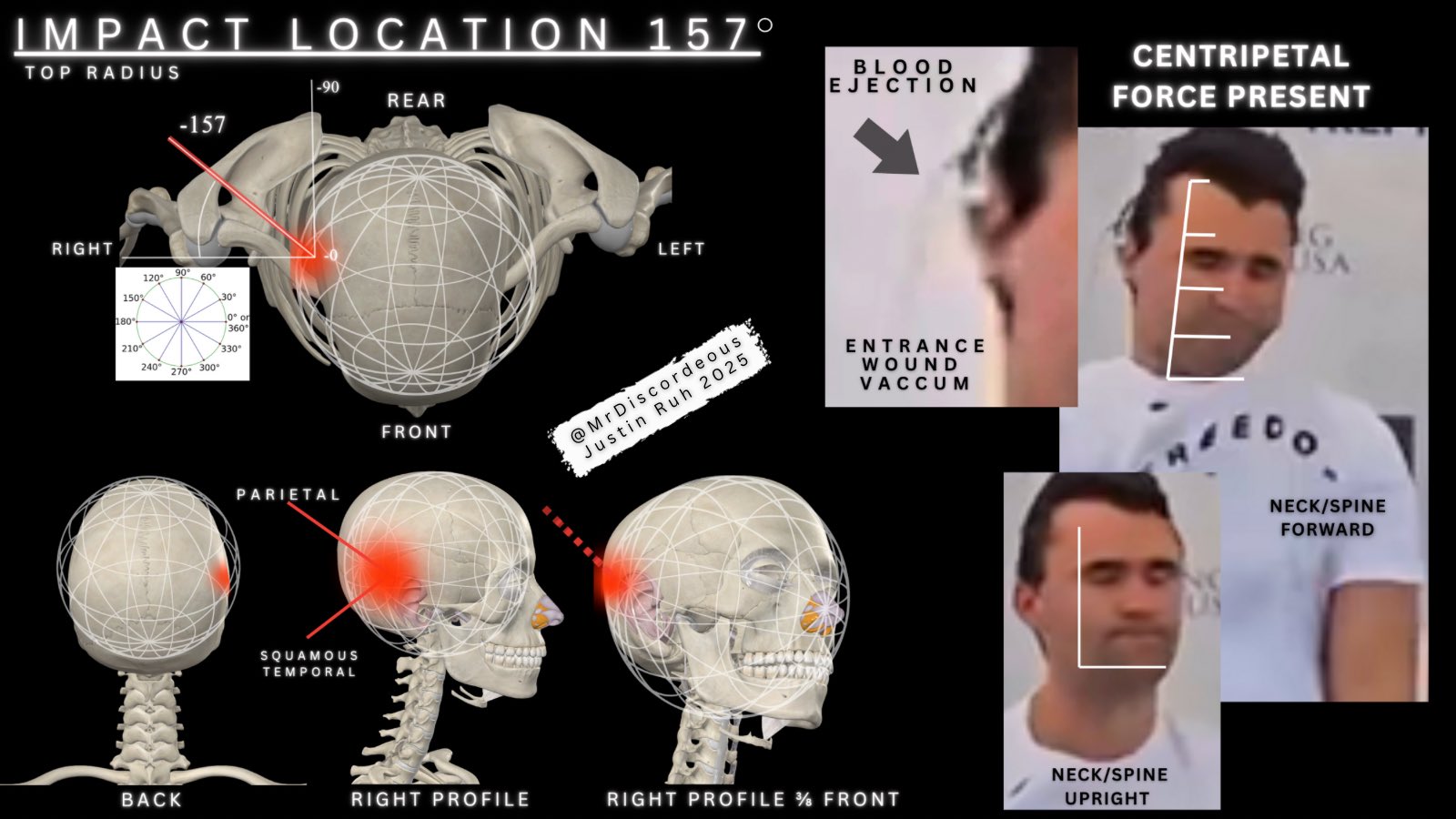
An analytical collage on black, combining three-dimensional models of the skull, cervical spine, clavicles, and upper ribs — each overlaid with a spherical latitude and longitude grid — with cropped, low-resolution video stills and a circular degree wheel. The header reads IMPACT LOCATION 157 degrees, TOP RADIUS.
The labels around the frame read ENTRANCE WOUND, BLOOD EJECTION, CENTRIPETAL FORCE PRESENT, PARIETAL, SQUAMOUS TEMPORAL, RIGHT PROFILE, BACK, FRONT, NECK/SPINE UPRIGHT, and NECK/SPINE FORWARD, with bearings of minus 157 and minus 90 marked on the model. The two neck-position labels are the analytical hinge: the same impact point maps to a different external bearing depending on whether the head was upright or pitched forward at that instant, which is precisely the variable other researchers dispute when they argue about the lean.
The blood-ejection and centripetal-force annotations are inferences drawn from a handful of compressed video frames, and they are the least verifiable part of the sheet. They are recorded here as the analyst's stated reading. The companion sheets are the 120-degree facial radius and the aerial impact map; the medical questions are at Ballistics and Wound Analysis and Cause of Death.
This website's author is @HolonCitizen on X and YouTube/@HolonCitizen. Follow me there.
Where This Image Appears
This image is used on the following investigation pages:
- Gun & Bullet Analysis
- MrDiscordeous (Justin Ruh) — X Posts
- Img Photo dc2701
- overview
- Is the Front Neck Wound an Entrance or an Exit? (Claims)
Related Areas
- Cluster: Ballistics and the Gun
- Section: Gun & Bullet Analysis
- All photos: Photos