N1098L NCSS CIA — Photos
Photos filed under N1098L NCSS CIA — 15 images on this page. Scan the list and open any image for the full picture and its write-up.
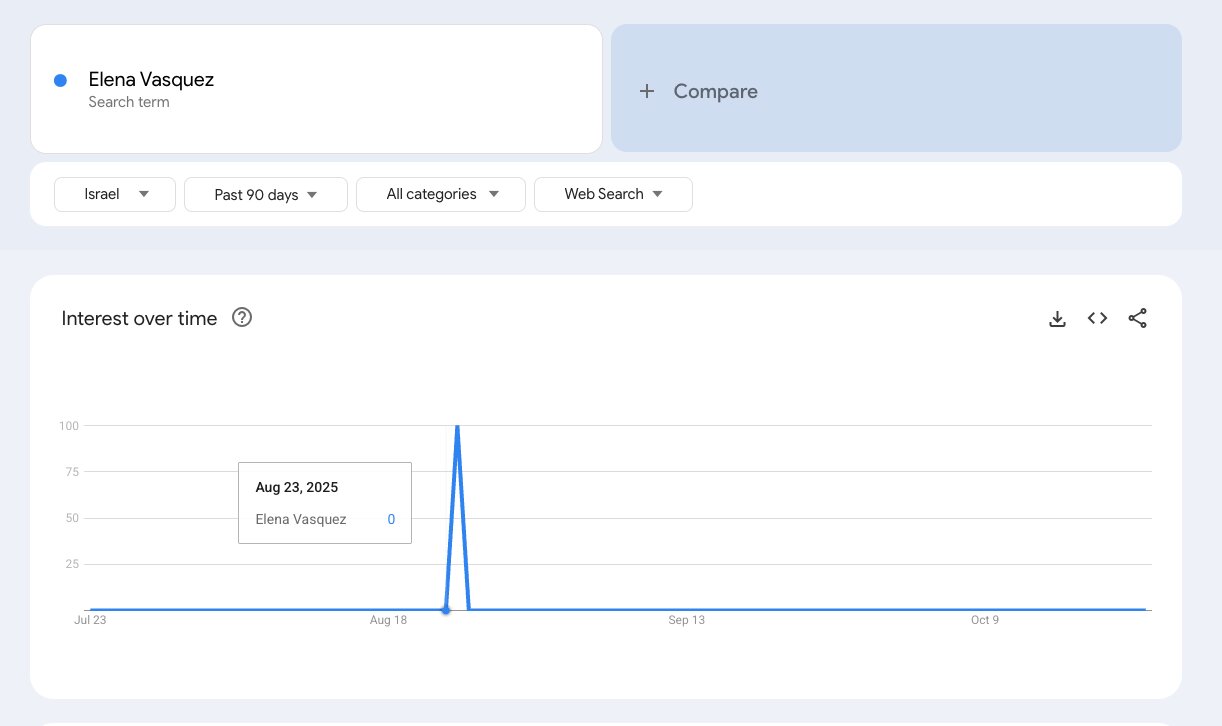
- Elena Vasquez — Israel, August 23 2025
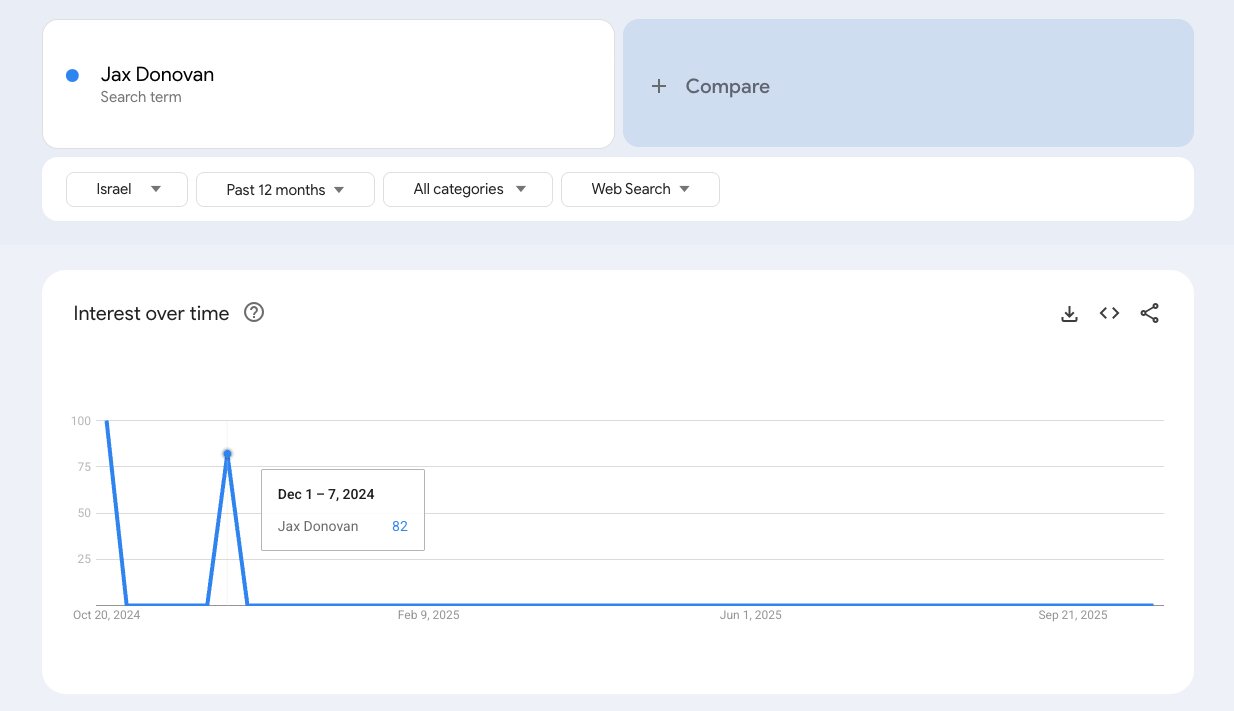
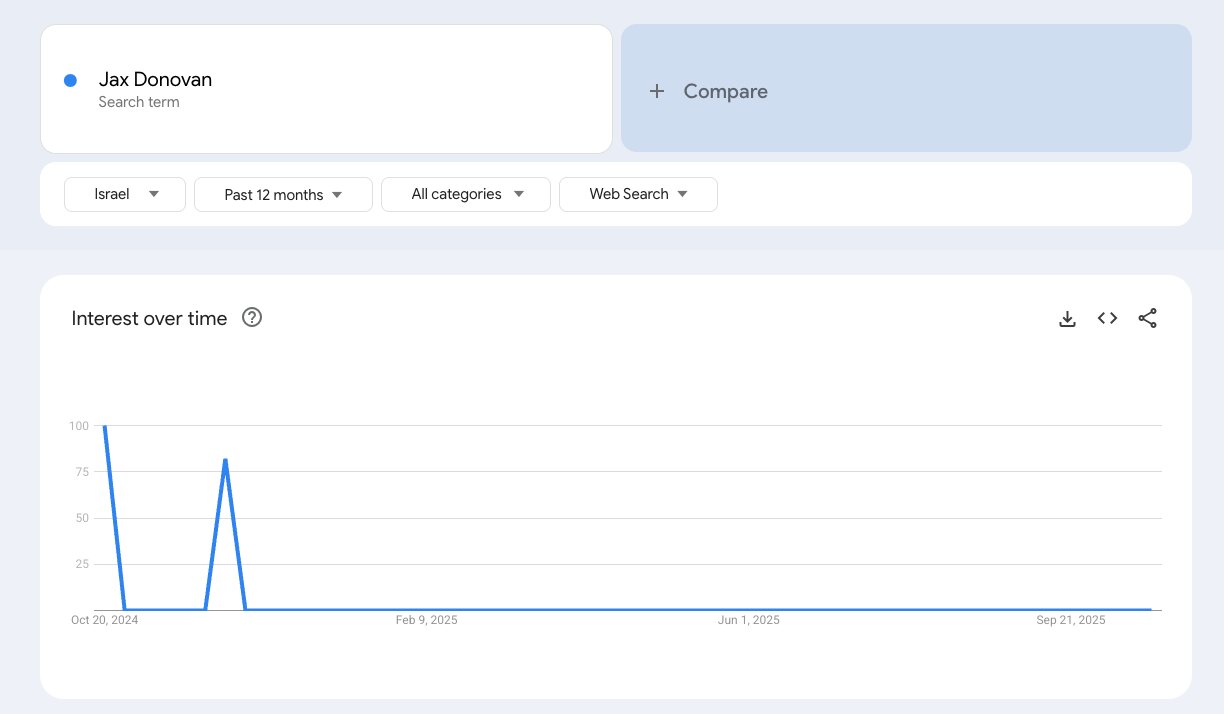
- Jax Donovan — Israel, Twelve-Month View
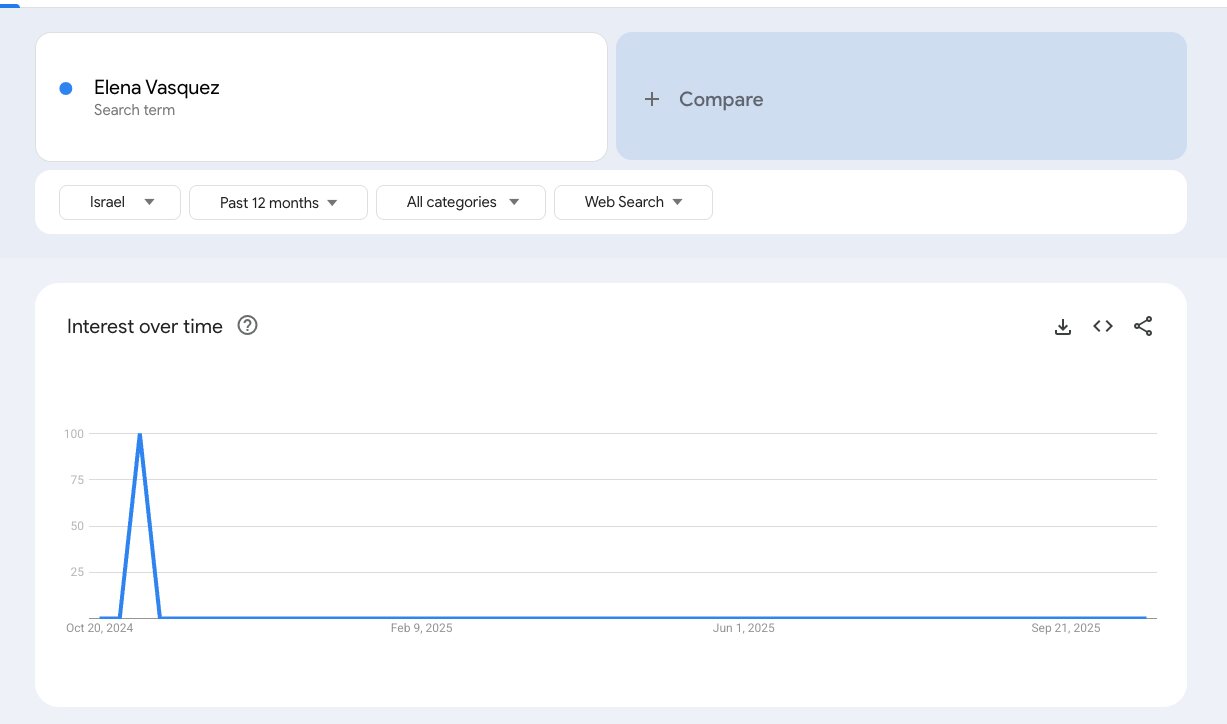
- Elena Vasquez — Israel, Late October 2024 Spike
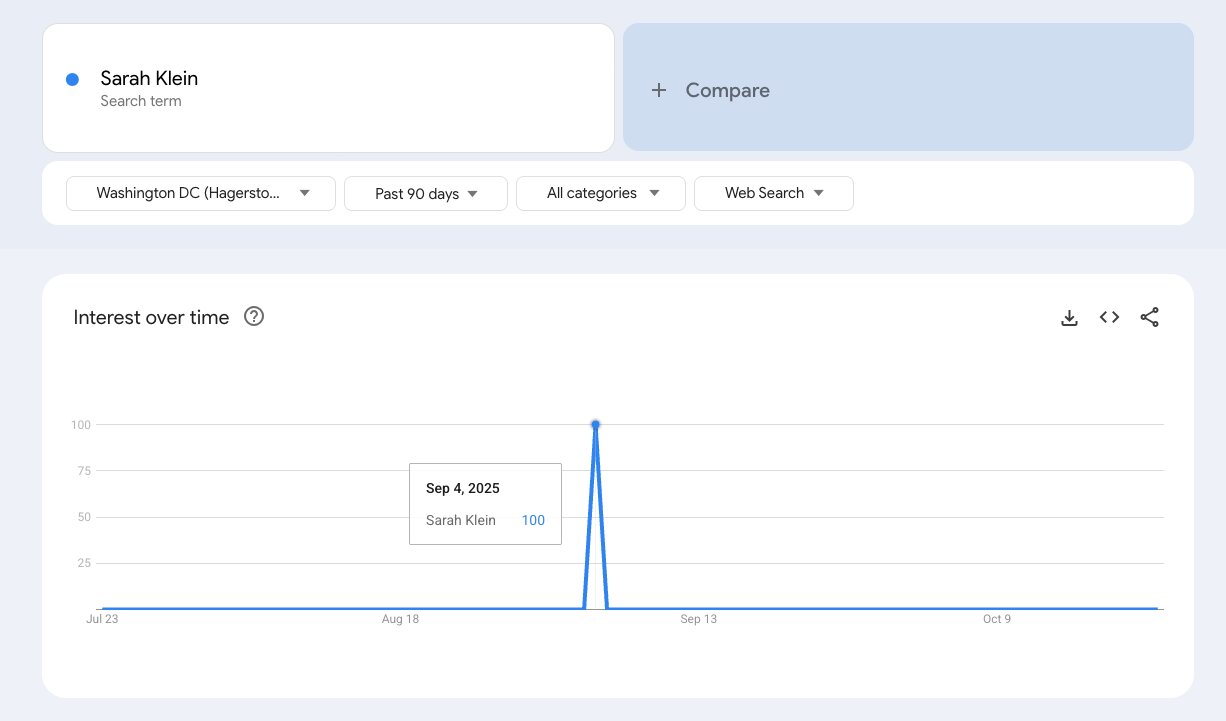
- Sarah Klein — Washington DC, September 4 2025
- Jax Donovan — December 2024 Peak
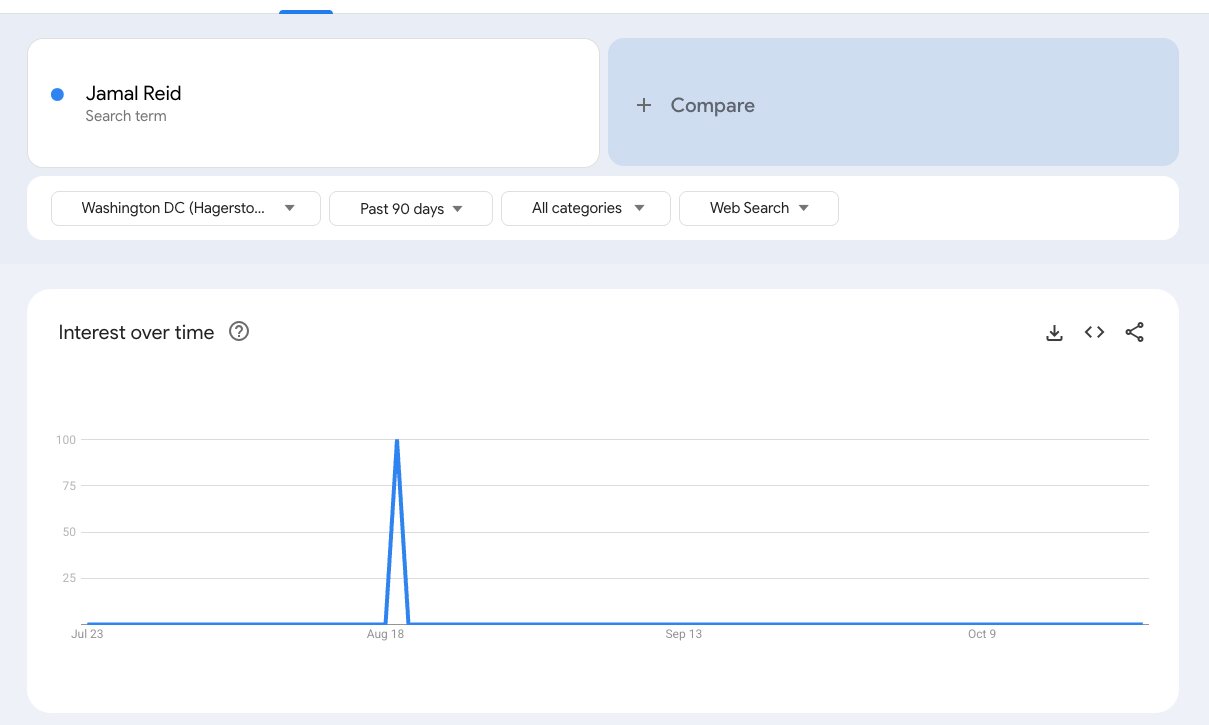
- Jamal Reid — Washington DC, Mid-August 2025
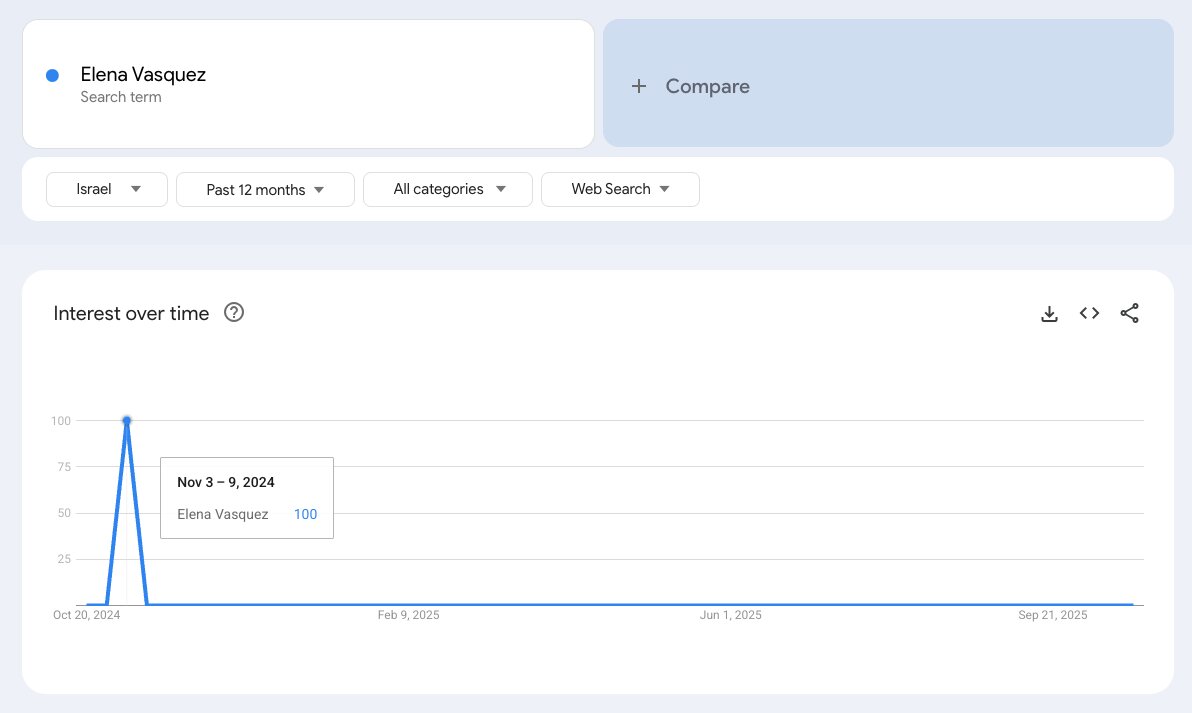
- Elena Vasquez — Israel, November 3 to 9 2024
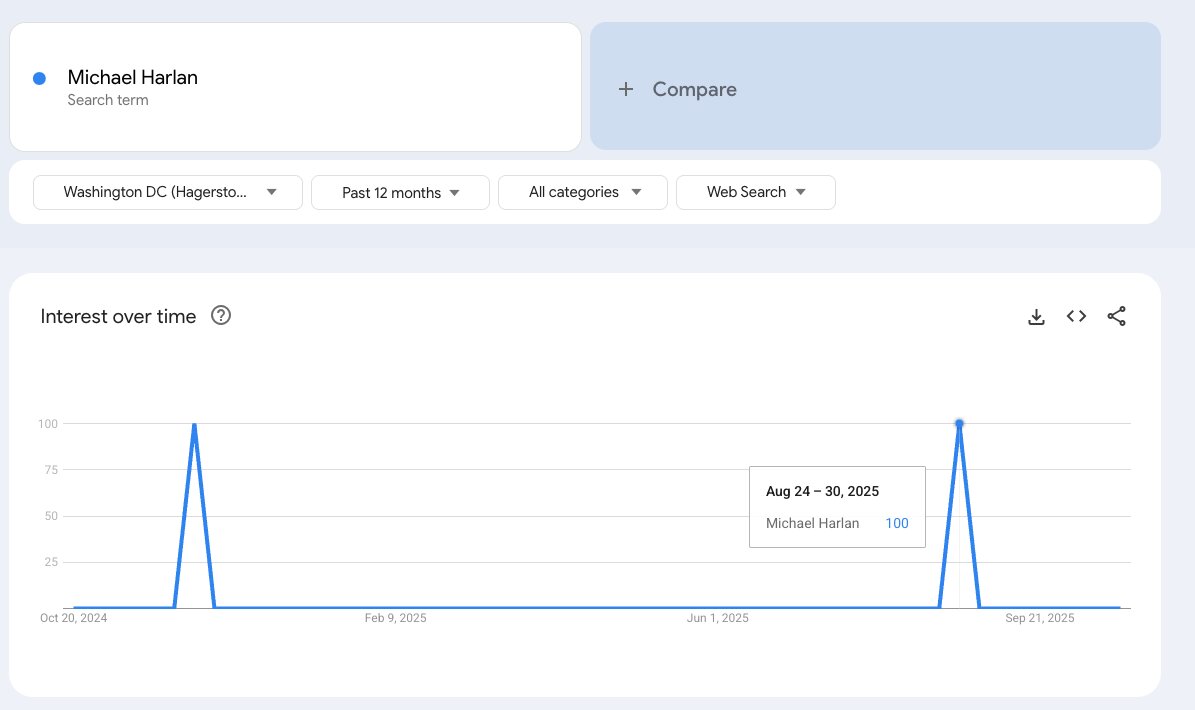
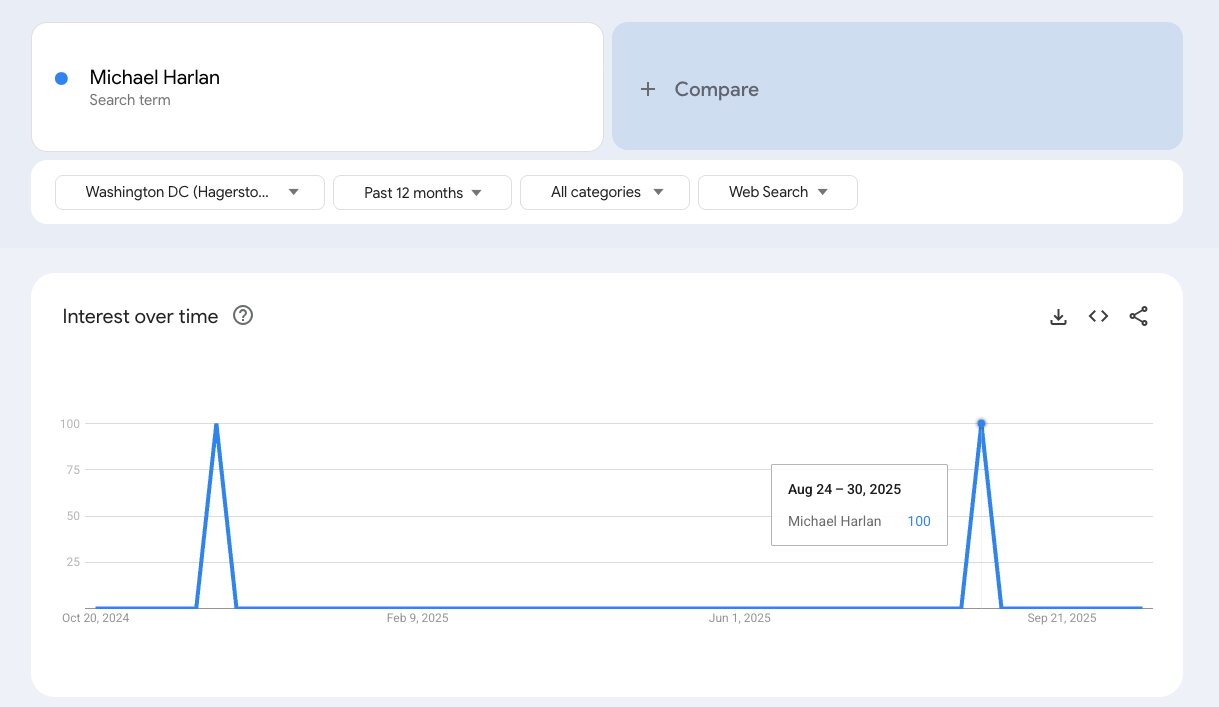
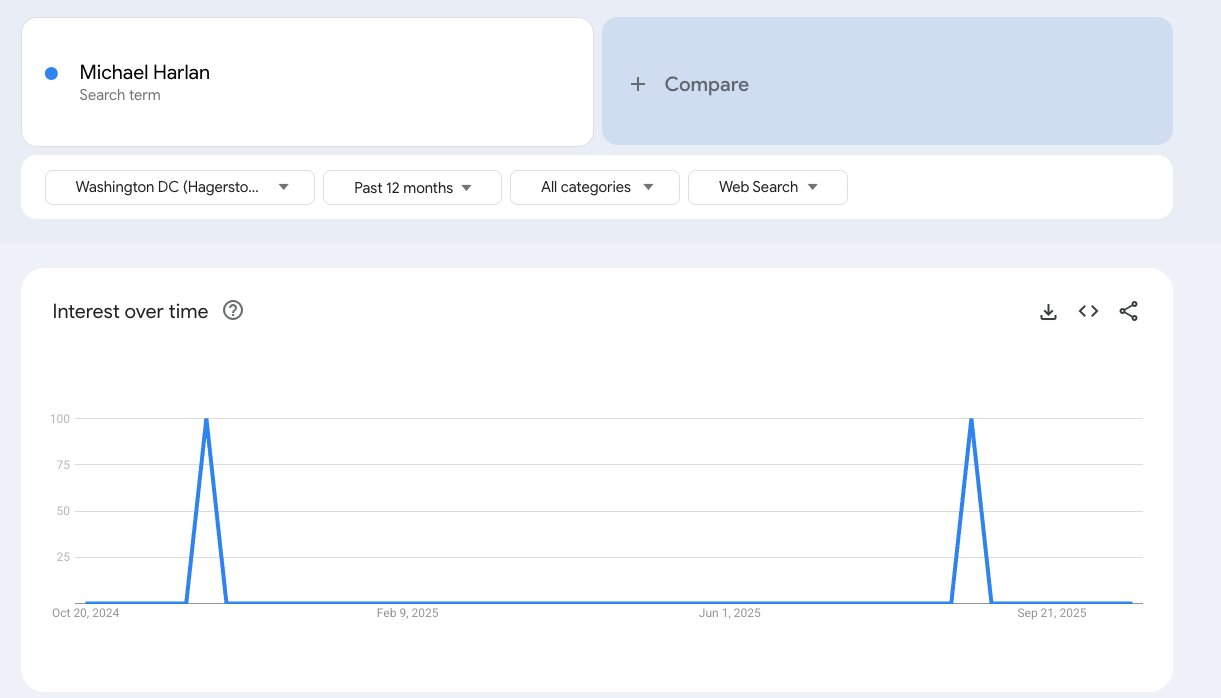
- Michael Harlan — DC, August 24 to 30 2025
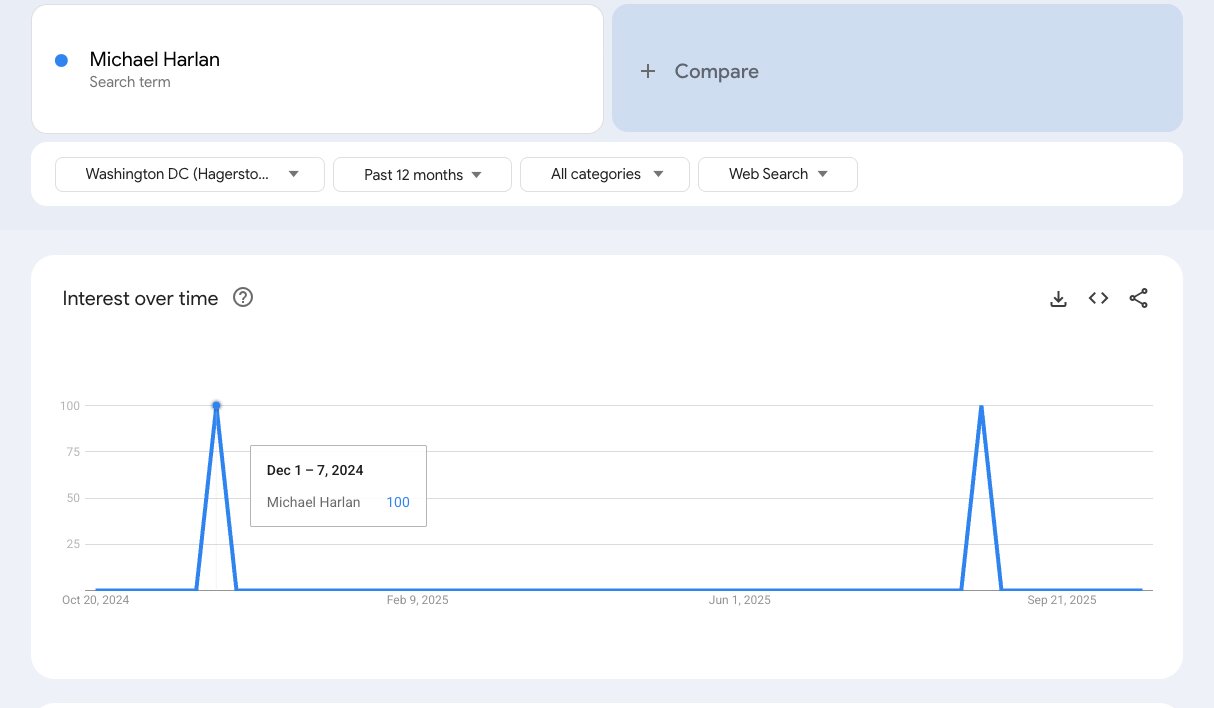
- Michael Harlan — DC, Two Spikes Untooltipped
- Michael Harlan — DC, Second August Capture
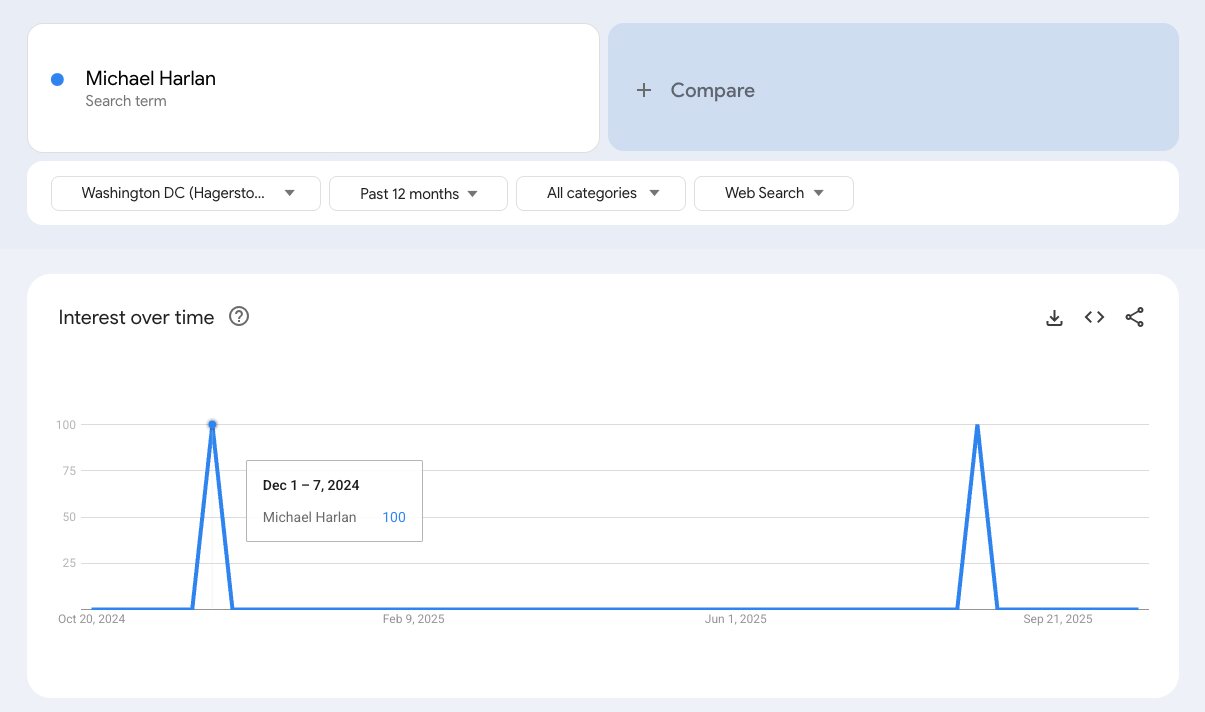
- Michael Harlan — DC, December 1 to 7 2024
- Michael Harlan — DC, Second December Capture
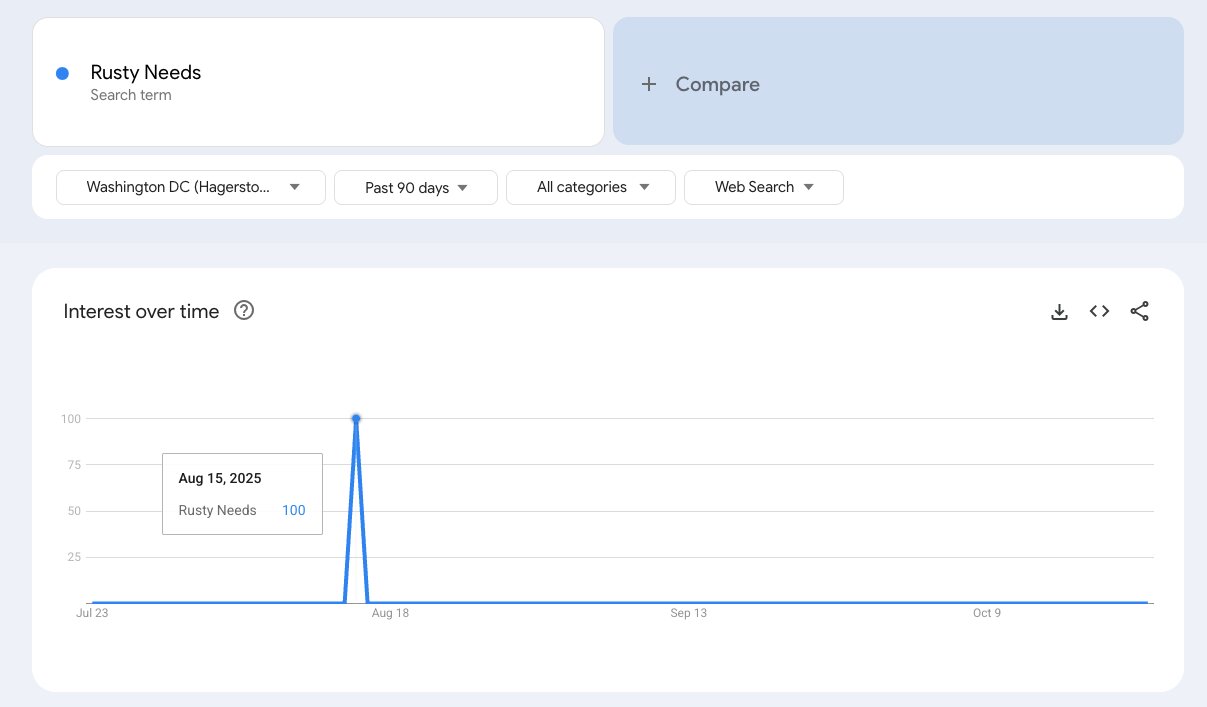
- Rusty Needs — Washington DC, August 15 2025
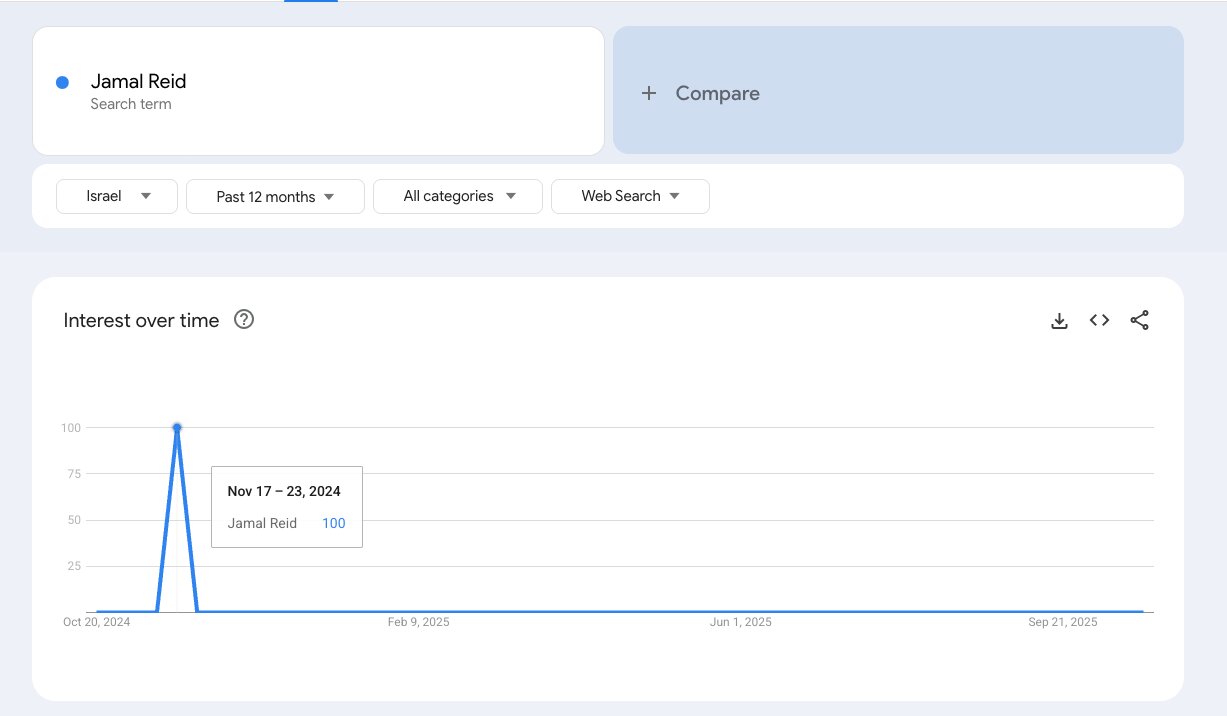
- Jamal Reid — Israel, November 17 to 23 2024
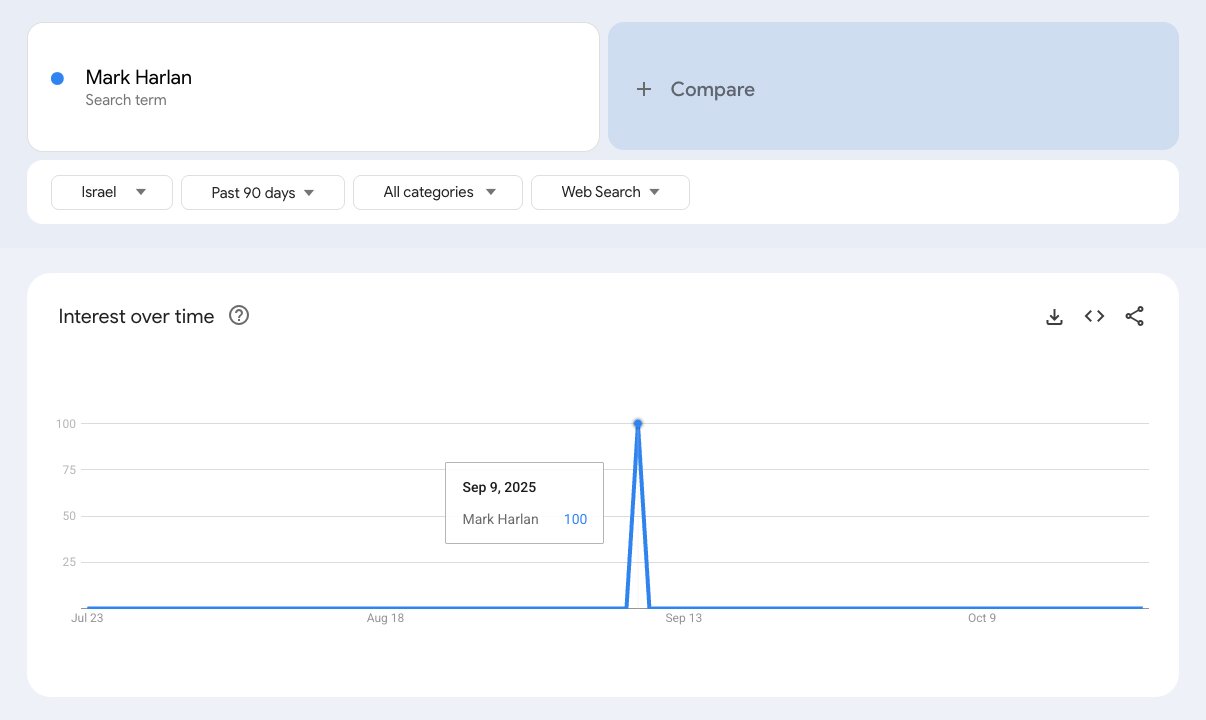
- Mark Harlan — Israel, September 9 2025
About This Cluster
Every capture in this cluster runs one name through Google Trends — and all of those names come from the disputed passenger and crew list for N1098L, the Bombardier Global 6500 that flew over Utah Valley on September 10, 2025. The aircraft is central to the case because flight-tracking data shows it dropping from cruise altitude to roughly 203 feet at about 116 knots near the UVU campus before the shooting, then repeating the maneuver about twenty-three minutes after it, which researchers read as a drone drop and recovery. The aircraft is registered to a contractor that supports Army intelligence, surveillance, and reconnaissance work, and crew names for private ISR flights are not published by FlightAware, Flightradar24, the FAA, or the operator. That gap is what produced this cluster: with no official manifest, competing crew lists circulated on X, and researchers turned to Trends to see whether the names in those lists behave like real people with a public footprint.
The names captured here are Michael Harlan (also spelled Harland, and appearing once as Mark Harlan), Elena Vasquez, Jax Donovan, Sarah Klein, Jamal Reid, and Rusty Needs. They map onto the two rival lists in circulation — one naming Michael R. Harlan as pilot in command with J. "Jax" E. Donovan as second pilot and Elena Vasquez as mission engineer, the other naming a different crew entirely and disputing that the aircraft was even configured to launch drones. The captures show the same signature over and over: a flat zero baseline across a full year or ninety days, then a single needle spike to an index of 100. The "Michael Harlan" capture in the Washington D.C. bucket peaks the week of August 24-30, 2025, about two weeks before the shooting. "Rusty Needs" peaks in the same D.C. bucket on August 15, 2025. "Jax Donovan" filtered to Israel shows activity clustered in late 2024 and then nothing at all through September 2025. Researchers argue that a name with zero baseline interest that spikes once, in a federal-corridor or foreign bucket, weeks before the event, is worth explaining. The counterargument is equally plain: none of these names has been verified as belonging to anyone on that aircraft, and Trends cannot distinguish a research spike caused by the online discussion itself from anything else.
Read this cluster alongside the aircraft work at N1098L, the ISR operations page, and the Biggs Army Airfield departure record. The written search analysis is at planes search patterns and the broader Israel IP patterns page. The sibling cluster Google Quotes holds the quoted-string versions of several of the same names, which is the more rigorous form of the same test.
This website's author is @HolonCitizen on X and YouTube/@HolonCitizen. Follow me there.
Related Areas
- Up: Google Search Screenshots
- All photos: Photos
Peer clusters: Google Quotes · Searches By Date · July 20, 2025 — Anchor Window — Photo 1 · Timpanogos, Examiner & Surgeon Searches — Photo 1 · UVU Campus & Location Searches — Photo 1