Biggs Army Airfield (KBIF)
Biggs Army Airfield (ICAO KBIF) is an active U.S. Army airfield at Fort Bliss in El Paso, Texas. It matters to this investigation for one reason: according to flight-tracking data and citizen investigators, it was the departure point for N1098L — the US Army ISR jet at the center of the aviation angle — on the morning of September 10, 2025, the day Charlie Kirk was shot at Utah Valley University in Orem, Utah.
The core point of this page is simple. The Army surveillance jet that, according to ADS-B data and citizen investigators, made low and slow passes near the UVU campus that day did not take off from a civilian executive terminal. It reportedly originated from an active U.S. Army airfield. That military origin is what investigators have flagged as significant.
About the airfield
Biggs Army Airfield is the airfield serving Fort Bliss, one of the largest U.S. Army installations in the country, spanning parts of West Texas and southern New Mexico. As Army property, the field is access-restricted: handling records and ramp logs are kept by Fort Bliss Airfield Operations, and the investigation notes that obtaining crew or visitor records there is realistic only for authorized personnel or through formal request channels.
Why does a military origin matter? A civilian business jet repositioning between two airports is unremarkable. But an Army ISR (intelligence, surveillance, reconnaissance) asset launching from an active Army airfield — rather than a civilian fixed-base operator — points to a government-tasked mission rather than a private charter. According to the investigation file, the HADES program associated with N1098L is described as being run out of Biggs. That direct program-to-base link is why citizen investigators treated the Biggs departure as more than a routine ferry flight.
Which planes used it
The plane tied to Biggs in this investigation is N1098L.
- Aircraft: Bombardier Global 6500 (G6500)
- Callsign: AXLE10 (also written AXEL10)
- ICAO hex: A0299E (also noted as A0299E / A0299E in tracking posts)
- Operator/owner: LASAI Aviation II LLC, associated with Sierra Nevada Corp / SAIC-Leidos
- Program: US Army HADES (High Accuracy Detection and Exploitation System) ISR, reportedly flown under a training cover
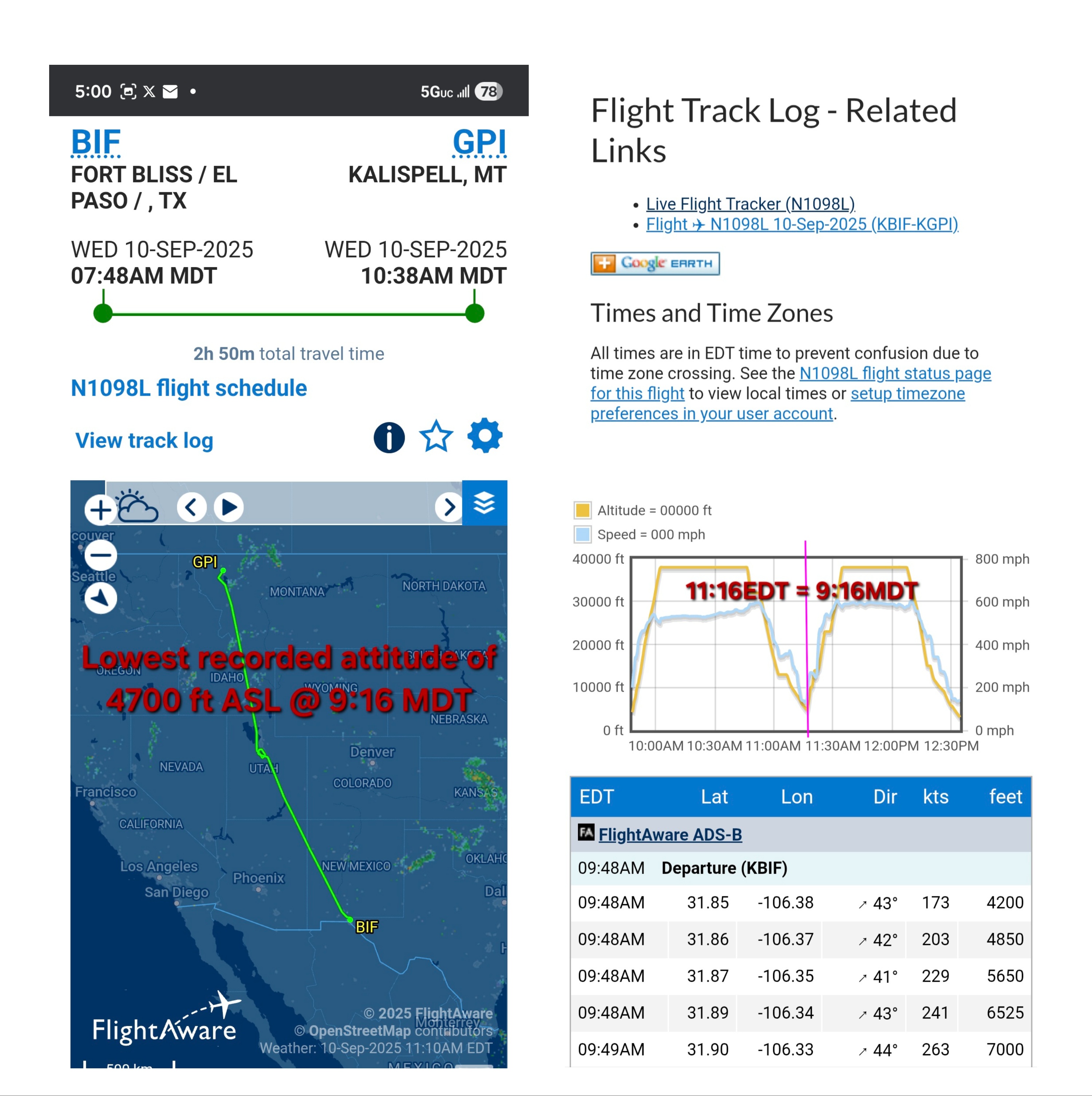
- Departure: Biggs Army Airfield (KBIF), El Paso, TX — approximately 07:48 MDT, September 10, 2025
- Destination: Glacier Park International Airport (KGPI / GPI), near Kalispell, Montana — arrival approximately 10:38 MDT
- Route: KBIF → KGPI, roughly 1,210 miles, about 2 hours 50 minutes, described in the investigation notes as a VFR repositioning flight
What trip it was on
According to the investigation file, the first and only flight of the day for N1098L departed Biggs Army Airfield at about 07:48 MDT and flew to Glacier Park International Airport near Kalispell, Montana, arriving about 10:38 MDT — a roughly 2-hour-50-minute flight logged as an operational or maintenance repositioning.
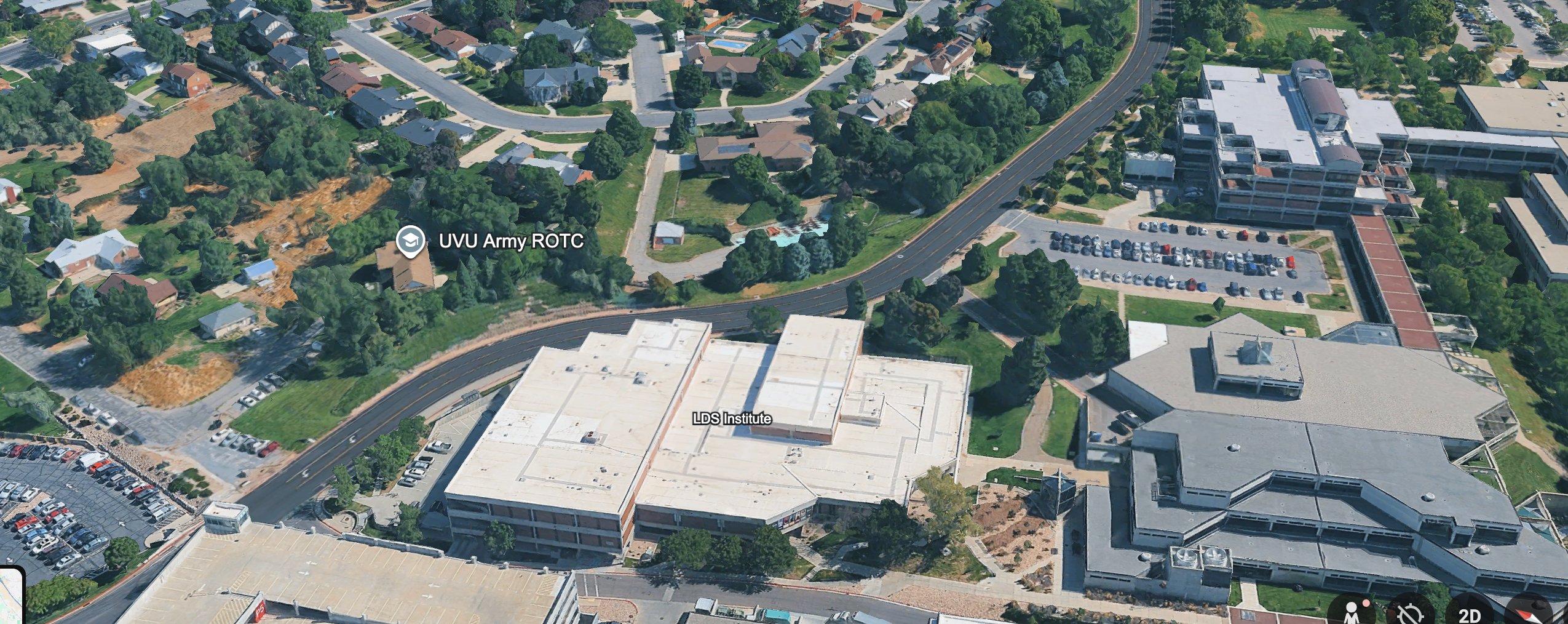
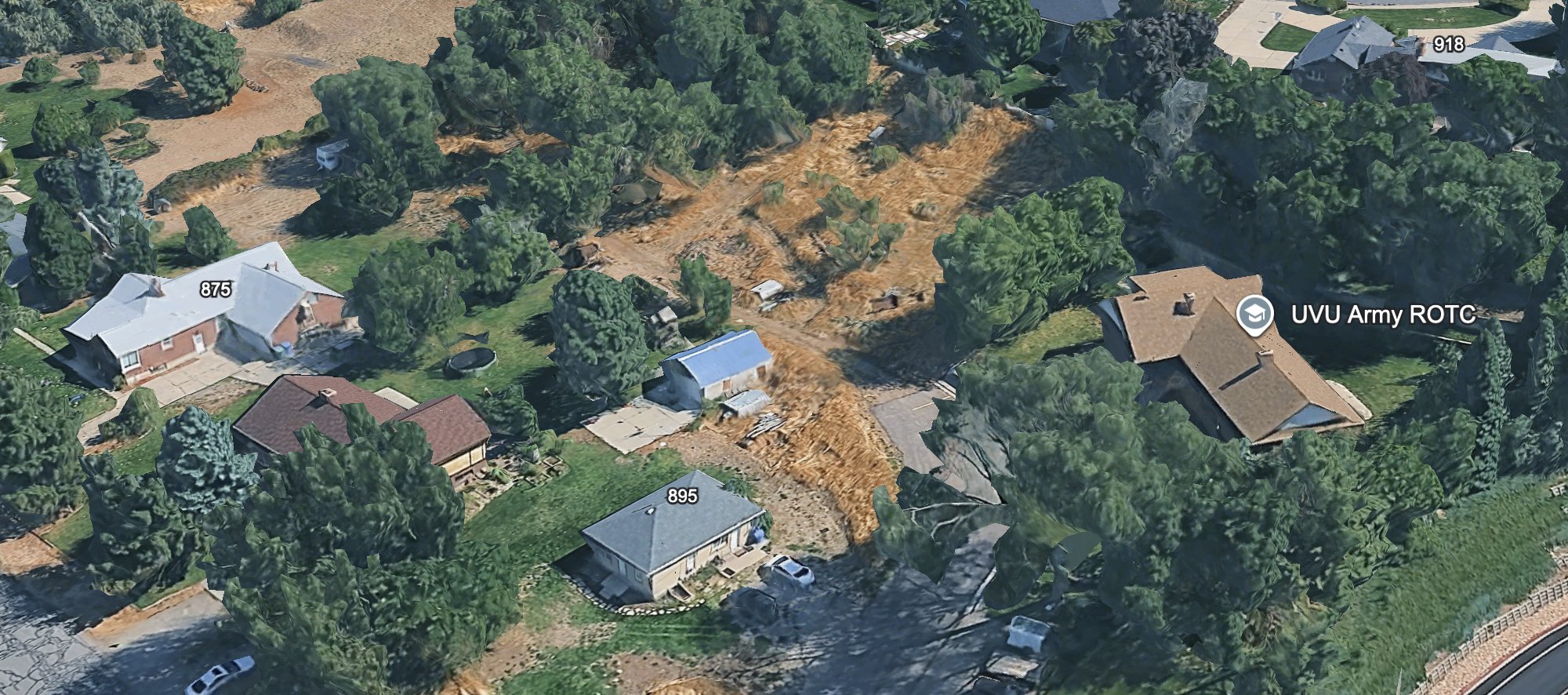
Investigators note that this routing placed the aircraft in a position from which, later that day, it would make the low-altitude passes near Utah that drew scrutiny. The investigation file states that the same airframe descended to roughly 203–600 feet AGL and slowed to near stall speed (~116–118 knots) about one mile from the UVU campus — reportedly dropping off drones at 9:16 AM MT, with the assassination at 12:23 PM MT, and a return pass to pick the drones up at 12:48 PM MT (about 23 minutes after the shooting). These altitude, speed, and timing figures are presented in the investigation notes and amplified by citizen investigators; they are reported claims, not officially confirmed facts.
Why it matters to the investigation
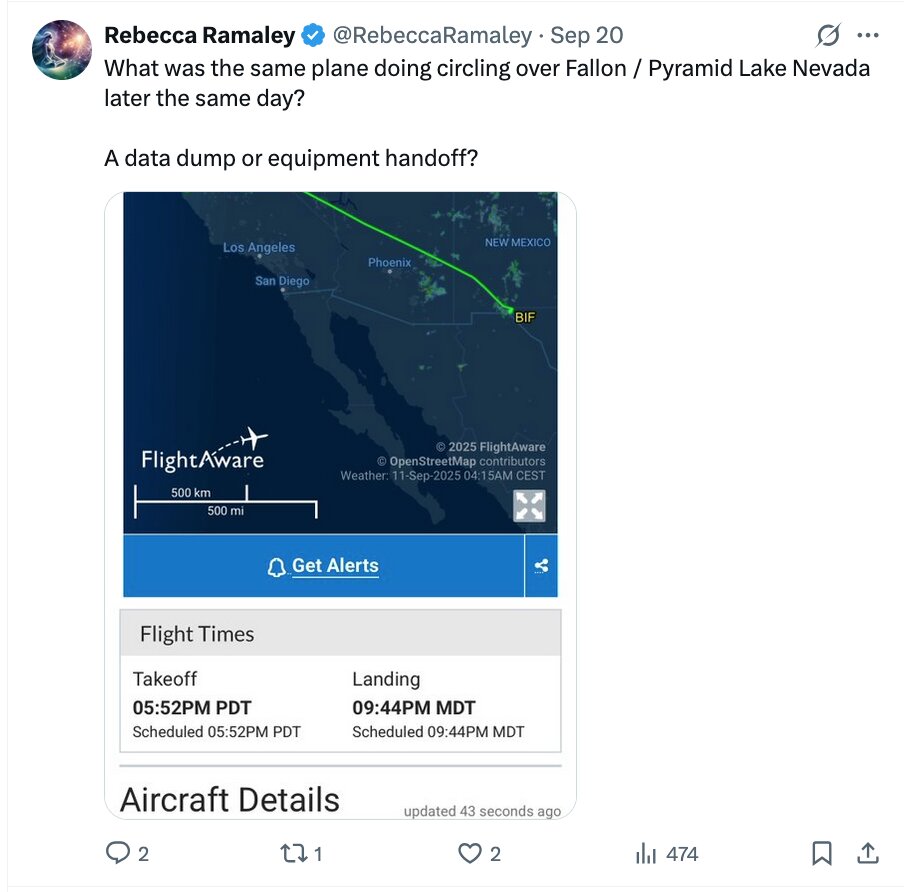
According to citizen investigators on X — including John Cullen (@I_Am_JohnCullen) and @DiligentDenizen — the publicly available FlightAware / ADS-B path for N1098L traces back to a departure from Biggs Army Airfield. They have argued that the military-base origin is significant for an aircraft they describe as an Army ISR asset capable of signals-intelligence collection or drone launch and retrieval.
The reported sequence is what drives the interest: an Army ISR jet associated with the HADES program, departing an active Army airfield, that then — according to ADS-B data cited by these investigators — made slow, low passes adjacent to a civilian site hours before and minutes after a high-profile assassination. The investigation file also notes that Bradley Hansell, named in connection with the September 9 Fort Huachuca activity, is described as overseeing the HADES program "run out of Biggs," tying this airfield to the broader military-aviation thread in the case.
Important caveat: no official source has linked this flight to the assassination. The open debate is whether the Biggs departure and subsequent passes were routine HADES ISR or training activity versus targeted surveillance tied to the event. This page documents the reported claims and the public flight data; it does not assert that any named person committed any crime.
Open questions
- Why did an Army ISR jet associated with the HADES program depart Biggs Army Airfield on the morning of the assassination, and was the timing coincidental?
- Who were the crew (pilot, co-pilot, mission crew) on the KBIF → KGPI flight, and who tasked the mission?
- Was the flight a genuine maintenance/operational repositioning, as the public data suggests, or an operationally tasked ISR sortie?
- Do Fort Bliss Airfield Operations ramp and handling logs for September 10, 2025 corroborate the ADS-B departure time of ~07:48 MDT?
- How does the HADES program's reported home at Biggs connect to the other military-aviation threads (Fort Huachuca, SAM flights) in the case?
Sources
- Charlie Kirk investigation file (
Charlie_Kirk.txt): N1098L / HADES entries, the KBIF → KGPI flight detail (~07:48 MDT departure, ~10:38 MDT arrival), the low-altitude pass timing, and the note that HADES is "run out of Biggs." - Public ADS-B / FlightAware flight-tracking data for N1098L (callsign AXLE10 / AXEL10).
- Citizen-investigator posts on X by John Cullen (@I_Am_JohnCullen) and @DiligentDenizen tracing the flight path back to Biggs Army Airfield.
- Fort Bliss Airfield Operations and FOIA/records channels referenced in the investigation notes as the route to crew and ramp-log confirmation.
Related
Citizen Investigator Claims on X
(Aircraft OSINT and attributed claims — not findings that any pilot, passenger, or official ordered or carried out the assassination.)
- X users including @Josh89220 cite FAA/transponder logs of an Army HADES-class ISR jet (N1098L / AXLE10 in investigation notes) making low (~200 ft class) passes near UVU/Orem before and after the shooting — correlation claims, not proven operational role in the killing.
- Commentators ask whether ISR/counter-UAS capability at Provo/UVU that week was routine training or something investigators should subpoena — open question for N1098L and Counter-UAS.
- This page’s focus (Biggs Army Airfield (KBIF)) should be read with the Planes overview and Sept 10 flight timeline for cross-checks.
This website's author is @HolonCitizen on X and YouTube/@HolonCitizen. Follow me there.
Interesting
- A sitting Vice President rode with the remains on the government's own VIP jet.
- UVU's own posts put the shooting 13 minutes before the prosecutor's timeline.
- A chest bulge from the transmitter is central to the exploding-mic theory.
Related Areas
Images