The Screwdriver and the Crime-Scene Tape
:::caution Nobody here is accused of wrongdoing This page compares reported courtroom testimony against publicly aired footage. Discrepancies between a witness's recollection and a video record are ordinary and have many innocent explanations. Nothing on this page asserts that any officer lied, mishandled evidence, or committed any offense. :::
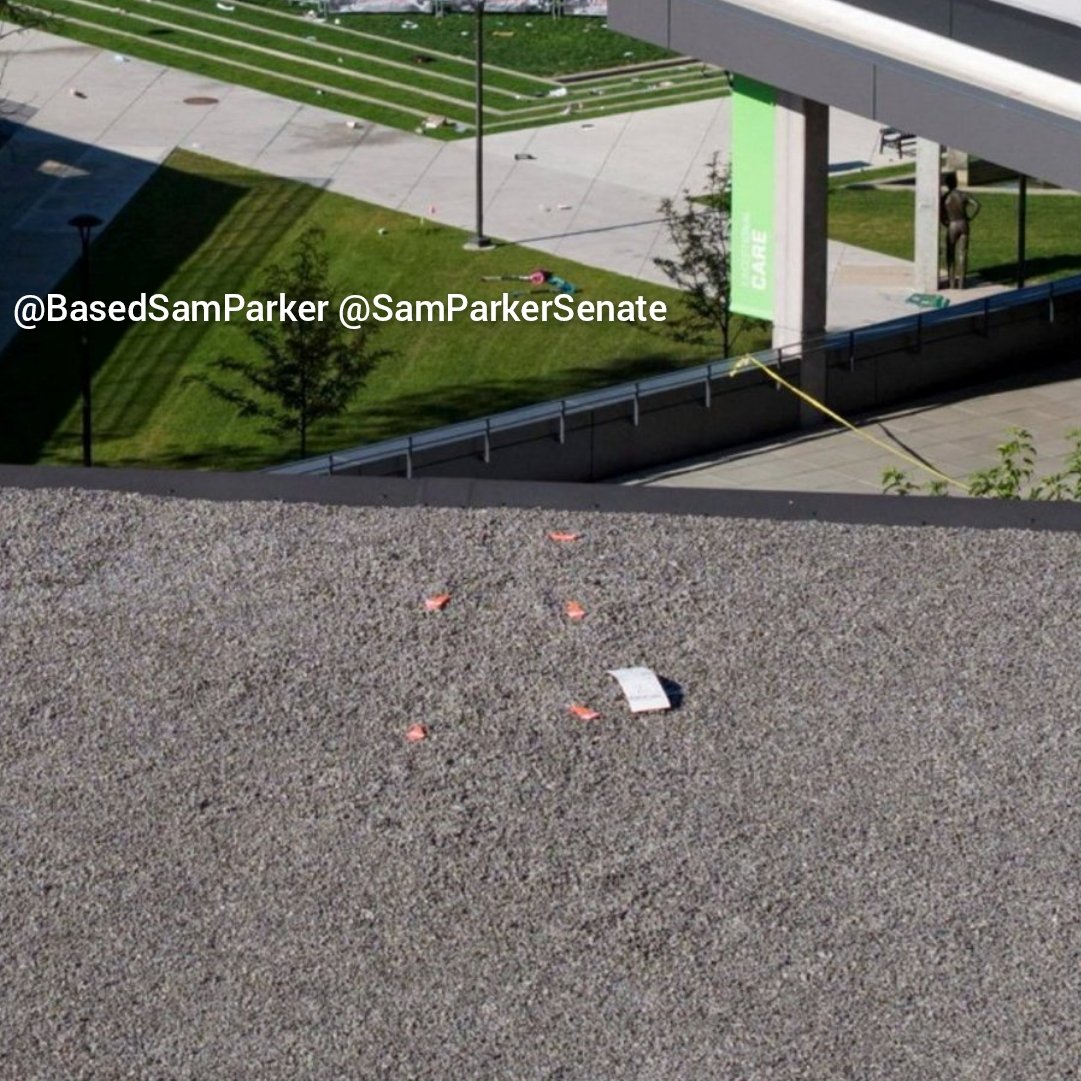
The gravel roof surface with orange evidence markers and a white placard in place; the courtyard and a length of yellow tape are visible beyond the roof edge. Source: @BasedSamParker on X, July 29, 2026.
A screwdriver sits at the center of one of the more concrete evidentiary disputes on the Losee Center roof. According to the account described by Sam Parker on X, Officer Bagley testified that he found the screwdriver 15–20 feet past the railing — that is, past the point where the figure is said to have crossed from the public walkway onto the roof.
Why a Screwdriver Matters at All
The tool is significant only because of what the State's sequence asks it to explain. In that account the rifle was carried onto the roof and assembled there, which requires a tool, which is why a screwdriver on the roof is corroborative rather than incidental. It also fixes a location: if the assembly happened 15–20 feet past the railing, then the runner's path, timing and stopping point are all constrained by that spot. That is the link worked through on The Tactical Roof Run.
The Tape Discrepancy
Parker's post raises a second reported point:
"Officer Bagley testified he put up yellow crime scene tape at the railing to protect the screwdriver evidence, but the KSL helicopter showed conclusively that there was no crime scene tape around the railing, and no screwdriver can be seen on their footage, either."
Two separate claims are bundled there, and they should be kept apart:
- The tape claim — whether yellow tape was strung at the railing at the time the helicopter passed overhead. Timing matters here: aerial footage captures one moment, and tape placement on an active scene changes over hours.
- The screwdriver claim — whether the tool is visible in helicopter footage. A hand tool on a gravel roof photographed from a circling news helicopter is a very small object, and its absence from that footage is weak evidence either way.
The photograph above shows the roof surface with orange evidence markers and a white placard already placed, and a strand of yellow tape visible beyond the roof edge near the courtyard walkway — which is a different location from the railing Parker refers to. The image is consistent with a processed scene; it does not resolve where tape was or was not strung at the moment the helicopter filmed.
What Would Settle This
None of this is unresolvable. The evidence log for the roof would record what was collected, from where, and when. The scene photographs taken by the processing team would show marker placement and tape lines directly. The full KSL aerial footage with a timecode, rather than the broadcast excerpt, would establish what was visible and when. All three exist; none has been published. That pattern — checkable records that would end an argument in a paragraph, held back — is the recurring subject of the Cover-Up section and a target of the proposed disclosure laws.
Officer Bagley's rooftop presence is also relevant to a separate reported issue: that his body-worn camera stopped recording while he was still on the roof. That is covered on Officer Bagley — Body Cam Died on Roof.
Open Questions
- What does the evidence log record for the screwdriver — recovery time, recovery location, and collecting officer?
- Was the screwdriver tested for prints or DNA, and were results produced in discovery?
- What is the timestamp on the KSL helicopter footage relative to the reported tape placement?
- Do the scene-processing photographs show tape at the railing, and have they been produced?
- Does the screwdriver match the rifle's hardware — that is, was it the right tool for that assembly?
See also in this section
- News Helicopter and the Screwdriver — aerial timing deep dive
- The Tactical Roof Run
- Decoy / No Shot From Roof Claims
- Roof Timeline
X.com posts:
This website's author is @HolonCitizen on X and YouTube/@HolonCitizen. Follow me there.
Interesting
- Early reports described an all-black tactical figure, not the jeans package.
- Searches for defense counsel's name reportedly spiked from foreign IPs months before, notes the trial page.
- Photos show bare hands, no gloves, handling the Twiggs drawings.