Possible Shooter Locations
Citizen investigators test where the fatal shot originated using ballistics, acoustics, maps, and affidavit timelines. This page summarizes proposed locations; it does not assert which is correct. It should be read alongside the finding that most independent researchers now hold — that Charlie Kirk was killed by an explosive device at the podium, in which case no shooter position explains the wound at all.
Official rooftop — Losee Center (affidavit timeline)
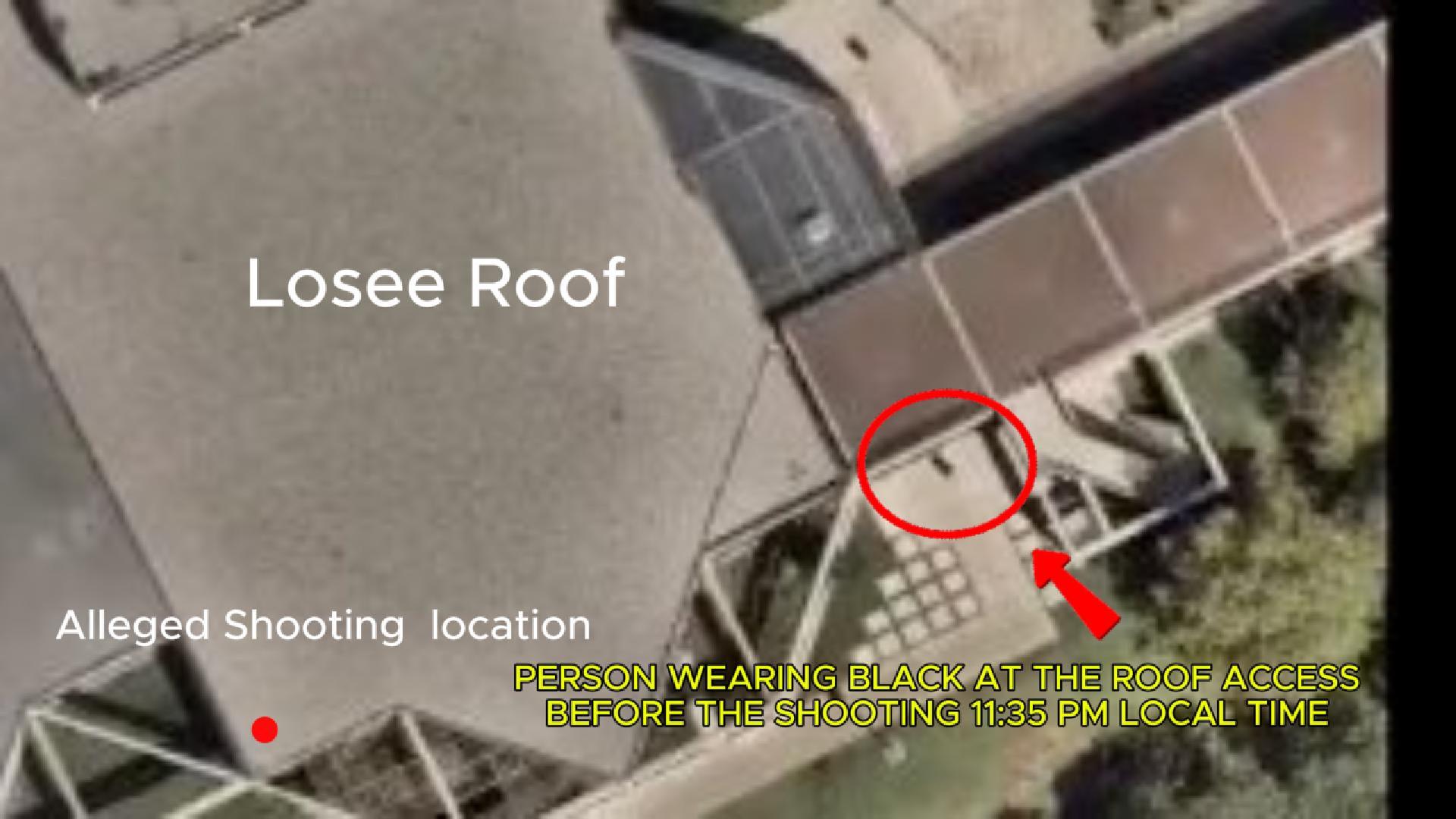
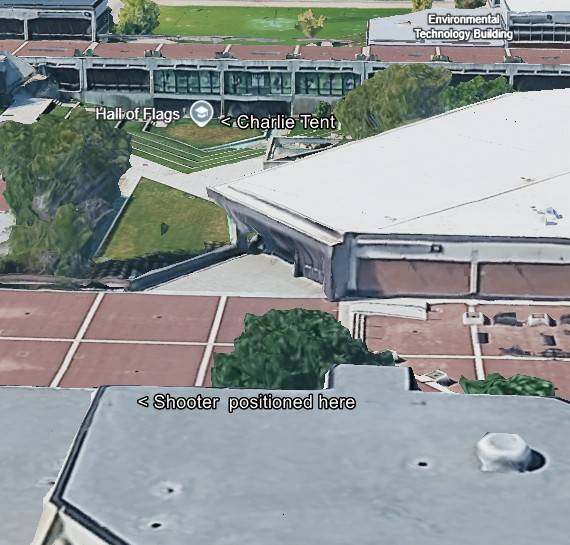
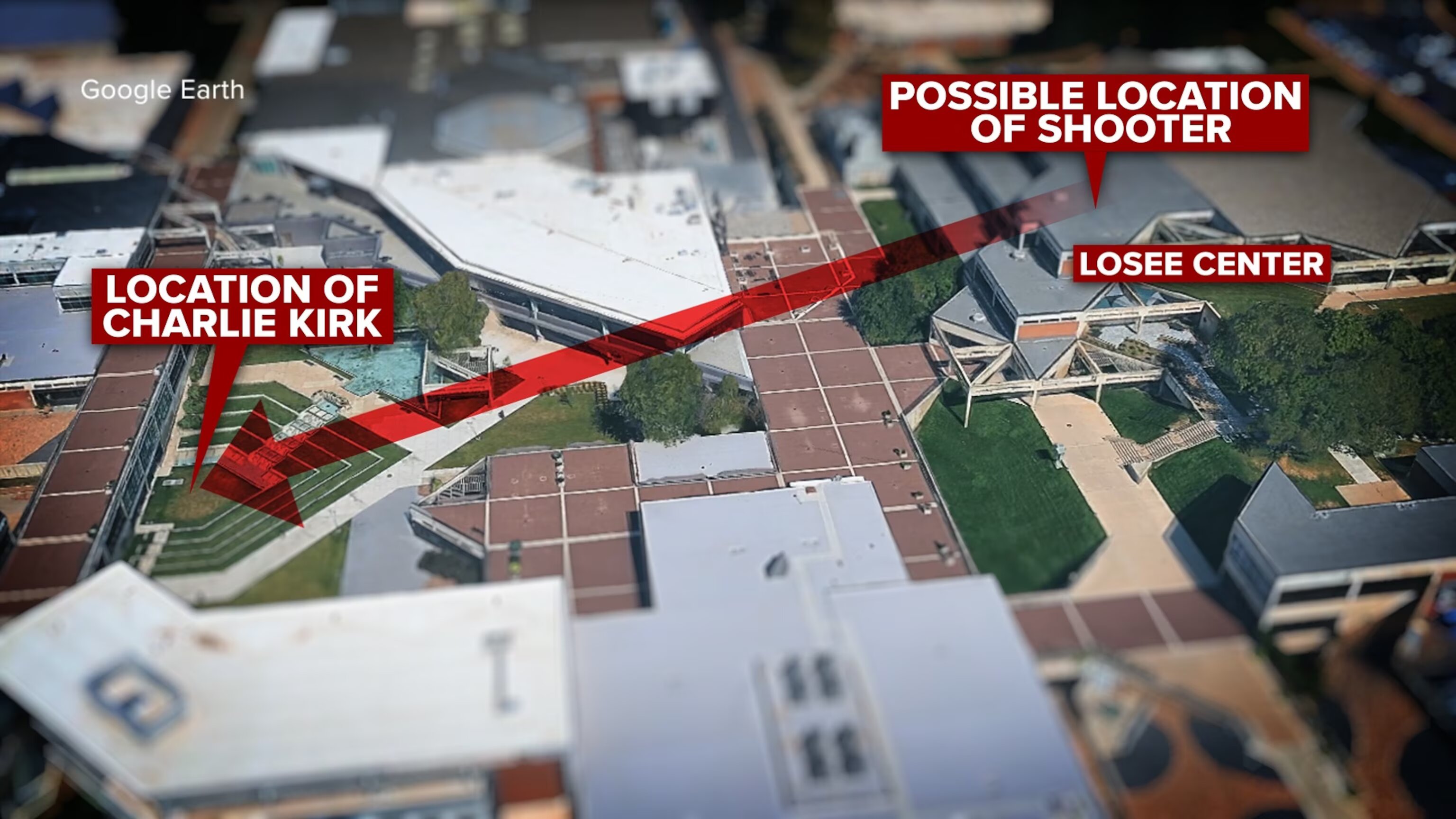
Charging documents allege Tyler Robinson fired from the Losee Center rooftop (~150 yards from the courtyard). The affidavit timeline summarized in the master file includes:
| Time (MT) | Alleged action |
|---|---|
| 11:52 | Suspect tracked toward Losee; limping gait |
| 12:15 | Accessed roof via southeast stairs / walkway |
| 12:23 | Single shot; suspect runs to NE corner |
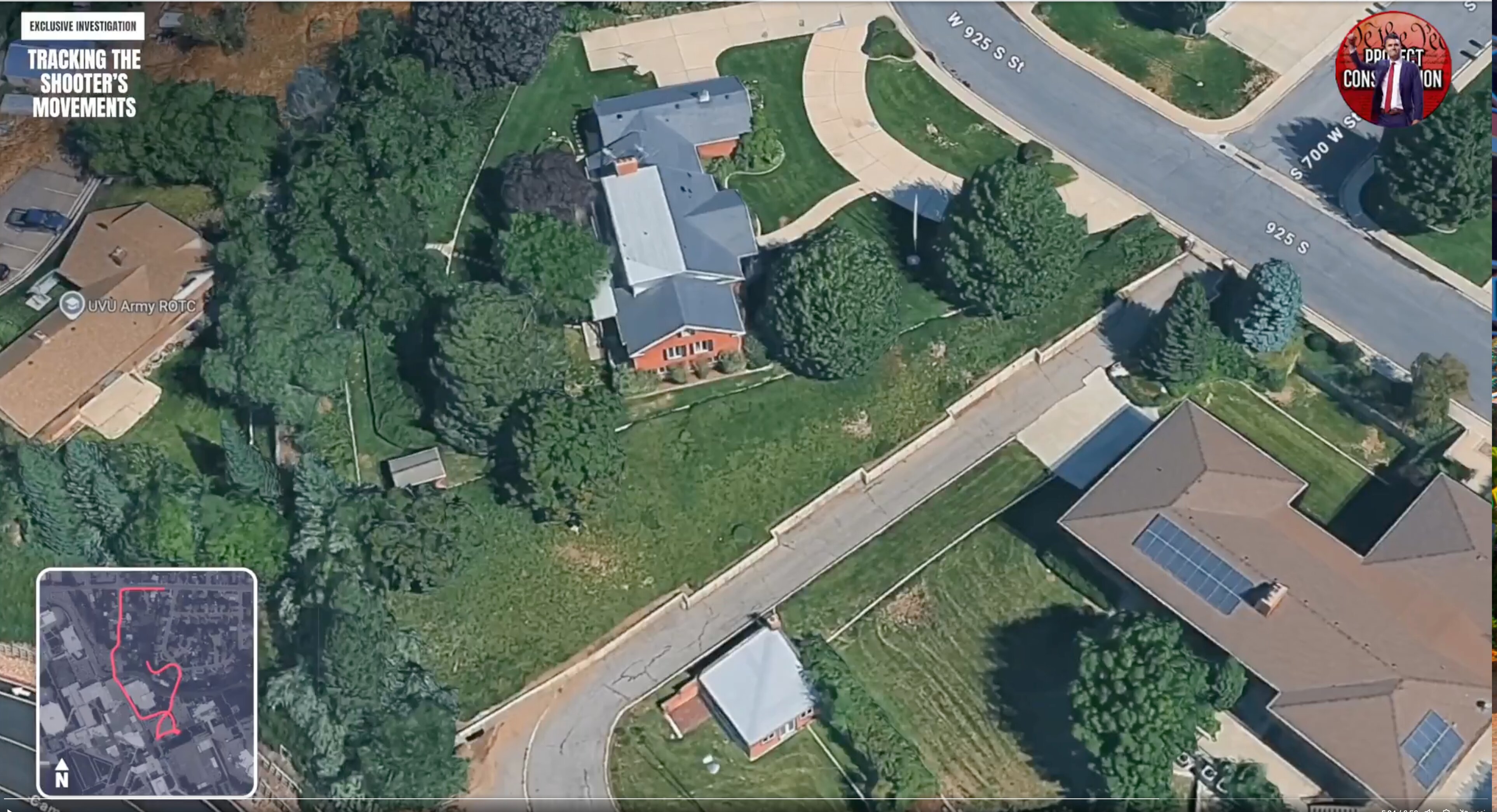
| 12:24 | Rifle placed on roof; descent to grass; flee to wooded area |
Surveillance stills from 12:23:29 through 12:23:54 map movement from the shooting position to the northeast corner in roughly 25 seconds (per X analysis in the investigation file).
Losee angle problem (ballistics)
Ballistics commentary in the master file argues that if the shot came from Losee, the downward angle is roughly 5–9 degrees — which would likely enter through the face or jaw, not the neck/chest path described in wound analysis. See Gun & Bullet and Medical ballistics. That geometric tension is a core reason alternative locations remain active.
Roof video clothing mismatch
Pre- and post-shot rooftop footage is widely discussed as showing all-black clothing inconsistent with Tyler Robinson's reported T-shirt and jeans. The rooftop filmmaker cited by @RealCandaceO reportedly states Tyler is not the person on the roof. Identity mismatch details live on Black Clothing Suspect and Stairs Guy — not duplicated here.
"Ran before shot" — rooftop runner timing (commentary)
Commentary in the master file alleges the public rooftop-runner clip is trimmed to begin at 12:23:34 PM — after the runner had already covered roughly 60 feet from the perch position. Frame analysis cited in the file argues:
| Timestamp (MT) | Alleged event |
|---|---|
| 12:23:28 | Runner begins full sprint on roof |
| 12:23:30 | Charlie Kirk struck |
| 12:23:34 | Released clip starts — runner ~220 ft into ~15 sec run |
If accurate, a rooftop shooter could not have fired from the perch at impact and then begun running — the runner would have had to move before the shot. Commentators tie this to claims that Utah County DA Jeffrey Gray and UVU are withholding fuller rooftop-view files. This is investigator arithmetic, not a court finding; see court discovery disputes for the official record posture.
Sections such as Tyler Robinson, Timeline, and Maps hold additional affidavit context.
Tent‑adjacent or interior shooter (claims)
One major alternative theory suggests the fatal shot came from inside or immediately adjacent to the tent:
- Acoustic and timing analyses are interpreted by some as pointing to a closer, lower‑angle shot.
- Video and still images are examined for possible reflections, flashes, or casing behavior near the tent fabric and equipment.
- The tent’s structure and the nearby tunnel and courtyard features are used to argue for specific concealed positions.
These ideas are developed further in the Tent, Killer, and Videos sections and remain contested.
Vehicle‑based shooter — grey van under tent tunnel
@ProjectConstitu argues an infrared laser on @DrFrankTurek's phone at impact traced to a grey van parked behind and right of Charlie, under the tent tunnel. Reported elements:
- Rear hatch opens ~4 seconds before the shot, closes immediately after (@HustleBitch_).
- Fleeting cargo-area figure: light shirt, bald/short hair, prominent ears, gloves.
- 4940 Hz frequency with left-channel dominance on the nearest camera (@jonaaronbray).
- Mach-cone analysis allegedly places the acoustic origin closer to van-side mics than front-row mics.
Full POI framing is on Grey Van Shooter. @CumbyWilliam posted separate identification allegations about van-rear occupants on Van Man Bednarz.
Acoustics — same-time crack and impact
@troofevades argues video-audio sync places the audible crack and visible impact in the same instant — implying a source much closer than 150 yards, where rifle sound delay would separate bang from reaction. Commentary places plausible origin within about two meters of Charlie in the courtyard.
Tent-adjacent theories also cite crack-thump patterns and canopy absorption — overlapping Mic and Tent Shooter Theories.
Other elevated positions (claims)
Additional proposed locations include:
- Balconies or stairwells on nearby buildings that offer alternate angles to the stage and crowd, including the South Stairs area.
- Potential faculty or restricted‑access areas that might provide partial concealment and lines of sight not visible from the main audience perspective.
Maps and 3D reconstructions are especially important for evaluating whether these vantage points match observed wound angles, timing, and video artifacts.
3D reconstruction — sound vs. distance
When investigators model the courtyard in 3D, a recurring claim is that synchronized audio-video on crowd phones rules out distant rooftop origin unless secondary sound effects (speakers, staged crack) explain the match. That logic feeds both inside-tent device theories and van/tunnel theories rather than a single conclusion.
Construction site escape path (dual theory)
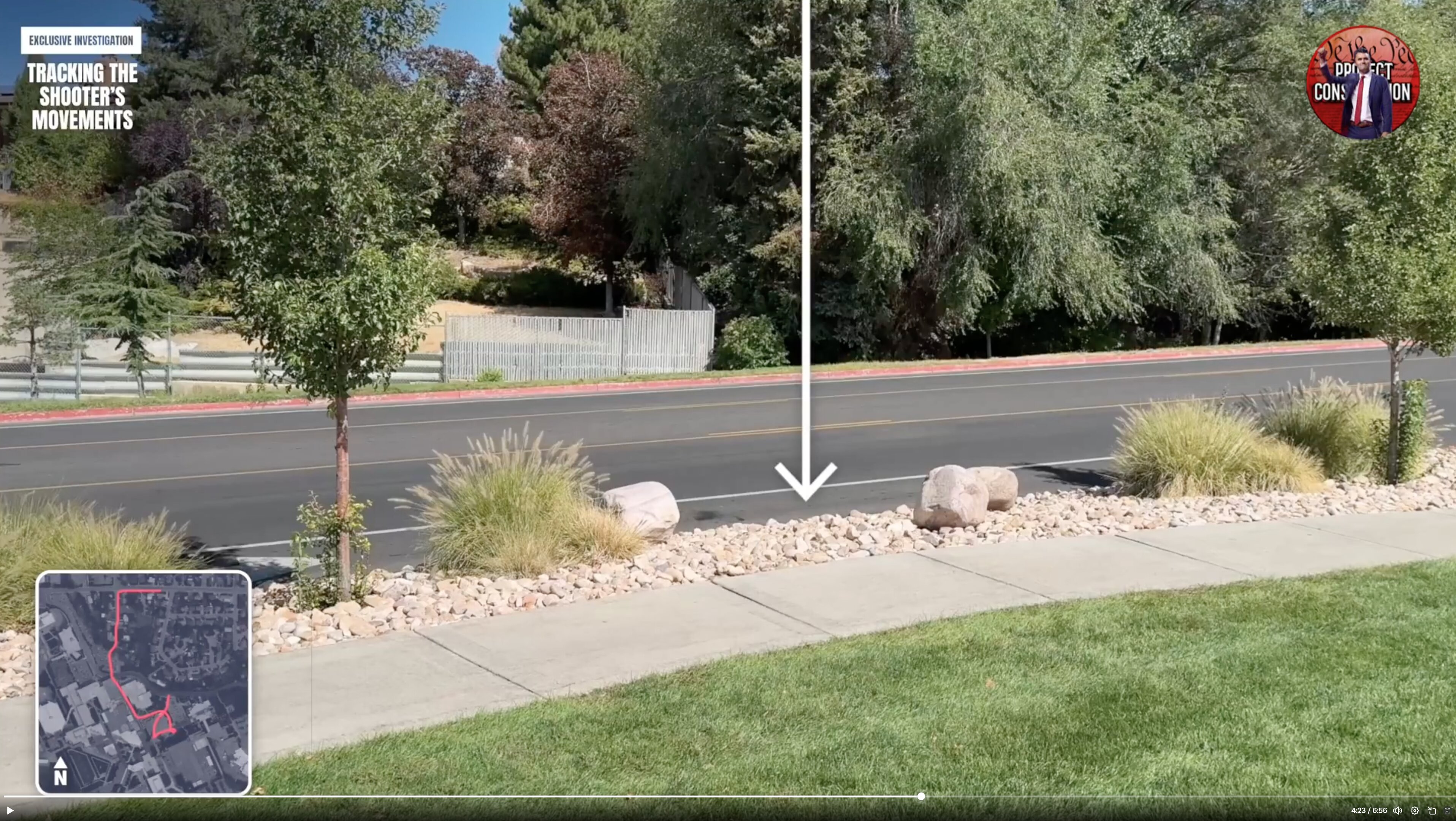
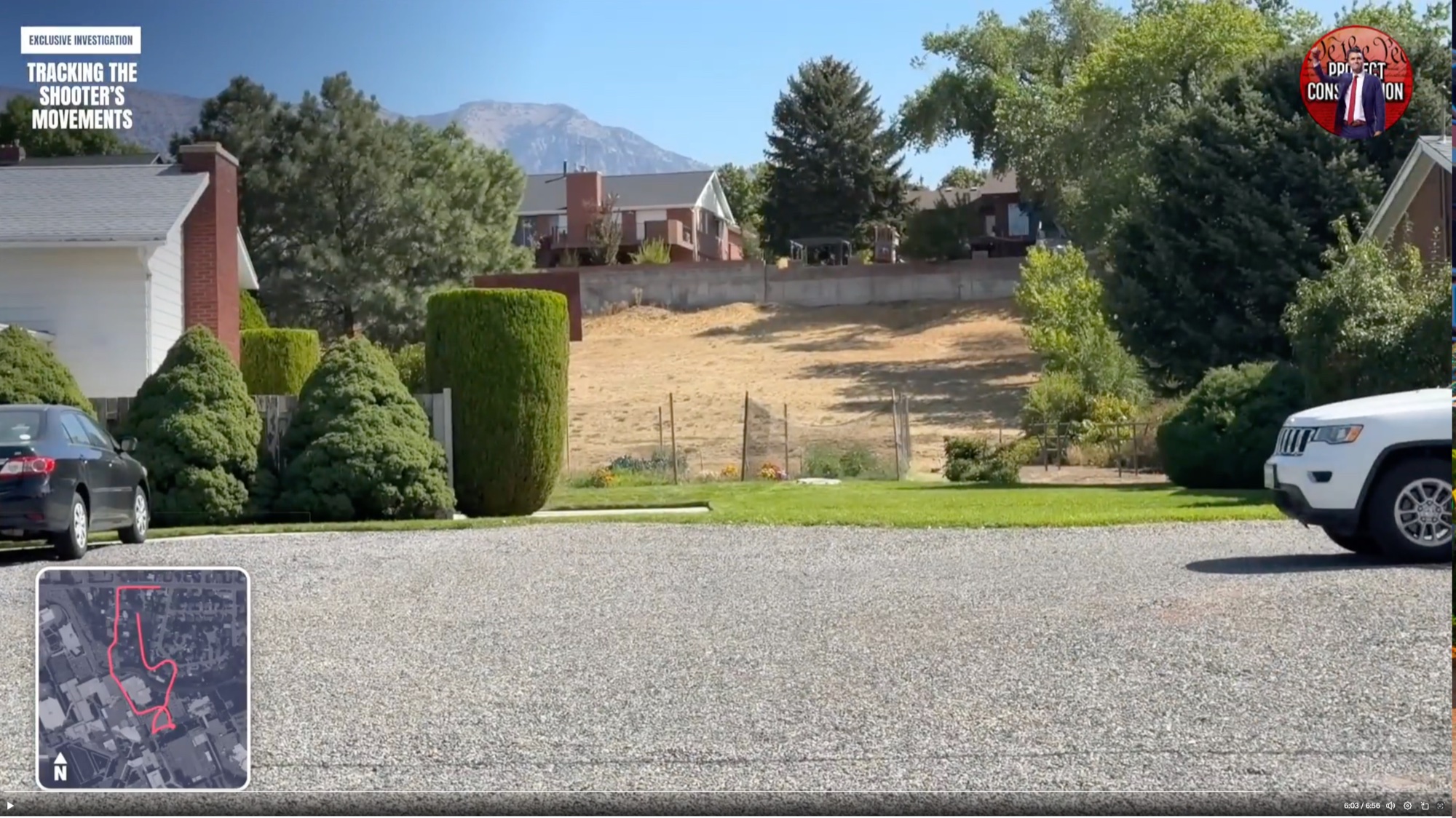
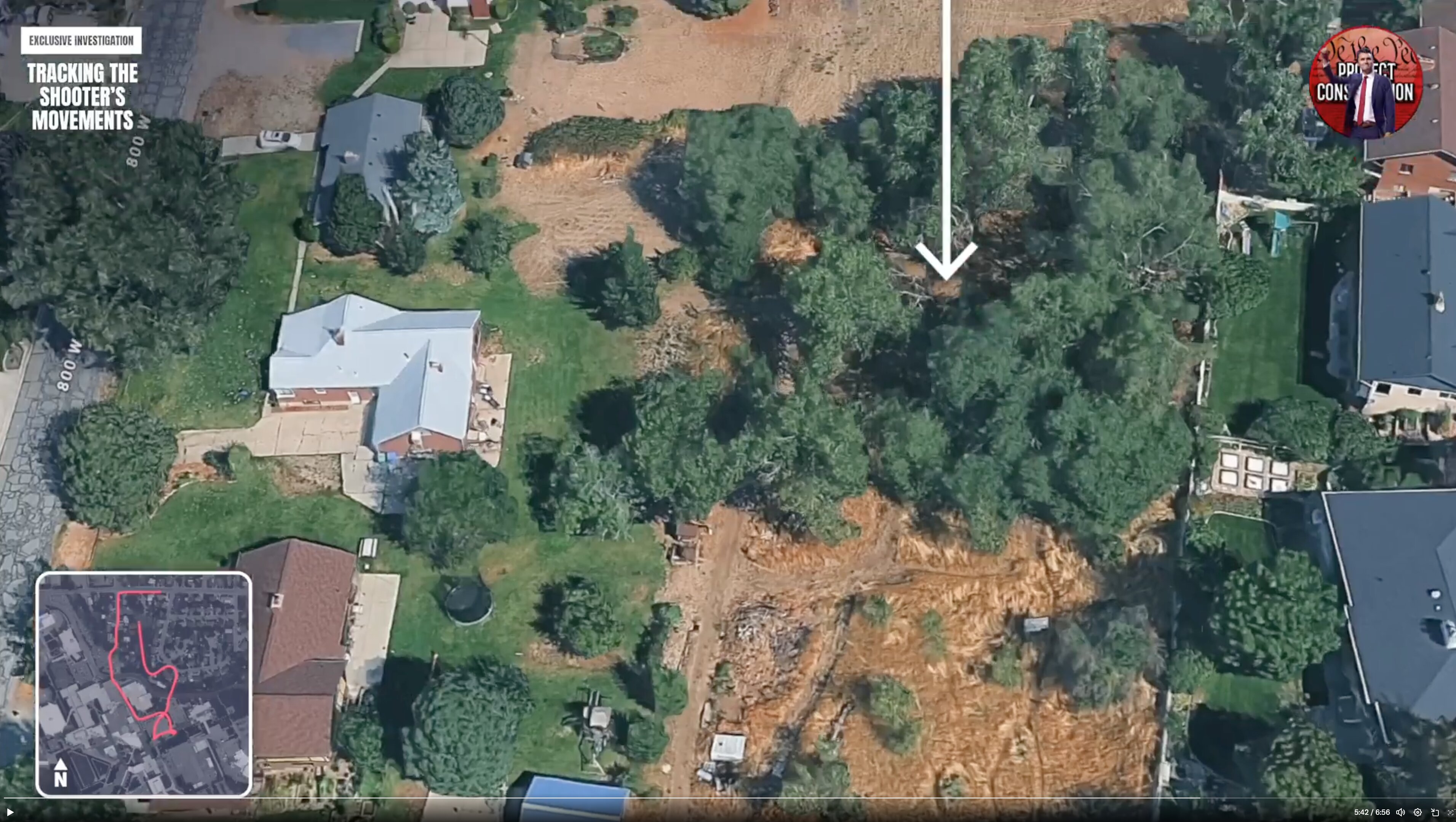
Parallel to the Losee rooftop account, Black Clothing Suspect documents a black-clad figure crossing the 785 College Dr construction site immediately after the shot — the same path the FBI later tied to the official suspect's escape. Some commentators treat rooftop and construction-site threads as competing origin stories; others argue they describe different actors in a coordinated event.
Drone and advanced‑weapon theories (claims)
Google Trends notes in the investigation file flag UVU Rooftop/Gun/Parking searches in May–July 2025 as possible scouting activity — contested interpretation. Drone deployment zones and advanced-weapon theories argue rooftop geometry alone cannot explain wound path, casing behavior, or laser sightings. See Drones and Proof Intel Services.
Campus scout claims (May–July 2025)
Investigation file entries list elevated search interest for UVU layout, Losee Center, parking, and CCTV terminology in the months before the event. Official confirmation of pre-event surveillance is not established here; the pattern is documented as citizen-search evidence only.
How this section relates to other pages
- For detailed spatial context, see Maps, UVU Courtyard, and Locations.
- For ballistics, medical, and acoustic analysis, see Medical, Charlie Kirk Autopsy, and Theories.
- For broader narrative and motive considerations tied to shooter‑location debates, see Killer, Motive, and Timeline.
Readers should use this page as a conceptual index of shooter‑location theories and follow links to topic‑specific sections to evaluate the underlying evidence.
Citizen Investigator Claims on X
Placement debates on X cluster into four attributed lanes (all theories until proven in court):
- Losee rooftop (official path) — Affidavit timeline + prone-figure video + charging package against Robinson.
- Grey van / tent tunnel — @ProjectConstitu laser-on-Turek-phone geometry; hatch timing; cargo-area POI (Grey Van Shooter).
- Close / acoustic origin — @troofevades, @jonaaronbray, and related 3D/sound work arguing the crack is too close for a 150-yard rifle report and that some models place energy within ~2 m of Charlie.
- Dual / construction-site — Less common threads arguing a second elevated or construction-adjacent position coordinated with a rooftop distraction.
@ProjectConstitu’s April 2026 all-black package also feeds location debate: if the tactical figure on the roof was not Robinson, either (a) the roof still hosted a different shooter, or (b) the roof was a visual decoy while the fatal energy came from elsewhere — both remain hypothesis, not site findings.
Official Narrative vs Competing Claims
| Model | Primary support claimed | Primary tension |
|---|---|---|
| Losee rooftop | Affidavit path, CCTV stills, charging evidence | 5–9° angle vs neck/chest wound path; clothing mismatch claims |
| Grey van tunnel | Laser frame, hatch timing, cargo profile | Needs continuous multi-cam custody |
| Close acoustic | Hz triangulation / phone array work | Not peer-reviewed here; mic-explosion theories compete |
| Dual positions | Pre-shot roof figure + close crack | Highest complexity; easy to overfit |
Open Questions Raised by Investigators
- Will full multi-mic WAV sets be released for independent acoustic replication?
- Does autopsy / CBLA trajectory work publicly constrain elevation and azimuth?
- Can continuous tunnel CCTV eliminate or confirm hatch activity at 12:23?
- Does the pre-shot all-black roof figure leave the roof on camera before the shot?
Laws (Charlie Kirk)
- The true wound trajectory pinpointing the shot's origin and drone flight and video-feed records over UVU and the suppressed acoustic analysis of the shot's real position are things that the Charlie Kirk Investigation Laws may result in powerful truths coming out that aren't out yet.
Commentator coverage: Citizen journalist Ian Carroll has weighed these location theories publicly — calling the shaped-charge/exploding-mic hypothesis the "best evidenced" alternative while saying he is not certain of it, questioning the .30-06 rooftop ballistics, and flying his own drone over the Losee roof to examine the official position.
This website's author is @HolonCitizen on X and YouTube/@HolonCitizen. Follow me there.
Interesting
- An excavator operator reportedly spoke with the fleeing man before any sirens sounded.
- UVU paid $900,000 for a house beside campus, well above its assessed value.
- Reuters reportedly counted 600-plus workplace actions alongside visa revocations over posts.
Related Areas
Images