The ATF Fragment Shows Only Class Characteristics (Claims)
Satirical LEGO-animated music video referencing Charlie Kirk's RØDE mic, via @RickyTheGuido, July 24, 2026. IPFS CID Qmd6zPTaBkhDSqCA9nEVrx1e7JsgAEUV7qSDu1pGELiPZJ.
:::caution Attributed claims only The ordinary baseline is that "inconclusive" is the single most common outcome when a firearms examiner is handed a deformed bullet jacket fragment, and that laboratory access rules and testing protocols are routine policy disputes litigated in criminal cases every week. This page describes a document and the competing readings of it. It does not establish that anyone tampered with evidence. Tyler Robinson is charged, not convicted. :::
A fragment that can be neither matched nor excluded leaves the state without physical proof of the weapon it says killed Charlie Kirk — the gap that pushes most citizen researchers toward the explosive-device reading instead.
Claim snapshot
| Field | Value |
|---|---|
| The claim | The ATF's lab report reportedly found the recovered jacket fragment shares only class characteristics with Robinson's Mauser 98 — the rifle could not be identified, and could not be excluded |
| Raised by | Andrea Burkhart, who released the document; the defense's January 9 motion; @ProjectConstitu, who goes much further and calls the fragment planted |
| First surfaced | ATF report dated September 17, 2025; defense motion dated January 9 |
| Rests on | Document — a four-page ATF summary report and a filed defense motion |
| Evidence rating | CONFIRMED |
What is alleged
This is the strongest item in this section, and it is the only one that rests on a document rather than a thread. According to the summary of the ATF report reproduced in the investigation file and the PDF released by Andrea Burkhart, one bullet jacket fragment and four lead fragments were recovered during Charlie Kirk's autopsy. The jacket is identified as coming from a .30-caliber class bullet. It reportedly shared class characteristics with Tyler Robinson's Mauser 98, so the rifle could not be excluded as having fired it. But the fragment reportedly lacks individual characteristics permitting identification of one rifle to the exclusion of all others in the class, and the ATF wrote that firearms producing similar general rifling characteristics "include numerous makes and models."
Three further details are documented. First, the State reportedly now wants Virtual Comparison Microscopy at the FBI lab — a 3D scan compared against a test fire — which may require an analyst to unfold deformed portions of the fragile jacket using pliers or similar gripping tools, potentially leaving tool marks and affecting the fragment's structural integrity. Second, an FBI analyst who received the fragment from the ATF reportedly noted that a portion had already become detached in the packaging. Third, the defense asked to photograph the jacket in its current state and to attend or photograph future testing; those requests were reportedly denied, prompting the January 9 motion. The report also reportedly notes the cartridge casing engravings are consistent with a rotary tool like a Dremel, and that the State seeks unspecified metallurgical testing of a lead fragment.
@ProjectConstitu reads the same document very differently, writing that it "proves the fragment is a planted prop designed to roughly match the narrative of the gun they are framing the patsy with." That accusation appears nowhere in the report, and the report does not support it. Saying so plainly matters more here than anywhere else on this site, because the document is genuinely important and overclaiming it is the fastest way to discredit it.
The ordinary explanation
"Could not be identified or excluded" is the routine, expected result for a mangled jacket fragment, and it carries no implication of planting whatsoever. Individual characteristics — the microscopic striations unique to one barrel — survive on an intact bullet. On a fragment that has been deformed by striking bone and tissue, they frequently do not. Examiners report inconclusive findings on such material constantly; it is a limitation of the evidence, not a signal about its provenance.
Worse for the planting theory: class-characteristic agreement is mildly inculpatory, not exculpatory. If the fragment had shown class characteristics inconsistent with a Mauser 98, the rifle would have been excluded outright and the State's case would have a hole in it. Instead the fragment is consistent with the rifle — it just isn't uniquely traceable to it. A person fabricating evidence would have no reason to plant something that fails to make the match they wanted.
Fragments genuinely do become detached in packaging; fragile evidence degrades in transit, which is why examiners document its condition on receipt — exactly what reportedly happened here. And VCM protocols, destructive-testing objections, and rules on defense observers are policy disputes, argued in courtrooms routinely. The defense motion is what a functioning adversarial system looks like, not proof of a cover-up.
What remains, stripped of both camps' overreach, is real and worth stating: the physical link between the recovered rifle and the object taken from Kirk's body is not individually established. That is a documented gap.
What would settle it
- Obtain the complete, unredacted ATF report rather than the four-page summary, including the examiner's bench notes and photographs of the fragment on receipt.
- Rule on the defense's January 9 motion and, if VCM proceeds, require it to be videotaped with a defense expert present — the relief the motion actually seeks.
- Order independent examination of the jacket fragment and the four lead fragments by an examiner retained by neither party, before any further destructive testing.
- Ask the ATF examiner directly, on the record, whether anything about the fragment's condition or packaging was inconsistent with recovery at autopsy.
Interesting In This Area
- The fragment gap is why researchers reach for the energy-mismatch reading instead.
- Investigators allege the FBI is reviving the banned CBLA test after the inconclusive exam.
- The defense was reportedly denied access to destructive ballistics testing of that fragment.
- A seal motion and withheld discovery kept the report from public view.
Interesting In Other Areas
- The ATF report could not tie the autopsy jacket fragment to the seized Mauser.
- An examiner testified the fragment measured .286 to .301 inches, with dust inside the barrel.
- The defense treats the report as exculpatory; examiners call inconclusive the commonest result.
- Sealing fights over that report drew a media coalition in opposition.
Other Pages In This Section
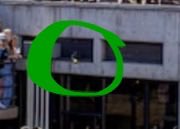
The Burnt Object as a RODE Transmitter (Claims)
Proponents zoom into a charred mass photographed in the SUV and read a melted audio jack and a warning symbol into it. The imagery cannot carry that weight, and the theory's own advocates cannot agree which RØDE model it was.
Read this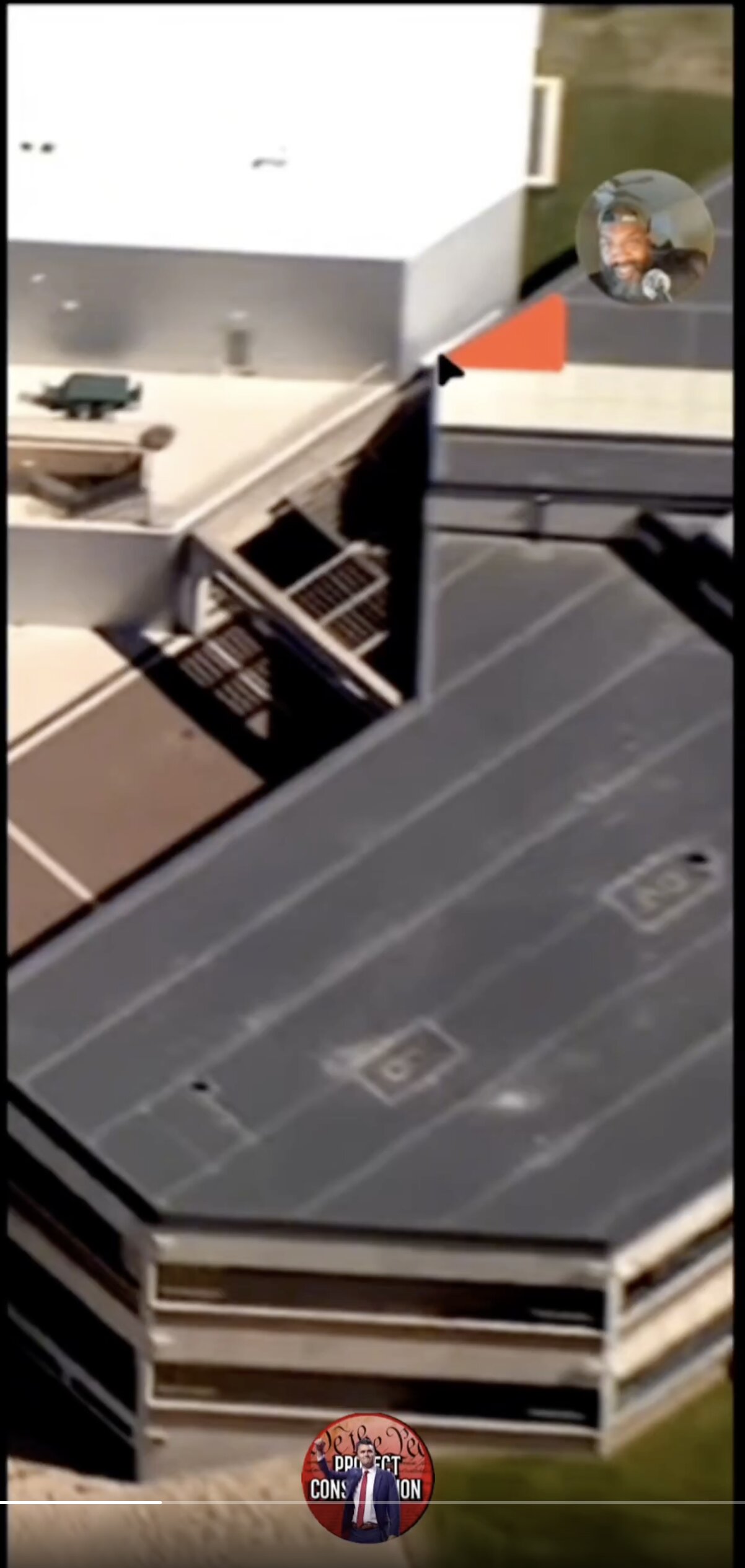
The Mic Placed Under, Not Over, the Shirt (Claims)
The RØDE transmitter was reportedly worn under Kirk's shirt, magnetically clasped through the fabric. That one detail is the precondition every contact-device theory needs — and it is also routine professional audio practice.
Read thisDefense Acquiescence to the Sua Sponte Gag Order (Claims)
Judge Tony Graf entered a publicity order on his own motion, and critics ask why the defense never fought it. Such orders are routine in capital cases and exist mainly to protect the defendant — so the complaint runs against Robinson's own interest.
Read thisSuspicious by Defense Attorneys
Nine things citizen investigators flag about Tyler Robinson's legal defense — counsel selection, the unchallenged gag order, the Miranda exhibit, the jailhouse informant. Questions about strategy, not accusations of misconduct against any attorney.
Read thisElsewhere In The Investigation
ATF Fragment — Inconclusive Match
The September 2025 ATF report could not tie the autopsy jacket fragment to the seized Mauser. The state is left without an individual physical match between the rifle it names and the object taken from the body.
Read thisThe state's own lab could not match the autopsy jacket fragment to the rifle it seized. The defense treats that as exculpatory; examiners would call inconclusive the commonest result in the discipline.
Read this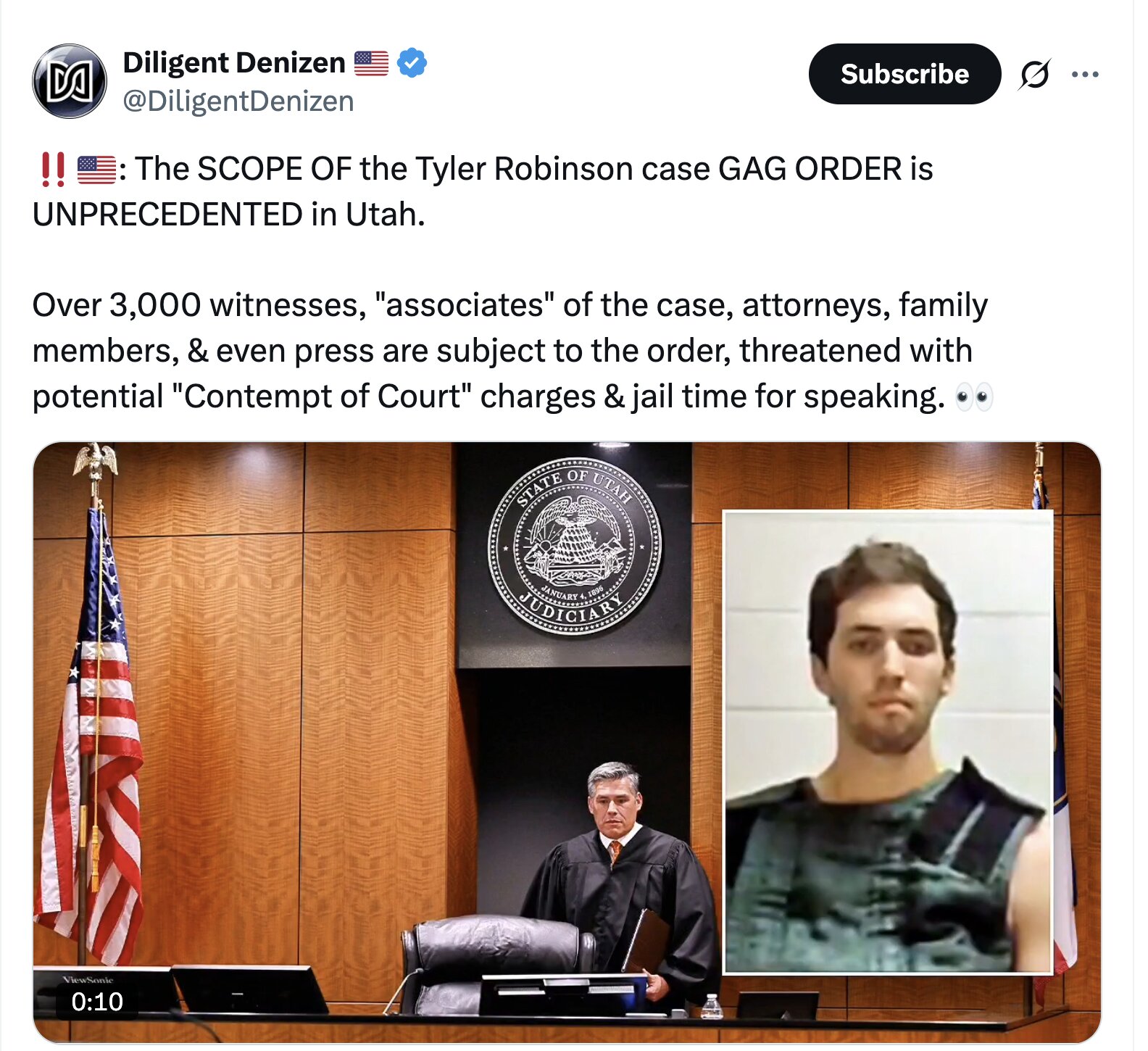
The December 2025 publicity order, the closed hearings, the March 2026 seal motion over the inconclusive ATF report, and the media coalition that opposed it. Everything the public is not allowed to see, in one place.
Read this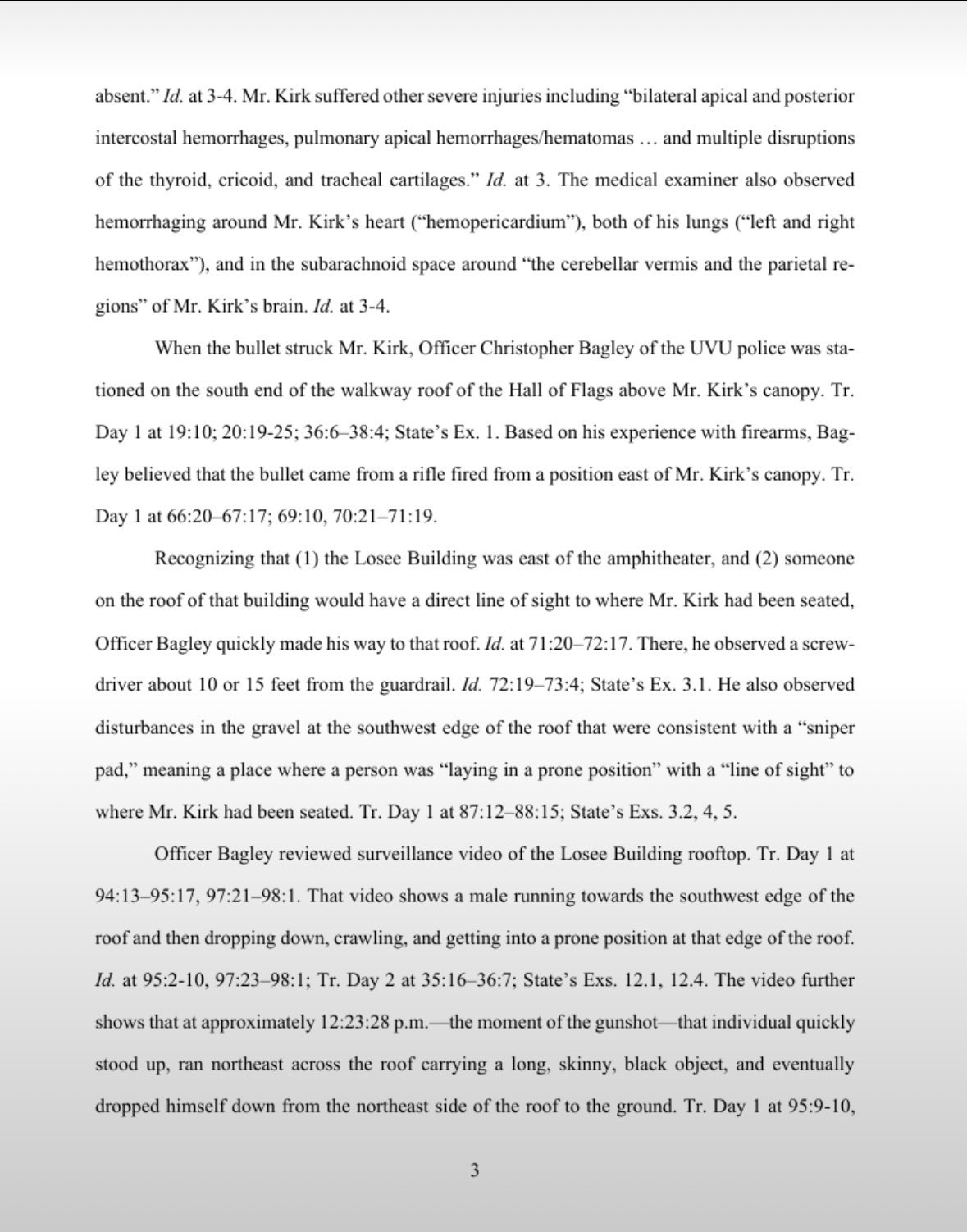
Shape Charge vs Bullet: from Medical Examiner results
The medical examiner findings quoted in the court filing — hemopericardium, bilateral hemothorax, subarachnoid hemorrhage — scored against two hypotheses side by side. The clearest place to see which mechanism the injuries actually fit.
Read thisSources
- Andrea Burkhart's document release (the ATF report PDF) — https://andreaburkhart.substack.com/api/v1/file/32f5d075-32a0-49c7-b5a8-aff3a440e6b9.pdf
- The defense's January 9 motion, as summarized in the investigation file. No direct docket URL is cited in the file.
- @ProjectConstitu for the planting claim, which the report does not support. No direct URL for this specific post is cited in the file.
- Related: the CBLA bullet-lead testing dispute
This website's author is @HolonCitizen on X and YouTube/@HolonCitizen. Follow me there.
Interesting
- An analyst counts 16 Israeli-registered phones near Kirk that day.
- Roughly ten inches of soil were hauled away from under the tent, the likeliest PETN surface.
- Days later the same ground was sealed under pavers and cement.