The Canon XA55 Audio and a Stage Detonation (Claims)
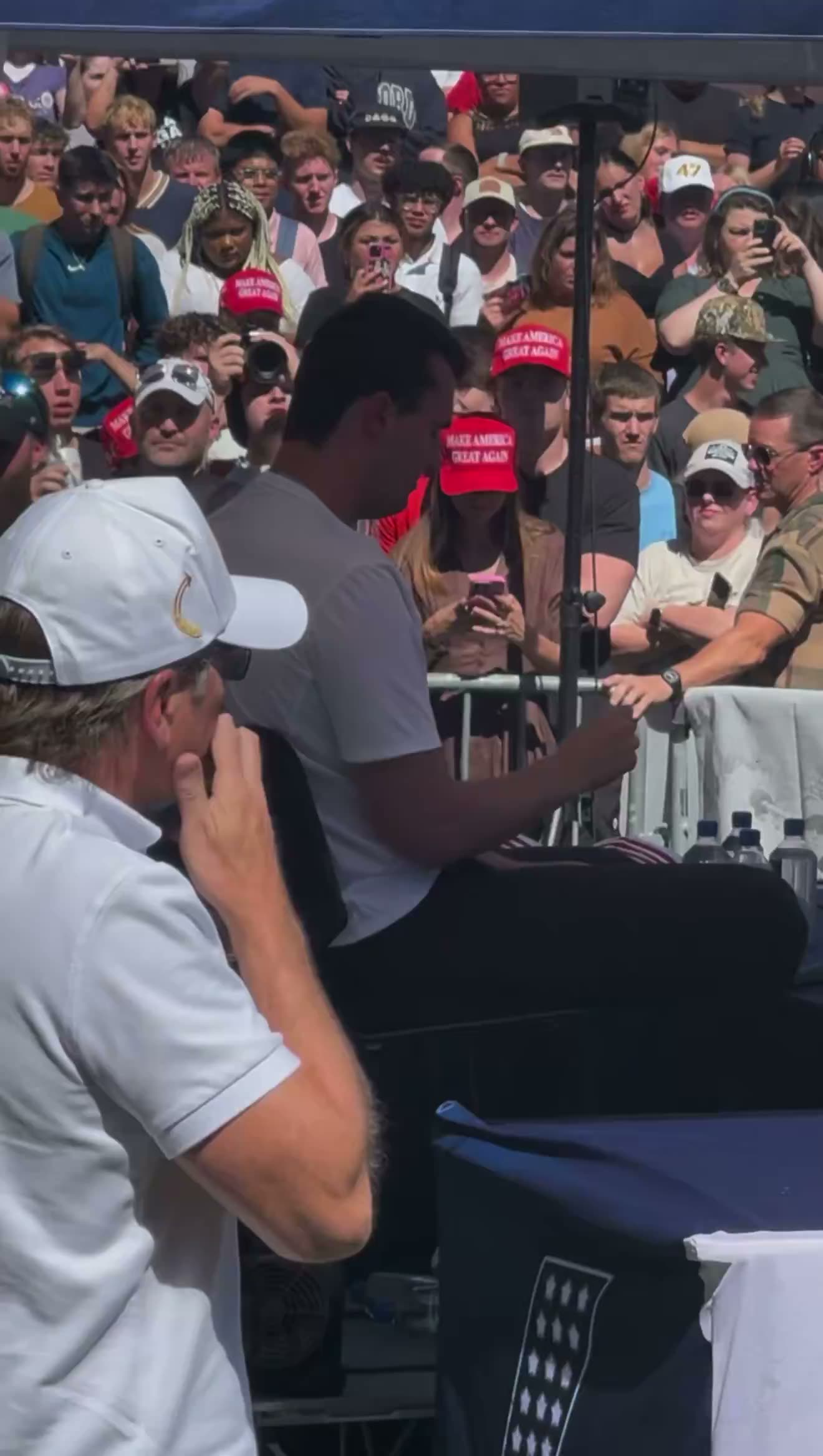
Satirical LEGO-animated music video referencing Charlie Kirk's RØDE mic, via @RickyTheGuido, July 24, 2026. IPFS CID Qmd6zPTaBkhDSqCA9nEVrx1e7JsgAEUV7qSDu1pGELiPZJ.
:::caution Attributed claims only The ordinary baseline is that a loud sound in a courtyard surrounded by hard surfaces produces reflections, and that a supersonic bullet's ballistic crack, its muzzle report, and echoes off campus buildings routinely produce several low-frequency arrivals in a single recording. The analysis below is unpublished, its author unnamed, and its raw audio unavailable. Tyler Robinson is charged, not convicted. :::
Claim snapshot
| Field | Value |
|---|---|
| The claim | A Canon XA55 roughly 46m from the tent reportedly separates three low-frequency events — a Mach cone at +114ms, a muzzle blast at +202ms placing a rifle ~120m away, and a louder detonation at +321ms originating at the tent |
| Raised by | An unnamed analyst whose writeup is reproduced in the investigation file; amplified by @ProjectConstitu |
| First surfaced | Undated in source |
| Rests on | Anonymous post — no raw audio file, no named analyst, no independent replication, no published methodology |
| Evidence rating | EMERGING |
What is alleged
This is the acoustic backbone of every device theory on the site, so it is worth stating carefully. According to the analysis, a professional broadcast camera — a Canon XA55 — was recording at UVU on September 10 from roughly 46 metres from the tent, capturing uncompressed audio on four channels at 48,000 samples per second. The argument is that every phone in the crowd used compressed audio that smeared the events into a single noise, while the Canon's distance and fidelity separated them.
The claimed separation is three distinct low-frequency events: +114ms, early energy attributed to a Mach cone; +202ms, a muzzle blast placing the rifle approximately 120 metres away; and +321ms, described as a detonation originating approximately 46 metres from the camera — that is, at the tent, where Kirk was seated. The analysis states this third event is the loudest of the three and asserts: "It's not an echo. It's not a reflection."
From that the argument runs: a rifle 120 metres away and a detonation at the tent are two events at two locations, and a single shooter cannot produce both. Supporting claims include 733 supersonic N-wave signatures captured by the Canon's shotgun microphone against 123 on the best phone recording, and the shotgun mic clipping 122,844 audio samples because the source was in its line of fire while the built-in mics stayed clean.
The ordinary explanation
The methodology gap is the whole story here. A courtyard with a PA system, a tent canopy, a lectern, concrete pillars, and surrounding buildings is an acoustically reflective environment. A reflection arriving 185ms after the muzzle blast is precisely what a sound path roughly 60 metres longer than the direct path looks like — which, in a courtyard bounded by buildings, is an unremarkable geometry. The analysis's own framing concedes the point it needs to defeat: it declares the third peak "not an echo" but shows no methodology for excluding reflection, PA re-radiation, or structural resonance. Asserting that a peak is not an echo is not the same as demonstrating it.
That a reflected arrival can be the loudest peak is also not surprising. Focusing off a curved or parallel surface, constructive interference between arrivals, and the directional response of a shotgun microphone all routinely make an indirect arrival exceed a direct one in a given channel. And calling the third peak a "detonation" is an interpretation, not a measurement — nothing in a low-frequency pressure peak is labelled with its cause.
The evidentiary problems compound: no raw file has been released, no named credentialed analyst stands behind the work, and no independent party has replicated it. The N-wave count and the clipped-sample figure are precise numbers with no way to check them.
Now state the irony, because it is the most important thing on this page. This analysis is offered as proof of an explosion at the tent. But its own muzzle-blast measurement puts the rifle at approximately 120 metres — which corroborates the official Losee rooftop account, and lands within about 6% of a separate 10-camera photogrammetric estimate of 127 metres. Two independent methods, the same answer, and that answer is the State's. The document marshalled to overturn the official account confirms its shooter position. It also sits in direct tension with the claim that the acoustics point South, which is promoted on this same site. Both cannot be load-bearing.
What would settle it
- Release the original uncompressed Canon XA55 file so any acoustician can examine the waveform independently. Without it, nothing here is checkable.
- Name the analyst and publish the method — specifically, the test used to distinguish a detonation from a reflection at +321ms.
- Conduct an on-site acoustic survey: fire a reference source from the Losee rooftop and measure the reflection arrivals at the Canon's position. This would establish directly whether a ~185ms echo is expected there.
- Have a named, credentialed forensic acoustician review the recording. None is cited anywhere in the investigation file.
Interesting In This Area
- An unnamed engineer places the shot South, which contradicts this analysis outright.
- The same audio is catalogued under the venue section as a third boom.
- Ryne Simmons reportedly deleted his 4K copy after sending it to the FBI.
- The shirt moves before the blood, which proponents pair with this timing argument.
Interesting In Other Areas
- The Canon XA55 captured four channels of uncompressed 48kHz audio at the courtyard.
- The two-event split is the same measurement, argued toward a different conclusion.
- No muzzle flash or recoil appears in the roof frames citizen reviewers examined.
- The exploding-mic hub collects the hardware, the procurement and the audio in one place.
Videos
Footage related to this page. Each card opens that clip's own page, with the video, the full write-up, and its source.

Other Pages In This Section
The Rick Cutler Hand-Device Claim (Claims)
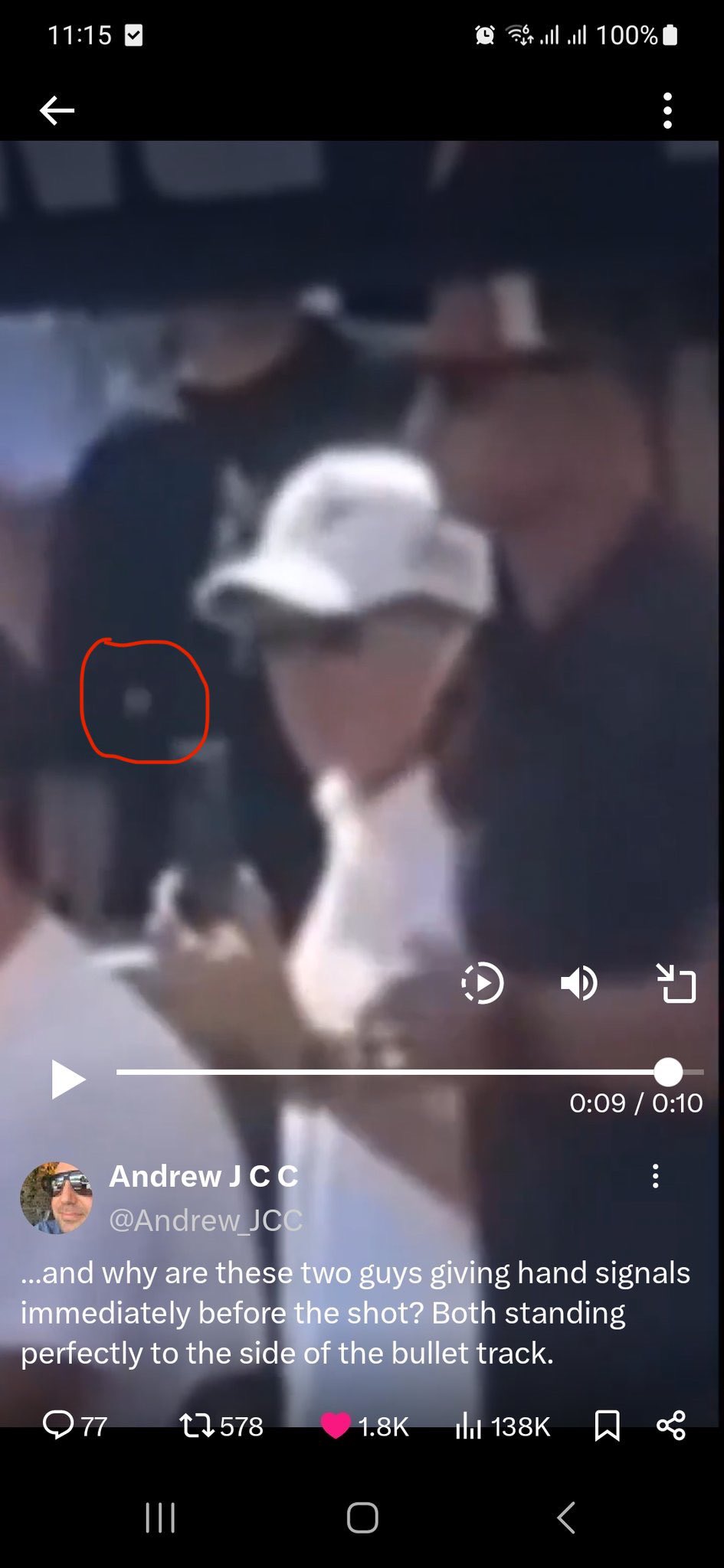
Recorded as a specimen of what is circulating, not as a claim this site advances. Anonymous accounts read a dark object in a named private citizen's hand as a trigger; he has been charged with nothing and no evidence supports it.
Read thisSuspicious About Cause of Death
Twelve numbered suspicions about the official rifle account, ranked honestly — the ATF fragment at the top, the frame-reading at the bottom. Read it to see which alternatives kill each other, because several of them do.
Read this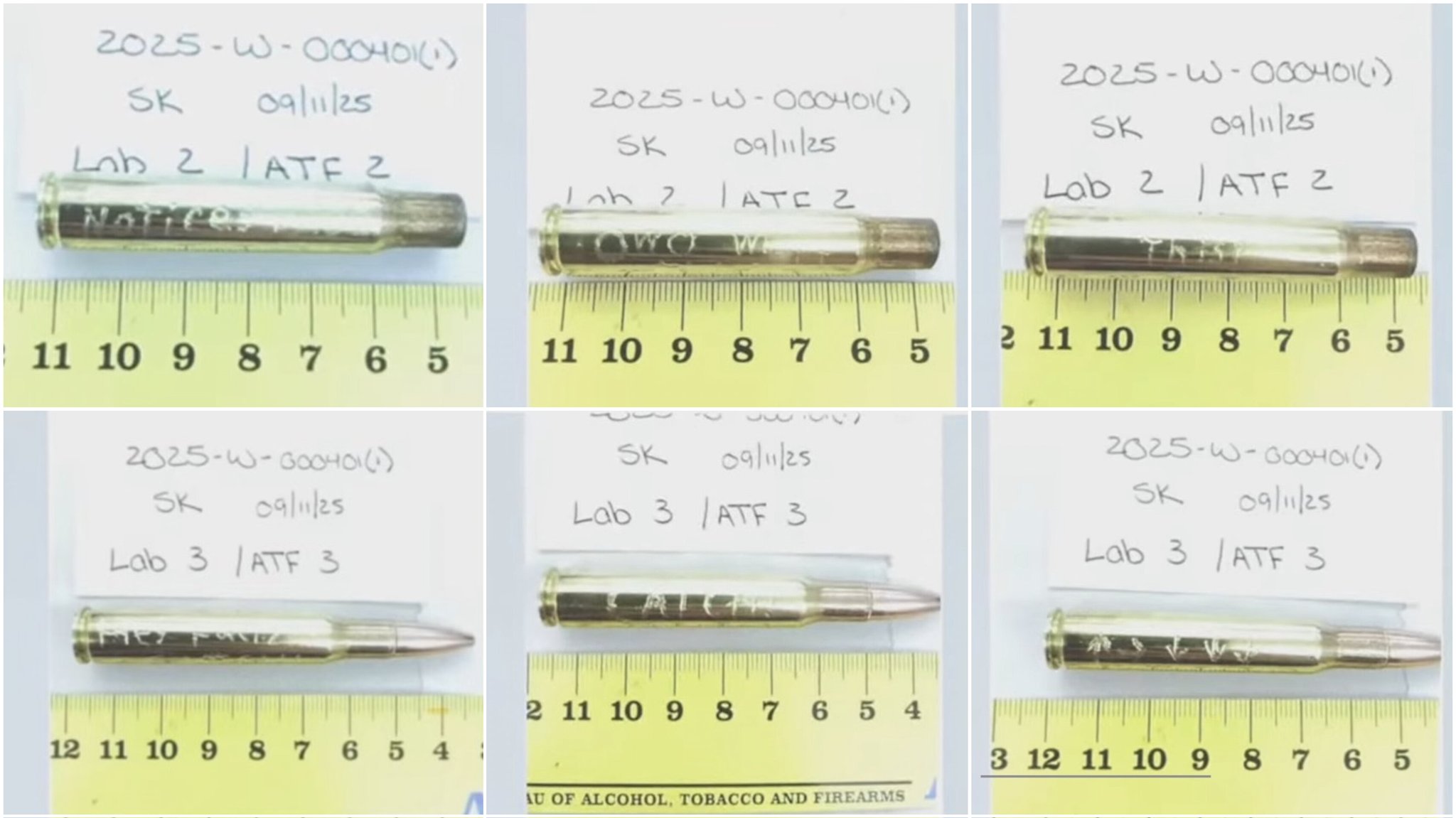
Kent's Halted Probe as Defense Ammunition (Claims)
Daily Mail reporting says officials worried Joe Kent's foreign-interference inquiry could hand Robinson's lawyers a multi-suspect argument. That single quoted sentence is why critics ask what counsel has done to demand the material.
Read thisNot-Guilty Plea Versus the Confession Narrative (Claims)
Candace Owens argues no sworn written confession exists and points to the not-guilty plea. Critics ask why the defense has not publicly rebutted the confession narrative — though a plea is itself the formal denial.
Read thisElsewhere In The Investigation
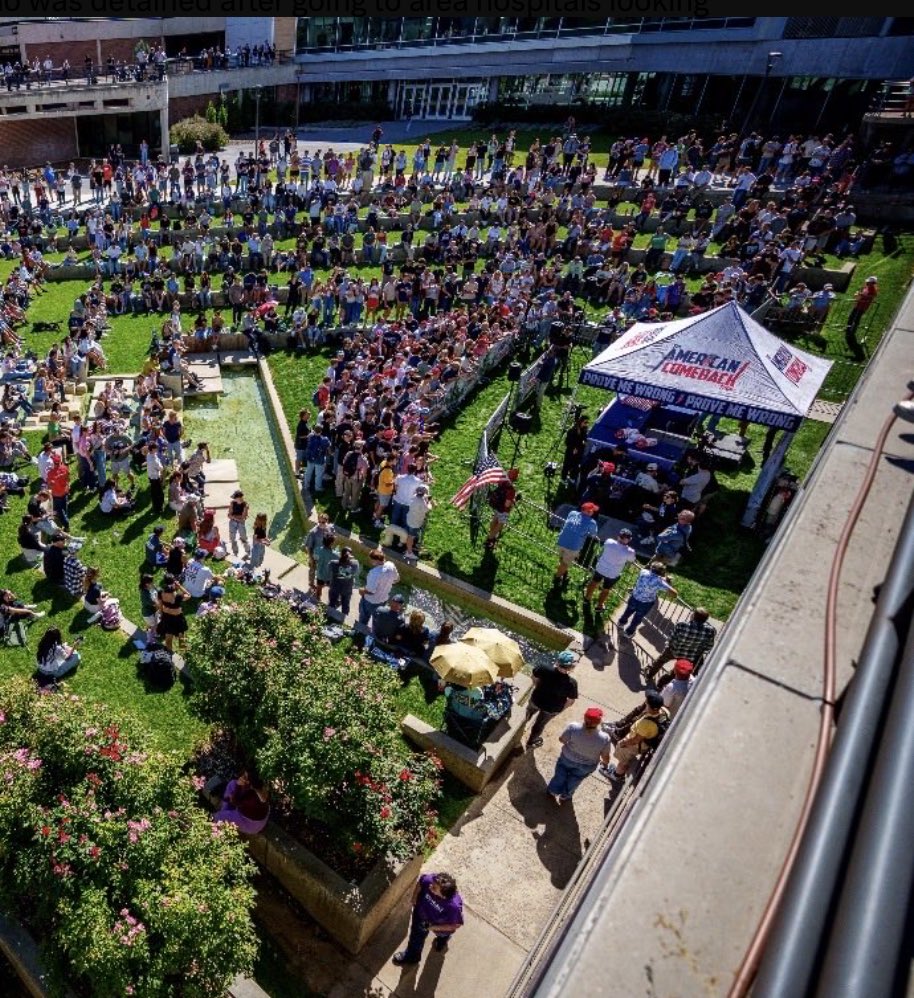
The machine behind the audio — what it was, where it stood, and why uncompressed 48kHz capture resolves timing that phone codecs smear together. Read it before trusting or dismissing the acoustic analysis.
Read this
Two sounds, two distances, two locations — roughly 120 metres and roughly 46 metres. If that split holds, the rooftop stops being the only place the harm could have come from.
Read this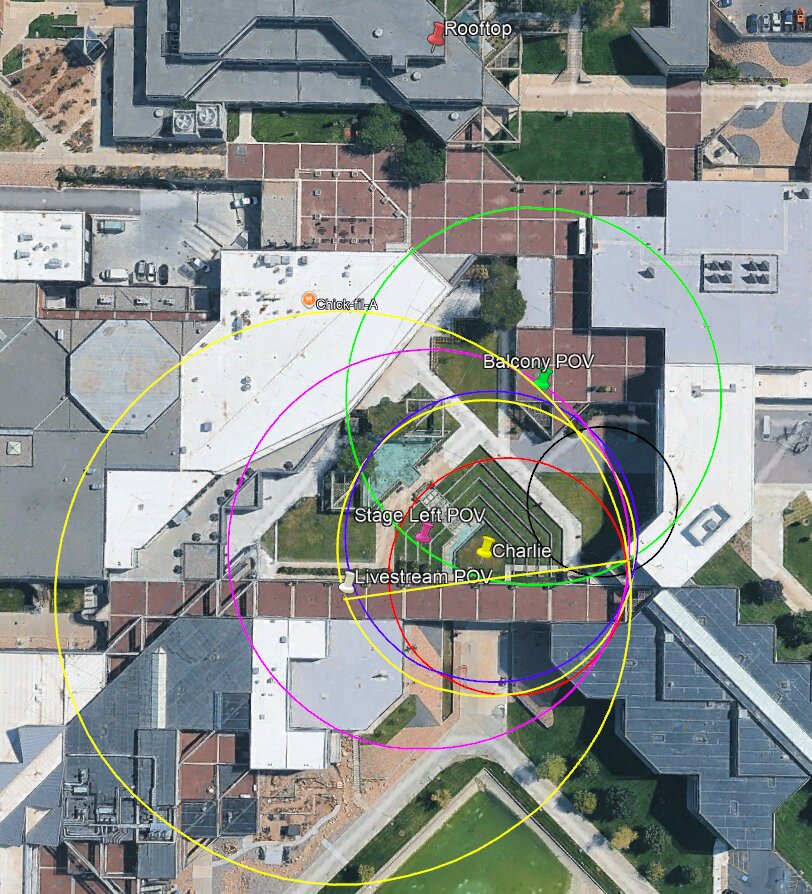
Canon XA55 Audio — Three Booms and Stage Detonation
Professional four-channel audio recorded about 46 metres from the tent. Researchers say it separates a distant muzzle blast near 120 metres from a louder event at the stage — two events at two locations, if the reading holds.
Read thisCitizen reviewers say roof surveillance shows no muzzle flash and no rifle recoil at the moment Kirk was hit. It is used to argue the roof figure was a decoy rather than the source of the harm.
Read thisSources
- The Canon XA55 analysis is reproduced in full in the investigation file from an unnamed analyst; no direct URL is cited in the file.
- @ProjectConstitu amplified the analysis; no direct URL for that post is cited in the file.
- The competing acoustic claim is at the acoustics point South, sourced to https://x.com/ProjectConstitu/status/1981085808699338766
This website's author is @HolonCitizen on X and YouTube/@HolonCitizen. Follow me there.
Interesting
- Candace Owens claims bomb dogs were kept out of parts of the scene.
- UVU's own posts create a 13-minute gap against the prosecutor's timeline.
- A chest bulge present before and gone after anchors the exploding-mic theory at the tent.