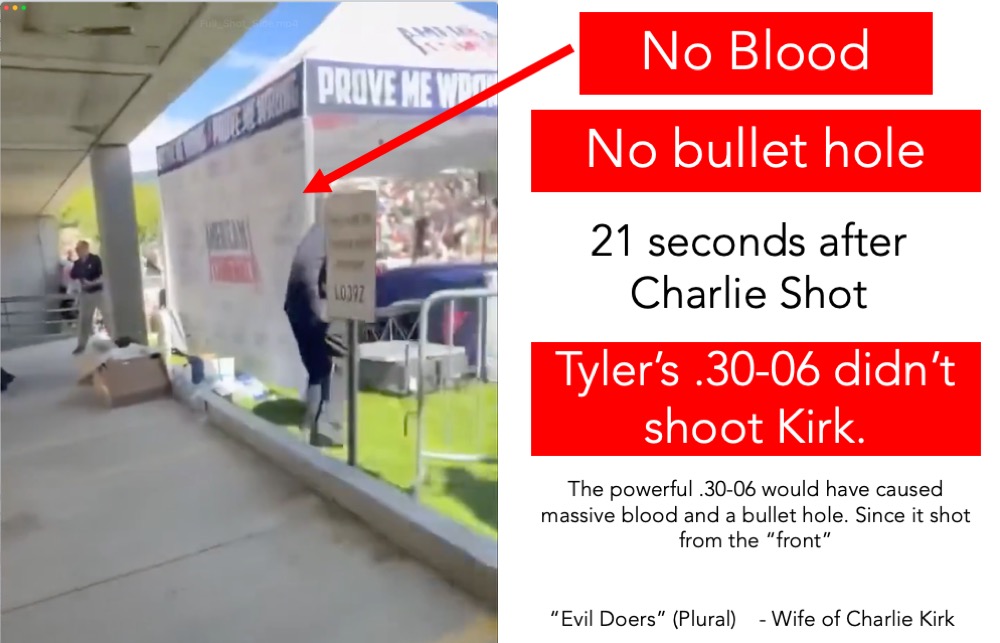
No Blood Spray, No Exit Wound (Claims)
Satirical LEGO-animated music video referencing Charlie Kirk's RØDE mic, via @RickyTheGuido, July 24, 2026. IPFS CID Qmd6zPTaBkhDSqCA9nEVrx1e7JsgAEUV7qSDu1pGELiPZJ.
:::caution Attributed claims only The ordinary baseline is that high-velocity rifle rounds routinely fragment or fail to exit after striking bone, and that "no exit wound" is a common finding in gunshot pathology rather than an anomaly. Nobody advancing the arguments below has examined the body, the autopsy, or the wound track. Tyler Robinson is charged, not convicted. :::
Claim snapshot
| Field | Value |
|---|---|
| The claim | A .30-06 from a Mauser 98 carries roughly 2,900 ft-lbs — it should have blown through the cervical spine, produced a massive exit wound, and sprayed blood and tissue across the tent and the people beside Kirk |
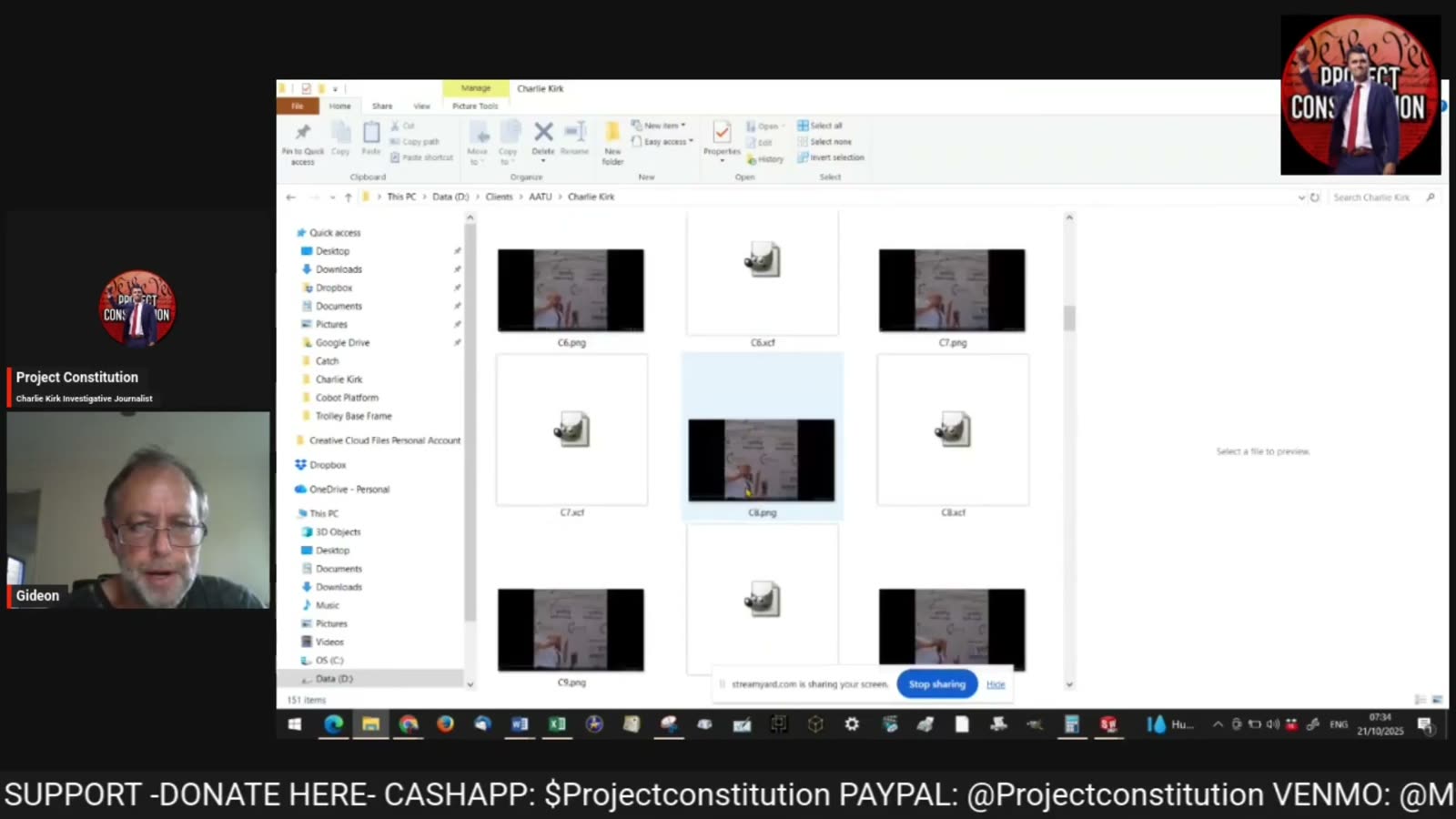
| Raised by | @HolonCitizen; Candace Owens; Dr. Chris Martenson (@peakprosperity), as cited by @ProjectConstitu; whokilledck.com |
| First surfaced | @HolonCitizen post dated 2026-04-17 |
| Rests on | Anonymous and secondhand posts — muzzle-energy arithmetic plus interpretation of event video; no autopsy, no wound examination |
| Evidence rating | MODERATE |
What is alleged
This is the single most-repeated suspicion about how Charlie Kirk died, and the arithmetic behind it is not in dispute. @HolonCitizen lays it out: a .30-06 firing a 180-grain bullet at roughly 2,700 fps carries approximately 2,914 ft-lbs at the muzzle, with published values hovering between 2,800 and 3,000+ — about 3,950 joules. A 9mm at 115 grains and 1,180 fps carries roughly 356 ft-lbs, or 482 joules. The .30-06 is, in his framing, a round that "won't stop until it is blasting through and past enough to finally scrub the energy to zero."
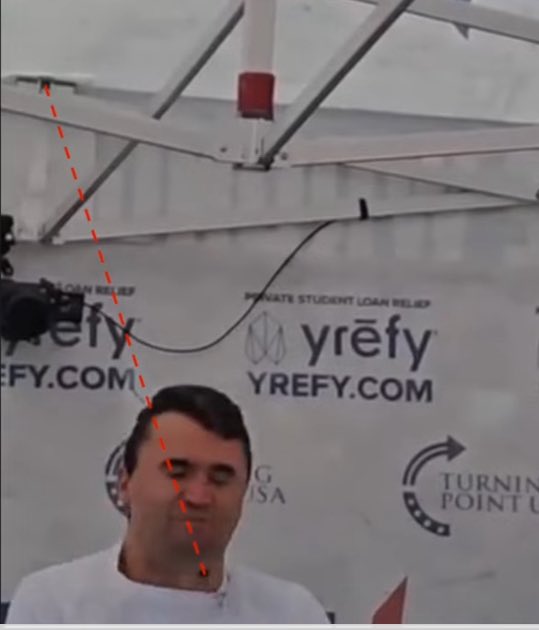
From that, the argument runs: such a round striking the neck should have destroyed the cervical spine, exited catastrophically, and thrown blood and tissue across the tent and onto the people seated beside Kirk. @HolonCitizen argues the videos instead show a comparatively contained neck wound, with a jacket fragment reportedly recovered from the neck at autopsy rather than an exit — an energy mismatch the official account, on this reading, never reconciles.
Dr. Chris Martenson (@peakprosperity) is cited on a variant of the same point. His reported conclusion is that the injury reflects a high-speed cavitation event — overpressure expanding the neck, snapping the necklace, and producing the clenched-fist posture — but that a .30-06 was "too much energy, would've knocked him flying," favoring a lower-velocity fragmenting round. Candace Owens has argued the mismatch supports a rigged-microphone explanation, and whokilledck.com builds its exploding-mic hypothesis partly on the same expectation about what a rifle round should have done.
The ordinary explanation
Mainstream forensic pathology answers this directly: a high-velocity rifle round to the neck is entirely capable of producing the observed injury. Bullets frequently fragment on striking bone, and they frequently fail to exit — retained bullets and jacket fragments are recovered at autopsy constantly, in cases nobody considers mysterious. That a fragment was reportedly found rather than an exit wound is an ordinary outcome, not an unexplained one. Energy at the muzzle is also not energy at the target: what matters is what the projectile does in tissue, and a round that yaws, tumbles, or breaks up dumps its energy internally rather than carrying it out the far side.
The blood-spray expectation is the weaker half. It derives from film and selectively chosen ballistic-gel clips, not from published case series. Real gunshot wounds vary enormously in external bleeding, and the amount of visible spray in the first frames of a video tells a pathologist very little.
Then there is the part that genuinely damages this argument: "he would have been knocked flying" is physically wrong. Momentum transfer from a bullet of roughly 10 grams cannot move an adult human body. A bullet cannot impart more momentum to a target than its recoil imparts to the shooter's shoulder — that is Newton's third law, and it is why no one is thrown backward by firing a .30-06. If that argument were sound, it would "disprove" every rifle homicide ever recorded. It does not undermine the rest of the energy question, but it does undercut the credibility of the analysts making it, and it is repeated often enough that it should be retired.
The honest summary: the energy question deserves an answer, and the reason it has not received one is that the autopsy is not public. That is a real gap. But an unanswered question is not evidence of an explosive, and none of the people arguing the mismatch have examined the wound track that would settle it.
What would settle it
- Release the autopsy report and the wound-track findings. The pathologist's description of the wound, the track, and the recovered fragments answers this question directly and nothing else does.
- Obtain the ATF and FBI analyses of the recovered jacket fragment and four lead fragments, which speak to whether the round fragmented as retained-bullet cases typically do.
- Ask a board-certified forensic pathologist — on the record and by name — whether the reported injury is within the normal range for a .30-06 neck wound. No proponent has done this.
- Ask Dr. Martenson to reconcile his cavitation model, which requires a projectile, with the explosive theories his analysis is used to support, which require none.
Interesting In This Area
- A jacket fragment was recovered at autopsy rather than an exit wound.
- Proponents disagree whether the front neck wound is an exit at all.
- Cavitation explains the snapped chain without any explosive being involved.
- The chest-and-heart witness accounts describe a wound the shirt does not show.
Interesting In Other Areas
- A .30-06 carries roughly 3,950 joules against a 9mm's 482.
- A July filing lists hemopericardium and bilateral hemothorax, far beyond one neck wound.
- Second-row witnesses say the impact landed on his chest, not his neck.
- The trajectory mismatch is the thread connecting every cause-of-death dispute here.
Images
Videos
Footage related to this page. Each card opens that clip's own page, with the video, the full write-up, and its source.
Other Pages In This Section
Is the Front Neck Wound an Entrance or an Exit? (Claims)
Proponents agree the front neck wound is an exit, then contradict each other completely about where the shot came from — high and behind, or from inside the tent. None has produced medical documentation, and video cannot settle a wound margin.
Read this
Baron Coleman Says Robinson Is in Grave Danger (Claims)
Baron Coleman says he is 100 percent convinced Tyler Robinson was framed and is in grave danger of being killed. He offers no evidence of any threat, and Robinson has been held in a high-security unit since September 2025.
Read this
Kathryn Nester and the Google Trends Spike (Claims)
An anonymous post reads a December 2024 Google Trends graph as proof lead counsel was pre-selected from abroad. Trends cannot report IP addresses, and Utah law makes the claim's premise impossible — published here to be examined, not credited.
Read thisFBI and ATF Reportedly Withholding Discovery (Claims)
The claim that Robinson's defense sought a continuance because the ATF and FBI would not release files held since September — DNA data, video chain of custody. Attributed and unverified, though it tracks the docket.
Read thisElsewhere In The Investigation
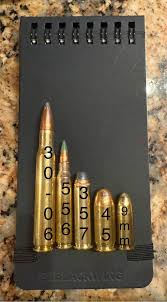
A .30-06 round carries roughly 3,950 joules against a 9mm's 482. Commentators argue the wound described publicly does not match that energy — the arithmetic is not disputed, the inference is.
Read this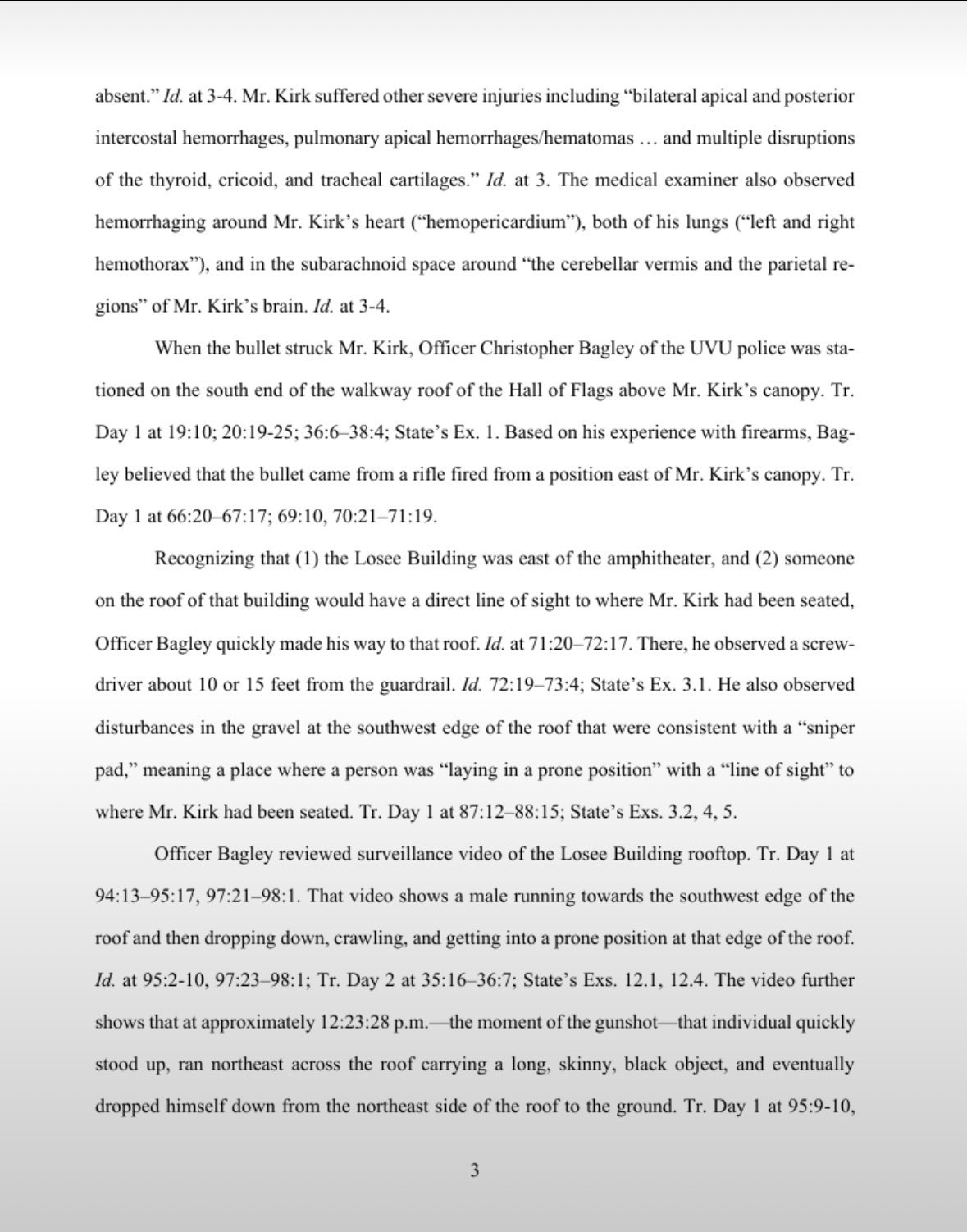
A July 2026 court filing lists injuries far beyond one neck wound — hemopericardium, bilateral hemothorax, brain hemorrhage, lung hematomas, airway cartilage disruptions. The full list is what most arguments here are missing.
Read this"You Just See It Hit His Chest" — Second-Row Witnesses Describe a Heart Shot
Second-row witnesses describe the impact landing on Kirk's chest and blood coming from the middle of it — one says outright he was shot in the heart. The white shirt shows no chest wound, which is what makes the pattern worth explaining.
Read thisThe argument that a rooftop .30-06 cannot match the reported neck wound path, the energy, or the blood evidence. It is the single thread connecting almost every cause-of-death dispute on this site.
Read thisSources
- @HolonCitizen, 2026-04-17, on .30-06 vs 9mm energy — https://x.com/HolonCitizen/status/2045212282712703209
- whokilledck.com, exploding-mic hypothesis and the .30-06 benchmark — https://whokilledck.com/theories/exploding-mic/introduction
- Dr. Chris Martenson (@peakprosperity) is cited secondhand in the investigation file via posts amplified by @ProjectConstitu and @stevendenoon; no direct URL to Martenson's own analysis is cited in the file.
- Candace Owens' rigged-mic framing is reproduced in the investigation file from video transcription; see the sources on the exploding microphone theory.
This website's author is @HolonCitizen on X and YouTube/@HolonCitizen. Follow me there.
Interesting
- Frames reportedly show the shirt balloon and the chain snap before any blood.
- A commentator close to Kirk's team hints at considerable evidence of state actors, then stops.
- Morning footage leaves no room for a scoped rifle, per the backpack impossibility analysis.