The Snapped Necklace and the Residue Search (Claims)
Satirical LEGO-animated music video referencing Charlie Kirk's RØDE mic, via @RickyTheGuido, July 24, 2026. IPFS CID Qmd6zPTaBkhDSqCA9nEVrx1e7JsgAEUV7qSDu1pGELiPZJ.
:::caution Attributed claims only The ordinary baseline is that collecting a victim's jewelry is standard evidence handling at any homicide, and that a high-energy round routinely snaps a chain through cavitation with no explosive involved. The two theories below are offered to explain the same snapped chain and contradict each other; at most one can be right. No named person is accused by this site of any crime. Tyler Robinson is charged, not convicted. :::
Claim snapshot
| Field | Value |
|---|---|
| The claim | A micro-cone of PETN inside the pendant's center column, anchored by the heavy chain and aimed at the neck, produced an upward directional blast — and federal investigators' reported search for the necklace was a hunt for explosive residue |
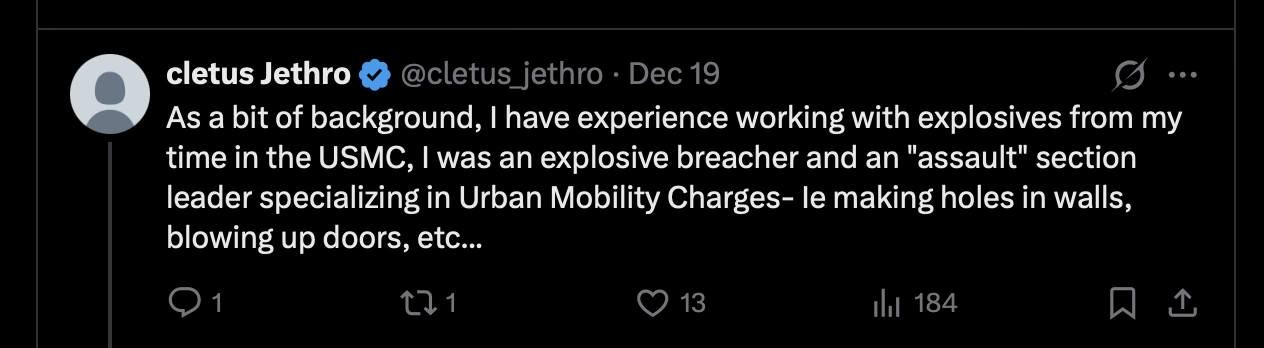
| Raised by | @cletus_jethro, self-described former USMC explosive breacher, credentials unverified; Candace Owens; Dr. Chris Martenson is cited on the opposite side of the same fact |
| First surfaced | Undated in source |
| Rests on | Anonymous post — an unverified expert claim reproduced from thread screenshots; no residue result, no physical examination |
| Evidence rating | SPECULATIVE |
What is alleged
The silver box chain and cross snapping and flying upward — in some accounts to ear level — is treated as a clue by both camps, which is what makes this page worth reading.
@cletus_jethro, who describes himself as a former USMC explosive breacher and "assault" section leader specializing in urban mobility charges, argues the pendant itself was the weapon. His reasoning, as reproduced in the investigation file: the cross would have been anchored by the thick chain around Kirk's neck, "allowing the force of the explosive to push off; while anchored in place by the necklace since blasts tend to follow the path of least resistance." Addressing the objection that the cross was too small, he writes that if the center column of the cross held a small amount of PETN "built in a cone shape... to utilize the Monroe effect, it would have been an extremely powerful upward blast relative to its size." He notes PETN's relative effectiveness of 1.66 — one gram equivalent to 1.66 grams of TNT — and argues that a shaped charge without rifling would lose speed rapidly, sufficient to cause the wound but not to cause an exit wound.
Separately, Candace Owens and others report that federal investigators were urgently searching for Kirk's necklace, and read that search as a hunt for explosive residue on an item that sat directly on his chest. It appears on a widely circulated list of anomalies the rigged-mic theory is said to explain.
Dr. Chris Martenson is cited on the other side of the very same fact. His reported analysis attributes the snapped chain to a high-speed cavitation event — overpressure expanding the neck — which requires no explosive whatsoever.
The ordinary explanation
Lead with the mutual refutation, because it is the strongest thing on this page. Cavitation from a high-energy round routinely snaps a chain. The same observation these theories are built on is fully explained by the official account — and it is explained by the very expert, Martenson, whom the alternative camp cites approvingly elsewhere. Martenson's model requires a projectile. The pendant model requires no projectile. Both are offered to explain one snapped chain. At most one is right, and the people promoting them rarely acknowledge that they are promoting incompatible claims.
The self-refutation goes further. @cletus_jethro's own analysis concedes that the mic-mounted variant makes no sense — he writes that an unanchored lapel mic "would not have been very accurate" and that a charge there would push the mic left, not right. That means the two most-promoted explosive theories on this site contradict each other on anchoring: the pendant theory's own expert refutes the microphone theory's mechanism.
On the residue search: collecting a victim's jewelry is standard practice at any homicide. Personal effects come off the body and into evidence as a matter of course. Reading that as a hunt for explosive residue assumes the conclusion. And decisively — no residue result, positive or negative, has ever been published. The theory rests on an inference about why an item was collected, with no test result on either side of the ledger.
Finally, no proponent has offered a calculation for how a pendant-sized charge produces the observed wound without burns, soot, or blast injury to the surrounding skin. A contact detonation against the chest and neck leaves characteristic, unmistakable signatures. No witness, clinician, or image in the investigation file describes them.
What would settle it
- Produce the necklace and cross from evidence and test them for explosive residue. One lab result — positive or negative — ends this dispute permanently. None exists.
- Release the autopsy findings on soot, burns, stippling, or blast injury to the skin surrounding the wound. A contact charge and a distant rifle round leave entirely different marks.
- Ask @cletus_jethro to publish his identity and credentials, and to state whether his anchoring objection means the microphone theory — which his own analysis is used to support — is wrong.
- Ask Dr. Martenson directly whether his cavitation model is compatible with a no-projectile explosive. His model requires a bullet.
Interesting In This Area
- The pendant reading needs no projectile; the cavitation reading requires one.
- Investigators reportedly searched urgently for the necklace, which both camps treat as significant.
- Bomb dogs were reportedly kept away and the courtyard was paved days later.
- Charred material and fragments were photographed in the transport SUV.
Interesting In Other Areas
- A cone of PETN in the crucifix is the mic theory's rival, not its ally.
- A gunshot-residue test and bomb dogs were reportedly bypassed at the scene.
- Roughly ten inches of soil reportedly left the courtyard before the paving contractor arrived.
- The examiner findings are scored against both mechanisms rather than assumed.
Other Pages In This Section
Suspicious About Cause of Death
Twelve numbered suspicions about the official rifle account, ranked honestly — the ATF fragment at the top, the frame-reading at the bottom. Read it to see which alternatives kill each other, because several of them do.
Read this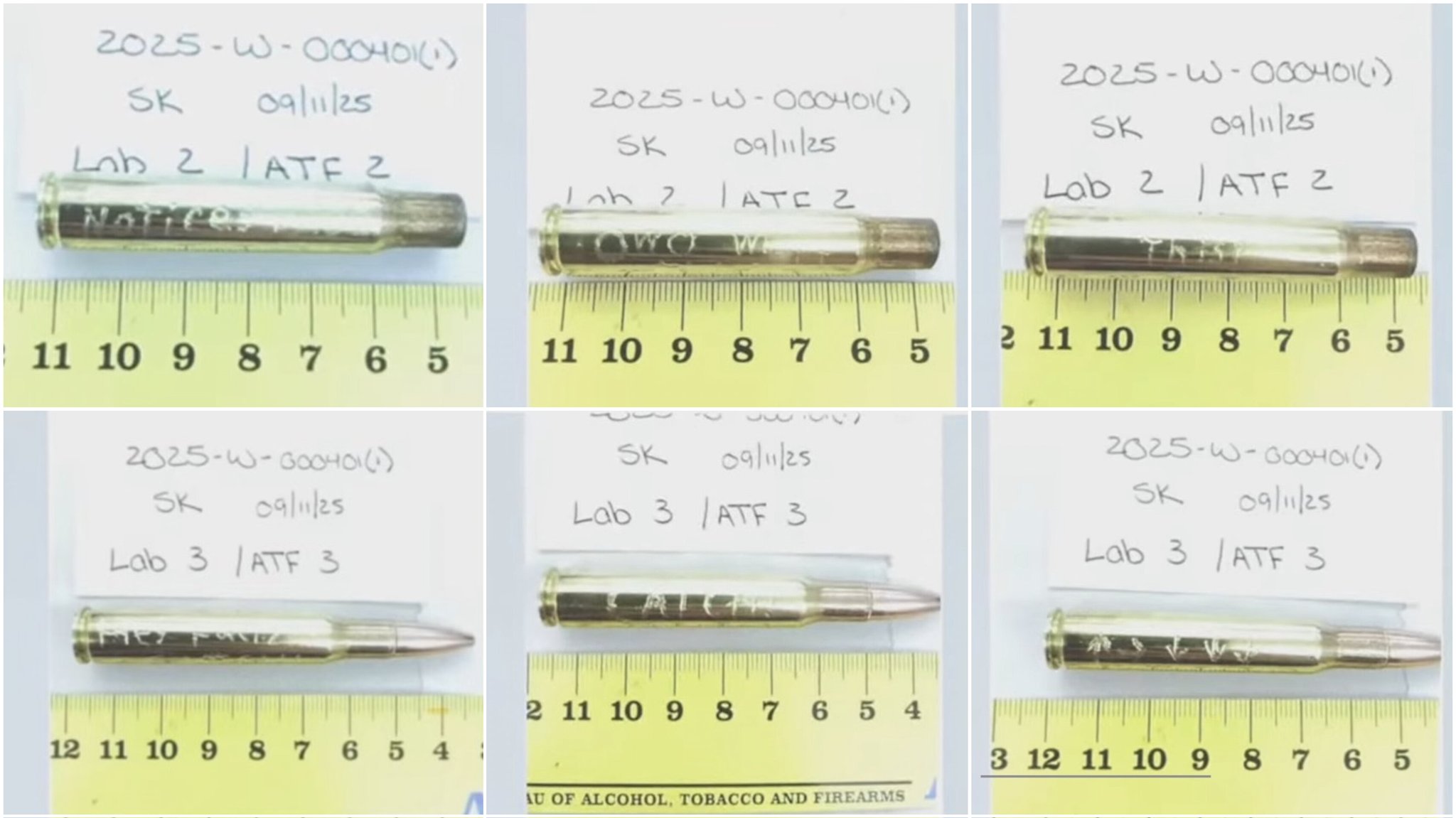
Kent's Halted Probe as Defense Ammunition (Claims)
Daily Mail reporting says officials worried Joe Kent's foreign-interference inquiry could hand Robinson's lawyers a multi-suspect argument. That single quoted sentence is why critics ask what counsel has done to demand the material.
Read thisNot-Guilty Plea Versus the Confession Narrative (Claims)
Candace Owens argues no sworn written confession exists and points to the not-guilty plea. Critics ask why the defense has not publicly rebutted the confession narrative — though a plea is itself the formal denial.
Read thisSeventeen things citizen investigators flag about the FBI in this case, split into Most Important and Secondary — the halted foreign-nexus probe, the paved crime scene, the seized security-team clothing. Attributed claims, not proven findings.
Read thisElsewhere In The Investigation
The Exploding Pendant — Shaped-Charge Crucifix Theory
A self-described former USMC explosive breacher argues a cone of PETN in the crucifix's centre column, anchored by the heavy chain, could fire upward. It is the mic theory's rival, not its ally — both cannot be the mechanism.
Read this
Standard Forensic Tests Reportedly Skipped (Claims)
Reported claims that basic steps — a gunshot-residue test, bomb dogs, an ambulance on standby — were bypassed at the scene. Critics read the pattern as consistent with something other than a rifle being the story.
Read this
10 Inches of Dirt Removed Before the Pavers
An unidentified crew reportedly took roughly ten inches of soil out of the tent courtyard before the landscaping contractor arrived on September 14. The ground under the chair is the one surface nobody can re-test.
Read this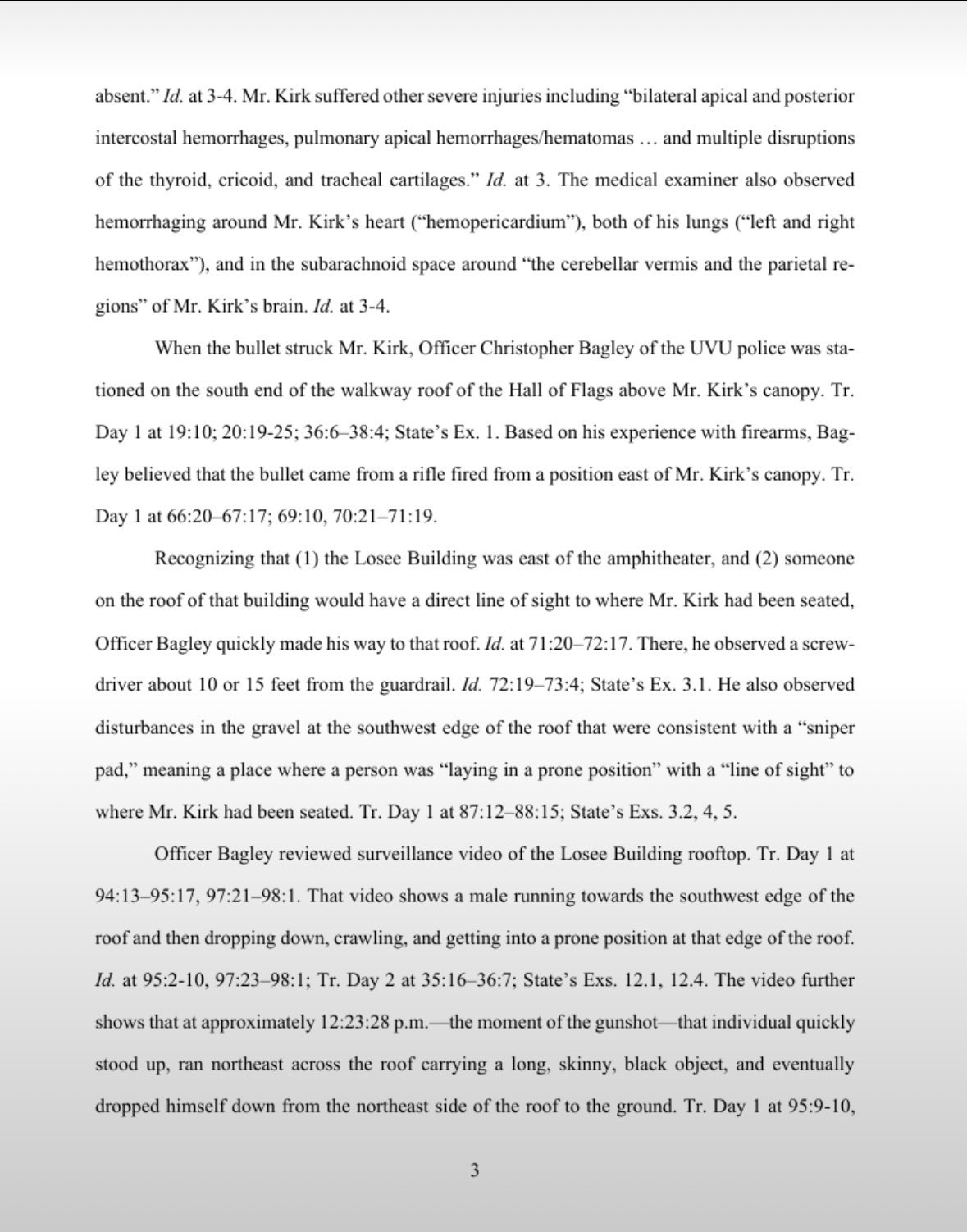
Shape Charge vs Bullet: from Medical Examiner results
The medical examiner findings quoted in the court filing — hemopericardium, bilateral hemothorax, subarachnoid hemorrhage — scored against two hypotheses side by side. The clearest place to see which mechanism the injuries actually fit.
Read thisSources
- @cletus_jethro's thread is reproduced in the investigation file from screenshots, alongside @RealCandaceO, @BlakeBednarz and @baroncoleman; no direct URL is cited in the file. He is anonymous and his credentials are unverified.
- Candace Owens' necklace-residue framing appears in a transcribed video posted by @ProjectConstitu, 2026-06-17 — https://x.com/ProjectConstitu/status/2067372027623715212
- Dr. Chris Martenson (@peakprosperity) is cited secondhand in the investigation file; no direct URL to his own analysis is cited.
This website's author is @HolonCitizen on X and YouTube/@HolonCitizen. Follow me there.
Interesting
- Two days before he died Kirk reportedly wrote about donor pressure over the pro-Israel cause.
- Chain of custody on the identification montage was picked apart in Preliminary Hearing Day 2.
- The case agent reportedly learned from the news that the crime scene had been paved.