Parents Reportedly Declined High-End Attorneys (Claims)
:::caution Attributed claims only Declining volunteer counsel and accepting court-appointed capital representation is ordinary, lawful, and frequently the better choice in a death-penalty case. The items below are unsourced claims recorded in the investigation file, not findings. Tyler Robinson is charged, not convicted. :::
Claim snapshot
| Field | Value |
|---|---|
| The claim | Robinson's parents did not want high-end attorneys — and separately, that volunteer attorneys were "told no by the Prosecutor" |
| Raised by | The investigation file's own "Strange events" list (item 4) and its "Legal" section; the fear theme is echoed by Baron Coleman citing an unnamed Robinson relative |
| First surfaced | Undated in source |
| Rests on | Anonymous, unattributed list entries — no name, document, or outlet is given for either |
| Evidence rating | THIN — the two claims contradict each other, and one describes a legal impossibility |
What is alleged
Item 4 of the file's "Strange events" list states flatly: "His parents. Didn't want high end attorneys." No source, name, date, or document accompanies it. A separate entry in the file's "Legal" section makes a different and incompatible claim: "Several high priced attorneys are volunteering to represent Tyler and be told no by the Prosecutor." It, too, is unsourced.
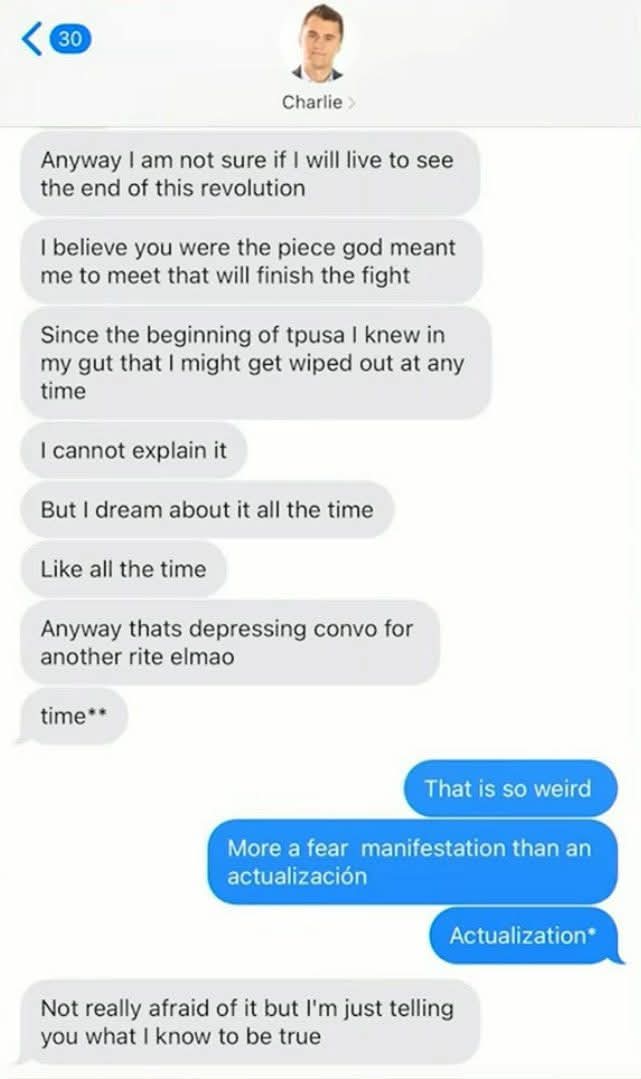
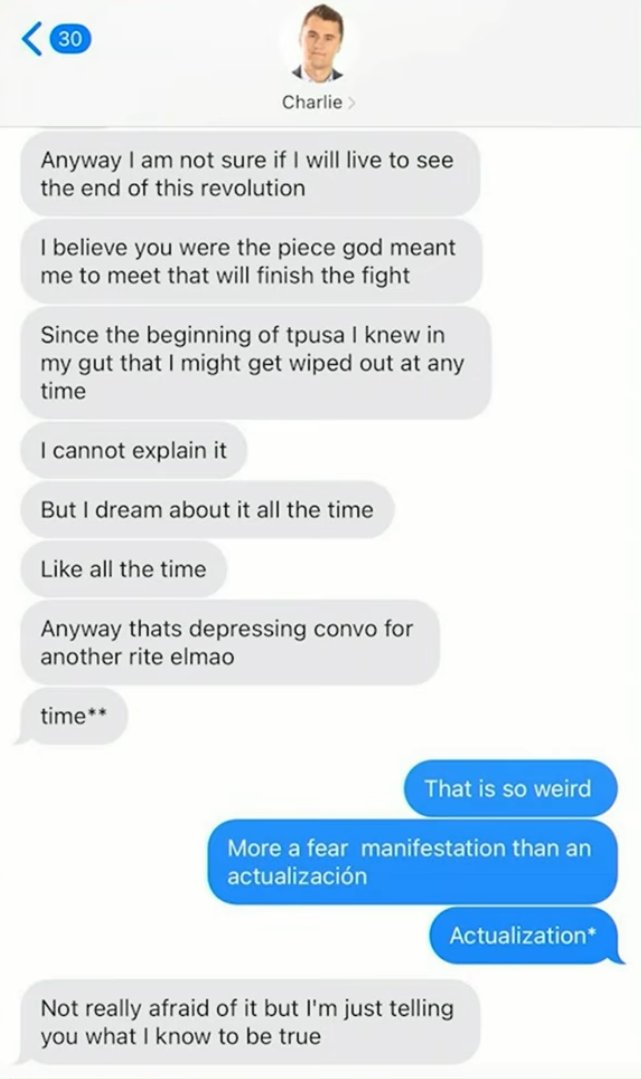
Commentators who treat the pair as suspicious ask the obvious question — why would a family facing a capital prosecution turn away free elite representation? They then pair it with item 5 of the same list, which asks whether the parents were told their son "would be assassinated," so that "turning him in" was an act "to save him." The suggested inference is that the family may have been acting under pressure or fear rather than on legal advice. Baron Coleman has said he spoke with a Robinson relative who claims Robinson was turned in out of fear for his life, while conceding on the record, "I haven't been able to fact check this myself."
The tension inside the file should be stated plainly, because it is the most important fact on this page. One claim says the family declined counsel. The other says the prosecutor blocked counsel. Those are opposite explanations for the same alleged outcome, and both cannot be true. Neither carries a source.
The ordinary explanation
The prosecutor claim fails on the law before it reaches the facts. A prosecutor has no authority to accept or reject a defendant's lawyer. Choosing counsel is the defendant's Sixth Amendment right, and the only gatekeeping that exists belongs to the court — conflict-of-interest checks and pro hac vice admission for out-of-state attorneys. "Told no by the Prosecutor" describes something that does not happen in an American courtroom. Utah capital counsel is appointed through the court and the indigent defense system, not selected by the state's trial lawyer.
Declining volunteer counsel is also standard, well-advised practice in a capital case rather than a red flag. Court-appointed capital defense in Utah is state-funded — reportedly $750,000-plus for the defense alone, part of a projected $1.3 million case cost — and carries statutory death-qualification requirements. That budget buys investigators, mitigation specialists, and experts that a solo volunteer offering free, publicity-driven representation typically cannot match.
And the premise collapses against the docket. Robinson is represented by three nationally recognized capital specialists: Kathryn Nester, a former Utah Federal Defender with 33-plus years and nine capital cases; Michael Burt, with 47-plus years, an editorship of California's Death Penalty Defense Manual, and the Menendez retrial; and Richard Novak, with 25-plus death-eligible cases. Burt and Novak were admitted from out of state to strengthen the team. Whatever else this is, it is not a cheap defense.
What would settle it
- Identify even one of the "several high priced attorneys" said to have volunteered, and obtain their account of who declined them and on what stated basis.
- Pull the court's counsel-appointment orders and the Affidavit of Indigency (9-16-25) to establish exactly how Nester, Burt, and Novak came to be appointed and by whom.
- Ask the Robinson family, on the record and through counsel, whether they were ever offered outside representation and why any offer was declined.
Interesting In This Area
- The companion claim that a prosecutor blocked volunteers describes a legal impossibility.
- A not-guilty plea is automatic in capital cases and reveals nothing about strategy.
- Baron Coleman says Robinson is in grave danger, citing an unnamed relative.
- The Miranda exhibit shows counsel obtained records and put them in the docket.
Interesting In Other Areas
- Appointment orders and the indigency affidavit would name who selected each attorney.
- Kathryn Nester is a former Utah Federal Defender with nine capital cases.
- Coleman says the family denies any confession and were absent from the witness list.
- Volunteer defenders were reportedly refused as a jailhouse informant was positioned nearby.
Images

Videos
Footage related to this page. Each card opens that clip's own page, with the video, the full write-up, and its source.

Other Pages In This Section
Not-Guilty Plea Versus the Confession Narrative (Claims)
Candace Owens argues no sworn written confession exists and points to the not-guilty plea. Critics ask why the defense has not publicly rebutted the confession narrative — though a plea is itself the formal denial.
Read thisSeventeen things citizen investigators flag about the FBI in this case, split into Most Important and Secondary — the halted foreign-nexus probe, the paved crime scene, the seized security-team clothing. Attributed claims, not proven findings.
Read this
A Surgeon Reportedly Blocked From Kirk's Room (Claims)
An unsourced list entry says the FBI blocked a surgeon from returning to the room with Charlie Kirk. No name, no hospital record, no source anywhere in the file — kept only so it can be run down.
Read this
The N1098L Low Pass at 12:24 (Claims)
A HADES-program aircraft reportedly made a 335-foot low pass near UVU at 12:24, thirty seconds after the shot. No aircraft can react in thirty seconds, so the pass is either coincidence or pre-positioning — and the file's own numbers conflict.
Read thisElsewhere In The Investigation
How Robinson's capital defense team was appointed, and what public commentary has claimed about the timing of it. Appointing specialised counsel in a death-penalty case is standard Utah practice.
Read thisKathryn Nester leading, with Michael Burt, Richard Novak and Staci Visser — appointments, motions and the estimated cost of the capital defense.
Read thisBaron Coleman — Family Denies the Confession
Coleman says on the Julian Dorey podcast that Robinson's family does not believe he did it and denies he confessed to them, and notes the parents were absent from the preliminary-hearing witness list.
Read this
Volunteer Defenders Reportedly Blocked, Jailhouse Informant Positioned (Claims)
Reported claims that volunteer attorneys were turned away while an unrelated inmate was positioned as a possible jailhouse informant. Two separate claims critics read together; each is weak on its own.
Read thisSources
- No primary source is cited in the investigation file for either claim. Both are bare list entries — "Strange events" item 4 and the "Legal" section — with no name, outlet, date, or document.
- Defense team composition and estimated cost: investigation file, "Attorney" section (Nester, Burt, Novak; $750,000-plus).
- Family-fear theme: Baron Coleman, citing an unnamed Robinson relative, who states he has not fact-checked it.
This website's author is @HolonCitizen on X and YouTube/@HolonCitizen. Follow me there.
Interesting
- The ATF lab could neither match nor exclude the rifle, per the fragment report.
- Three official times for the shot cannot be reconciled in the 12:23 versus 12:27 dispute.
- Kirk left in an SUV rather than an ambulance, per the first ten minutes.