The Banned CBLA Bullet-Lead Test (Claims)
:::caution Attributed claims only Forensic laboratories routinely propose additional testing when an initial examination is inconclusive, and proposing a test is a lawful and ordinary step in a prosecution. The material below consists of reported claims and one poster's inference, not a finding that any agency has done anything improper. Tyler Robinson is charged, not convicted. :::
Claim snapshot
| Field | Value |
|---|---|
| The claim | After the ATF fragment exam came back inconclusive, the FBI is reportedly being brought in to perform Comparative/Compositional Bullet Lead Analysis — a technique the FBI itself abandoned in 2005 |
| Raised by | Anonymous X investigators; the underlying ATF and motion details come from Andrea Burkhart's document analysis |
| First surfaced | Defense motion reportedly filed January 9; commentary after |
| Rests on | Document (ATF summary and defense motion) plus a poster's inference |
| Evidence rating | MODERATE — the strongest item in this section |
What is alleged
Per Andrea Burkhart's analysis of the now-available ATF report, one bullet jacket fragment and four lead fragments were reportedly recovered during Charlie Kirk's autopsy. The jacket was identified as coming from a .30-caliber class bullet. Critically, the summary reportedly found the jacket fragment shared only class characteristics with Robinson's Mauser 98 — meaning the rifle "couldn't be excluded" as having fired the bullet, but the fragment "lacks individual characteristics permitting identification of one rifle to the exclusion of all others in the class." That is not a match. It is the absence of one.
According to the motion, the State then reportedly sought two further examinations. The first is Virtual Comparison Microscopy, in which the item is 3D scanned and virtually compared to a test fire — a step that may require an analyst to "unfold" deformed portions of the jacket, which could leave tool marks and could affect the fragment's structural integrity. An FBI analyst who received the fragment from the ATF reportedly noted part of it had already become detached in the packaging. The second is "metallurgical" testing of a lead fragment, the precise nature of which is unspecified.
That single unspecified word is where the claim is built. Anonymous X investigators argue "metallurgical" means the FBI is reviving Compositional Bullet Lead Analysis — a technique used from the 1980s until 2005, when, per those posts, the FBI abandoned it permanently over "flawed scientific, statistical, and interpretive validity" following a National Research Council review. Posters cite the Jimmy Yates case, in which a 1991 conviction reportedly rested on FBI lead analysis matching a bullet in a car to a crime scene, as precedent for the technique putting innocent people in prison. Their framing is that the ATF declined to produce a match, so the FBI was handed the job of manufacturing one.
This must be said plainly: no source confirms the FBI has designated the planned test as CBLA. The filing reportedly says "metallurgical." The word CBLA appears in the posts, not in the document. The leap from one to the other is the poster's inference, and the page rests or falls on it.
The ordinary explanation
"Metallurgical testing" is a broad term that comfortably describes modern elemental or alloy characterization methods that are not CBLA and were never discredited — techniques used to characterize what a fragment is made of rather than to claim it came from a particular box of ammunition. It is also entirely possible the testing was contemplated for exclusion rather than identification, which would cut in the defense's favor, not against it.
Class-characteristic-only findings are extremely common with fragmented rifle bullets. A jacket that has struck bone and deformed frequently loses the fine striations needed for individual identification; this is a routine forensic outcome and is not evidence of tampering by anyone.
Most importantly, the adversarial process is visibly working here rather than being circumvented. The reason the public knows about the proposed testing at all is that the defense's own motion surfaced it — filed after the defense reportedly asked to photograph the jacket in its current state and to attend or photograph any future testing, and was denied. The defense can challenge any methodology under Daubert and Rule 702 before a jury ever hears about it. A test that is proposed is not a test that is admitted.
What would settle it
- Obtain the State's written testing protocol and lab request naming the specific method, so "metallurgical" is replaced by an actual technique name.
- Ask the FBI Laboratory directly, on the record, whether CBLA is currently offered as a service — it reportedly has not been since 2005.
- Docket the outcome of the defense's January 9 motion: were the photography and observation conditions granted?
- Pull the FBI analyst's bench notes documenting the fragment's condition on receipt from the ATF, including the detachment in the packaging.
Interesting In This Area
- The ATF fragment showed class characteristics only, which is the absence of a match.
- The defense was denied access to destructive testing of that same fragment.
- FBI and ATF are reportedly withholding DNA data and video chain of custody.
- The section's own overview calls this its strongest documentary trail.
Interesting In Other Areas
- The ATF exam could not exclude the Mauser, and could not identify it.
- The State's ballistics posture sits in the docket, not in commentary.
- Inconclusive ballistics is the first pillar of the not-Tyler case.
- FBI ballistics and forensics covers what the Bureau has and has not released.
Images
Other Pages In This Section
FBI and ATF Reportedly Withholding Discovery (Claims)
The claim that Robinson's defense sought a continuance because the ATF and FBI would not release files held since September — DNA data, video chain of custody. Attributed and unverified, though it tracks the docket.
Read this
Feds Directed the Re-Search That Found the Rifle (Claims)
Hands found no gun, dogs found no gun, and the rifle reportedly turned up only after federal agents sent junior local officers back to search again. Unsourced in the file, and squarely relevant to where the rifle was recovered.
Read this
Three Minutes to the First Police Report (Claims)
Police audio reportedly carries the first report of the shooting at 12:26, after the SUV had already left with Kirk. Two and a half minutes to a radio channel is fast, not slow — which is why this one deflates on inspection.
Read this
The 12:22 Roof Run and the Vanishing Limp (Claims)
A compiled timeline says the roof figure limped all morning, then ran without a limp at 12:22. The entry carries no source and rests entirely on an observer's impression of gait in low-resolution video.
Read thisElsewhere In The Investigation
ATF Fragment — Inconclusive Match
The state's own September 17, 2025 ATF report could neither identify nor exclude the seized Mauser as the source of the autopsy jacket fragment. The rifling matched "numerous makes and models" — a class, not a weapon. The defense reportedly calls that exculpatory, and it is a large part of why independent work has moved toward a device at the podium.
Read thisBallistics — ATF Inconclusive & CBLA
The ATF could not match the recovered jacket fragment to the seized Mauser. This page separates a casing from a fragment and explains why that distinction decides a great deal.
Read thisThe prosecution's physical case needs the autopsy fragment tied to the seized rifle, and the state's own lab could not do it. Rifling consistent with numerous makes and models is a class description, not an identification.
Read this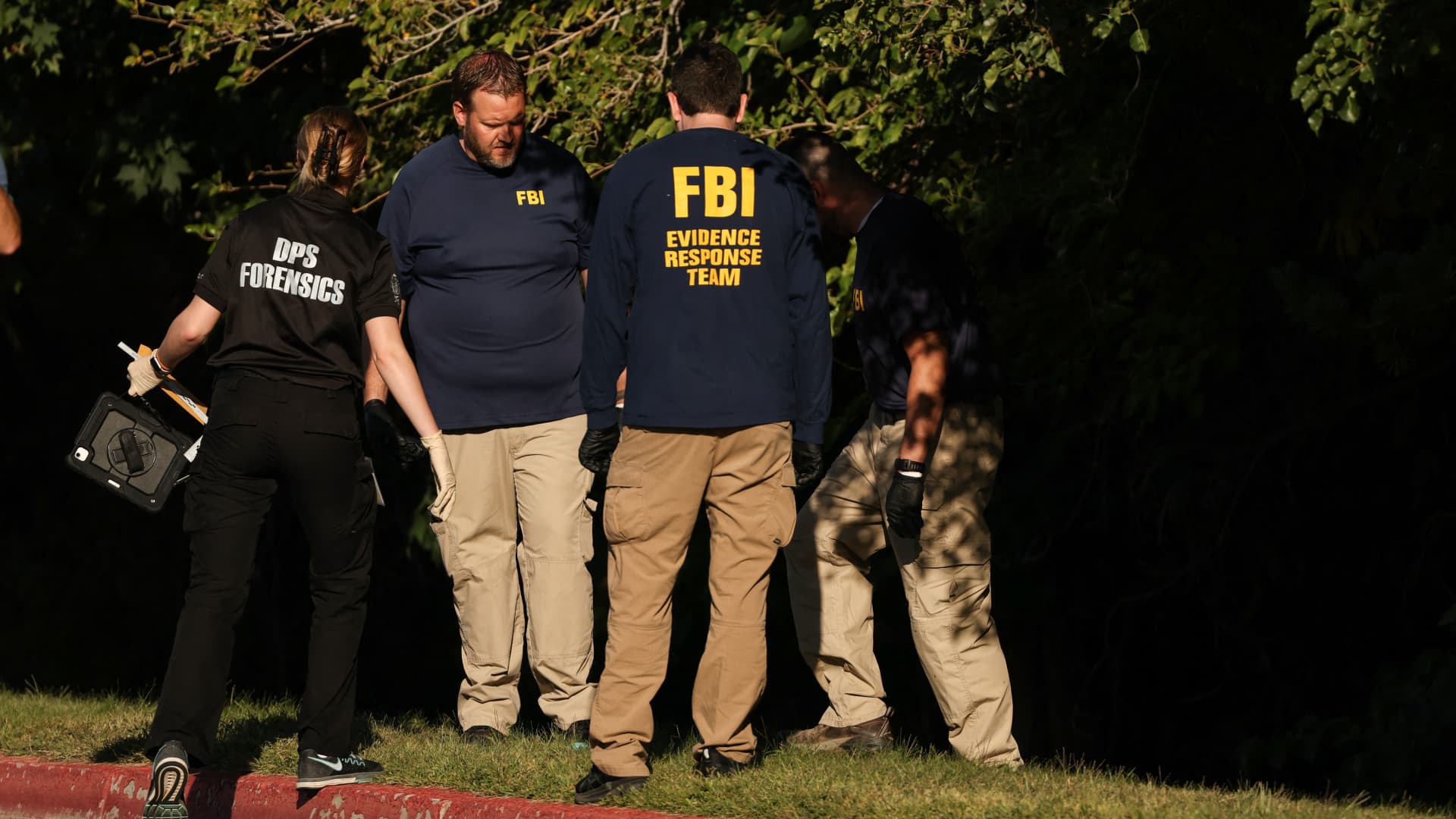
The ATF reportedly found the jacket fragment shared class characteristics with the Mauser — numerous makes and models, no individual match. The defense was then reportedly refused permission to photograph it or attend the destructive testing.
Read thisSources
- Defense motion and ATF summary analysis: Andrea Burkhart document
- The CBLA characterization and Jimmy Yates precedent come from anonymous X commentary. No primary source is cited in the investigation file identifying the planned test as CBLA.
This website's author is @HolonCitizen on X and YouTube/@HolonCitizen. Follow me there.
Interesting
- The RODE transmitter was reportedly worn under the shirt, against his torso.
- A tip claims the ER was emptied hours before the shot, not after it.
- One account says the treating surgeon was kept from the body for about two hours.