Enhanced Stairwell Photos Released After Custody (Claims)
:::caution Attributed claims only Forensic image enhancement is routine and court-admissible, and continuing a public bulletin during an unconfirmed detention is ordinary practice. What follows is one commentator's reading of documents and his own inference, not a finding that any agency doctored evidence. Tyler Robinson is charged, not convicted. :::
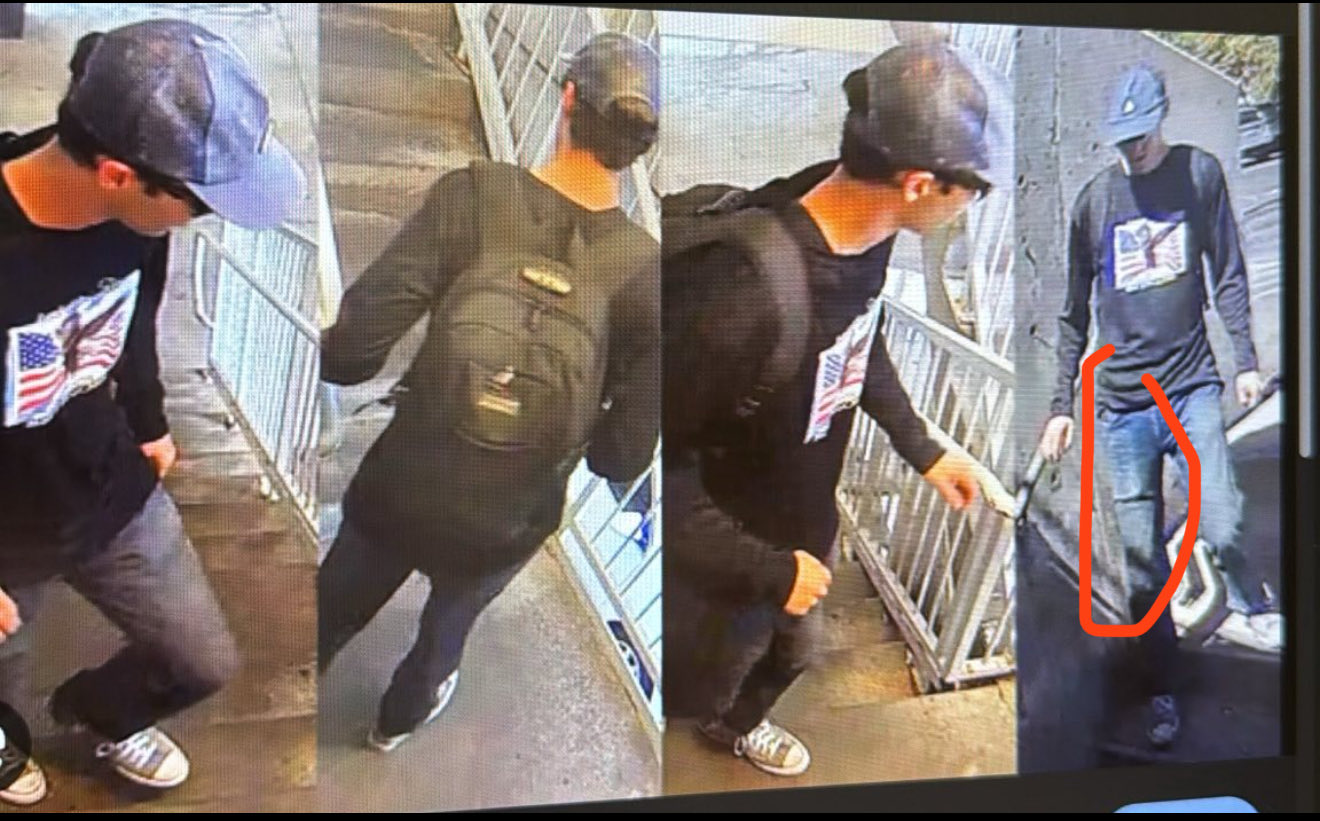
Claim snapshot
| Field | Value |
|---|---|
| The claim | The FBI released a second set of stairwell suspect photos after Robinson was already in custody and being Mirandized, and the images were "enhanced" |
| Raised by | Baron Coleman, radio host and commentator |
| First surfaced | Coleman's broadcasts; video circulated 2026-06-30 |
| Rests on | Document (an undated Bates-stamped defense filing) read and dated by Coleman himself |
| Evidence rating | EMERGING |
What is alleged
Baron Coleman alleges the FBI released a second set of stairwell suspect photographs at 7:17 PM Central on September 11, and contends that by that moment Tyler Robinson was already in custody and being Mirandized. His timeline anchor is a Bates-stamped document filed by the defense — a motion to exclude still photographers, television cameras, and microphones — which reportedly transcribes a video of an encounter at a timestamp of 6:25 PM, in which a Miranda warning is read and Robinson asks for counsel. Coleman places that reading on September 11 MDT.
His argument from there is short. You do not ask the public for help finding a man you already have in handcuffs. If the photos went out after the detention, they were not a search tool. In his phrase, "they weren't looking for a suspect, they were selling a culprit" — released, on his account, to fix an image of Robinson in the public mind before any courtroom saw him. That framing is Coleman's opinion and inference, not a fact.
His second point concerns the images themselves. Coleman points to Kash Patel's reported statement on Fox News that the stairwell images were "enhanced," and argues that an enhanced image is by definition not a fair and accurate representation of the original scene and should be challenged on that basis. He also questions how Robinson's father could reportedly have identified his son from a distant, low-resolution figure jumping from the UVU roof — a figure Coleman describes as small enough to be mistaken for an insect.
Coleman's case has a real weakness that this page should state rather than bury: his central document has no date. He says so himself. He reconstructs September 11 from inference — that Robinson's remark about his lawyer's office being "closed for the night" rather than for the weekend implies a Thursday, and that a booking sheet reportedly lists an arrest at 10 PM on September 11 by an officer who would have needed hours to travel there. That is careful reasoning. It is not a dated record, and the entire chronology depends on it holding.
The ordinary explanation
"Enhanced" in a forensic context ordinarily means routine processing that laboratories document and courts admit: sharpening, contrast and brightness adjustment, deinterlacing, noise reduction, upscaling. None of it creates content that was not in the original sensor data, and all of it is disclosable and reproducible from the source file. Patel using the word on television is not an admission of anything; it is the correct word for what image labs do. A defense expert can and will examine the originals against the released versions, which is precisely the check the system provides.
Continuing a public bulletin for a short period after an initial detention is likewise normal. Agencies do not confirm a suspect the instant someone is detained — identification has to be secured, the arrest processed, and the detained person is frequently still an uncertain lead. Withdrawing a public appeal prematurely risks losing the actual subject if the detention turns out to be the wrong person, which is an error agencies are far more afraid of than the reverse. A 52-minute gap between a Miranda warning and a photo release, if that is what it was, is not evidence of narrative construction.
What would settle it
- Obtain the FBI's release log for both stairwell photo sets — exact timestamp, authorizing official, and the internal basis for each release.
- Obtain the date of the Bates-stamped video Coleman relies on. This is one field on one document and it resolves his entire timeline.
- Obtain the image lab's processing notes for the stairwell photos: original files, every operation applied, and the analyst's report.
- Ask Robinson's father, on the record, what image he was shown and when.
Interesting In This Area
- Coleman's Miranda exhibit is the undated document his whole chronology rests on.
- A booking sheet arrest time reportedly contradicts the affidavit by six hours.
- Robinson reportedly did not surrender voluntarily, on one reading of the same records.
- The surrender video was reportedly refused, then reported deleted after thirty days.
Interesting In Other Areas
- The FBI has acknowledged enhancing the stairwell suspect images.
- Enhancement is routine and reproducible from the original sensor file.
- The 6:25 custody clock collides with the Discord confession timeline.
- Bates 003996-R2 is the exhibit number everything here turns on.
Images
Other Pages In This Section
Local Police Reportedly Told Not to Investigate (Claims)
The claim that federal agents told local officers not to talk to witnesses, and that DNA testing on items along the escape route stopped. Attributed and unverified — and it recurs in the cover-up material from a different direction.
Read this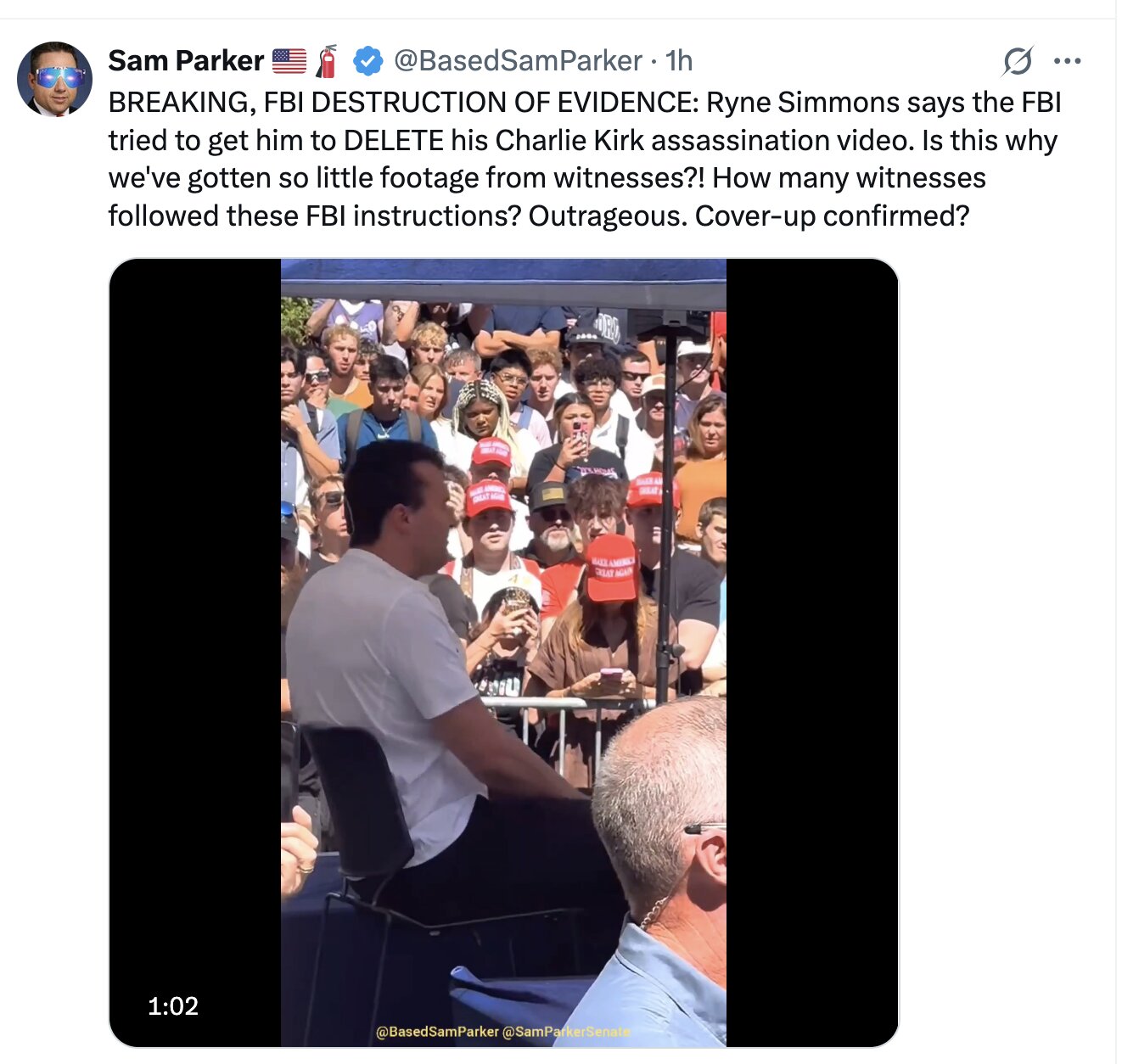
Ryne Simmons Reportedly Told to Delete His 4K Video (Claims)
A named witness describing his own experience, which the page rates above an anonymous claim. It also states the ordinary reading: asking a witness not to keep graphic footage is common and lawful once the original is secured.
Read this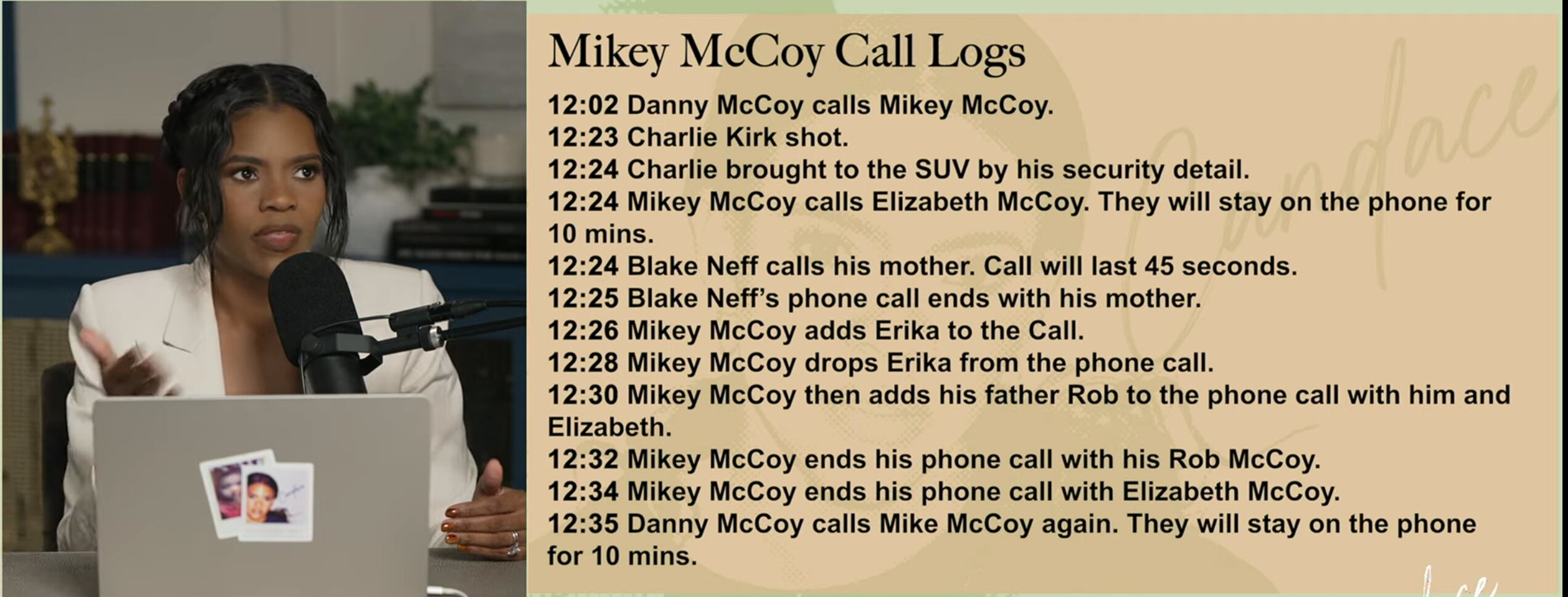
McCoy Alone in Frame, Neff Nowhere (Claims)
Blake Neff has said he witnessed McCoy's calls, yet at 12:24:02 McCoy is reportedly alone in frame. The investigation file's own author calls it a timeline question and makes no accusation — and nearly every premise, from the word "witnessed" to the clock offsets, is soft.
Read this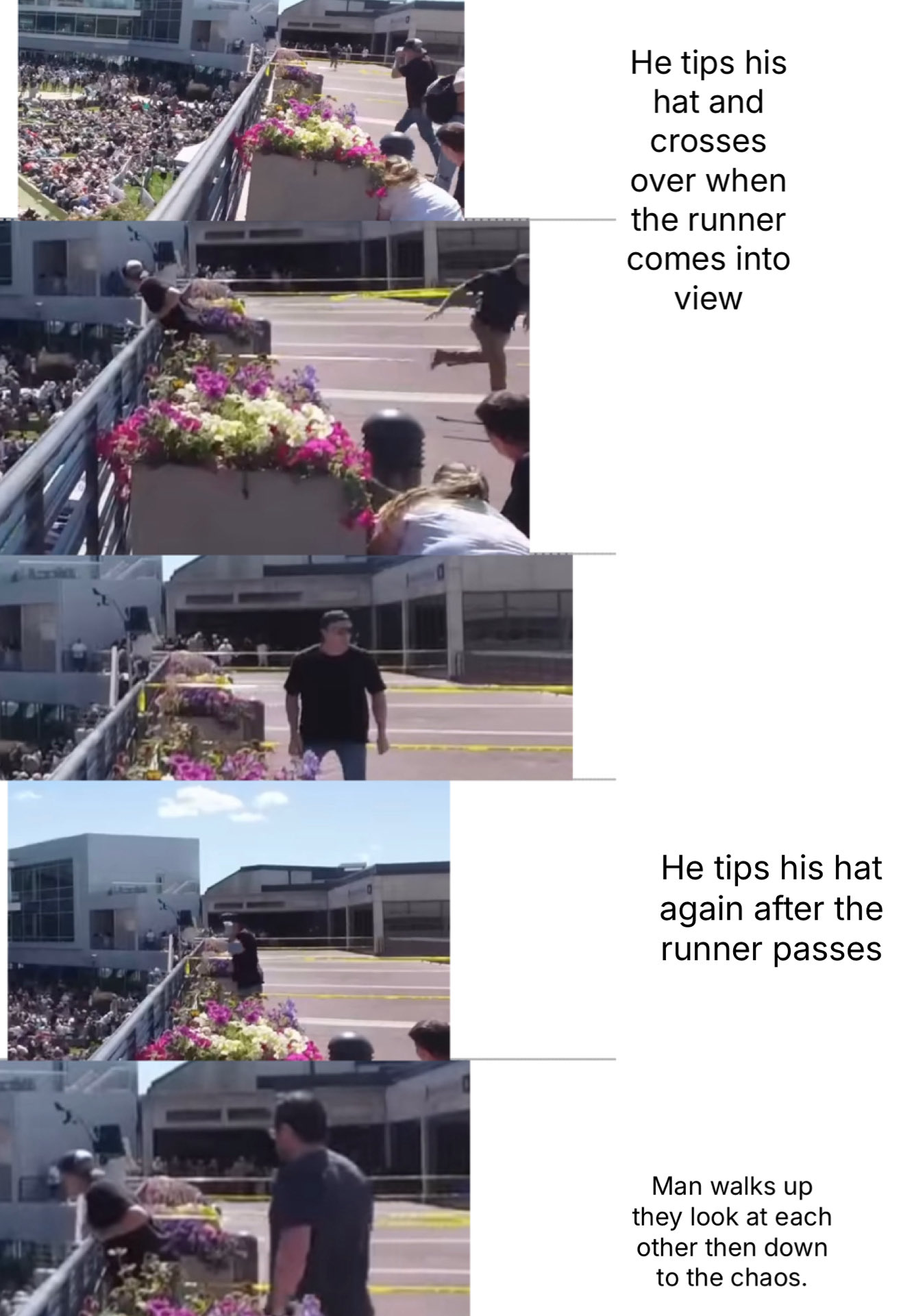
The Shirt Pulled at the Instant of the Shot (Claims)
Exploding-mic proponents read a 4K close-up as showing an object driven up under Kirk's shirt. The theory's own cited explosives expert says the mechanism would move the mic the other way — a claim rebutted by its own witness.
Read thisElsewhere In The Investigation
FBI Admitted Enhancing the Suspect Photos (Claims)
The FBI director reportedly called the stairwell images "enhanced." They went out on the evening the suspect was already in custody — and critics say the morning and afternoon figures do not look like the same man.
Read thisStairwell photos went out at a 7:58 PM press conference; court documents reportedly put the Miranda warning at 6:25 PM the same evening. The Director described the images as "enhanced" and nobody has said on the record what that meant.
Read this6:25 PM Custody vs Discord Confession Timeline Conflict
The 6:25 PM Miranda against the 7:57 PM Discord stamp, laid out as a timeline rather than an argument. Read it beside the surrender narrative and decide which entries cannot both be true.
Read this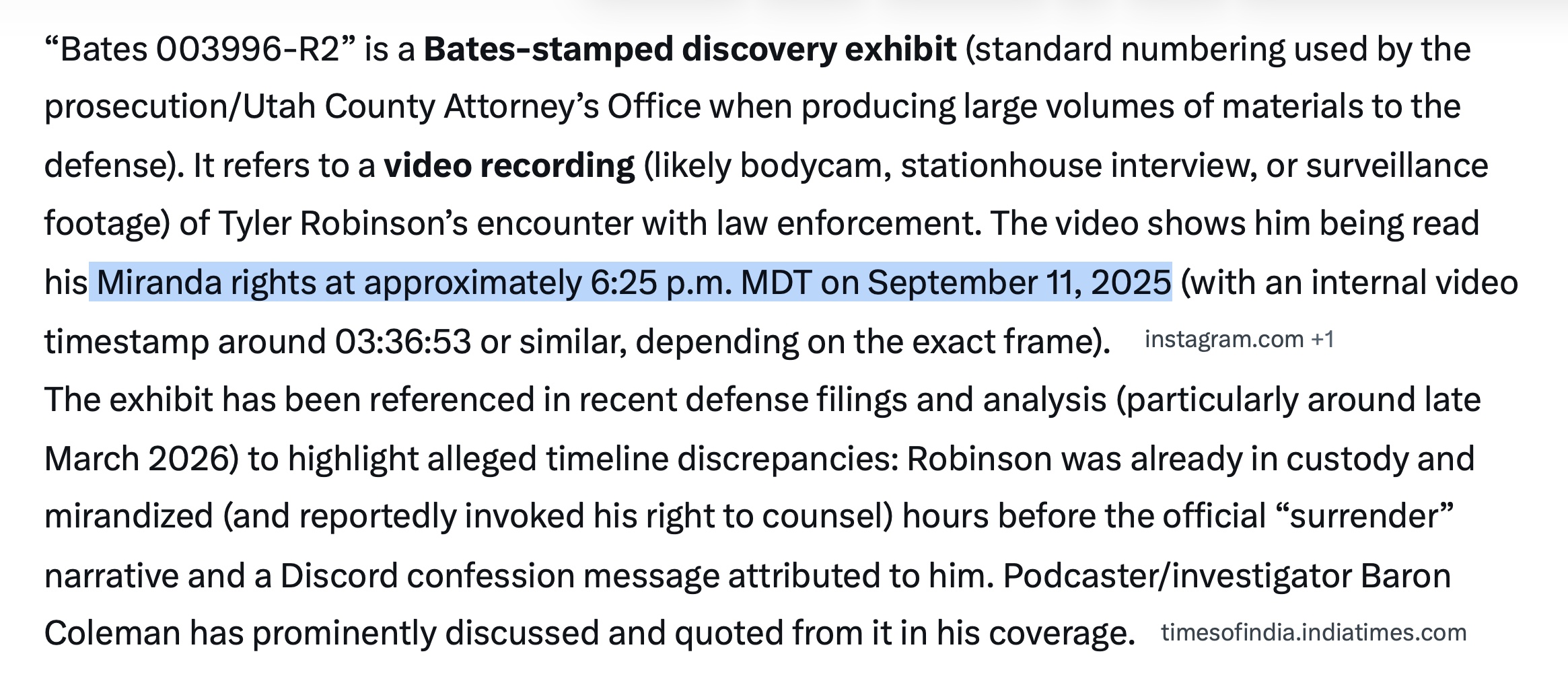
Bates 003996-R2: Miranda at 6:25 vs. the Discord Clock
Bates-stamped discovery puts Robinson Mirandized at about 6:25 PM. The confession is timestamped roughly ninety minutes later, when his phone should already have been in county custody.
Read thisSources
- Baron Coleman video via @IGraceAshford
- Kash Patel's "enhanced" remark is attributed to a Fox News appearance in Coleman's commentary; no direct citation to the broadcast is given in the investigation file.
This website's author is @HolonCitizen on X and YouTube/@HolonCitizen. Follow me there.
Interesting
- Booking paperwork and submission records reportedly disagree by six hours on the arrest time.
- Sixteen drones were reportedly observed over the scene, tied to an Army surveillance plane.
- How the case was classified reportedly decided what evidence was ever collected.