Local Police Reportedly Told Not to Investigate (Claims)
:::caution Attributed claims only Coordinating witness contact through a single lead agency is standard and lawful practice in any multi-agency major case. Nothing below is a finding that any officer or agent acted improperly. Sergeant Jennifer Faumuina is a living person; no wrongdoing on her part is alleged or implied. :::
Claim snapshot
| Field | Value |
|---|---|
| The claim | The FBI reportedly told local law enforcement not to talk to witnesses, and more broadly "that they can't investigate"; forensic testing on recovered items was reportedly stopped |
| Raised by | The investigation file's compiler; Candace Owens characterizing Sgt. Jennifer Faumuina's preliminary-hearing testimony |
| First surfaced | Undated in source; the testimony element dates to the preliminary hearing |
| Rests on | On-record testimony (as characterized by a third party) plus an unsourced list entry |
| Evidence rating | EMERGING |
What is alleged
The investigation file's "Strange events" list opens with a bare assertion: the FBI reportedly told local law enforcement not to talk to witnesses. A separate section, "FBI Blocking Investigations by other law enforcement," puts it more broadly still — "they told local law enforcement that they can't investigate." Neither entry carries a source, a date, an agency, or a named officer. Taken alone, they are assertions, not evidence.
What gives the item weight is a second, more concrete strand. Per Candace Owens' account of the Tyler Robinson preliminary hearing, Sergeant Jennifer Faumuina of UVU Public Safety reportedly testified that officers recovered a backpack, a jacket, gloves, and other abandoned items along the route the alleged shooter took after jumping from the Losee Center. Those items were reportedly found near the Fulton Library — the same area where, per the account, multiple 911 callers reported an armed man in a black shirt, black mask, and long rifle. Per that account, the items were initially sent to the FBI for DNA and analysis, and then a decision was made to stop testing them. Asked who made that call and why, the sergeant reportedly could not recall.
Investigators add a third strand. They note that the only person who reportedly both saw and filmed the figure on the roof — describing him as wearing full black tactical gear, a face mask, and possibly a helmet — has reportedly never been called by the prosecution, and that this witness told police on the scene they had the wrong man in custody. His description, per the account, matched early scanner traffic rather than the account that came later.
The argument stitched from these three strands is that witness contact was centralized, physical evidence from the alleged escape route was collected and then set aside untested, and the one eyewitness who contradicted the emerging account was left uncalled. Whether that pattern reflects an investigative judgment or something else is exactly what is unresolved. Investigators note the stand-down pattern was not limited to locals: former NCTC director Joe Kent has said on the record that his own center's foreign-nexus review was likewise ordered to stop once a suspect was in custody.
The ordinary explanation
Centralizing witness contact under the lead agency is textbook practice in a multi-agency major case, and the reason is not secrecy — it is evidentiary survival. Uncoordinated interviews contaminate memory, produce conflicting written reports, and generate impeachment material that defense counsel will use to dismantle a prosecution. A directive that local officers route witnesses through the FBI is what a competent lead agency issues on day one, and it is not the same thing as telling anyone they "can't investigate."
Stopping forensic testing on recovered items is likewise routine once investigators determine those items are not connected to the crime. A campus library sits near thousands of students; abandoned backpacks, jackets, and gloves accumulate there in ordinary life. Running DNA on every bag near the Fulton Library would consume scarce lab capacity that a capital case needs elsewhere, and the decision to stop is a resourcing call made after triage, not a suppression. A sergeant being unable to recall, months later, which supervisor made a particular resourcing decision is ordinary human memory, not evasion — and it would be unfair to read it as anything more.
Finally, prosecutors do not call every witness. They call the witnesses needed to prove the elements of the charge. A witness whose account conflicts with the State's theory is a witness the defense is free to call, and the file gives no indication the defense has been prevented from doing so.
What would settle it
- Obtain the preliminary-hearing transcript and read Sgt. Faumuina's testimony in full rather than through a third-party characterization.
- Request the evidence log for the backpack, jacket, and gloves: date received, tests requested, tests completed, and the written basis for any test cancellation.
- Identify by name and date any FBI directive to local agencies regarding witness contact, and read what it actually said.
- Ask the defense on the record whether the roof-footage witness has been interviewed and whether they intend to call him.
Interesting In This Area
- Recovered backpack, jacket and gloves were reportedly sent for DNA, then testing stopped.
- The roof eyewitness was never called by the prosecution.
- Joe Kent's foreign-nexus review was reportedly halted once a suspect was held.
- A surgeon was reportedly blocked from the room, on an unsourced list entry.
Interesting In Other Areas
- Police radio reportedly carried clear direction not to interview before statements were taken.
- Witness coordination through one lead agency is standard in multi-agency cases.
- The stairs-guy identity gap is what the uncalled eyewitness would speak to.
- Joe Kent has said on the record that his review was stopped.
Images
Other Pages In This Section
Seventeen things citizen investigators flag about the FBI in this case, split into Most Important and Secondary — the halted foreign-nexus probe, the paved crime scene, the seized security-team clothing. Attributed claims, not proven findings.
Read this
A Surgeon Reportedly Blocked From Kirk's Room (Claims)
An unsourced list entry says the FBI blocked a surgeon from returning to the room with Charlie Kirk. No name, no hospital record, no source anywhere in the file — kept only so it can be run down.
Read this
The N1098L Low Pass at 12:24 (Claims)
A HADES-program aircraft reportedly made a 335-foot low pass near UVU at 12:24, thirty seconds after the shot. No aircraft can react in thirty seconds, so the pass is either coincidence or pre-positioning — and the file's own numbers conflict.
Read this
The Shot Time: 12:23 or 12:27? (Claims)
The investigation file records two shot times, 12:23 and 12:27, and asks itself which is right. The 12:27 figure is never sourced, and every other reconstruction in the file settles on 12:23:30.
Read thisElsewhere In The Investigation
Local Police Reportedly Told Not to Interview Witnesses (Claims)
The allegation is that local police were directed not to interview witnesses and were separately tied up elsewhere, so the on-scene record was thinned at the source. Radio traffic and eyewitness accounts are what it rests on.
Read thisWitnesses & Local Coordination
"As per SBI and FBI, we've been given clear direction NOT to interview." One witness says he sent in close-up 4K footage to help, then got calls asking him to confirm he had deleted it.
Read this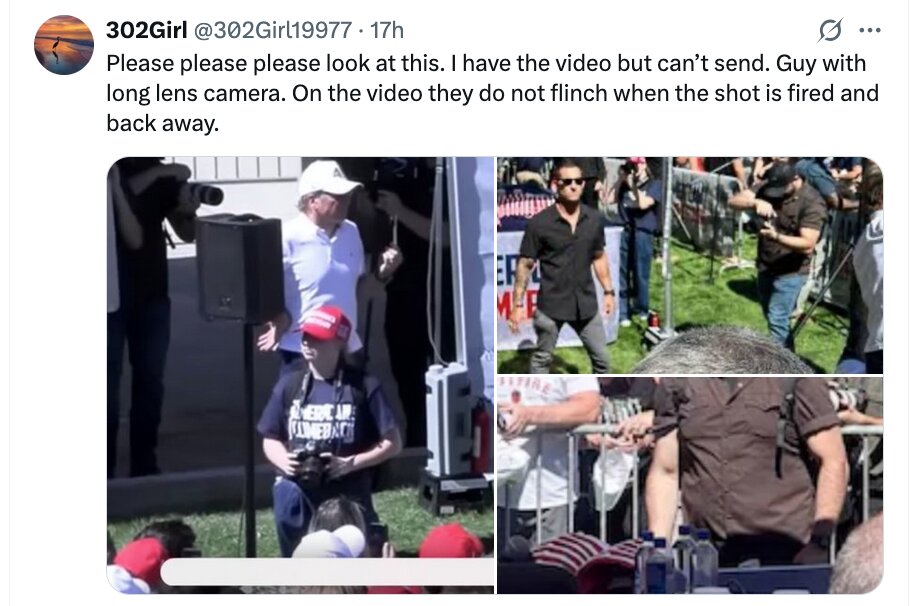
The figure on the stairs and the man in custody, compared frame by frame on build, gait and clothing. The gap between them is the whole argument.
Read this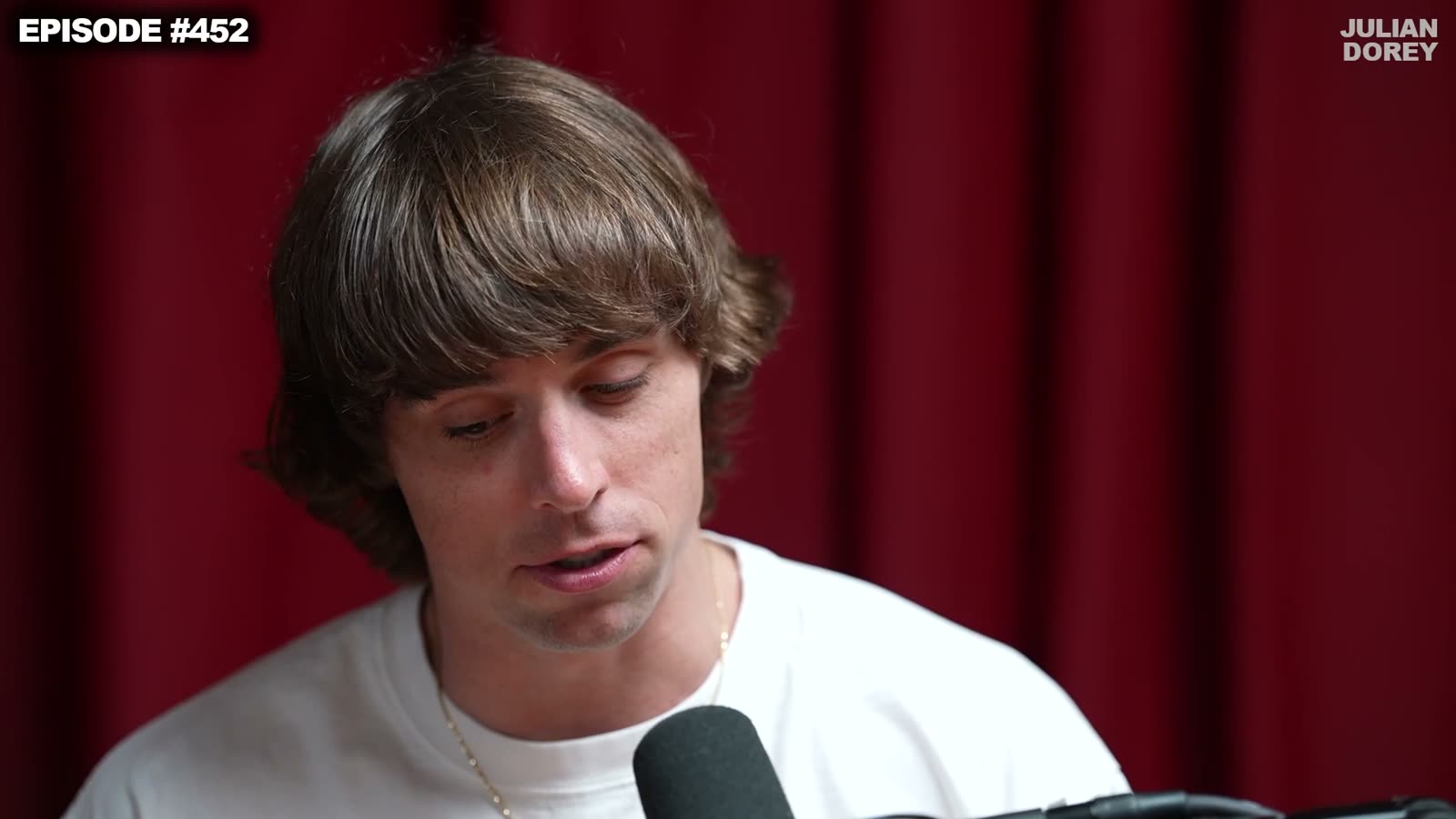
Sources
- Candace Owens' characterization of Sgt. Jennifer Faumuina's preliminary-hearing testimony, reproduced in the investigation file. No direct URL is cited in the investigation file for this item.
- The "FBI told local law enforcement" entries are unsourced list items in the investigation file.
This website's author is @HolonCitizen on X and YouTube/@HolonCitizen. Follow me there.
Interesting
- Broadcast audio analysis reads one arrival as a detonation at the tent itself.
- An Egyptian jet reportedly made repeated Provo stops in the week before September 10.
- Donor meetings and pre-event aircraft remain open investigative lanes, not settled background.