Suspicious by the FBI
Things citizen investigators flag as suspicious about the FBI specifically — its handling of evidence, witnesses, other agencies, and the public narrative. State and local conduct is tracked under Suspicious by Law Enforcement; the broader intelligence community under Suspicious by US Intel. Every item is an attributed claim; no FBI employee named here has been charged with or found to have done anything wrong.
All of it traces back to one afternoon: Charlie Kirk was assassinated at Utah Valley University on September 10, 2025, and citizen investigators still dispute the government's account of how he died.
Most Important
- Patel reportedly shut down the Kent probe — the FBI director's role in halting the foreign-nexus question, with Joe Kent himself on the record
- Federal investigators reportedly turned around at an airport — a sister agency's personnel reportedly put back on the plane and sent home, escalated to the Oval Office with no corrective action
- Local police reportedly ordered not to interview witnesses — "as per SBI and FBI, we've been given clear direction NOT to interview," on police radio, before statements were taken
- A contractor reportedly told to pave the crime scene — Dan Merrell's on-camera account of a hardscaping job at the UVU courtyard, with the FBI named alongside the governor in the chain of authority
- The security team's clothing reportedly seized — down to their underwear — the detail ended up in hospital scrubs; no property receipt or lab result is public, and possible residue would live on that fabric
- The banned CBLA bullet-lead test — a technique the FBI abandoned in 2005 after the National Research Council questioned it, reportedly proposed again once the ATF fragment exam came back inconclusive; sourced from the defense's own filings
- An Israeli firm, Cellebrite, did the phone extractions — the foreign digital-forensics vendor named in open court as the tool used on the phones in State of Utah v. Robinson
- FBI and ATF reportedly withholding discovery — files held since September, and a 600,000-document dump
- Bomb dogs reportedly kept from parts of the scene — and the missing gunshot-residue test
- A surgeon reportedly blocked from Kirk's room — unsourced, and consistent with ordinary scene control
- The FBI Rav4 that reportedly flashed a badge — an unmarked federal vehicle near the scene, minutes after
Secondary
- Local police reportedly told not to investigate — witness contact centralized, DNA testing stopped, a sergeant who could not recall who decided
- Ryne Simmons reportedly told to delete his 4K video — with follow-up calls to confirm it was gone
- Feds reportedly directed the re-search that found the rifle — hands found nothing, dogs found nothing, then it was found
- Enhanced stairwell photos released after custody — Baron Coleman on "selling a culprit"
- Selective 4K release versus the FBI gag claim — crisp tribute-video clips from footage that could not be released
- SUV destroyed and the ADL floor-sharing claim — two low-confidence optics complaints
What makes this section different
The two lists are ordered by what a subpoena could actually settle, not by how alarming the claim sounds. The Most Important list opens with the items where a named person has spoken on the record about something they personally experienced or ordered. Former NCTC director Joe Kent has said in his own voice that his center's foreign-nexus review was ordered to stop once Robinson was in custody, before those leads were exhausted. Mike Glover has said on a podcast that a high-level official told him a sister agency's personnel were turned around at an airport and sent home, and that the incident went to the Oval Office without a correction. Contractor Dan Merrell has said on camera that he was called to pave the UVU courtyard by Monday, with the FBI named alongside the governor in the chain of authority. None of these are proven. All of them name a person who can be deposed.
The middle of the Most Important list is where the documentary items sit — the ones that live in a filing, a docket, or an evidence log rather than in anybody's memory. Two of them came out in open court rather than on social media.
The first is the banned CBLA bullet-lead test, and it is arguably the most substantive single document trail on this page. It surfaced through the defense's own filings by way of Andrea Burkhart's document analysis. The ATF fragment examination reportedly found only class characteristics, meaning Robinson's Mauser 98 "could not be excluded" but could not be individually identified either. What follows is a proposal for "metallurgical" testing, and investigators infer that means CBLA — the compositional bullet-lead technique the FBI itself retired in 2005 after a National Research Council review questioned its scientific and statistical validity. Read the counterargument on that page carefully: "metallurgical" is a broad word, and the inference may be wrong. But if the inference is right, it describes the Bureau reaching for a method it had already conceded was not reliable, at the exact moment the reliable method failed to individualize.
The second is Cellebrite: a foreign digital-forensics vendor performed the extraction of the phones the state's case rests on, and the extraction record has separately been contradicted inside the filings. The discovery-withholding item and the bomb-dog item are both answerable from a docket and an evidence log. The clothing item is there because a property receipt either exists or it does not — and if the garments were logged, a lab either examined them or did not.
The last two Most Important entries — the surgeon and the Rav4 — are the weakest things on that list, and they are on it because Bryan flagged them as the ones a reader should not lose track of, not because the sourcing is good. Both have no cited source at all: not a link, not a name, not a timestamp. Both also describe conduct that is entirely normal. Securing a homicide victim's room is chain-of-custody practice, and an agent showing credentials is how agents are supposed to identify themselves. Read them as open leads that need a source, not as findings.
The Secondary list is not a discard pile — it is mostly narrative-control material, weaker than the evidence-handling claims above it but not empty. The Ryne Simmons item has a named witness on the record describing his own experience, which is worth more than an anonymous claim, even though "we already have your original, please don't distribute a murder video" is both a completely ordinary request and exactly what the account describes. The "told not to investigate" item's strongest component is Sergeant Jennifer Faumuina's reported preliminary-hearing testimony that recovered items were sent for DNA analysis and then testing stopped, and that she could not recall who made that call. That is a question a court can answer. The SUV-and-ADL entry is last because it bundles two low-confidence optics complaints, one of which concerns a landlord's tenant roster over which no agency has any say.
Interesting In This Area
- Patel reportedly halted the foreign-nexus review because it might help the defense.
- The proposed metallurgical test surfaced through the defense's own filing, not social media.
- Sergeant Faumuina reportedly could not recall who stopped DNA testing on recovered items.
- The Rav4 and the blocked surgeon have no cited source at all.
Interesting In Other Areas
- A sister agency's personnel were reportedly turned around at an airport and sent home.
- A contractor says he was called to pave the courtyard by Monday.
- Cellebrite, an Israeli firm, was named in open court as the extraction tool.
- Joe Kent is the only named federal official speaking on the record here.
Other Pages In This Section
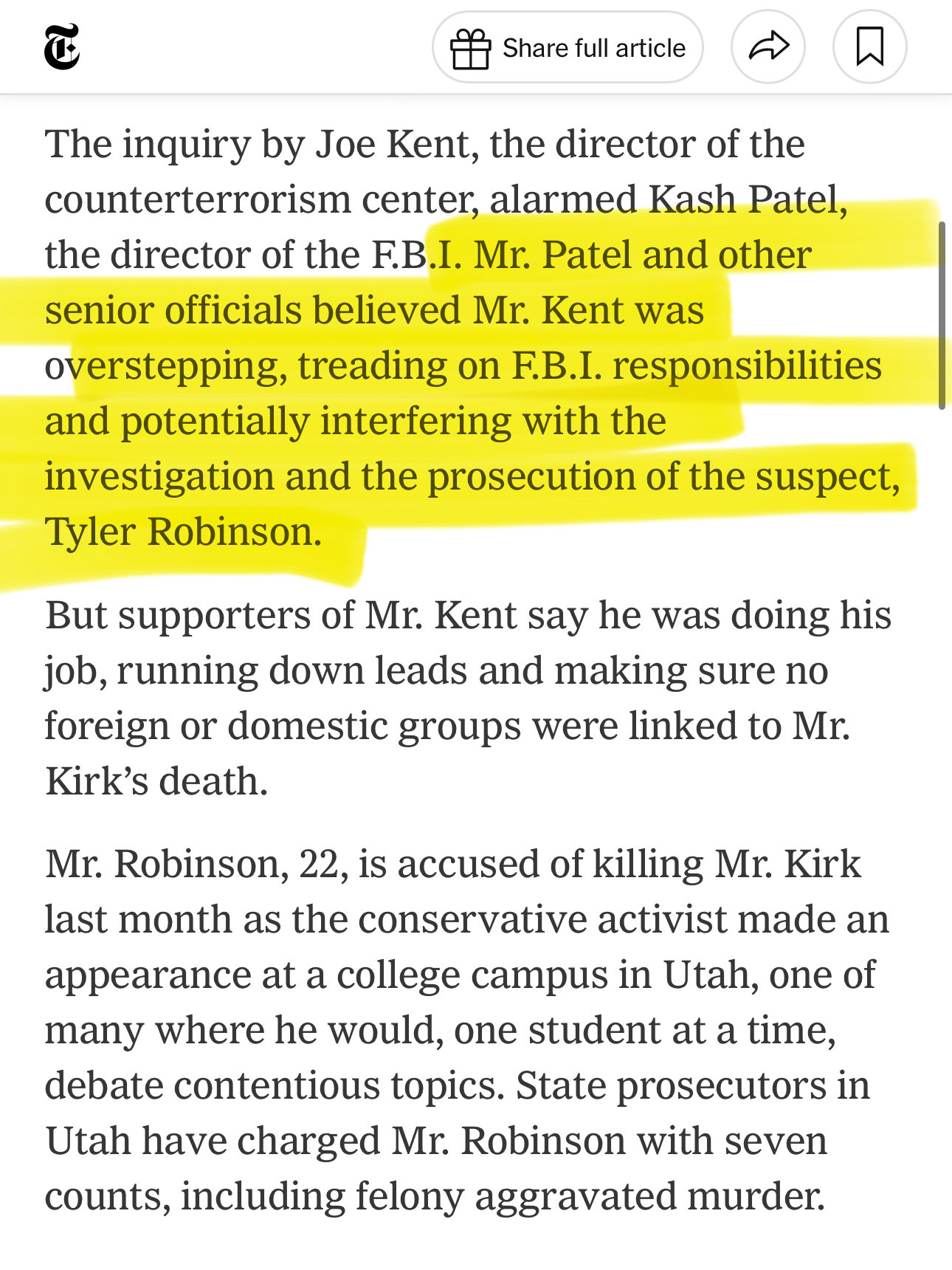
Patel Reportedly Shut Down the Kent Probe (Claims)
Per Daily Mail reporting, FBI Director Kash Patel allegedly halted the counterterrorism review of a possible foreign nexus to the killing. Attributed reporting, not a proven finding — and Joe Kent has since spoken on the record.
Read this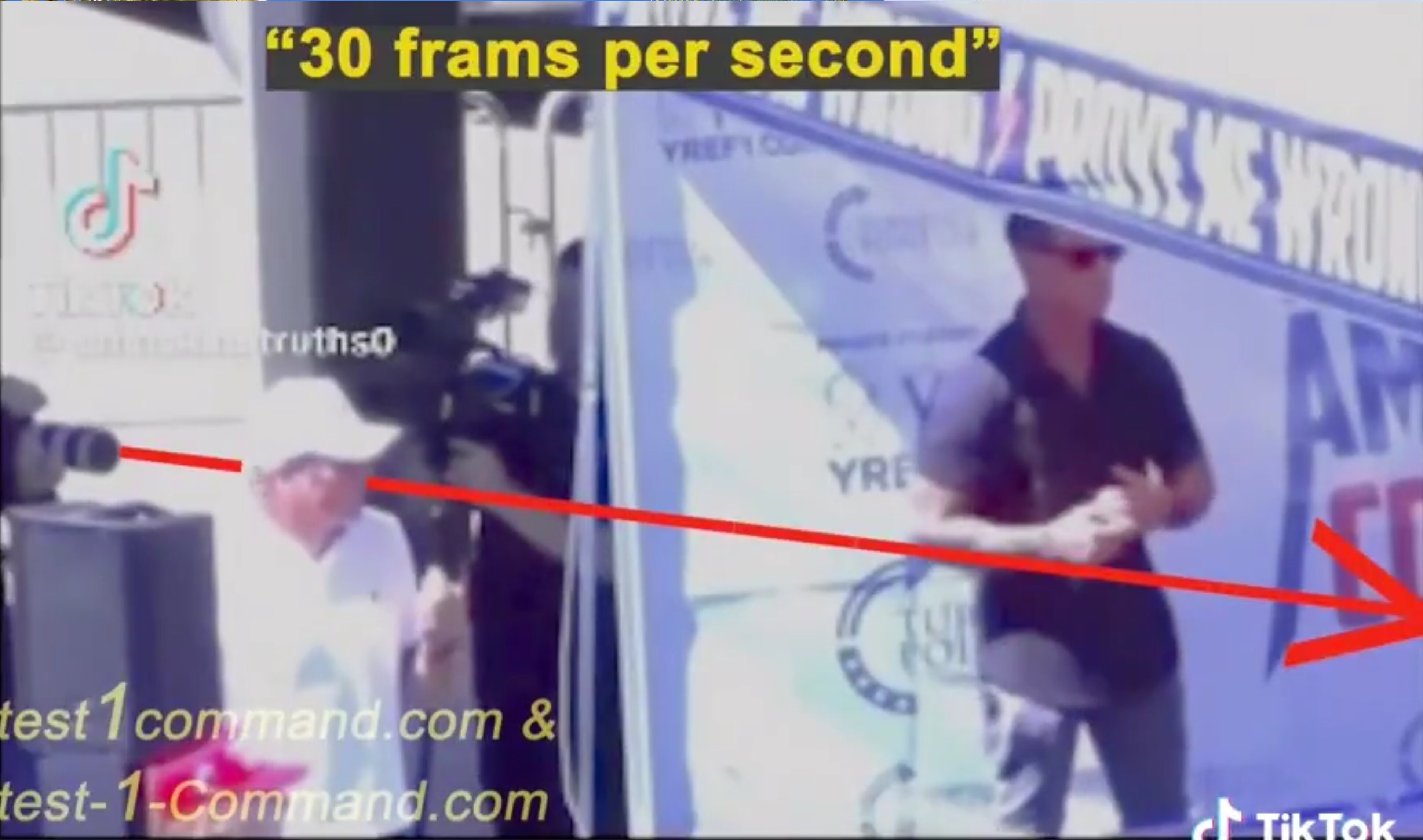
The Banned CBLA Bullet-Lead Test (Claims)
Investigators allege the FBI is reviving Comparative Bullet Lead Analysis, a test the Bureau abandoned in 2005, after the ATF exam came back inconclusive. An attributed inference, not a confirmed fact.
Read thisFBI and ATF Reportedly Withholding Discovery (Claims)
The claim that Robinson's defense sought a continuance because the ATF and FBI would not release files held since September — DNA data, video chain of custody. Attributed and unverified, though it tracks the docket.
Read this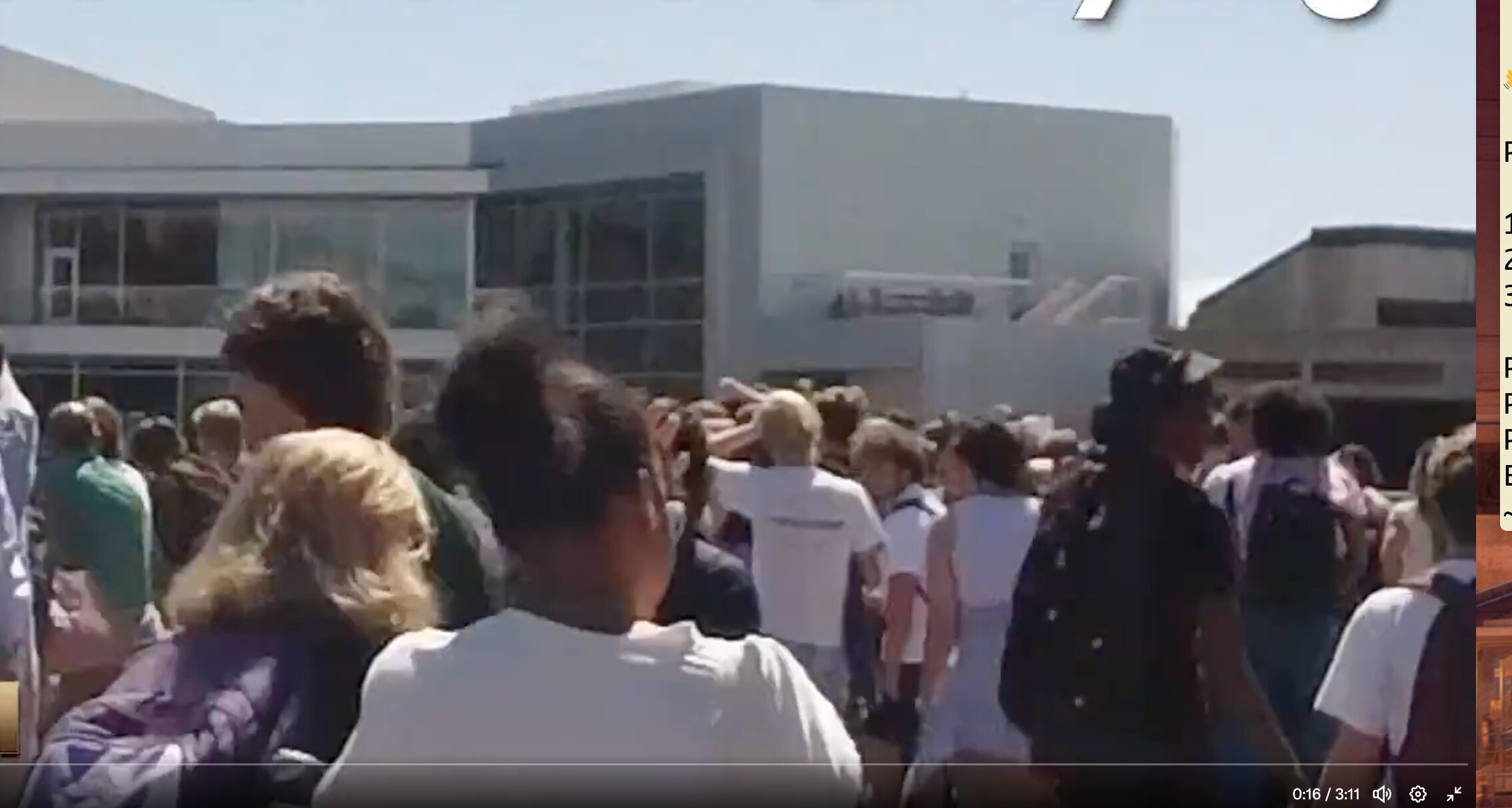
Bomb Dogs Reportedly Kept From Parts of the Scene (Claims)
Candace Owens has claimed the FBI did not want bomb dogs in certain places at UVU, a keystone of the rigged-microphone theory. The investigation file's own record shows bomb dogs were called at 11:17am.
Read thisElsewhere In The Investigation
CIA Reportedly Blocked From the Investigation (Claims)
Reported claims that the FBI physically blocked CIA personnel from advancing the investigation, and that the Oval Office heard about it and did nothing.
Read this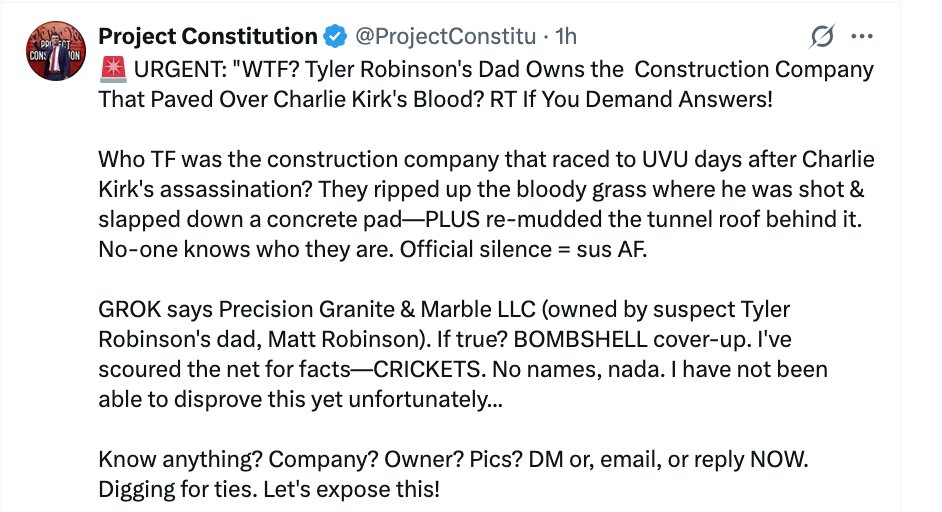
The contractor says he was told "the governor and the FBI said they want this by Monday" and laid pavers four days after the killing. Doing pavers correctly means over-excavating — stripping the exact soil layer residue clings to.
Read this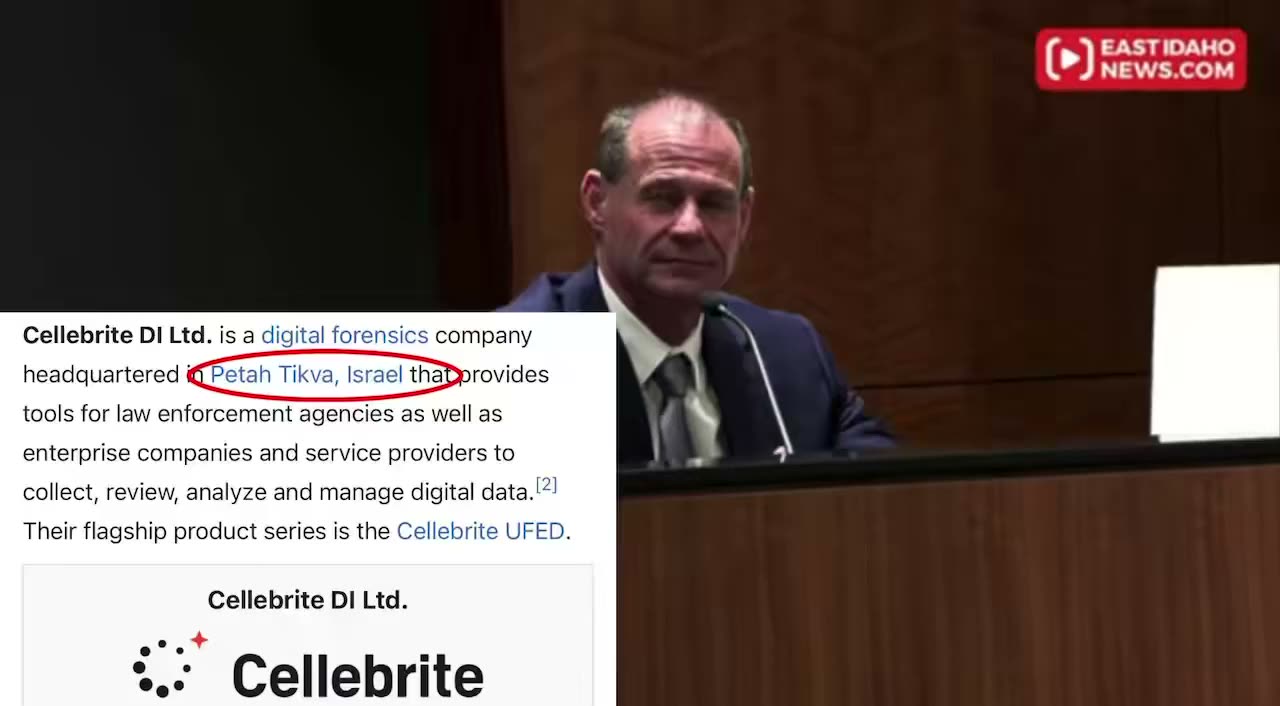
Cellebrite — Israeli Forensics Firm
The Israeli forensics firm whose tooling extracted the phones at the centre of the case. Who built the extraction is not a neutral detail when foreign leads are part of the argument.
Read this
This website's author is @HolonCitizen on X and YouTube/@HolonCitizen. Follow me there.
Interesting
- Archives reportedly show a TPUSA officer vanish from the site after September 1.
- Owens reports other prints on the rifle, no firing video, and no standard GSR test.
- A demonstrator says a rifle shoved down a pant leg loses zero entirely.