Patel Reportedly Shut Down the Kent Probe (Claims)
:::caution Attributed claims only Deconfliction between agencies — insisting that one body leads an investigation — is routine, lawful, and often legally necessary. Kash Patel, Joe Kent, and Tulsi Gabbard are living public officials; nothing here asserts that any of them committed a crime or acted improperly. These are reported claims. :::
Claim snapshot
| Field | Value |
|---|---|
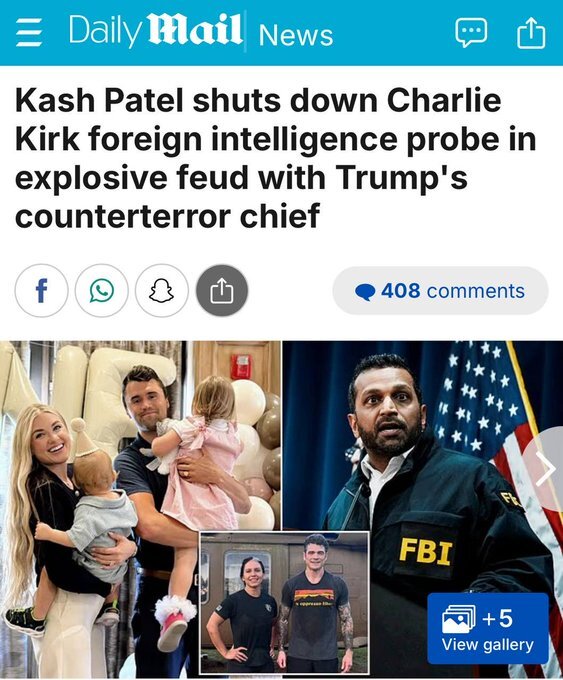
| The claim | FBI Director Kash Patel allegedly "snuffed out" NCTC efforts to examine whether foreign governments had any nexus to the killing |
| Raised by | Daily Mail (Ruiters); Candace Owens; Russell Brand (secondhand) |
| First surfaced | Daily Mail report; Brand's account describes a cabinet meeting six days after the killing |
| Rests on | Published reporting plus uncorroborated secondhand hearsay |
| Evidence rating | MODERATE |
:::note Scope of this page This page covers Patel's role specifically. The NCTC and institutional angle — what the counterterrorism center was doing and why it stopped — is covered at Kent's NCTC probe halted. This page does not duplicate it. :::
What is alleged
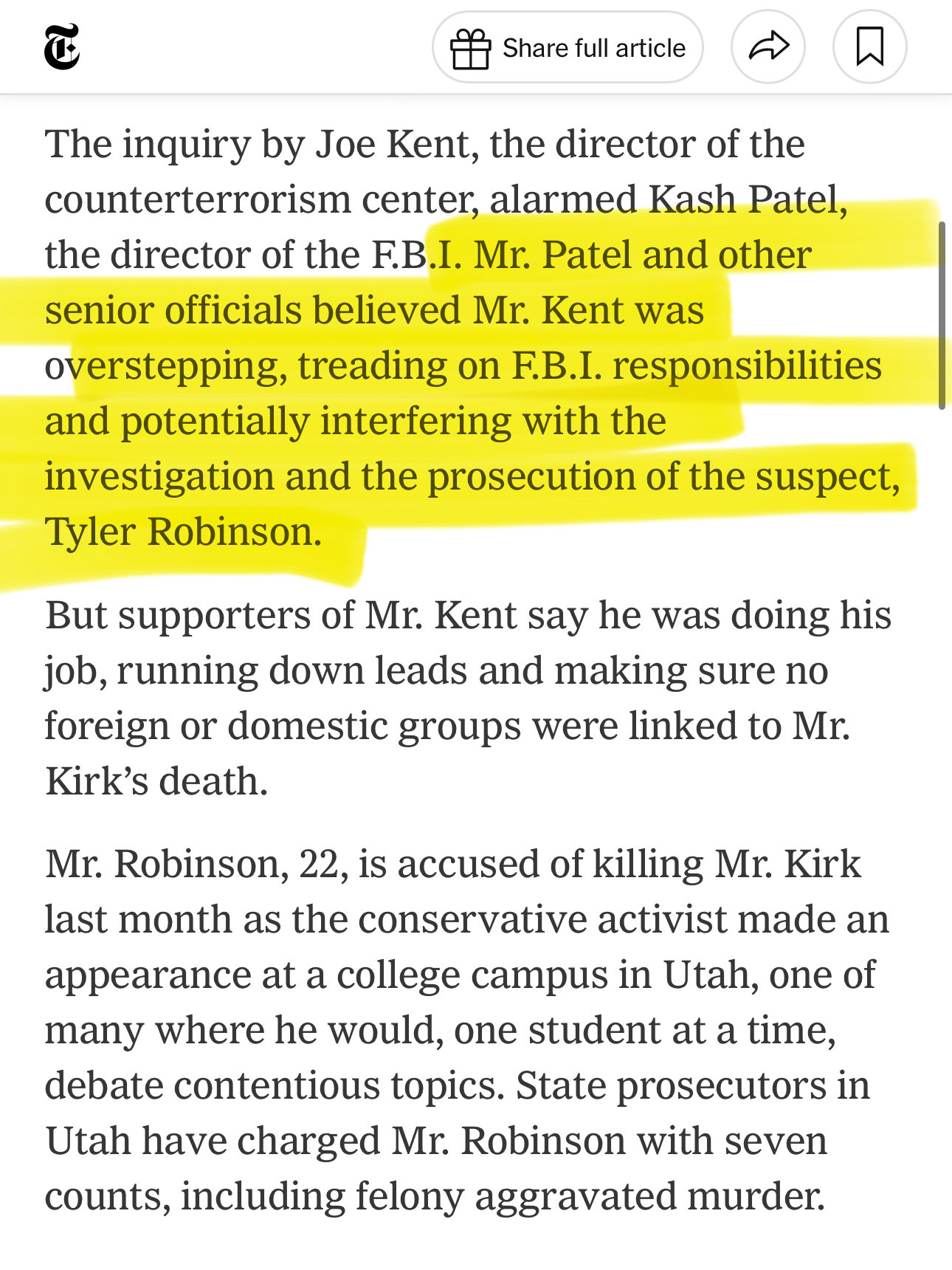
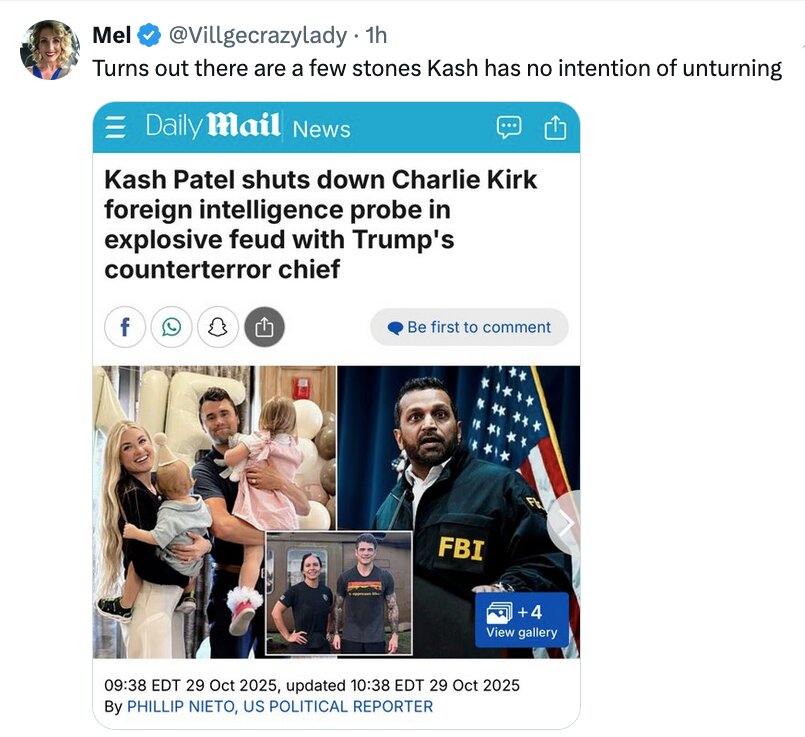
Per a Daily Mail report attributed to Ruiters, FBI Director Kash Patel allegedly "snuffed out efforts by the Counterterrorism Center to see if foreign powers were involved in Charlie Kirk's murder." The effort in question was reportedly run by Joe Kent, Director of the National Counterterrorism Center, which sits under the Office of the Director of National Intelligence, then led by Tulsi Gabbard. The investigation file records that Patel was reportedly angry Kent had "gone through FBI material" on the case.
The article reportedly attributes the administration's concern to a specific and rather revealing worry: that Kent's foreign-interference probe could provide ammunition to Robinson's defense lawyers, who could then argue more than one suspect was involved in the killing. Investigators seize on this. If the stated reason for closing a line of inquiry is that the inquiry might help the defense, then the inquiry was being weighed against the prosecution's convenience rather than against the truth. That is their argument, and it is the sharpest thing on this page.
Candace Owens has publicly framed the same reporting as a question rather than an accusation: the article, she notes, is about Patel being upset that Kent and Gabbard were trying to do their jobs, and she asks why Patel would seemingly want to be the sole point person on this.
A third strand is weaker and should be labeled as such. Russell Brand claims two unnamed sources who were in a cabinet meeting told him that, six days after the killing, Patel, Gabbard, and the Vice President said "we're not looking at foreign involvement" and "we're not looking at any accomplices domestically." This is uncorroborated secondhand hearsay from anonymous sources, relayed by a commentator, and the file's own transcript of Brand's remarks is garbled about who was in the room. It is recorded here for completeness, not as support. Notably, it also cuts against the Patel-acted-alone framing, since it places Gabbard — Kent's own superior — in the same decision.
The ordinary explanation
Deconfliction is routine and, in a case like this, close to mandatory. The FBI is the lead agency on a domestic homicide and terrorism investigation. An intelligence body running a parallel inquiry through FBI case material creates genuine and serious problems: chain-of-custody complications for evidence that must survive a capital trial, classification entanglement that can render material undisclosable, and Brady obligations that become impossible to discharge cleanly when an intelligence agency holds derivative information the prosecution cannot see or produce. A director who insists on a single lead channel is doing his job, and doing it in a way that protects the prosecution rather than sabotaging it.
Nor is closing a line of inquiry the same as suppressing evidence. Investigations narrow constantly. If the foreign-nexus review produced nothing, ending it is a resourcing decision, not a cover-up. The Daily Mail's reported rationale is uncomfortable, but it is also a real litigation risk that any prosecutor would raise: an unresolved, publicly known foreign-interference inquiry is precisely the kind of loose thread a defense team uses to manufacture reasonable doubt about a lone actor.
What would settle it
- Obtain the NCTC's written record: what Kent's review was chartered to examine, what it found, and the documented basis on which it ended.
- Ask the FBI, on the record, whether it issued any instruction limiting NCTC access to case material, and on what legal authority.
- Ask Patel, Kent, and Gabbard directly — ideally under oath before a congressional committee — whether the foreign-nexus question was closed, by whom, and why.
- Identify whether the Daily Mail's "Trump administration officials" are willing to testify to the defense-ammunition rationale.
Interesting In This Area
- The NCTC side of the story covers the institution rather than the director.
- Sixteen Israeli-registered phones at UVU are the kind of lead such a review examines.
- Kent's halted probe is read by critics as ammunition counsel should demand.
- The Fort Huachuca JTF meeting sits in the same foreign-nexus territory.
Interesting In Other Areas
- Joe Kent has since spoken on the record about the stopped review.
- The halt itself is tracked separately as a cover-up claim.
- Foreign-inquiry shutdown is treated there as proof rather than as question.
- Kash Patel has not answered the defense-ammunition rationale on the record.
Images
Videos
Footage related to this page. Each card opens that clip's own page, with the video, the full write-up, and its source.
Other Pages In This Section
The FBI Rav4 That Reportedly Flashed a Badge (Claims)
An unsourced list entry says an FBI Rav4 drove past Tyler Robinson right after the shooting and flashed a badge when pulled over. No source, no date, no agent named — recorded so it can be checked or dropped.
Read this
Farnsworth Already Filming From the Rock Pile (Claims)
Terryl Farnsworth was reportedly filming from a rock pile 27 seconds after the shot and said "He's dead" at 12:24:36. Critics call it foreknowledge; the ordinary reading is a bystander watching a man bleed.
Read this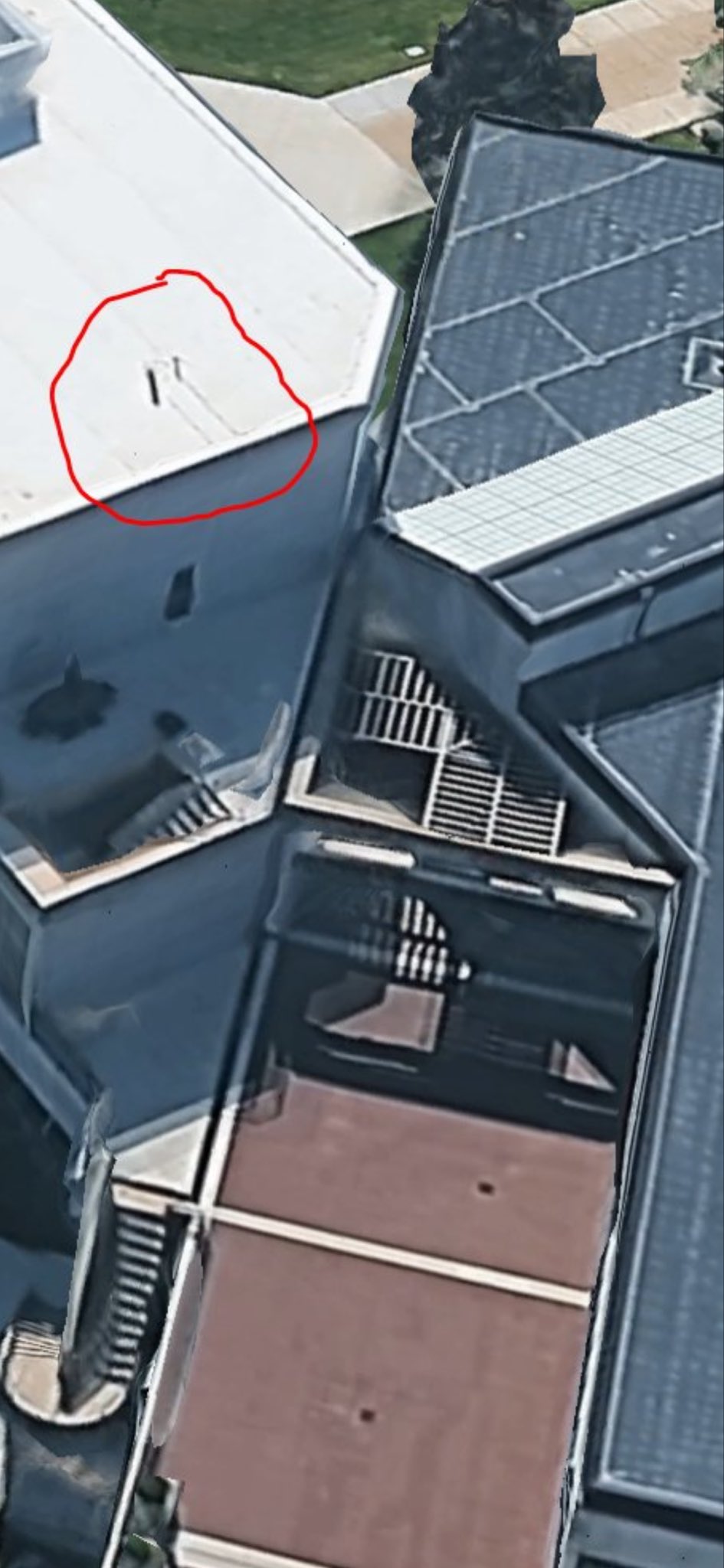
The Rifle Wrapped, Placed on the Roof, the Descent (Claims)
A compiled timeline says the rifle was set down on the Losee roof at 12:24 — yet the Mauser was recovered in the woods. The tension resolves if the item was put down only to free both hands for the drop.
Read this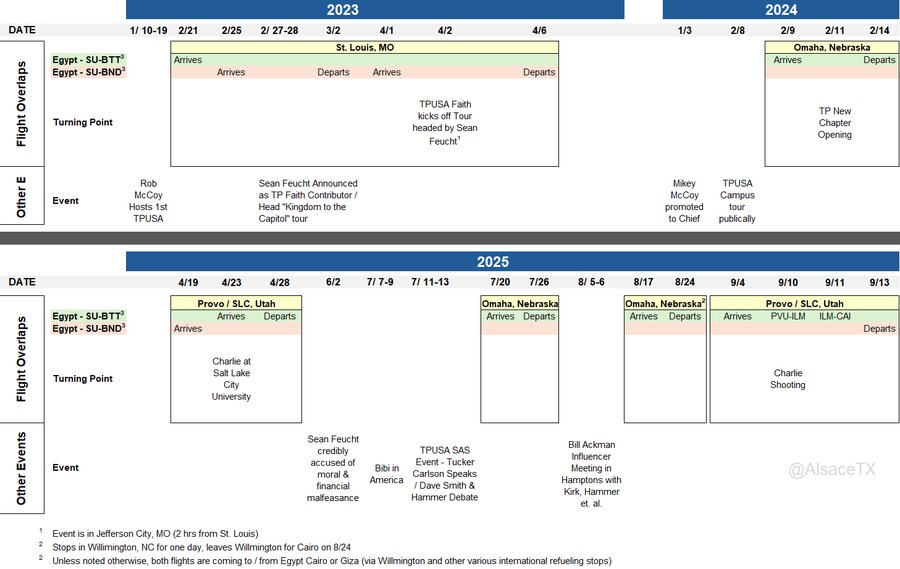
The Egyptian Jet SU-BTT (Claims)
Flight trackers highlight an Egyptian-registered Falcon 7X parked at Provo the week of the assassination. It departed five hours before the shooting, which puts it hundreds of miles away — the detail the circulating posts leave out.
Read thisElsewhere In The Investigation
FBI Halt of Joe Kent's Counterterrorism Leads (Claims)
Reported allegations that a counterterrorism review into a possible foreign role was stopped before its leads were run down. Every person named is a living public figure who denies or has not commented, and nothing here is a finding of fact.
Read thisJoe Kent — Foreign Inquiry Shutdown
Joe Kent says the FBI halted his NCTC foreign-nexus inquiry. It is the most directly attributable U.S. intelligence thread on the site — a named official, on the record.
Read thisA statement-versus-document index for the FBI director: what he said publicly in the first days, set beside the filings and booking records that came later. The dispute is recorded as a dispute.
Read thisSources
- Daily Mail (Ruiters) report on Patel and the Counterterrorism Center
- Candace Owens on Patel as sole point person
- Russell Brand's secondhand cabinet-meeting account — anonymous sources, uncorroborated
This website's author is @HolonCitizen on X and YouTube/@HolonCitizen. Follow me there.
Interesting
- Thousands of pagers detonated remotely in 2024 — an established capability, not speculation.
- The scene was reportedly paved over within days — more signs of cover-up.
- The Active Denial System already projects a 95 GHz beam at human targets.