Feds Directed the Re-Search That Found the Rifle (Claims)
:::caution Attributed claims only Directing an expanded or repeated search of an area is exactly what a supervising agency is supposed to do, and repeat searches that finally succeed are commonplace. The items below are unsourced claims from a list in the investigation file, not findings that any agent or officer did anything improper. :::
Claim snapshot
| Field | Value |
|---|---|
| The claim | Local officers found no gun on a line search, K9s found no gun, and the rifle was found only after three federal agents directed three junior local officers to search the area again |
| Raised by | The investigation file's compiler's "SUPER Strange events" list; echoed in cover-up posts on X |
| First surfaced | Undated in source |
| Rests on | Anonymous list entry — no cited source |
| Evidence rating | EMERGING |
What is alleged
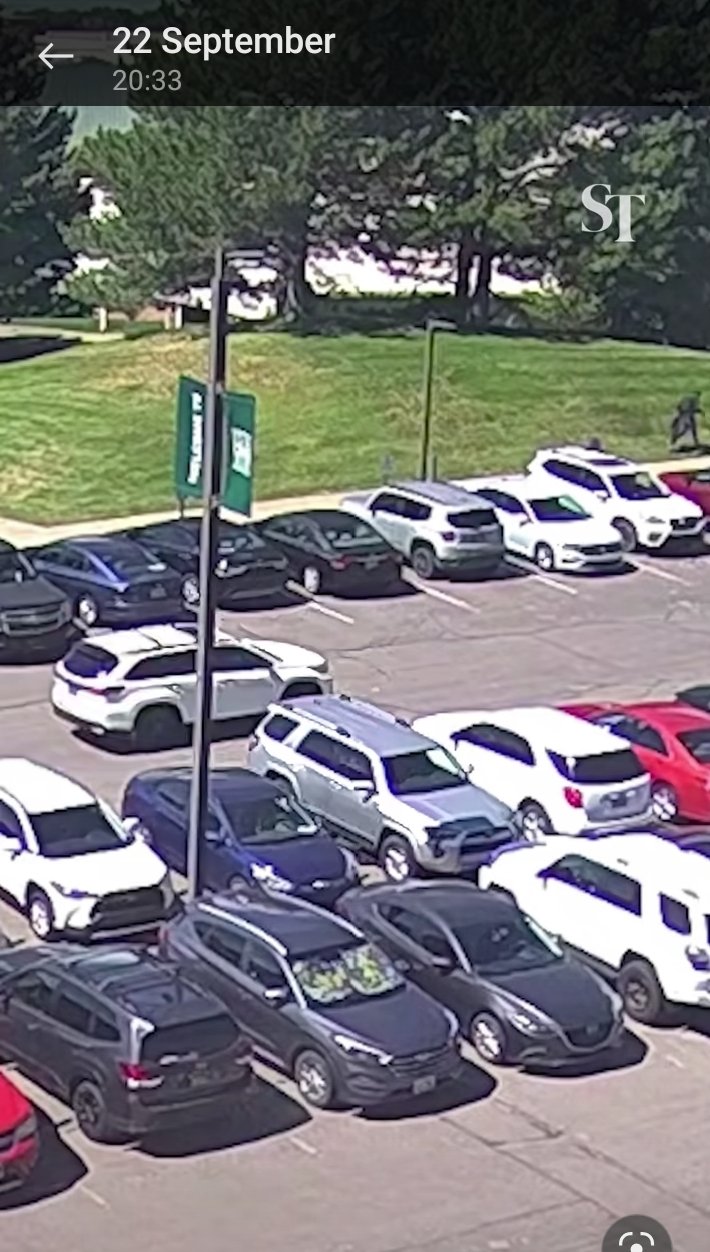
Item 1 of the investigation file's "SUPER Strange events" list records a reported sequence in four steps. First, local law enforcement conducted an arm-to-arm line search of the area, and no gun was found. Second, K9 dogs searched, and no gun was found. Third, federal agents arrived. Fourth, per the entry, three federal agents told three junior local officers — described as new hires — to search the area again, and the rifle was then found.
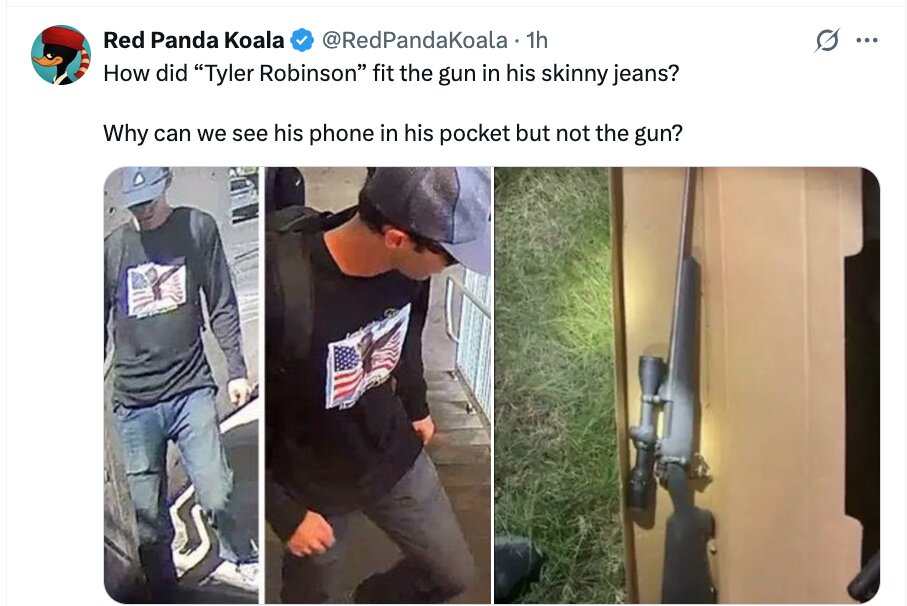
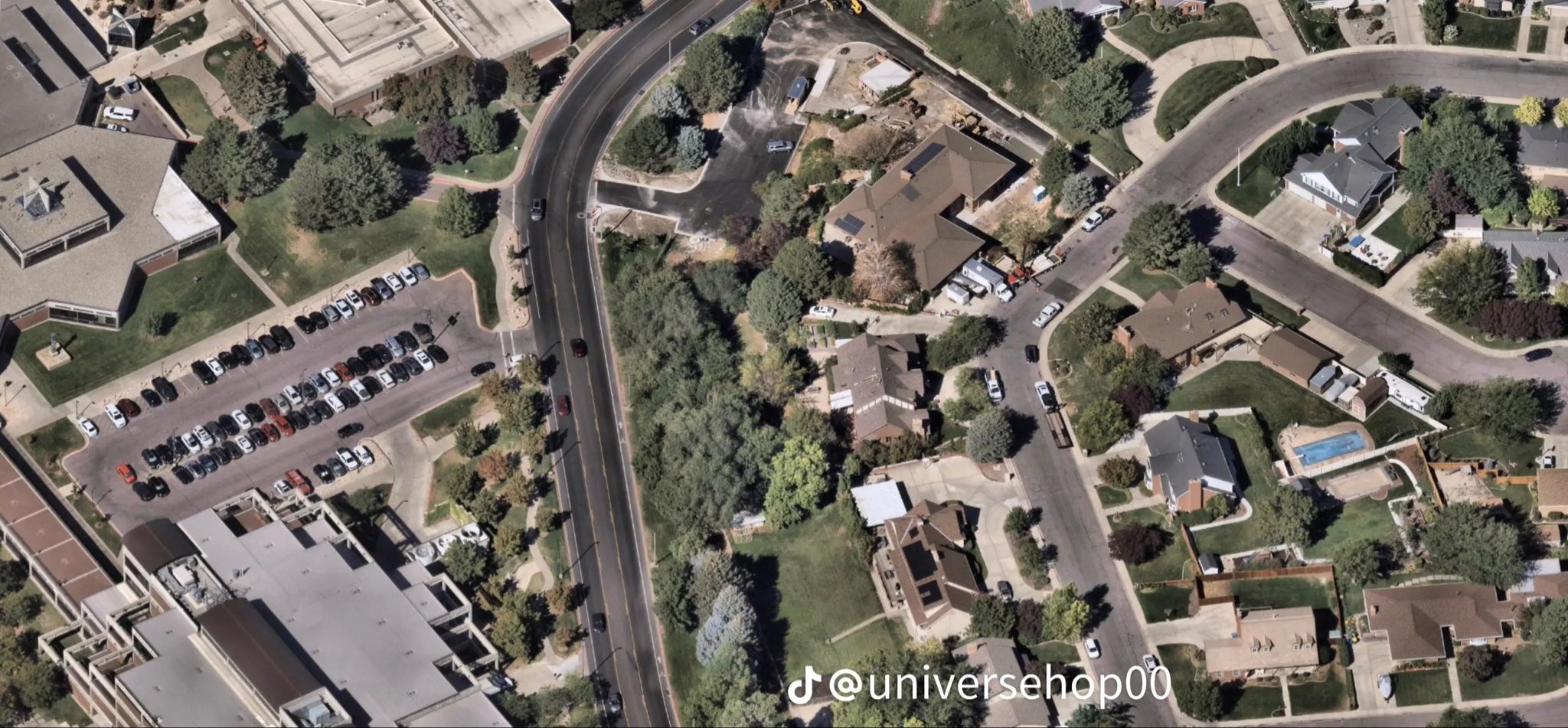
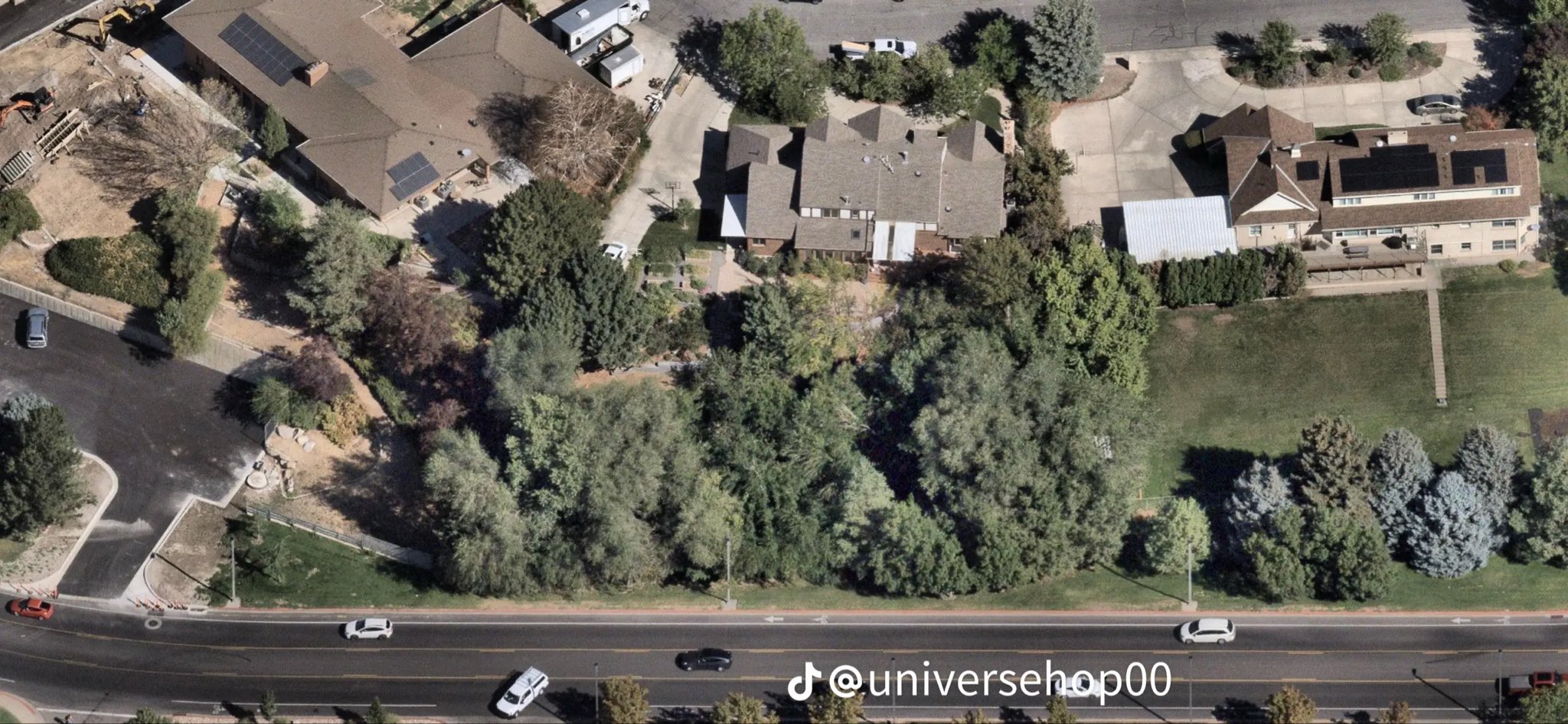
Investigators raise two objections to that sequence. The first is a physical one: a rifle reportedly wrapped in a towel in a wooded area is not a small object, and they argue it should have been located on the first pass, when officers were walking the ground shoulder to shoulder, or on the second, when dogs were working the area. The second objection is about who conducted the successful pass. They regard it as notable that the search which produced the single most important piece of physical evidence in the case was reportedly carried out by the least experienced officers on the scene, at the direction of agents from another agency, rather than by the investigators who had already covered that ground.
The same section of the file separately alleges, without elaboration or source, that "the Feds lied about the gun location." Related claims in the file allege no standard gunshot-residue testing was conducted on Robinson — an item argued elsewhere on this site as part of a broader convergence theory.
It is necessary to state clearly what this item is. It is a list entry. No primary source is cited in the investigation file for any part of the sequence — not a name, not a date, not a time, not a report number, not an officer's account. The claim that three agents directed three junior officers is as unverified as the claim that the earlier passes found nothing. Nothing on this page has been corroborated.
The ordinary explanation
Repeat searches that finally succeed are routine and unremarkable. Line searches miss items constantly — that is why agencies run them more than once — and the failure rate rises sharply with dense brush, uneven ground, leaf litter, fatigue, and any degree of concealment. An object wrapped in fabric on a wooded floor is close to a best case for being walked past.
The K9 element is weaker than it looks. Dogs are trained to a specific target odor. A dog certified for explosives or for tracking a person is not trained to alert on a firearm and would have no reason to indicate on one; the fact that dogs "found no gun" may simply mean no dog present was looking for a gun. Without knowing what those particular K9s were certified to detect, the point carries no weight at all.
Federal agents directing an expanded or repeated grid search is precisely the function of a supervising agency arriving at a scene: reassess the search area, widen the boundaries, and put more bodies on the ground. Assigning additional officers — including junior ones, who are frequently the personnel available for labor-intensive canvass work — is normal resource management, not staging. And the entire inference collapses into ordinary police work the moment one considers the alternative reading: the feds arrived, decided the first search was inadequate, ordered it done again properly, and it worked.
What would settle it
- Obtain the search logs and incident reports for each pass: who searched, what area, what time, and what the assignment was.
- Identify the K9 units deployed and their certifications — explosives, narcotics, tracking, or evidence recovery.
- Obtain the recovery report and photographs for the rifle: exact location, condition, wrapping, and the name of the officer who found it.
- Ask on the record whether GSR testing was performed on Robinson or his clothing, and if not, what the documented basis for that decision was.
Interesting In This Area
- The same list carries the Rav4 badge claim, also with no source.
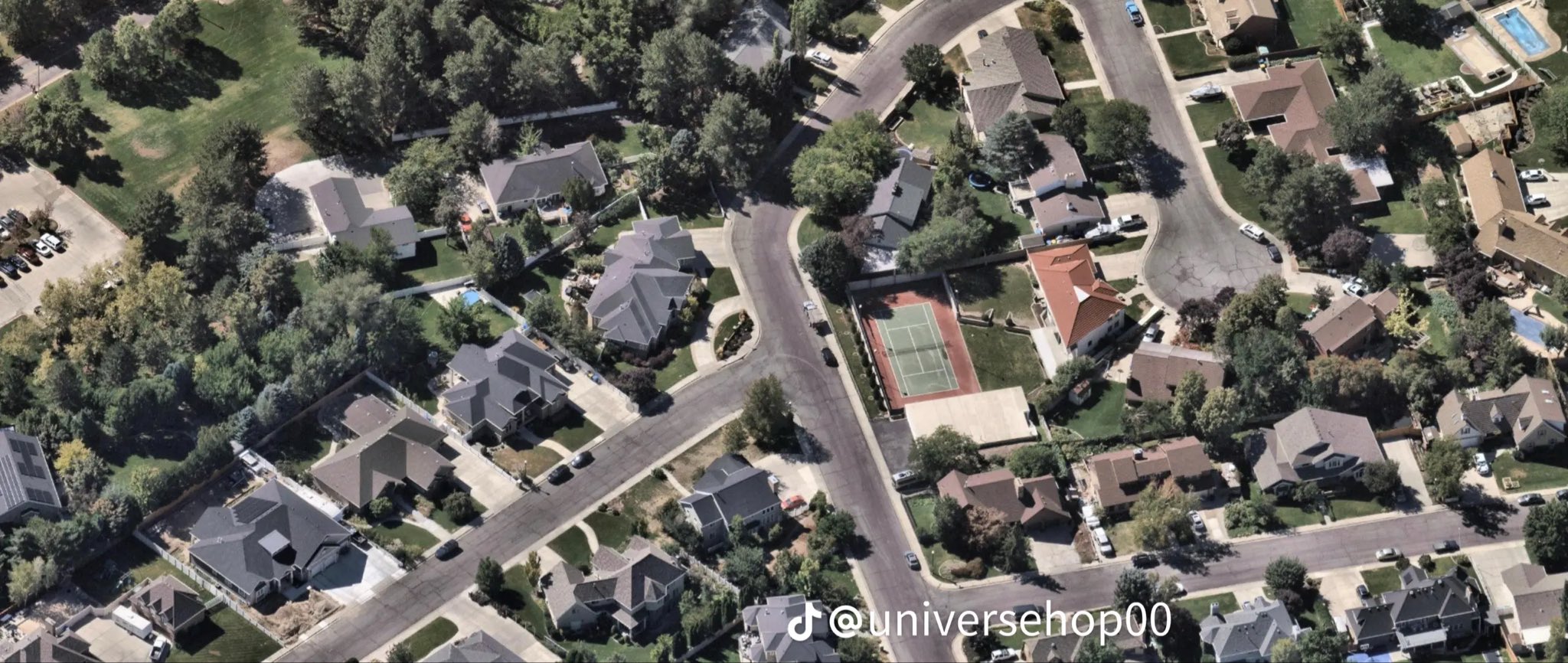
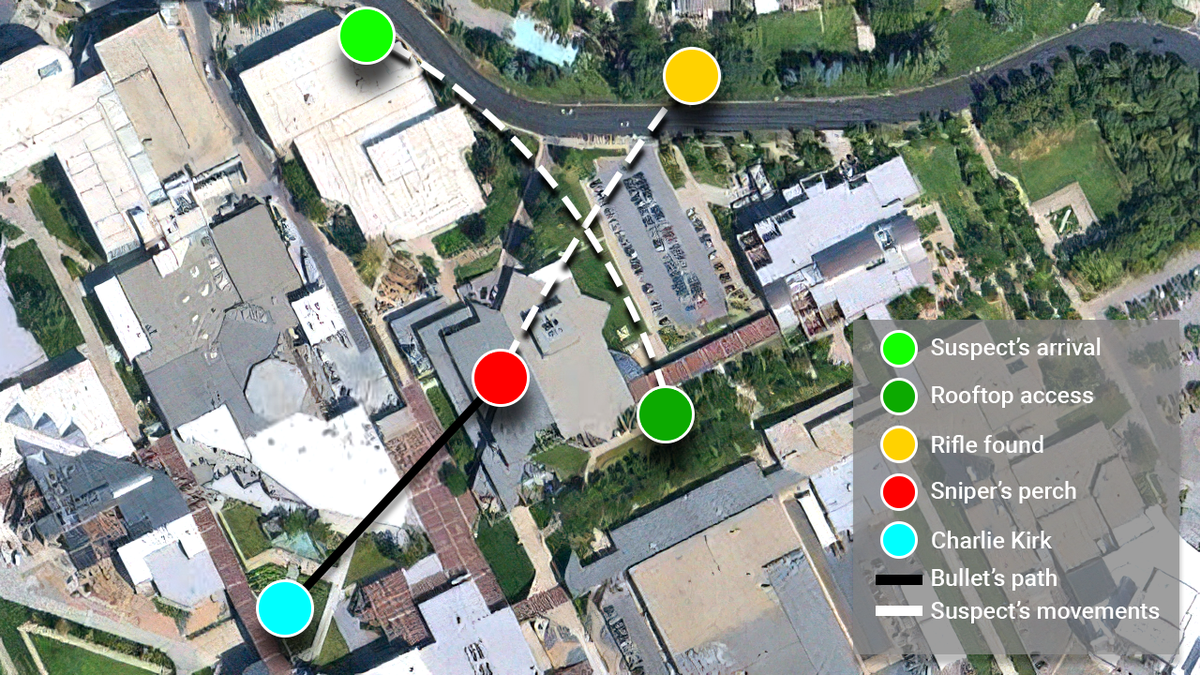
- The gun drop location and search sequence is where the physical detail lives.
- A towel-wrapped rifle on the roof conflicts with recovery in the woods.
- The ATF exam could not tie that rifle to the fragment.
Interesting In Other Areas
- The same claim is argued as cover-up rather than as police work.
- Where the gun was dropped still does not match the described escape route.
- The gun discovery sequence is one pillar of the not-Tyler argument.
- The Mauser chain of custody starts at that second search.
Images

Other Pages In This Section
Selective 4K Release Versus the FBI Gag Claim (Claims)
TPUSA's October 14 tribute video reportedly used crisp 4K and drone footage from September 10 — footage said elsewhere to be unreleasable on FBI advice. An attributed inference about which version of the day gets shown.
Read this
McCoy Reportedly Phones His Wife as the Shot Lands (Claims)
A reconstruction places Mikey McCoy phoning his wife at 12:23:30, the same second as the shot. No phone record supports that timestamp; it is an inference drawn from footage.
Read this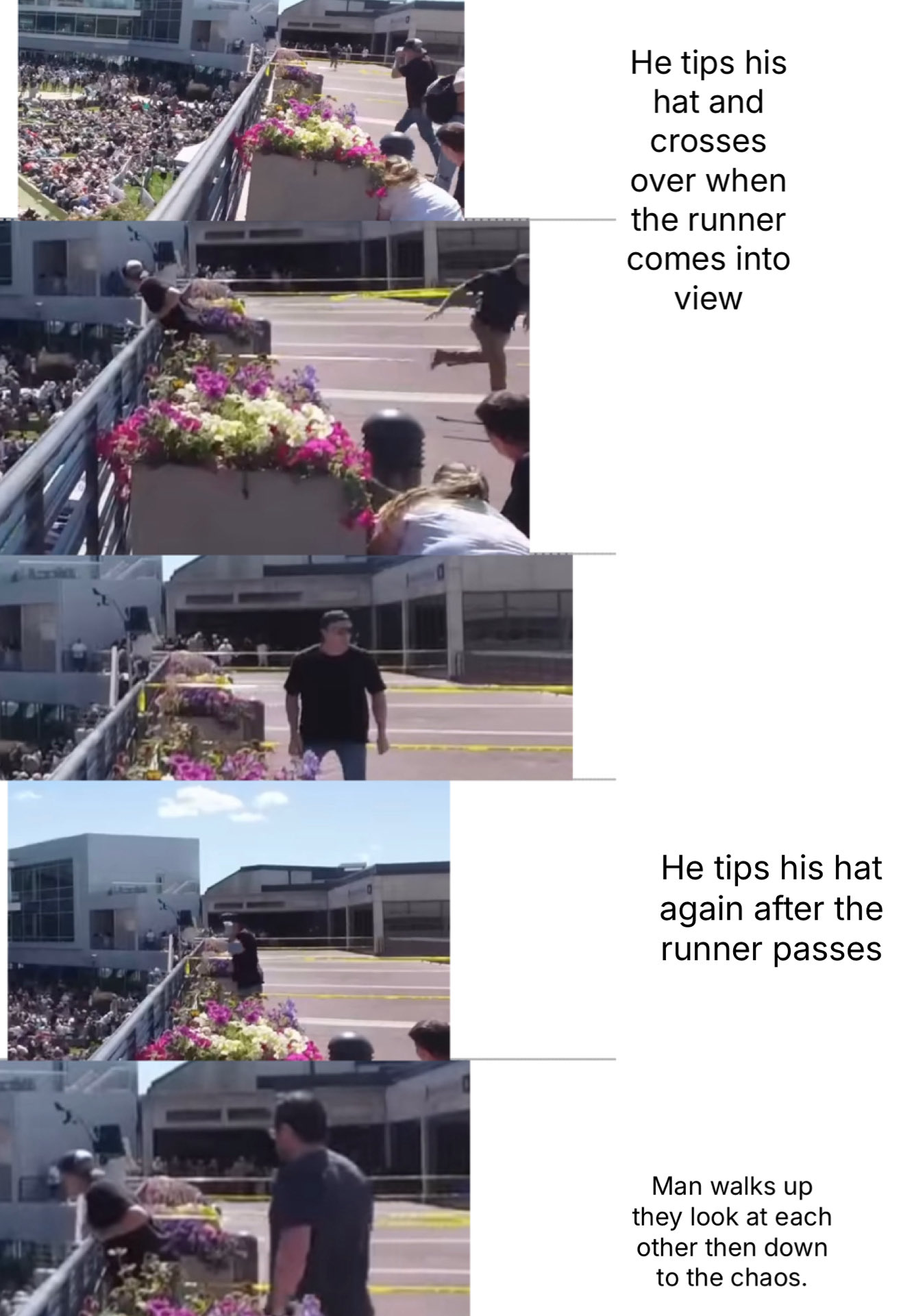
The Claim the Runner Started Before the Shot (Claims)
An unattributed passage back-extrapolates the rooftop runner's start to 12:23:28, two seconds before the shot. The arithmetic assumes constant velocity from a standing start, which is exactly where the two seconds come from.
Read this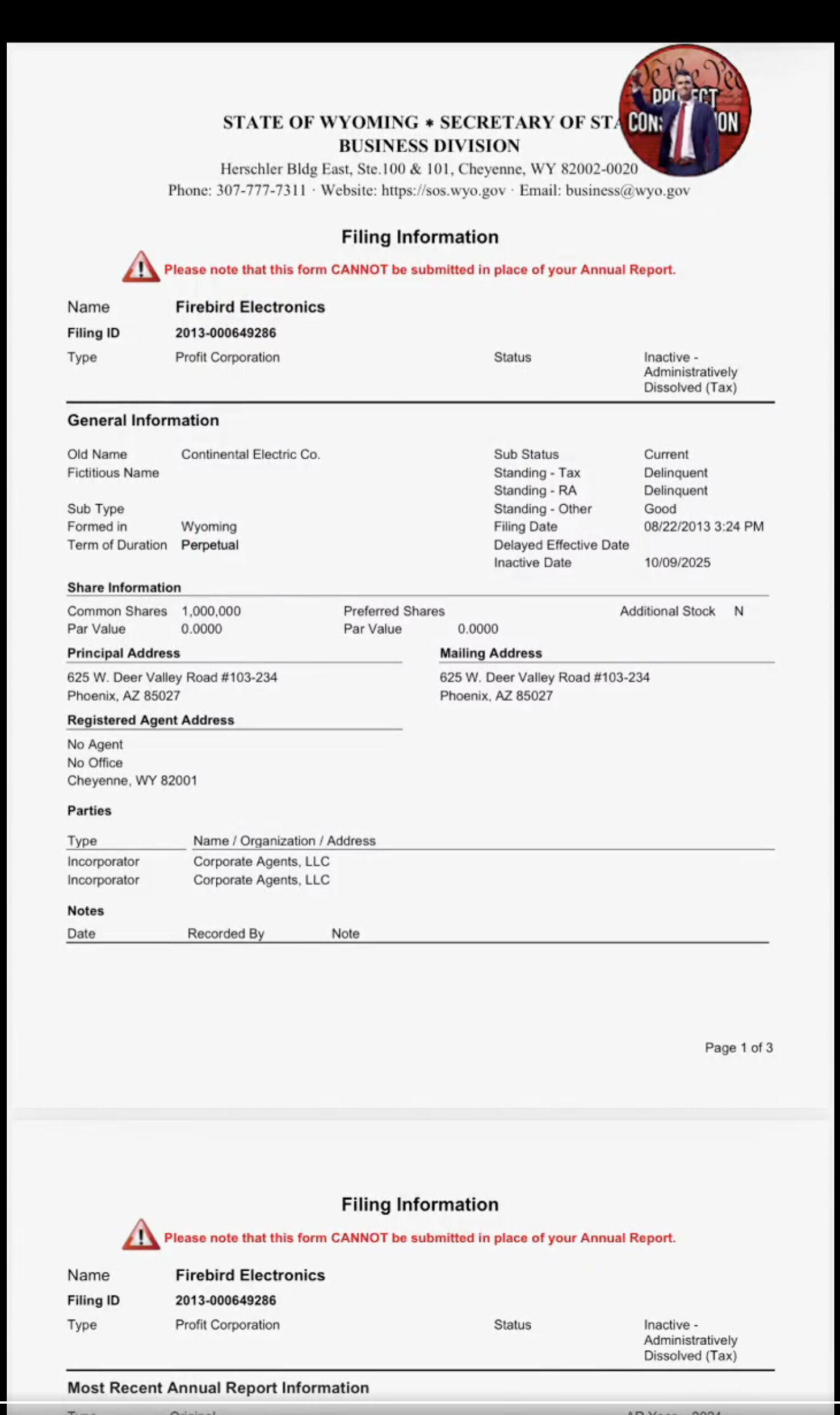
The GGLF 2023 LLC Life-Insurance Policy (Claims)
Researchers claim a policy on Charlie Kirk was taken out right after he questioned October 7. The Wyoming filing offered as proof shows the LLC was formed five months before October 7 — the exhibit defeats the claim it was produced for.
Read thisElsewhere In The Investigation
Rifle Found Only After a Federal Redirect (Claims)
An arm-to-arm search found nothing. A K-9 pass found nothing. Then federal agents arrived, sent local officers back over the same ground, and a towel-wrapped rifle appeared — the reported sequence skeptics keep returning to.
Read this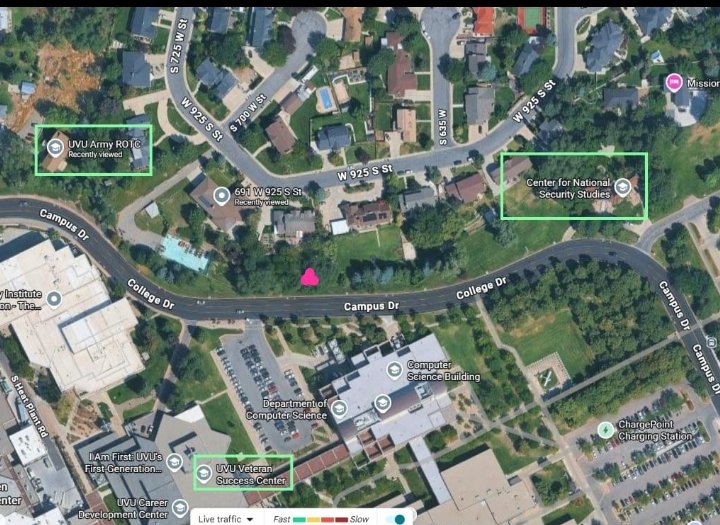
The rifle was reportedly dropped in a wooded strip with buildings on either side. The official account puts a car in a UVU lot at 8:29 AM and never says when it left — and no cell-tower record filling that gap has been released.
Read this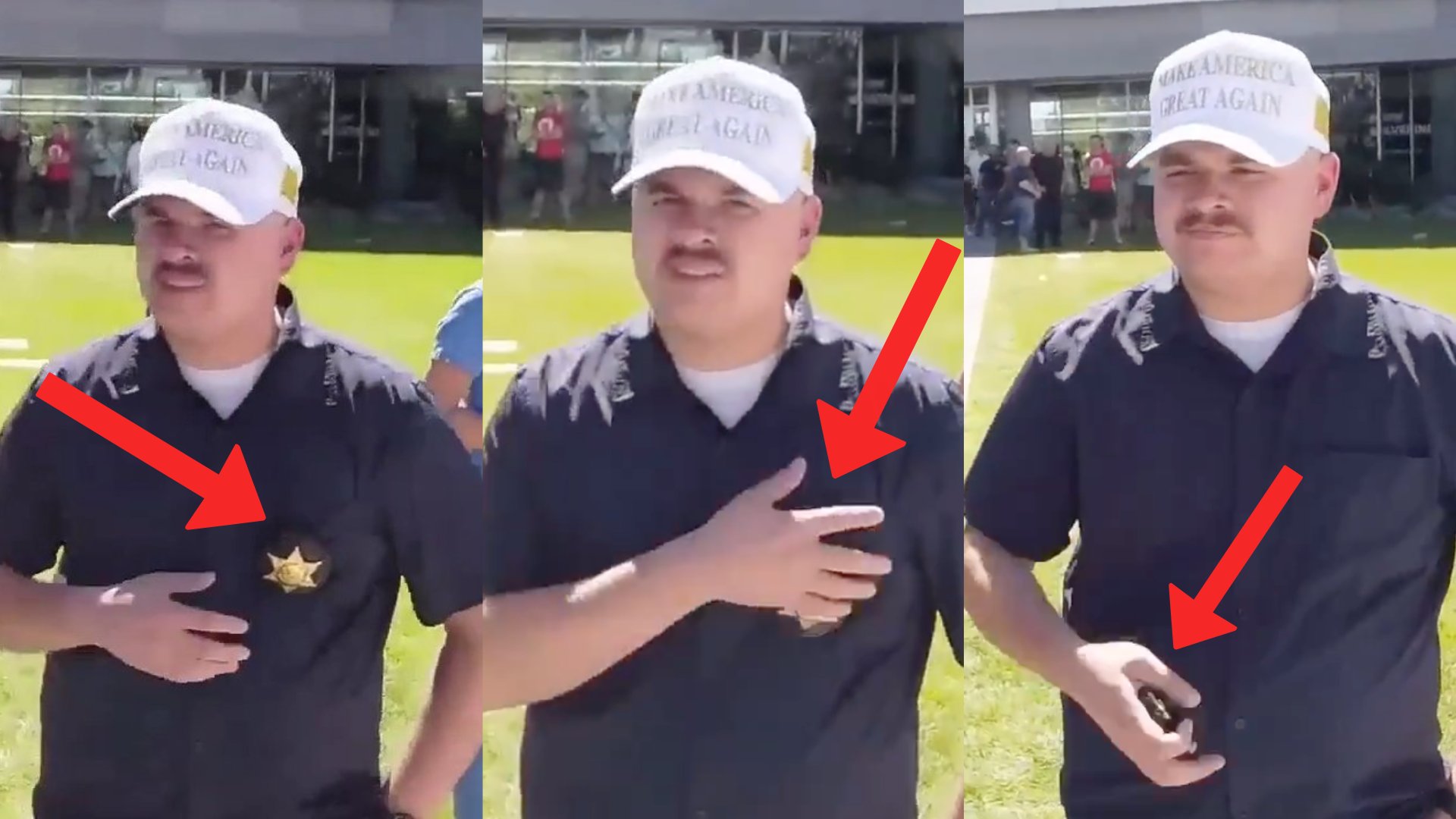
Arm-to-arm sweeps found nothing. A K-9 pass found nothing. Then federal agents reportedly sent three junior local officers back over the same ground, and the rifle appeared.
Read this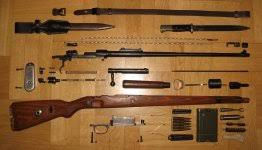
Who found the rifle, when, after which K-9 passes, and how the towel-wrapped bundle was photographed and sealed. These are ordinary evidence-handling questions, and on the public record they are unanswered.
Read thisSources
- No primary source is cited in the investigation file for this claim. It appears as an entry in an internal "SUPER Strange events" list, echoed in cover-up commentary on X.
This website's author is @HolonCitizen on X and YouTube/@HolonCitizen. Follow me there.
Interesting
- The ATF lab reportedly could neither match nor exclude the Mauser as the source.
- A foreign head-of-state jet reportedly made its first-ever US landing at a Nebraska Army base.
- The official chronology goes silent at specific clock intervals, and records requests were refused.