A Surgeon Reportedly Blocked From Kirk's Room (Claims)
:::caution Attributed claims only Securing the room of a homicide victim after pronouncement is standard chain-of-custody and medical-examiner practice, and hospitals independently restrict access in high-profile cases. This item is a single unsourced secondhand assertion and is presented as such, not as a finding that any agent did anything improper. :::
By the time the room was sealed Charlie Kirk had already been killed, so what a surgeon might have documented goes straight to the unsettled cause-of-death record.
Claim snapshot
| Field | Value |
|---|---|
| The claim | A surgeon was reportedly blocked by the FBI from going back into the room with Charlie Kirk |
| Raised by | The investigation file's compiler's "SUPER Strange events" list |
| First surfaced | Undated in source |
| Rests on | Anonymous list entry — no source, no surgeon's name, no hospital record |
| Evidence rating | THIN |
What is alleged
Item 4 of the investigation file's "SUPER Strange events" list reads, in its entirety, that a surgeon was blocked by the FBI from going back into the room with Charlie Kirk. That is the whole of it. There is no surgeon's name, no hospital, no time, no agent, no record, and no source of any kind cited in the investigation file for this claim. It is one clause on a list.
Investigators pair it with two other elements from the file. The first is the file's own timeline reconstruction, which reportedly places 20 to 30 minutes in the operating room before a surgeon emerged and pronounced Kirk deceased at approximately 1:03:30 MT, within a reconstructed end window of roughly 12:56 PM to 1:13 PM Utah time. The second is the claim that the Jerusalem Post reportedly announced his death before that window closed — a separate item with its own evidentiary problems, examined elsewhere on this site.
The suggestion drawn from the combination is that access to the body was being managed — that if an outlet published a death before the clinical pronouncement, and a treating surgeon was simultaneously being kept out of the room, then the flow of information about what happened inside that room was under someone's control. That is the inference. It is built on one unsourced sentence resting against a timeline reconstruction and a second contested claim, and it should be weighed accordingly.
This is among the weakest items in this section, and saying so is the point of including it. A claim with no source is not evidence that something happened; it is evidence that someone said something. Listing it openly, labeled, is better than letting it circulate unlabeled — but nothing here supports a conclusion.
The ordinary explanation
Once a patient in a federal-interest homicide is pronounced, the legal character of the room changes completely. The body becomes evidence and the room becomes a scene. Securing it and restricting re-entry is not concealment; it is the baseline requirement of chain of custody and of medical-examiner jurisdiction, which attaches at death. Restrictions apply to everyone, including treating clinicians who no longer have a clinical role — because once resuscitation has ended, a surgeon in that room is a person handling evidence, and every subsequent movement of the body has to be documented by the people whose job that is.
Hospitals also restrict access independently of any law-enforcement instruction, for patient privacy and for physical security, and they do so most aggressively in exactly the sort of high-profile case where a building fills with press, police, staff, and onlookers within minutes. A clinician being told they cannot go back in is an entirely predictable feature of that environment and does not require a decision by the FBI at all.
A single unsourced secondhand account is a thin basis for inferring anything beyond routine scene control — which is the most likely explanation, and which is what the account describes.
What would settle it
- Identify the surgeon. A name is the minimum required for this claim to be examinable at all, and the file does not have one.
- Obtain the hospital's access log and security record for the room on September 10, showing who was admitted, who was refused, and on whose instruction.
- Obtain the medical-examiner's custody record: when jurisdiction attached, and who controlled the room afterward.
- Obtain the pronouncement record with its exact documented time, and compare it against the publication timestamp of the earliest death report.
Interesting In This Area
- No autopsy and death-certificate questions are the record this claim leans against.
- The empty ER and personnel changes describe the same building that afternoon.
- An unknown woman reportedly signed the medical examiner report.
- The OR timeline versus the Jerusalem Post is the contested publication claim.
Interesting In Other Areas
- Hospital footage was reportedly seized and staff asked to sign agreements.
- The footage seizure is tracked separately from the room-access claim.
- Charlie's trip to the hospital is the timeline this claim sits inside.
- One witness gave two accounts of where the wound was.
Images
Other Pages In This Section
The SUV Destroyed and the ADL Floor-Sharing Claim (Claims)
Two low-confidence optics items: a claim the transport SUV was chopped up and melted down, and a list entry that an FBI building shares a floor with the ADL. Both unverified, and the second proves nothing alone.
Read this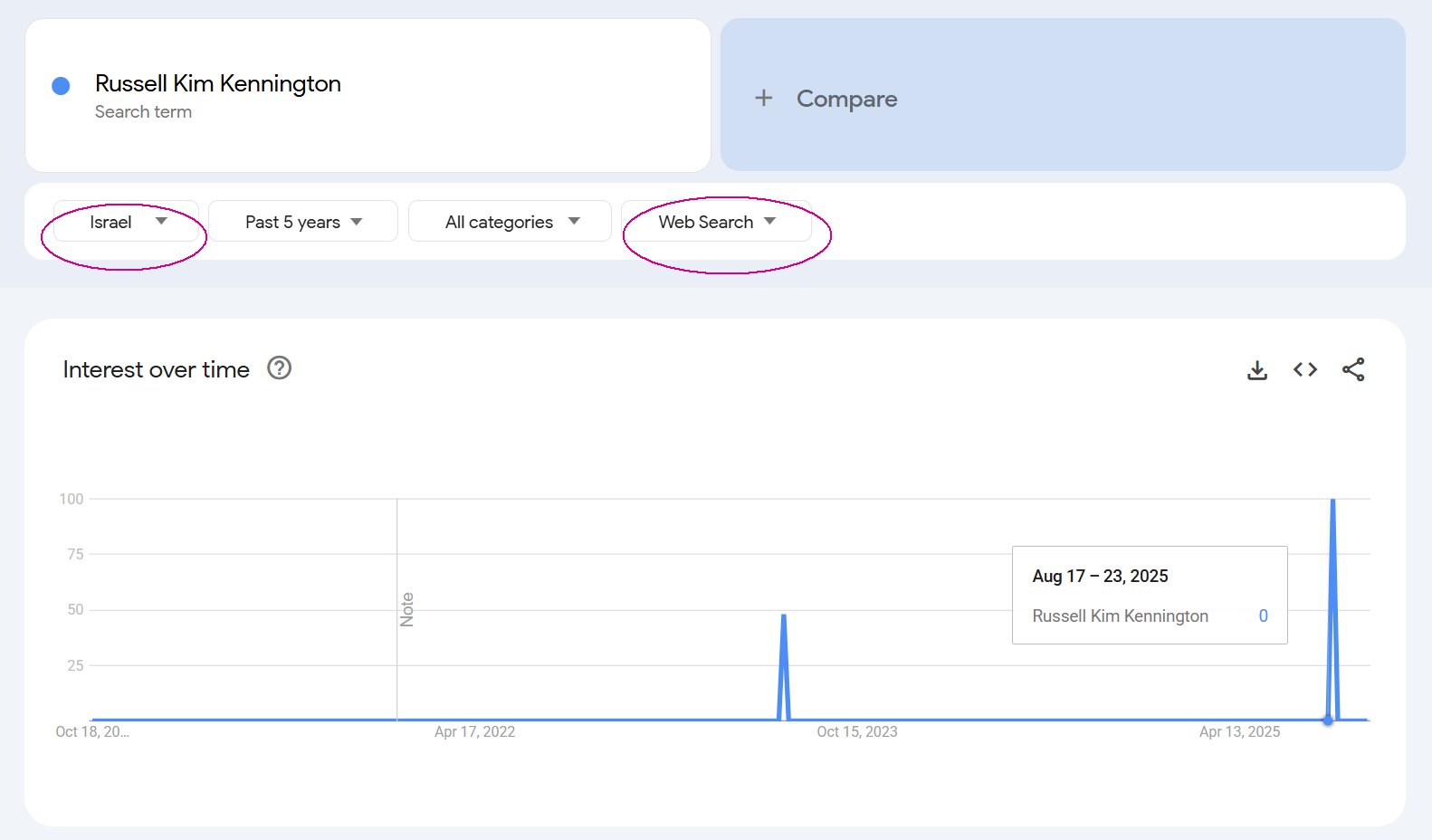
Suspicious Within Five Minutes
Everything citizen investigators flag inside the ten minutes from 12:18:30 to 12:28:30 on September 10 — five minutes either side of the shot. Second by second is where the strongest and the flimsiest claims sit next to each other.
Read thisThe Donor Texts, 48 Hours Before (Claims)
Candace Owens released September 8, 2025 messages in which Charlie Kirk reportedly wrote that donor pressure was leaving him no choice. TPUSA reportedly confirmed the texts, which makes this one of the few items here with an organization's own confirmation behind it.
Read this
Sixteen Israeli-Registered Phones at UVU (Claims)
An analyst reportedly claims raw GPS data put 44 foreign-registered phones near Charlie Kirk on September 10, sixteen of them Israeli. The dataset has never been published, so nobody outside the claim can test it.
Read thisElsewhere In The Investigation
Hospital Footage Seized, ER Cleared, Staff NDAs (Claims)
Footage never released, an emergency room that reportedly looked unusually empty, and staff at a nearby facility reportedly asked to sign non-disclosure agreements. Presented as questions, not conclusions.
Read thisInterior hospital cameras were reportedly seized while the manhunt was still running outside. Those cameras are the only record of who entered treatment areas, and whether the emergency room was cleared and on whose authority.
Read this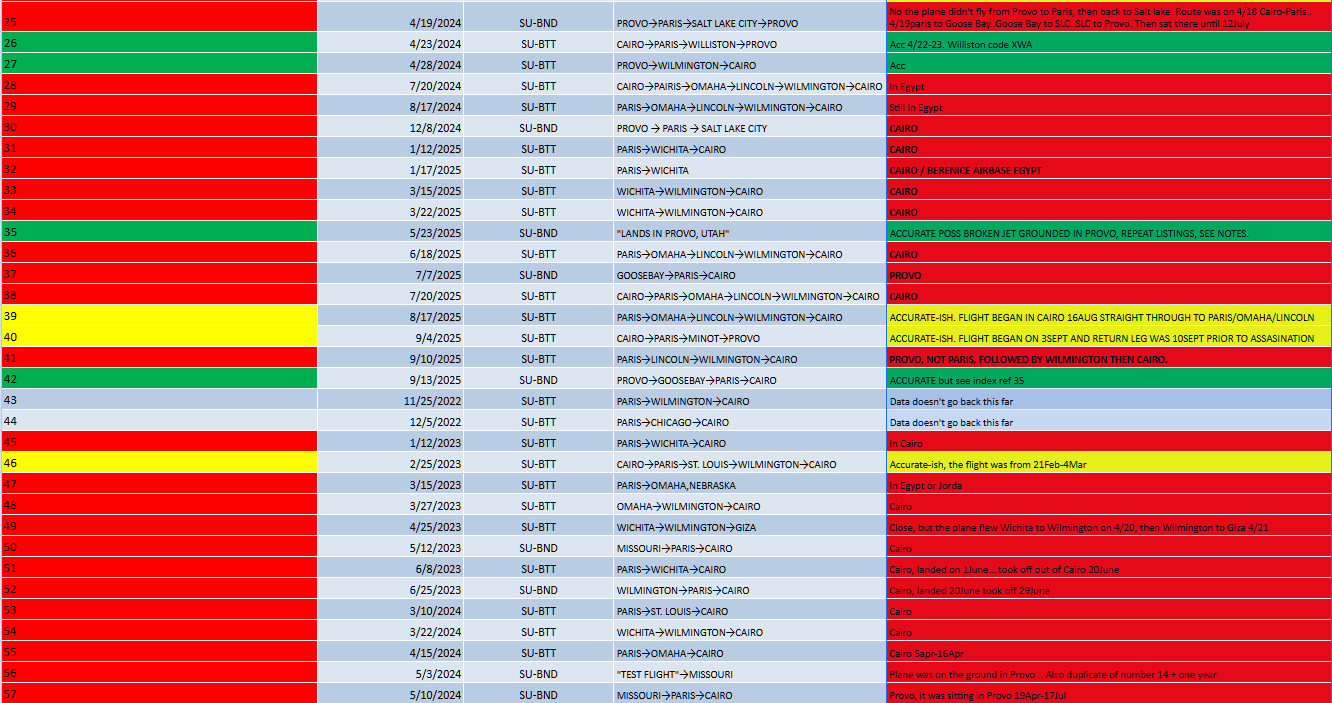
No ambulance, no sirens — carried into a private vehicle by his own detail. Using the car already on hand in a chaotic scene is not evidence of wrongdoing, which is why the page is about who controlled the evidence, not about rescue.
Read this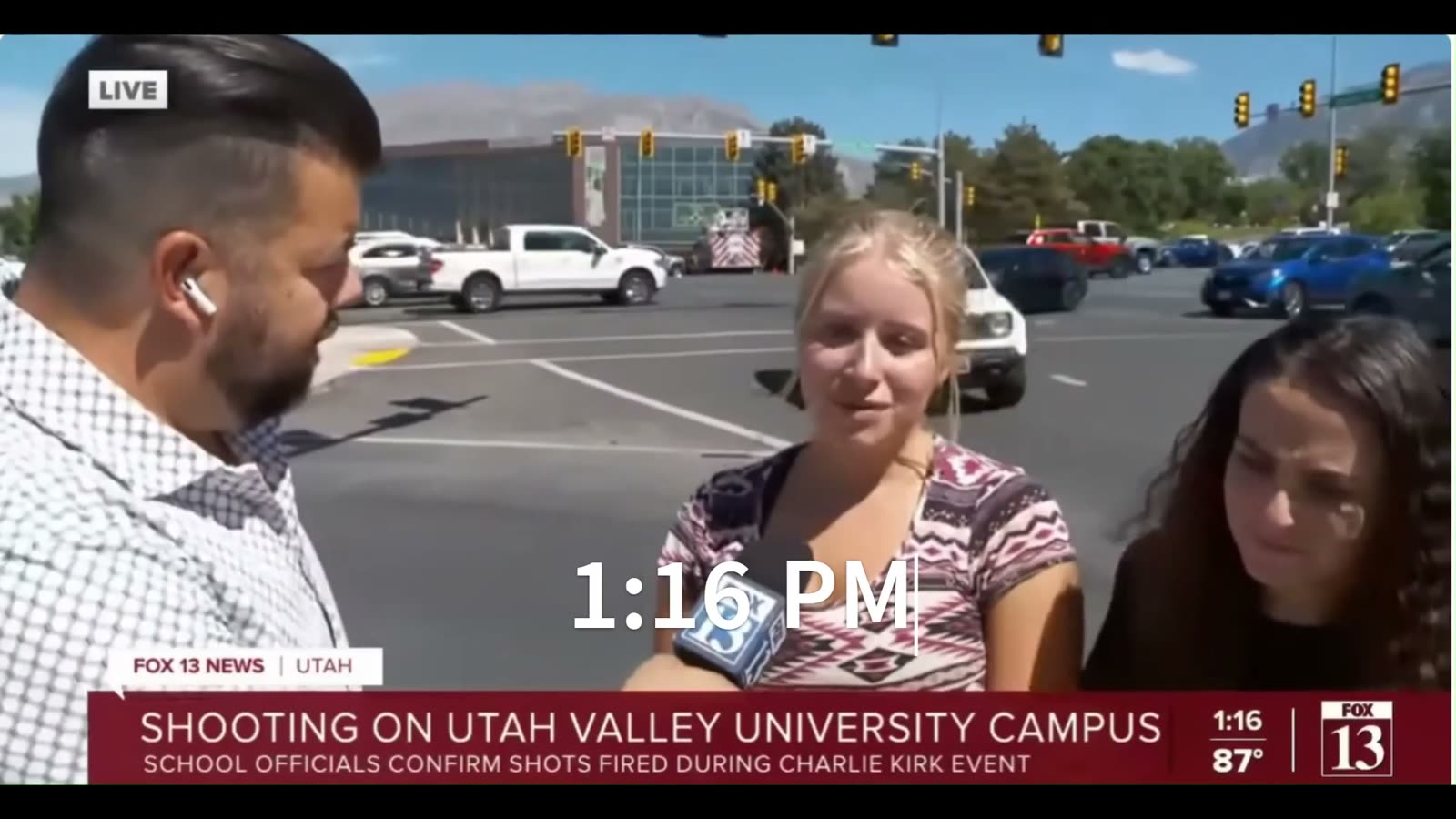
Shot in the Chest, Then the Neck — One Witness, Two Accounts
One witness, two accounts: chest first, then neck. The page tracks when the account changed, and what else changed around it.
Read thisSources
- No primary source is cited in the investigation file for this claim. It appears as a single entry in an internal "SUPER Strange events" list, with no name, no hospital record, and no date.
This website's author is @HolonCitizen on X and YouTube/@HolonCitizen. Follow me there.
Interesting
- One thesis says witnesses described a chest wound because a shaped charge was meant to produce it.
- Image results reportedly disappeared for the security chief the day after he was named.
- Search spikes reportedly clustered on people needing escort at an Army intelligence base.